
~
~
~
~
~
~
G320ZAN02.5 1000nit Mini-LED Medical UHD LCM 32 Inch AUO
Model P/N
Size
Resolution
Brightness
Viewing Angle
Connector Type
Operating Temp
Overall(mm)
auo
G320ZAN02.5
Brand
Panel Size (inch)
Model P/N
Resolution
Brightness (nits)
Viewing Angle
Contrast Ratio
Response Time
Overall (mm)
Active Area (mm)
Refresh Rate
Display Colors
Panel Type
Connector Type
Surface Treatment
Operating Temp
Touchscreen Type
Storage Temp
Work Mode
Pixel Format
Input Voltage (V)
Vibration Resistance
Designed For
Product Details
Product Overview
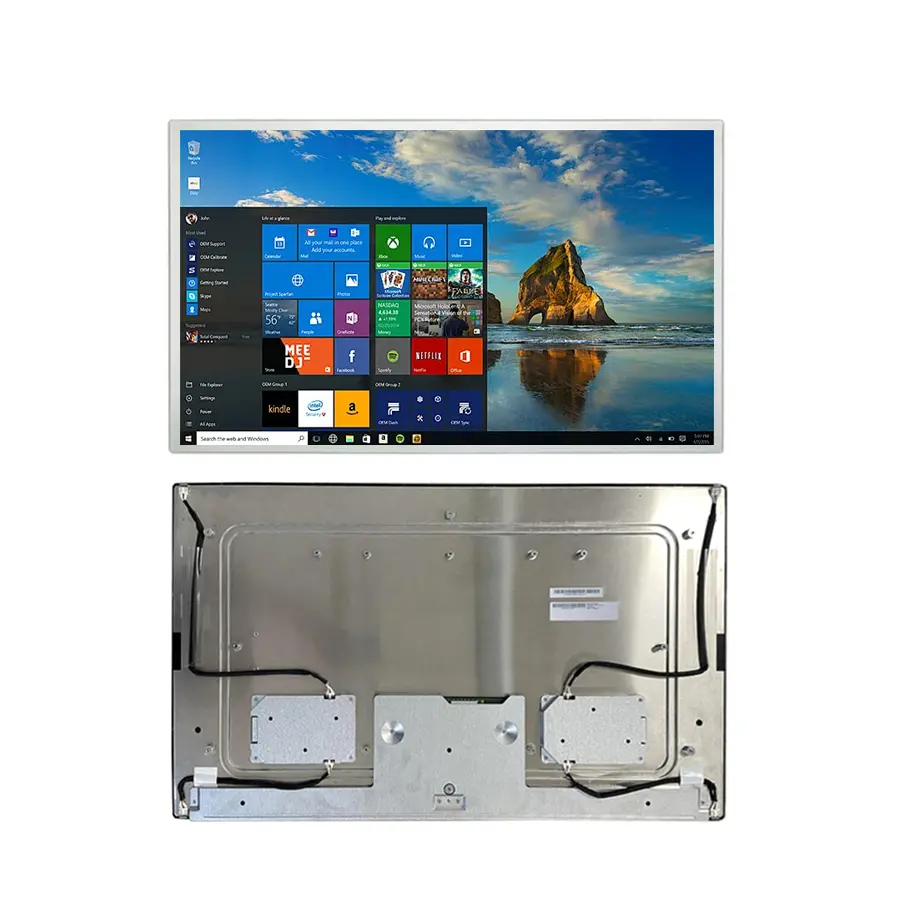
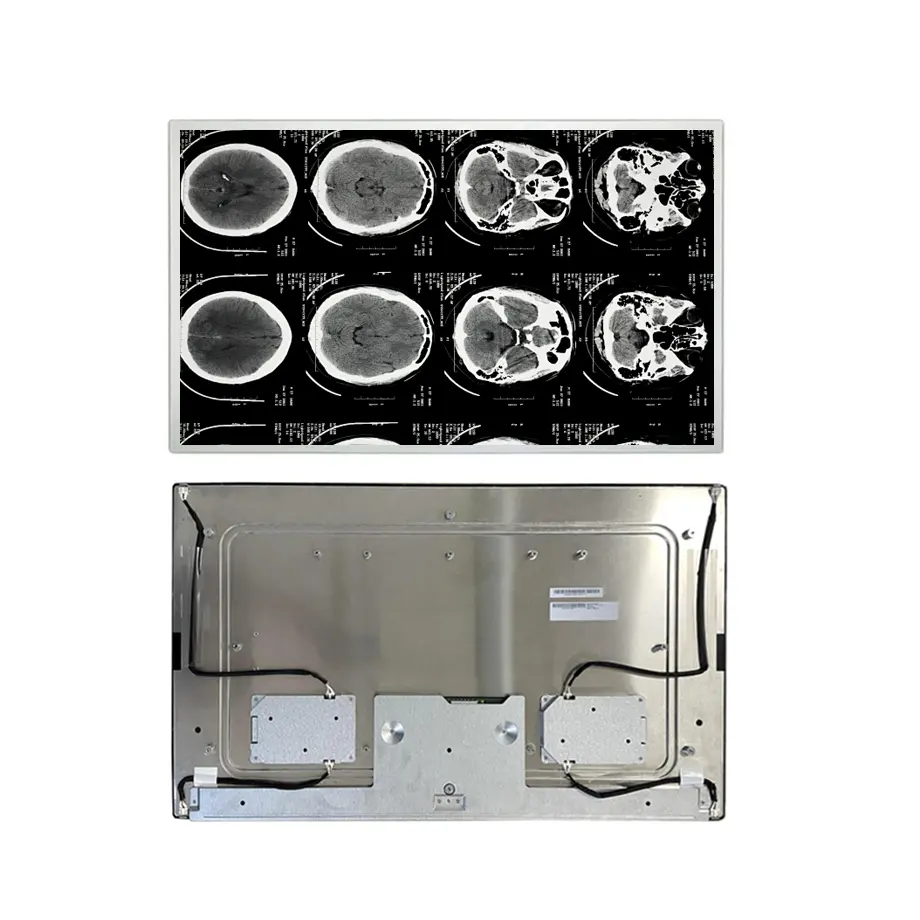
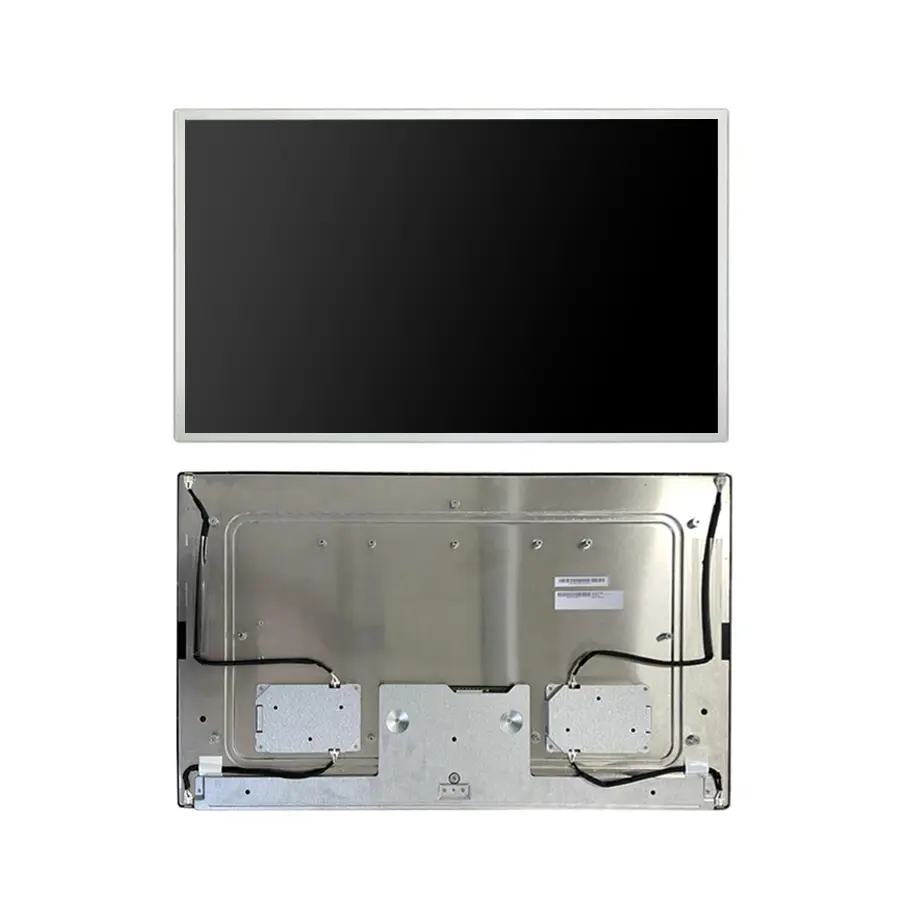
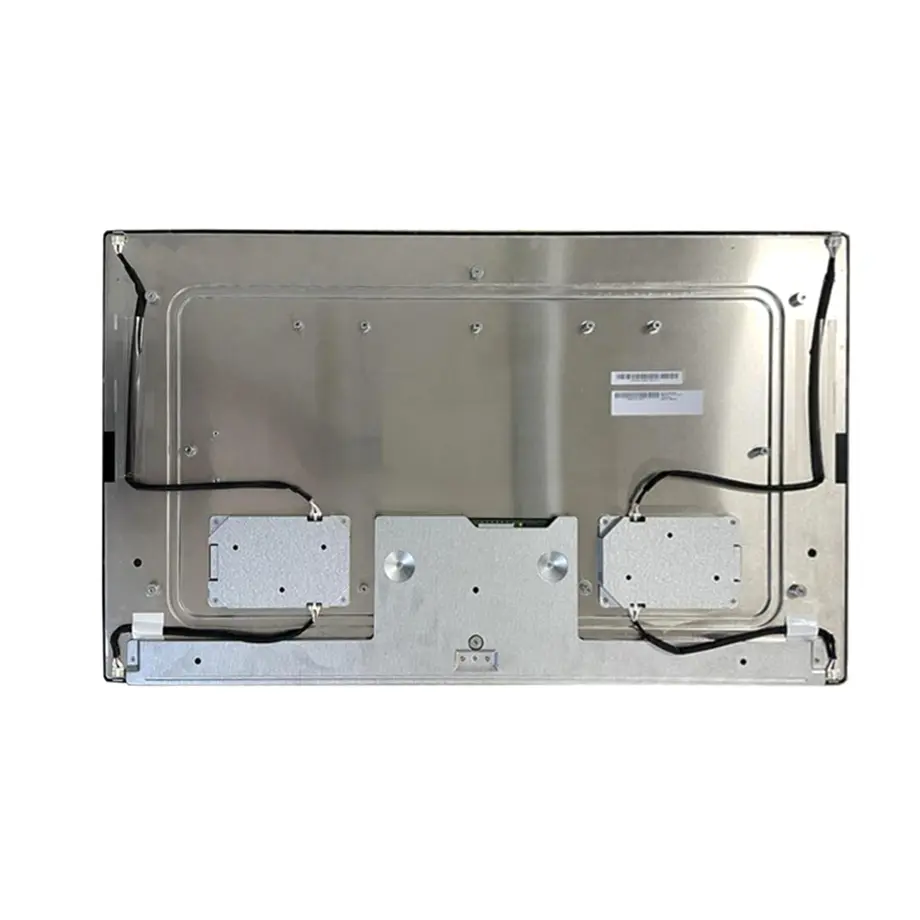
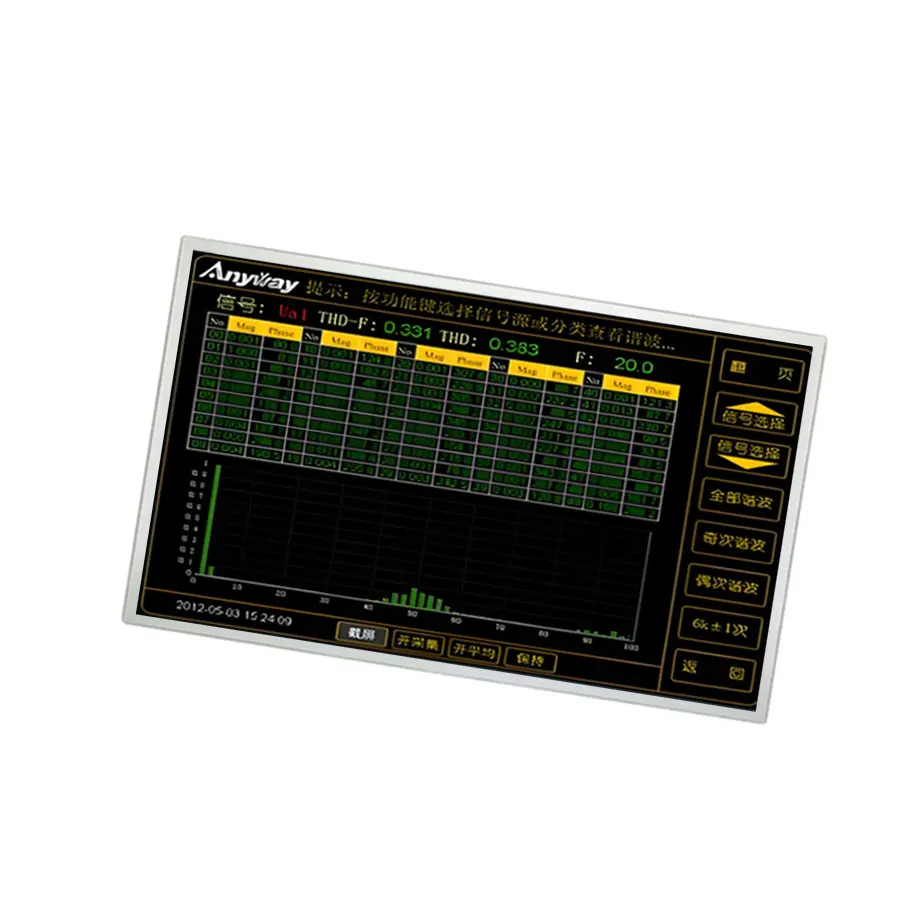
G320ZAN02.5 1000nit Mini-LED Medical UHD LCM is a 32.0-inch AUO a-Si TFT-LCD full module designed for industrial and medical-imaging display integration. The user-supplied exact-model specification defines a 3840(RGB)×2160 UHD image in a 16:9 aspect ratio, with a 708.48 × 398.52 mm active area inside a 727.3 × 424.5 × 31.5 mm module outline. Typical module mass is 4.74 kg. The optical stack includes an integral Mini LED backlight with LED driver and a 50,000-hour light-source reference.
The confirmed panel optics are 1000 cd/m² typical luminance, 1800:1 typical contrast, 89/89/89/89 typical viewing at CR≥10 and 1.07B colors with 98% DCI-P3. The operating mode is AHVA, normally black and transmissive. The supplied source shows “10/10 (Typ.)(Tr/Td) mm” for response, which is an obvious unit mismatch for a time quantity; the production record normalizes that value to 10/10 ms typical Tr/Td while preserving the raw source wording in traceability.
The native signal path is four-lane HBR2 eDP at 5.4 Gbit/s per lane through a 51-pin 0.5 mm connector. The panel supply is 12.0 V typical. The exact-model technical listing supports the 1000-nit Mini LED, industrial and medical-imaging application context. AUO's healthcare solutions page also describes medical-display use of advanced display technology, providing manufacturer-level context without implying that this exact panel carries a medical certification.
Three Core Buyer Value Propositions
1. 1000 cd/m² Mini LED illumination provides substantial luminance headroom
The module combines a high panel-level luminance target with a Mini LED backlight and integrated driver. That is a strong starting point for industrial visualization and medical-imaging workstations used in bright rooms or controlled professional environments. The 1000-nit rating remains a component specification: perceived visibility still depends on ambient reflection, cover materials, enclosure lighting and final system calibration.
2. 98% DCI-P3 and 10-bit-class color support demanding image presentation
With 1.07B colors and 98% DCI-P3, the display has a wide-gamut baseline that can be useful for rich visualization, image review and professional color workflows. Those figures do not establish diagnostic compliance, DICOM calibration, factory color accuracy or a particular medical-image standard. If those requirements matter, they must be validated separately on the completed display system with the intended controller, calibration software and measurement method.
3. Four-lane HBR2 eDP defines a modern UHD integration boundary
The exact 51-pin eDP interface gives engineering teams a clear panel-side transport for 3840×2160 at 60 Hz. The controller must match the lane map, AUX channel, power sequencing and connector assignment for this exact AUO model. A 32-inch UHD panel with a different eDP connector or another G320ZAN suffix cannot be treated as electrically interchangeable without verification.
Key Specifications at a Glance
| Parameter | Confirmed value |
|---|---|
| Manufacturer / model | AUO G320ZAN02.5 |
| Display size | 32.0 inch |
| Panel type | a-Si TFT-LCD, LCM |
| Resolution | 3840(RGB)×2160, UHD, 16:9 |
| Active area | 708.48 × 398.52 mm |
| Outline | 727.3 × 424.5 × 31.5 mm |
| Weight | 4.74 kg typical |
| Brightness | 1000 cd/m² typical |
| Contrast | 1800:1 typical |
| Viewing | 89/89/89/89 typical at CR≥10 |
| Color | 1.07B, 98% DCI-P3 |
| Response | 10/10 ms typical Tr/Td, unit normalized from source typo |
| Refresh | 60 Hz |
| Interface | eDP, 4 lanes, HBR2 5.4 Gbit/s/lane, 51-pin connector |
| Supply | 12.0 V typical |
| Backlight | Mini LED, 50K hours, integrated LED driver |
| Touch | Without touch screen |
| Operating / storage | 0 to 50 °C / -20 to 60 °C |
How Should the 1000-Nit Mini LED Backlight Be Qualified?
Mini LED increases the importance of thermal and optical validation because the module can generate substantial light and heat. G320ZAN02.5 1000nit Mini-LED Medical UHD LCM should be tested after thermal stabilization at the production brightness setting, not only immediately after power-on. Measure center and corner luminance, white uniformity, black level and visible halo behavior using representative dark and bright image patterns.
The built-in LED driver simplifies the external hardware boundary, but the system still controls the 12 V supply, enclosure ventilation and operating duty cycle. For continuous industrial use, measure module temperature at sustained high luminance. If the final product dims automatically, document the brightness policy because thermal behavior and average power can change significantly with content and operating mode.
Local-dimming behavior is system dependent
The reference confirms Mini LED but does not establish a specific local-dimming-zone count, algorithm or HDR behavior for the production record. Do not invent those values. If zone control is part of the exact panel-controller implementation, request the AUO specification and validate blooming, transition behavior and dark-scene uniformity with the approved control electronics.
What Does Medical-Imaging Application Evidence Actually Prove?
The supplied application line explicitly includes Medical Imaging, and the same-model reference repeats that recommendation. This supports use in medical-display projects and makes `For Medical Displays` a valid inventory taxonomy classification. It does not prove regulatory clearance, diagnostic-grade certification, DICOM conformance or suitability for a particular clinical modality.
Medical equipment teams should define the required luminance stability, grayscale response, calibration interval, color accuracy and regulatory pathway for the complete product. A display used for image review in a healthcare environment may have very different requirements from a primary diagnostic workstation. The panel can be an engineering candidate, while final medical qualification remains a system responsibility.
How Should Wide-Gamut Color Be Controlled?
The 98% DCI-P3 figure is valuable for applications that need a broad color volume, but gamut coverage alone does not control color error. A finished system should define white point, gamma, color profile and uniformity limits. If the display is used for scientific or medical visualization, the controller and calibration workflow should be frozen together with the panel revision.
Incoming panels can also vary within manufacturing tolerances. Representative-unit testing is appropriate when color consistency matters across a fleet. Preserve the exact-model panel identity in the bill of materials because a family substitute with another backlight spectrum can change the finished gamut even if resolution and connector remain similar.
What Must Match on the 51-Pin HBR2 eDP Interface?
The electrical design should use the exact AUO pin assignment for the 51-pin 0.5 mm connector. Confirm lane polarity, AUX signals, grounds, panel enable, 12 V sequencing and any backlight or control lines exposed through the connector. HBR2 link margin should be checked with the production cable, especially if the controller is mounted remotely or the cable runs near high-current LED power paths.
Test cold boot, restart, no-signal recovery and repeated display sleep/wake. Monitor for link retraining, transient blanking or pixel errors at native UHD. A bench cable that works in open air is not sufficient proof when the final enclosure changes cable bend, shielding or electromagnetic environment.
Why Does the Response-Time Unit Need Explicit Normalization?
The source row places “mm” after a Tr/Td response quantity. Millimeters are not a time unit, while the surrounding field is clearly a response-time measurement. The approved public and storage value therefore uses milliseconds, preserving the numeric 10/10 pair without changing the physical meaning. This is a value-preserving unit correction rather than enrichment from another model.
For motion-critical systems, treat 10/10 ms as one panel transition metric and validate actual application behavior. The display is a 60 Hz professional module, so it should not be repositioned as a high-refresh gaming panel merely because Mini LED and wide color are present.
Where Does G320ZAN02.5 Fit Best?
The user-supported applications are Industrial and Medical Imaging. G320ZAN02.5 1000nit Mini-LED Medical UHD LCM fits large industrial visualization stations, inspection systems, professional image-review equipment and compatible healthcare display projects that need 32-inch UHD resolution, high luminance and wide-gamut output. The exact final use must still validate controller, calibration, enclosure and any regulatory requirements.
Because the user evidence directly supports both industrial and medical-display scenarios, the inventory taxonomy should prioritize `Industrial & Wide Temperature LCD Panels` and `For Medical Displays`. Mini LED remains an important technology fact in the content, but the closed taxonomy permits only two categories and direct user application evidence outranks technology-only classification.
How Should Mechanical and Thermal Integration Be Approved?
The 727.3 × 424.5 × 31.5 mm module is much deeper and heavier than a bare LCD cell. At 4.74 kg typical, frame stiffness and mounting support are meaningful design inputs. Use the complete AUO drawing for mounting holes, keep-out areas and connector access. Avoid concentrated pressure on the front surface or frame that could create mura or mechanical distortion.
Thermal testing should be performed in the final enclosure with the Mini LED system operating at representative brightness. Record internal temperatures around the panel, controller and power supply. If the product is used continuously, include long-duration soak testing rather than relying only on a short functional check.
How Should First-Article Approval Be Structured?
Start by recording the full G320ZAN02.5 model, panel revision, controller board, cable and firmware. Verify 12 V power and native 3840×2160 at 60 Hz. Confirm stable HBR2 link operation through cold boot and sleep/wake before moving to optical testing.
After final mechanical assembly, measure luminance, contrast, gamut and uniformity at the intended operating brightness. For a medical-imaging project, add the system's required calibration and grayscale checks. For industrial use, add representative duty-cycle and enclosure-temperature testing. Keep the approved configuration as the baseline for incoming lots.
How Should Incoming Lots Be Controlled?
Incoming inspection should verify the AUO model label, 51-pin connector, module outline and Mini LED configuration. New lots should be sampled at native UHD with the approved controller and checked for brightness, obvious uniformity defects and color behavior. A different G320ZAN02 suffix should remain blocked until interface, optics, backlight and mechanics are separately reviewed.
Public production and stock information is point-in-time data. It can help sourcing, but it should not be converted into a lifecycle guarantee, lead-time promise or second-source statement. Long programs should request current production and change-notification information from AUO or an authorized channel.
Procurement Checklist
- Confirm exact AUO G320ZAN02.5 identity and current production revision.
- Match the 727.3 × 424.5 × 31.5 mm outline and 4.74 kg typical mass.
- Verify four-lane HBR2 eDP and the exact 51-pin connector map.
- Use 1000 cd/m², 1800:1 contrast and 98% DCI-P3 as the optical baseline.
- Qualify Mini LED thermal behavior and any exact-model local-dimming controls.
- Keep the normalized 10/10 ms response value traceable to the source unit typo.
- Separate medical-display application evidence from medical-device certification.
- Confirm lifecycle and revision-control information before volume sourcing.
G320ZAN02.5 1000nit Mini-LED Medical UHD LCM is a high-luminance UHD AUO module that combines Mini LED illumination, wide-gamut color and an HBR2 eDP interface for professional display systems. Its strongest production value comes from preserving exact-model evidence while treating medical qualification, color calibration and thermal management as system-level engineering responsibilities.
Recommended: Same Size
(32")
Applications & Value of LCD Panel

- Fast sourcing with in-stock panels & cross-reference alternatives
- Stable supply chain with long-term availability
- Engineering-level support from panel to integration
- Custom solutions: cable, touch & optical bonding
- Strict quality control with IQC / OQC / aging test
- Full traceability system for quality assurance
- Complete technical documentation & drawings
- Compliance support: RoHS & certification files
