
~
~
~
~
~
~
TCG121SVLCECNN-AN20 25ms 6-Bit 720g Module Kyocera
Model P/N
Size
Resolution
Brightness
Viewing Angle
Connector Type
Operating Temp
Overall(mm)
kyocera
TCG121SVLCECNN-AN20
Brand
Panel Size (inch)
Model P/N
Resolution
Brightness (nits)
Viewing Angle
Contrast Ratio
Response Time
Overall (mm)
Active Area (mm)
Refresh Rate
Display Colors
Panel Type
Connector Type
Surface Treatment
Operating Temp
Touchscreen Type
Storage Temp
Work Mode
Pixel Format
Input Voltage (V)
Designed For
Product Details
Product Overview
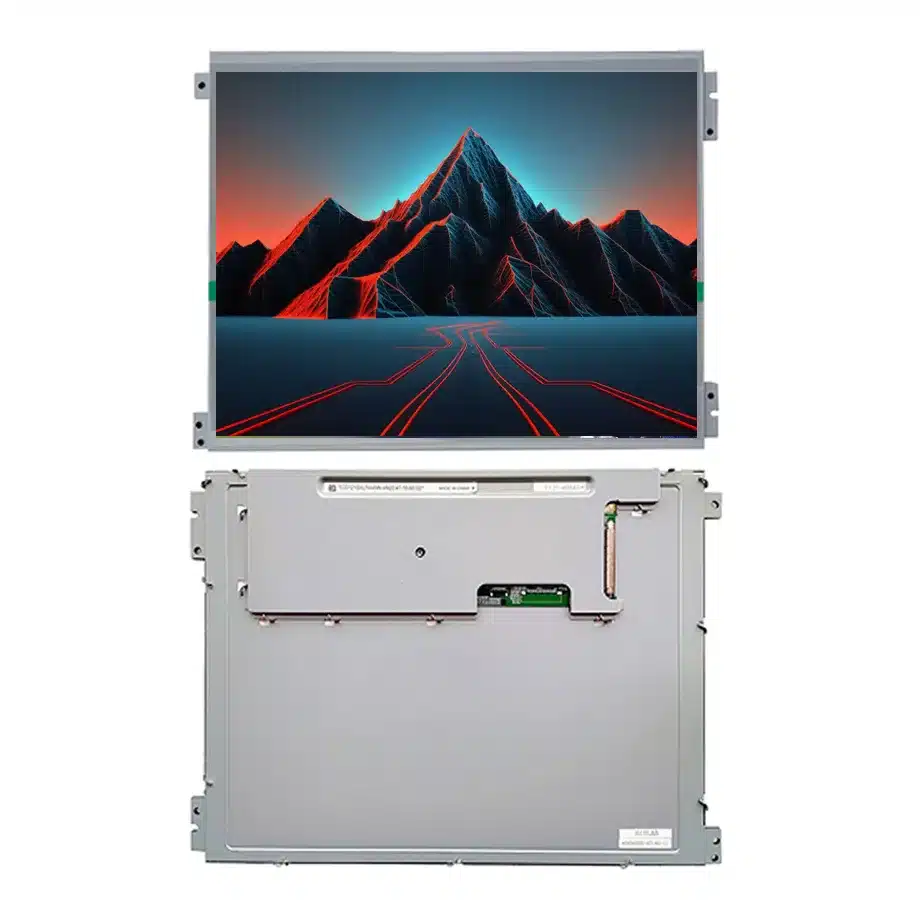
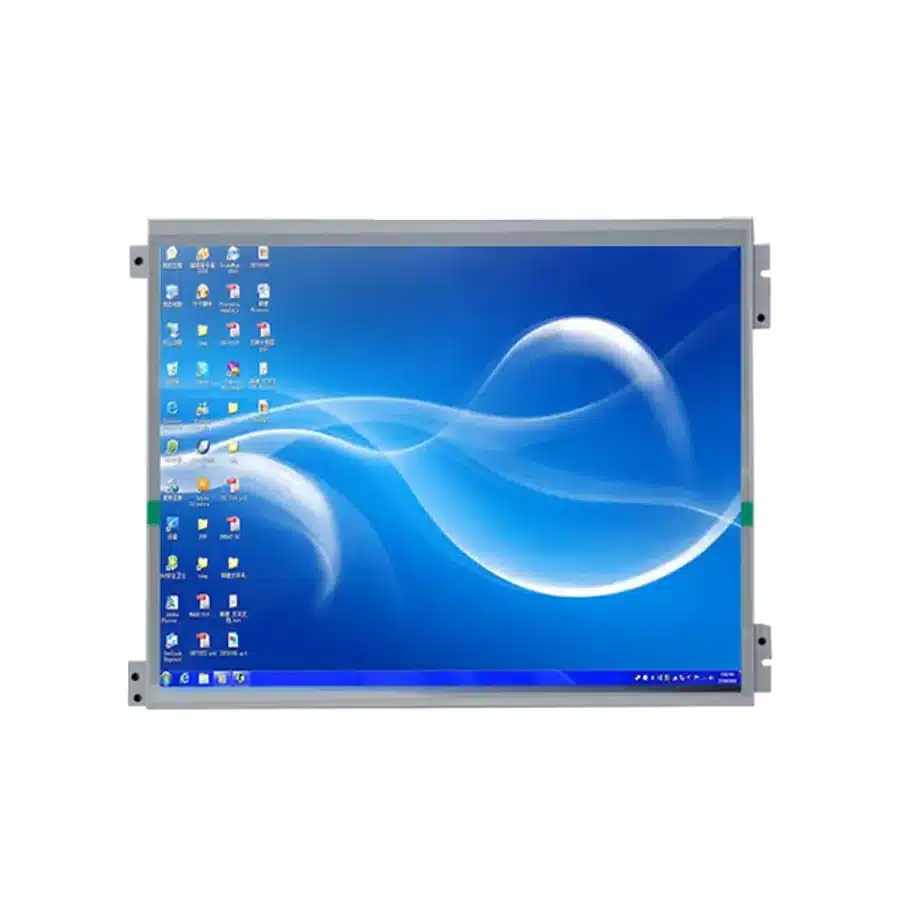
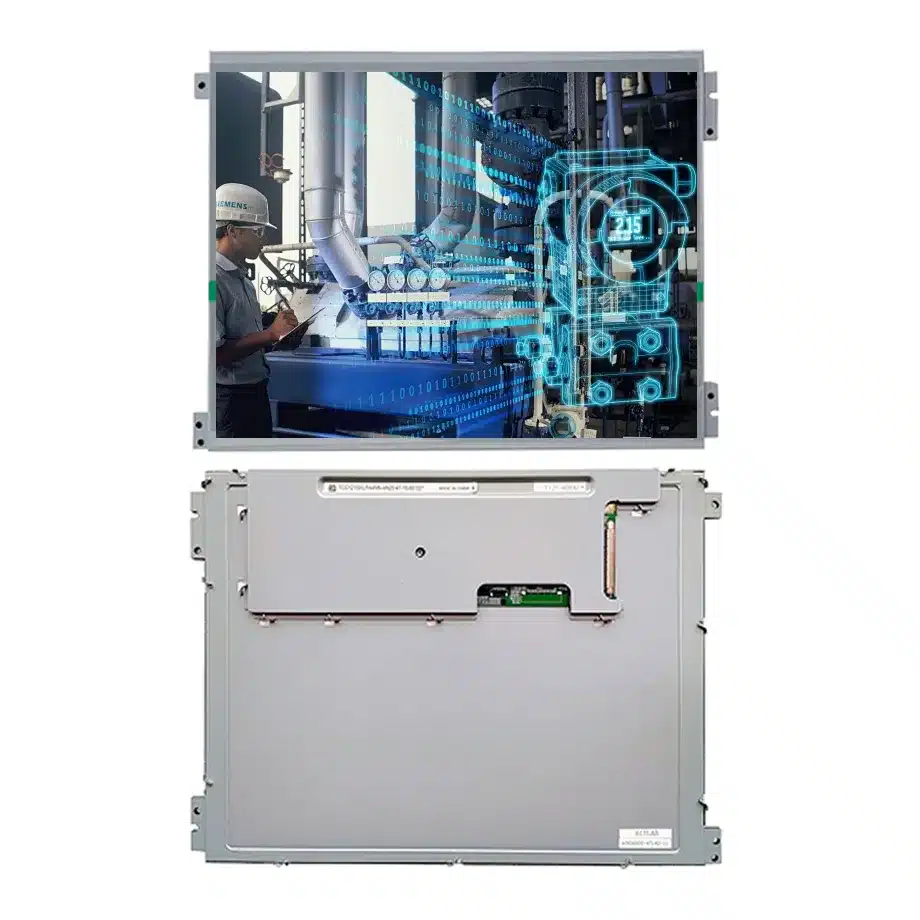
TCG121SVLCECNN-AN20 25ms 6-Bit 720g Module is a 12.1-inch Kyocera a-Si TFT-LCD module for industrial embedded systems. The user-supplied exact-model facts define 800(RGB)×600 SVGA resolution in a 4:3 aspect ratio, a 246 × 184.5 mm active area and a 278.3 × 209 × 9.5 mm module outline. Maximum weight is 720 g. The front surface is antiglare with a 3H hard coating.
The optical baseline is 450 cd/m² typical luminance, 600:1 typical contrast, 80/80/80/80 typical viewing and 262K colors. The module uses ASV normally-black transmissive operation with a 25 ms typical Tr+Td response and 60 Hz refresh. It includes a WLED backlight with integrated LED driver and a 100,000-hour source-life reference. Touch is not included.
The display interface is single-channel 6-bit LVDS through a 30-pin connector with a 3.3 V typical supply. Operating temperature is -20 to 70 °C and storage is -30 to 80 °C. The supplied exact-model reference identifies industrial use and wide-temperature/long-life-backlight characteristics. Kyocera's 12.1-inch industrial TFT portfolio provides manufacturer-level application context without replacing any user-locked value.
Three Core Buyer Value Propositions
1. 12.1-inch SVGA preserves a common industrial HMI footprint
The 4:3 800×600 format remains common in machinery, instrumentation and older embedded-control platforms. Maintaining the same display geometry can reduce software, bezel and controller redesign when a product line must stay compatible with established UI layouts. The exact outline and connector still need to match because 12.1-inch SVGA modules from different manufacturers are not automatically interchangeable.
2. 100K-hour WLED reference supports long-duty-cycle equipment
The supplied backlight-life figure is meaningful for industrial systems expected to remain powered for extended periods. An integrated LED driver simplifies the electrical boundary, while enclosure temperature and brightness duty cycle still influence real aging. Procurement should use the value as a component planning input and request the relevant Kyocera lifetime definition before turning it into maintenance intervals.
3. 720 g maximum mass and robust 9.5 mm package give mechanical teams a clear envelope
The module is heavier than many notebook-class displays, which is normal for an industrial 12.1-inch package. The locked 278.3 × 209 × 9.5 mm outline and 720 g maximum mass help designers size brackets, bezels and support structures. Mounting should avoid concentrated stress that can cause panel distortion or pressure-related image artifacts.
Key Specifications at a Glance
| Parameter | Confirmed value |
|---|---|
| Manufacturer / model | Kyocera TCG121SVLCECNN-AN20 |
| Display size | 12.1 inch |
| Panel type | a-Si TFT-LCD, LCM |
| Resolution | 800(RGB)×600, SVGA, 4:3 |
| Active area | 246 × 184.5 mm |
| Outline | 278.3 × 209 × 9.5 mm |
| Weight | 720 g maximum |
| Brightness | 450 cd/m² typical |
| Contrast | 600:1 typical |
| Viewing | 80/80/80/80 typical |
| Response | 25 ms typical Tr+Td |
| Color | 262K |
| Display mode | ASV, Normally Black, Transmissive |
| Refresh | 60 Hz |
| Interface | LVDS, 1 channel, 6-bit, 30-pin connector |
| Supply | 3.3 V typical |
| Backlight | WLED, 100K hours, integrated LED driver |
| Touch | Without touch screen |
| Operating / storage | -20 to 70 °C / -30 to 80 °C |
How Should the 100K-Hour WLED Figure Be Used?
The long-life WLED reference is valuable for industrial equipment, but it is not the same as a guaranteed machine lifetime. TCG121SVLCECNN-AN20 25ms 6-Bit 720g Module should be tested in the intended enclosure at realistic brightness and ambient temperature. LED aging accelerates with heat, so the system thermal design is part of any credible life expectation.
Request the source-life test condition and end-point definition if the maintenance plan depends on it. The integrated driver means there is no separate external LED-driver board to qualify, but the equipment still supplies power and controls brightness. Validate those control states across the planned operating range.
Duty cycle should be documented
A machine that dims during idle shifts has a different backlight duty cycle from a 24/7 status display at full brightness. Record the actual operating policy when estimating service intervals, and keep the published 100K-hour figure distinct from any field-life projection.
What Must Match on the 6-Bit LVDS Connection?
The module uses one LVDS channel with 6-bit color signaling. Verify the exact 30-pin mapping, differential pair order, clock, grounds, panel enable and 3.3 V power from the approved Kyocera documentation. Another 12.1-inch SVGA module can share the same nominal interface family while using a different connector or pin assignment.
Bring up native 800×600 at 60 Hz using the production controller and cable. Exercise repeated power cycles, controller resets and no-signal recovery. Keep the approved firmware and cable revision with the first article so future sourcing changes can be traced.
How Should 450 cd/m² Be Positioned?
Four hundred fifty cd/m² typical luminance is a practical level for industrial indoor equipment and well-lit control areas. It does not, by itself, establish sunlight readability. The user application is Industrial, so the safe positioning is an industrial display with useful brightness rather than an outdoor-high-brightness product.
If a protective window or touch layer is added, measure the final assembly because extra layers can reduce transmission and add reflection. For direct outdoor use, define an ambient-contrast test and qualify that finished configuration separately.
What Does the 4:3 SVGA Format Offer?
Industrial systems often retain 4:3 layouts because existing control software, mechanical cutouts and operator workflows are built around that geometry. SVGA provides enough resolution for status fields, buttons, schematics and trend plots without demanding a high-bandwidth graphics controller. The 262K color capability is appropriate for typical HMI graphics but should not be positioned as wide gamut.
For a new design, test the intended UI at native resolution and normal viewing distance. Avoid scaling from a widescreen source if that makes text soft or stretches control elements. Native rendering usually provides the clearest result for legacy HMI software.
Where Does TCG121SVLCECNN-AN20 Fit Best?
The user-supplied application is Industrial. TCG121SVLCECNN-AN20 25ms 6-Bit 720g Module fits machine controls, factory terminals, laboratory equipment and long-life embedded systems that need a 12.1-inch SVGA display with extended temperature capability. Its dimensions and mass make it particularly suitable where a robust, established panel envelope matters more than ultra-thin packaging.
The panel is non-touch. If operator touch is required, add a separately qualified touch solution and recheck optical transmission, environmental range and mechanical fit. Taxonomy should reflect TFT-LCD technology plus industrial/wide-temperature use.
How Should the Environmental Range Be Validated?
The component is specified from -20 to 70 °C in operation and -30 to 80 °C in storage. At low temperature, verify startup and liquid-crystal response. At high temperature, check luminance, image stability and controller behavior after thermal soak. The complete system should use the most restrictive limit among the display, power supply, controller and other materials.
Storage limits also matter during transport and warehousing. Condensation and rapid temperature transitions can create risks not represented by the numeric range alone. Follow the equipment's environmental procedure before applying power after extreme storage conditions.
What Makes the 12.1-Inch Mechanical Envelope Important?
The 278.3 × 209 mm frame is substantially larger than the 10.4-inch Kyocera modules that may use the same SVGA pixel count. That difference matters in retrofit work because software resolution can stay unchanged while bezel opening, mounting support, cable reach and enclosure depth all change. Use the locked 9.5 mm depth and 720 g maximum mass when checking brackets, door-mounted HMIs or instrument housings.
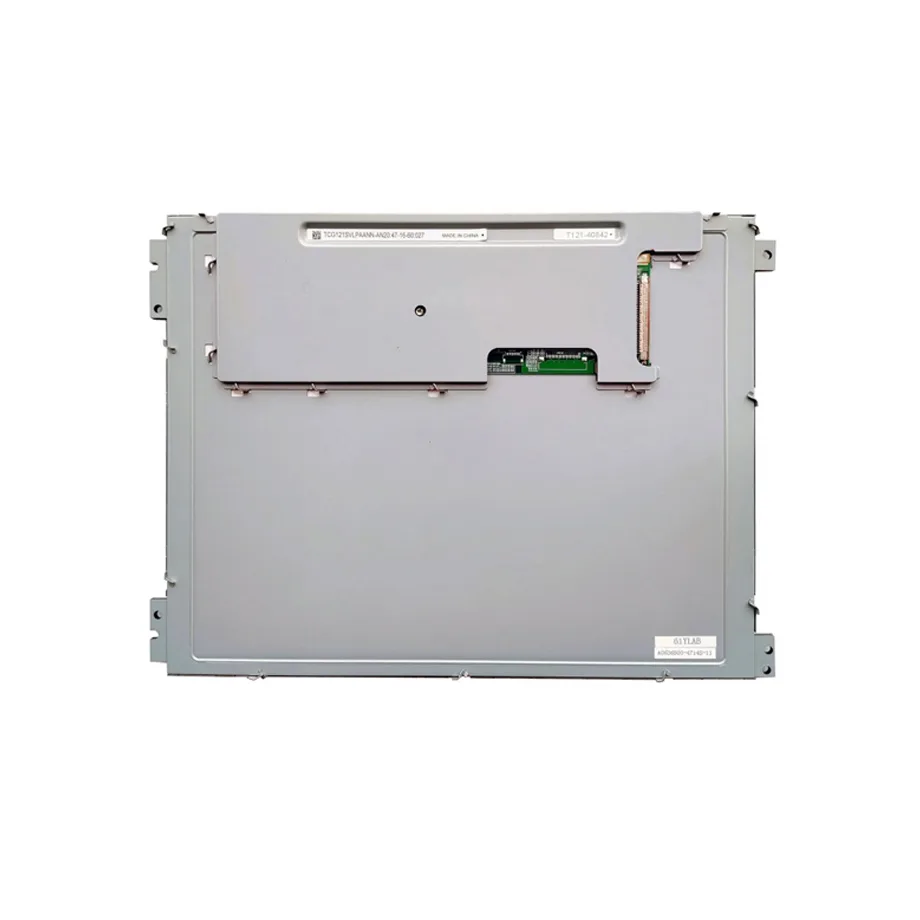
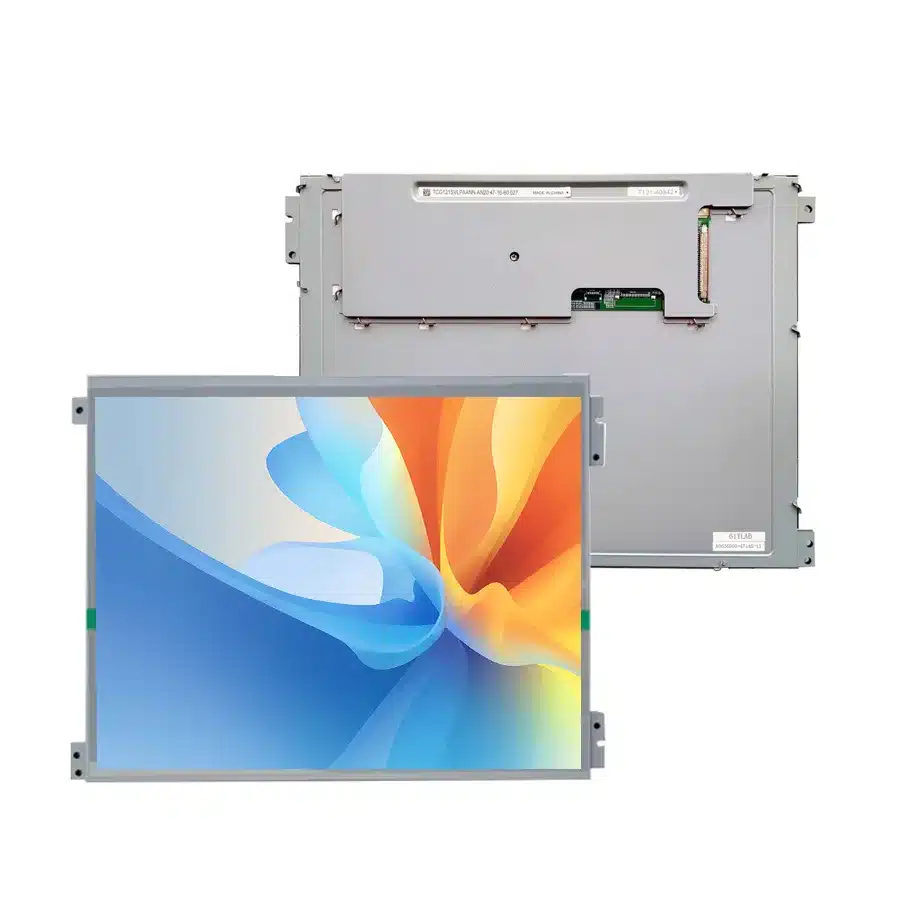
For replacement projects, compare the rear frame, connector location and mounting points against the removed panel before ordering quantity. A controller can produce a perfect SVGA image while the display remains mechanically unusable. Keeping a dimensioned first-article photograph beside the drawing gives service teams a quick reference for future supplier lots.
How Should First-Article Approval Be Structured?
Record the full TCG121SVLCECNN-AN20 label, production LVDS cable and controller. Verify 3.3 V panel power and native SVGA at 60 Hz, then check power cycling, brightness control and no-signal recovery. Keep the approved firmware version in the BOM or qualification packet.
Install the panel in the final enclosure and confirm the 278.3 × 209 × 9.5 mm outline, maximum mass allowance and connector access. Measure brightness and visible uniformity after warm-up. Add representative hot and cold tests if the equipment relies on the extended operating range.
How Should Incoming Lots Be Controlled?
Incoming inspection should verify the exact Kyocera model, 30-pin connector, antiglare surface and module dimensions. Sample new lots with the approved controller for native SVGA operation and backlight performance. A proposed 12.1-inch replacement should be treated as a separate candidate until pinout, mechanics, optical class and temperature range are qualified.
Public production and stock information is a time-sensitive sourcing signal, not a guarantee. Long-running industrial products should confirm current revision, production status and change-notification expectations through Kyocera or an authorized distributor.
For long-running equipment, keep a rear-view photograph, connector keying record and controller configuration with the approved part master. These simple artifacts make later supplier-lot checks faster and reduce the risk that a mechanically similar 12.1-inch SVGA module is accepted before its pinout and environmental characteristics have been reviewed.
Use that reference package whenever a new distributor, lot or replacement candidate enters the sourcing process safely.
Procurement Checklist
- Confirm exact TCG121SVLCECNN-AN20 identity and current revision.
- Match the 278.3 × 209 × 9.5 mm outline and 720 g maximum mass.
- Verify one-channel 6-bit LVDS and the exact 30-pin mapping.
- Use 450 cd/m², 600:1 contrast and 25 ms response as the locked baseline.
- Validate -20 to 70 °C operation in the complete equipment.
- Confirm the 100K-hour WLED test basis before using it for maintenance planning.
- Qualify any added touch layer as a separate optical/mechanical object.
- Confirm lifecycle and revision-control information before volume sourcing.
TCG121SVLCECNN-AN20 25ms 6-Bit 720g Module is a long-life industrial SVGA module whose value comes from a proven 4:3 form factor, extended temperature range and straightforward 6-bit LVDS interface. Production approval should keep the exact mechanical and electrical configuration tied to the Kyocera model identity.
Recommended: Same Size
(12.1")
Applications & Value of LCD Panel

- Fast sourcing with in-stock panels & cross-reference alternatives
- Stable supply chain with long-term availability
- Engineering-level support from panel to integration
- Custom solutions: cable, touch & optical bonding
- Strict quality control with IQC / OQC / aging test
- Full traceability system for quality assurance
- Complete technical documentation & drawings
- Compliance support: RoHS & certification files
