~
~
~
~
~
~
M270HVR03.3 CELL High-Contrast Gaming Display AUO
Model P/N
Size
Resolution
Brightness
Viewing Angle
Connector Type
Operating Temp
Overall(mm)
auo
M270HVR03.3 CELL
Brand
Panel Size (inch)
Model P/N
Resolution
Viewing Angle
Contrast Ratio
Response Time
Overall (mm)
Active Area (mm)
Refresh Rate
Display Colors
Panel Type
Connector Type
Surface Treatment
Operating Temp
Touchscreen Type
Storage Temp
Work Mode
Pixel Format
Input Voltage (V)
Weight (g)
Designed For
Product Details
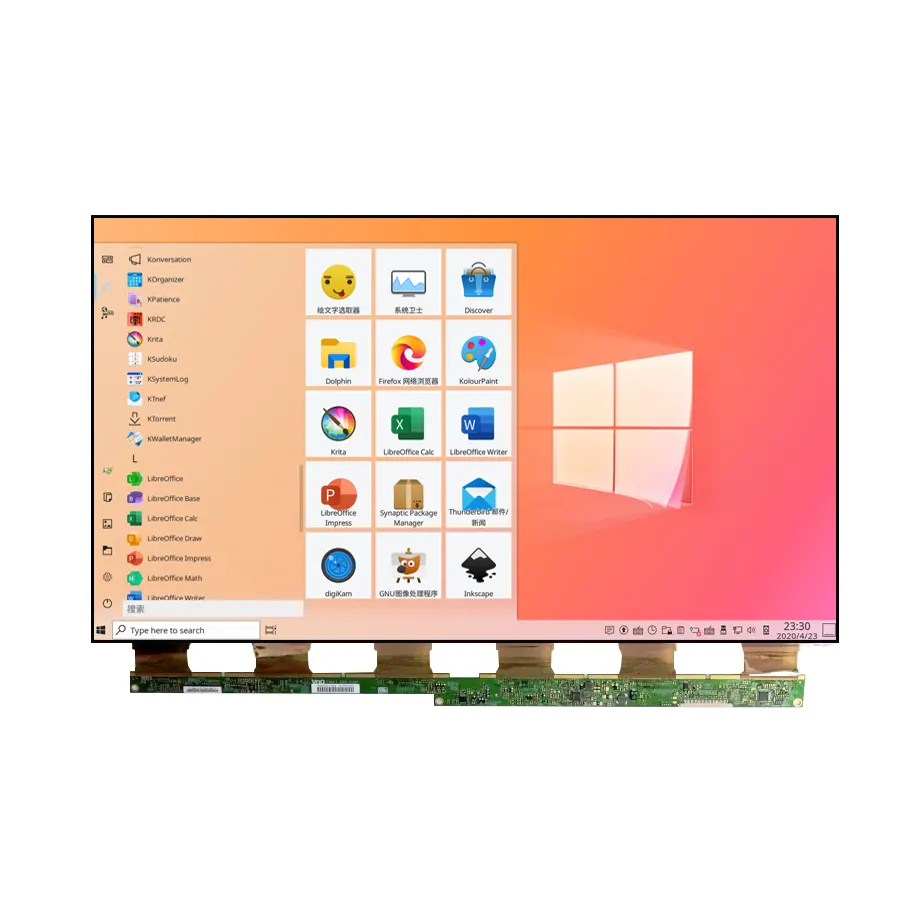
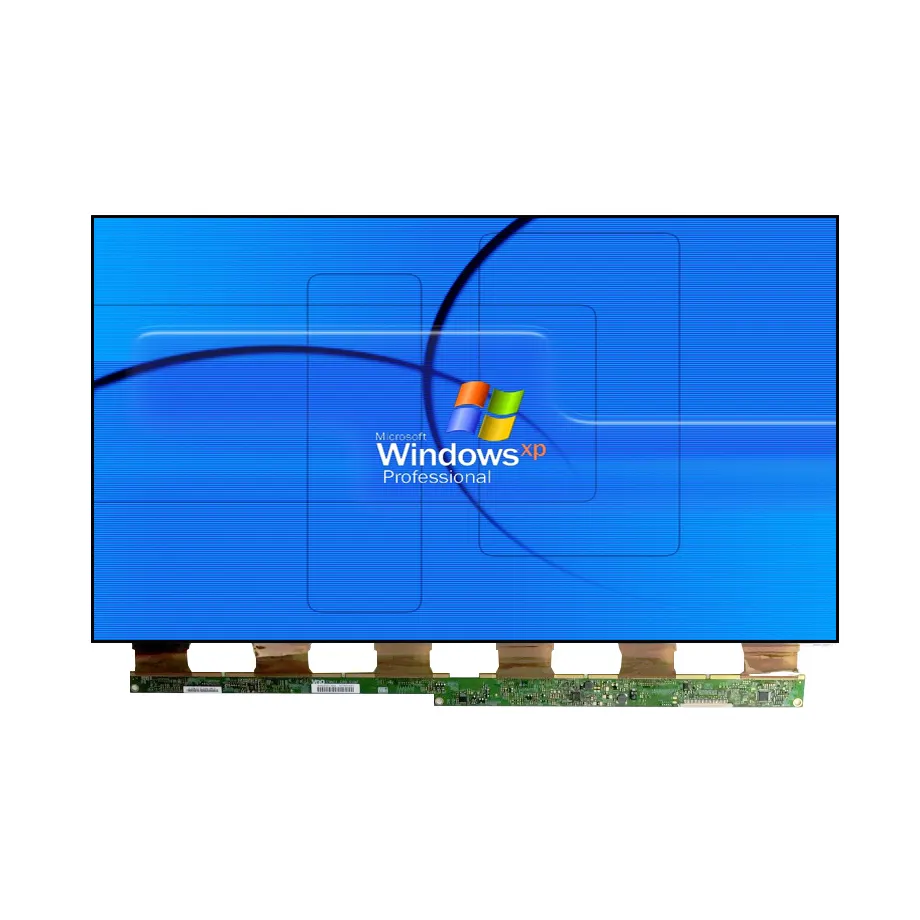
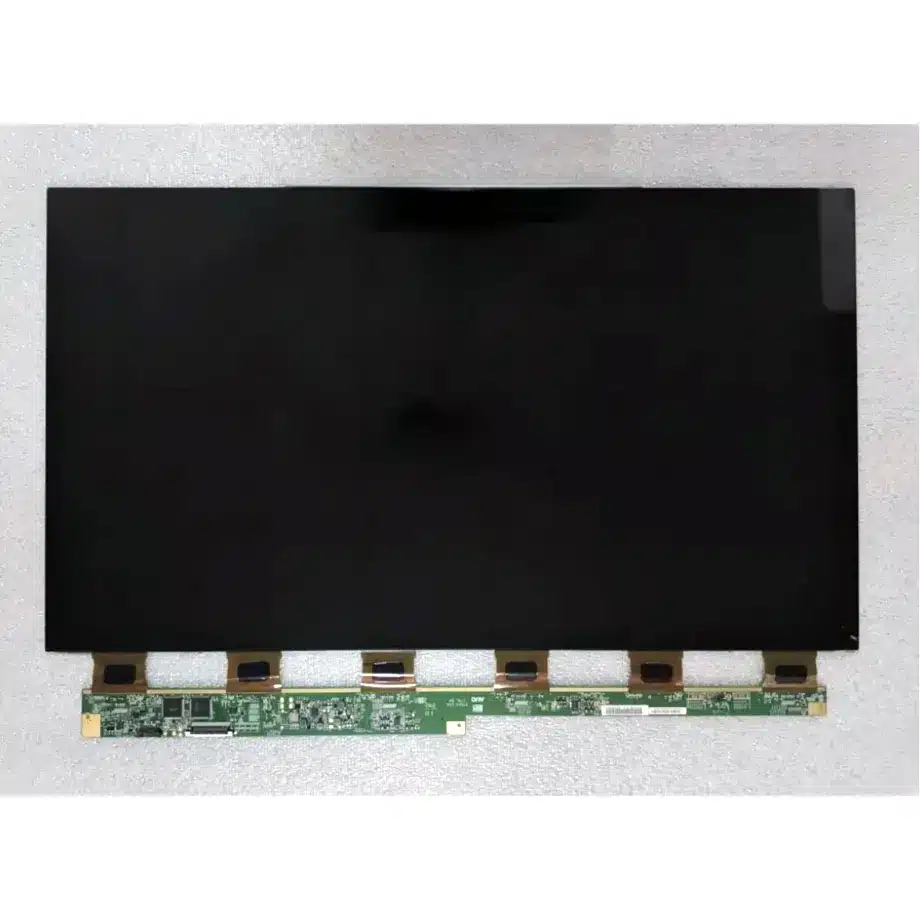
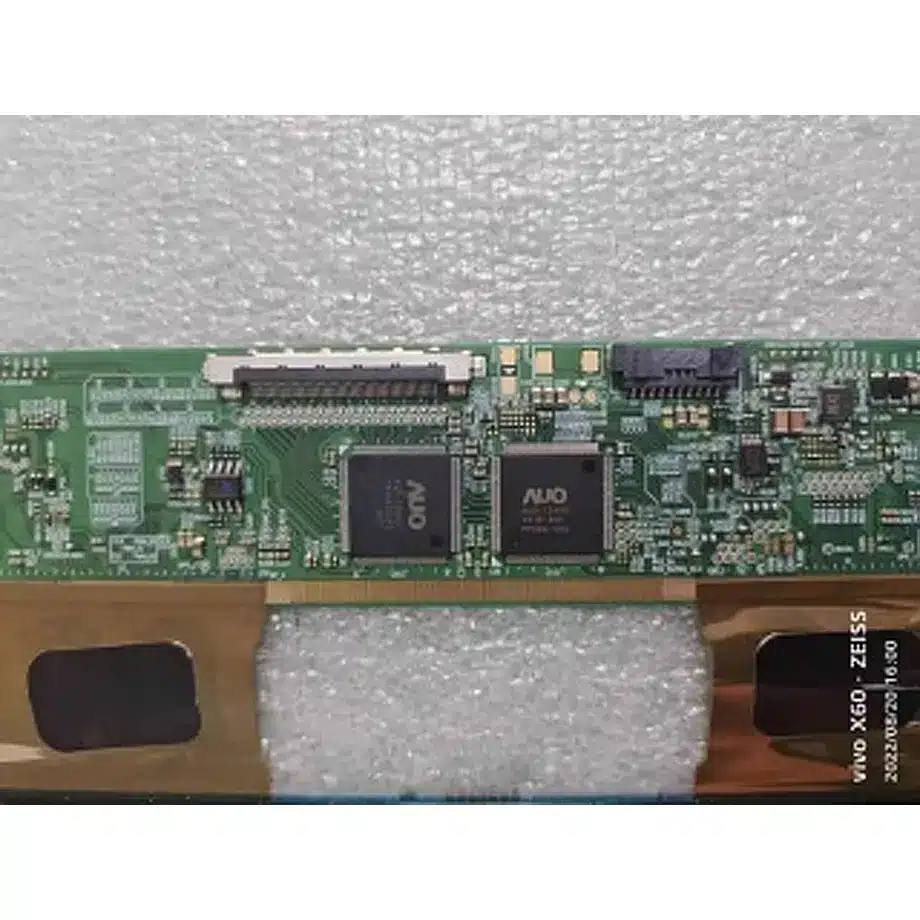
M270HVR03.3 CELL High-Contrast Gaming Display is a 27.0-inch AUO a-Si TFT-LCD CELL for desktop-monitor and gaming projects, combining 1920×1080 FHD resolution, a 180 Hz refresh rate and a VA normally-black transmissive architecture. The active area is 597.888 × 336.312 mm within a 608.888 × 348.337 × 1.17 mm outline, and the source data lists a typical mass of 600 g. Because this is a CELL/FOB product with no integrated backlight, the stored 0 cd/m² luminance value describes the absence of a finished light source rather than a black-screen brightness specification. System designers must provide the optical stack, backlight, mechanical support and thermal path needed for a complete monitor.
Product form first: a high-refresh monitor cell, not a finished LCD module
The most important integration distinction is the product form. A CELL contains the active TFT glass and associated source-driver structure, but it does not provide the WLED backlight assembly found in an LCM. The user-supplied exact-model record explicitly describes this part as a CELL (FOB) without backlight. That means the monitor maker controls the backlight architecture, diffuser stack, light guide, reflector, frame and related power electronics. Brightness, uniformity and final optical efficiency therefore cannot be inferred from the panel's 0 cd/m² field.
The glass stack is listed at 0.40 + 0.40 mm and the cell itself is only 1.17 mm deep. Those values make the part attractive for thin monitor constructions, but they also increase the importance of even support and controlled bezel pressure. The approved mechanical design should protect the glass from torsion, localized clamp loads and shipping shock. A 27-inch diagonal alone is not sufficient for interchangeability; active area, outline, driver placement, connector position and optical stack all need exact-model comparison.
Three Core Buyer Value Propositions
1. Native 180 Hz capability supports performance-oriented monitor platforms
The documented 180 Hz frame rate is the clearest performance trigger for this model. It gives controller and timing engineers a concrete native target for gaming-oriented monitor designs rather than a generic “high refresh” description. Qualification should verify the full path from scaler output to the cell at the intended native timing, including frame transitions, link stability, source changes and sustained high-motion content. The panel refresh capability does not by itself guarantee low end-to-end input latency, because scaler processing, source timing and firmware can add delay elsewhere in the finished display.
2. 3000:1 VA contrast gives a strong dark-scene component baseline
The exact-model specification lists a 3000:1 typical transmissive contrast ratio, 89/89/89/89 degree typical viewing angles and VA normally-black operation. That combination is relevant for monitor programs where dark-scene depth is a design priority. The final measured contrast still depends on the added backlight, front polarizer condition, optical films, leakage control and monitor settings. Buyers should therefore use the cell value as an engineering baseline, then measure the assembled optical system under the intended brightness and viewing conditions.
3. Bare-cell sourcing gives the monitor maker direct control of the backlight stack
For manufacturers that already own a proven 27-inch backlight platform, a cell can provide more freedom than a complete LCM. The optical designer can select LED spectrum, film stack, light-guide geometry and thermal management around the target monitor. That flexibility also creates responsibility: there is no integrated backlight performance to inherit from the panel supplier. Optical uniformity, LED current, dimming behavior, color balance and long-term thermal behavior must be validated as part of the finished monitor design.
Key Specifications at a Glance
| Specification | M270HVR03.3 CELL value |
|---|---|
| Display size | 27.0 inch |
| Product form | a-Si TFT-LCD, CELL (FOB), no backlight |
| Resolution | 1920×1080 FHD, 16:9 |
| Active area | 597.888 × 336.312 mm |
| Outline | 608.888 × 348.337 × 1.17 mm |
| Weight | 600 g typical |
| Contrast | 3000:1 typical |
| Viewing angle | 89/89/89/89 typical at CR≥10 |
| Response | 10 ms typical G-to-G |
| Colors | 16.7M, 69% NTSC |
| Refresh rate | 180 Hz |
| Signal record | LVDS (4 ch, 8-bit), HBR2 notation, 61-pin 0.5 mm connector |
| Supply | 12.0 V typical |
| Operating / storage | 0 to 50°C / -20 to 60°C |
Signal-path qualification: preserve the exact source wording
The current-run source lists the native signal as “LVDS (4 ch, 8-bit)” through a 61-pin 0.5 mm connector and also includes “HBR2 (5.4G/lane)” notation. Those terms should not be silently reinterpreted as proof of a different native interface. Engineering should obtain the current AUO electrical specification for the exact revision and confirm pin assignment, lane definition, clocking, voltage levels and sequencing before controller release. The stored connector field preserves the supplied wording rather than converting one interface family into another by assumption.
M270HVR03.3 CELL High-Contrast Gaming Display should be exercised with the intended controller across cold start, repeated power cycling, mode changes and long-duration 180 Hz content. Monitor the image for intermittent corruption, link loss, scan instability and color mapping errors. The approved timing file, cable/FPC design and controller firmware should be version-controlled together, because a future board change can alter signal integrity even when the cell part number is unchanged.
Backlight engineering determines real brightness and uniformity
A bare cell cannot deliver a finished luminance target by itself. The monitor manufacturer must define LED count, spectrum, current, light-guide extraction, diffuser stack and reflective cavity. The choice affects center luminance, edge falloff, color temperature, power and thermal loading. If the product requires a specific brightness class, measure the assembled panel at the intended drive setting after thermal stabilization. Do not translate the stored 0 cd/m² into a consumer-facing brightness claim, and do not infer sunlight readability from cell-only optical data.
Uniformity deserves equal attention. Thin large-area cells can reveal mura or edge effects when the backlight frame applies uneven pressure or when optical films are not properly supported. Prototype evaluation should include full-field gray patterns, dark scenes, white fields and representative gaming content. Mechanical and optical teams should review failures together instead of treating uniformity as a purely electrical issue.
Color and surface behavior for a matte 27-inch monitor
The source specifies 16.7 million colors and 69% NTSC, with an antiglare surface at 25% haze. These facts point to a mainstream monitor color target rather than a wide-gamut professional imaging panel. The added backlight spectrum still affects the final color gamut and white point, so an assembled monitor should be measured after the LED and optical-film choices are frozen. No unsupported sRGB percentage or calibration tolerance should be attached to the cell merely because the final monitor is intended for gaming.
The matte surface can reduce mirror-like reflections, but perceived glare depends on ambient lighting, front structure and viewing geometry. If a protective cover is added, its reflection and air-gap behavior may change the visual result. Any front glass, touch layer or additional coating should therefore be treated as a new optical stack that requires separate validation.
Mechanical integration and incoming inspection
The 608.888 × 348.337 mm outline, 597.888 × 336.312 mm active area and 1.17 mm depth are the primary packaging references. Incoming inspection should confirm the exact label, glass outline, connector side and visible driver layout against the approved sample. Cell edges are particularly vulnerable before they are captured in a proper frame, so handling fixtures, ESD controls and packaging should be defined before volume receiving begins.
During enclosure development, confirm bezel overlap, glass support, connector clearance and backlight-frame tolerance. The typical 600 g mass describes the cell, not the final display assembly. The monitor's complete mechanical design must also account for the backlight, metal/plastic frame, controller, thermal elements and rear cover.
Application fit: desktop monitors and gaming displays
Desktop Monitor and Gaming are the documented applications. That evidence supports high-refresh desktop display development where a 27-inch FHD VA cell and external backlight architecture match the product concept. It does not prove fit to a named retail monitor, a particular controller board or any universal 27-inch chassis. Exact electrical and mechanical matching remains mandatory for replacement and new-design work.
For gaming products, test frame delivery, dark transitions, overdrive strategy and visible smearing on the actual controller. The 10 ms typical G-to-G response is a component value, not a guarantee of the finished monitor's motion clarity. Firmware and drive settings can materially change artifacts, so qualification should include both measurement and representative game content.
Procurement controls for a bare high-refresh cell
Before volume release, procurement should lock the exact M270HVR03.3 CELL identity, approved revision, incoming label format and electrical/mechanical documents. Supplier substitutions should not be accepted solely because another cell is 27-inch FHD or 180 Hz. Driver placement, connector definition, transmissivity, glass thickness and optical behavior can differ enough to require a fresh engineering review.
M270HVR03.3 CELL High-Contrast Gaming Display should move into the approved BOM only after the intended controller, backlight stack and mechanical frame have passed joint validation. Keep sample photos, timing data and optical acceptance limits with the sourcing record. Current stock, pricing, MOQ, lead time and lifecycle are separate commercial questions and should be confirmed at the time of purchase rather than inferred from technical parameters.
Engineering summary
M270HVR03.3 CELL High-Contrast Gaming Display is best treated as a thin 27-inch FHD VA CELL with 180 Hz capability, 3000:1 typical contrast, 16.7M color support and a 61-pin native signal connection documented in the supplied source. Its greatest integration opportunity is also its main boundary: the monitor maker owns the backlight and optical stack. Stable high-refresh timing, backlight uniformity, mechanics and controller compatibility must therefore be proven as a complete system before production release.
Recommended: Same Size
(27")
Applications & Value of LCD Panel

- Fast sourcing with in-stock panels & cross-reference alternatives
- Stable supply chain with long-term availability
- Engineering-level support from panel to integration
- Custom solutions: cable, touch & optical bonding
- Strict quality control with IQC / OQC / aging test
- Full traceability system for quality assurance
- Complete technical documentation & drawings
- Compliance support: RoHS & certification files