~
~
~
~
~
~
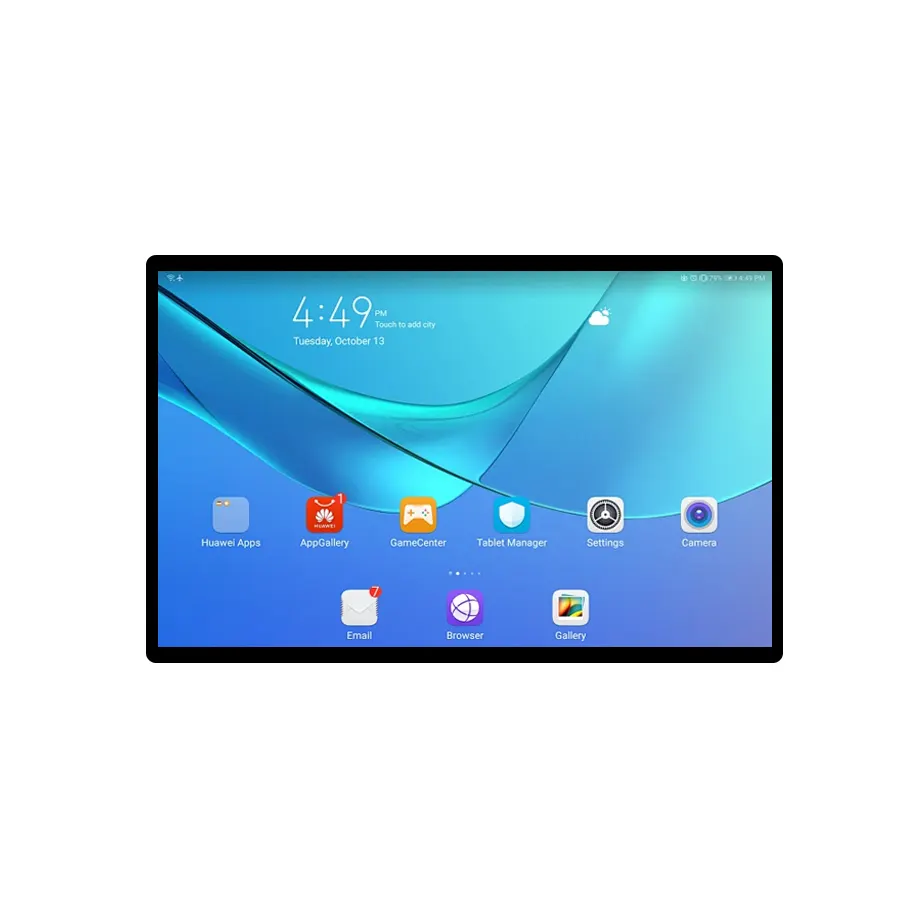
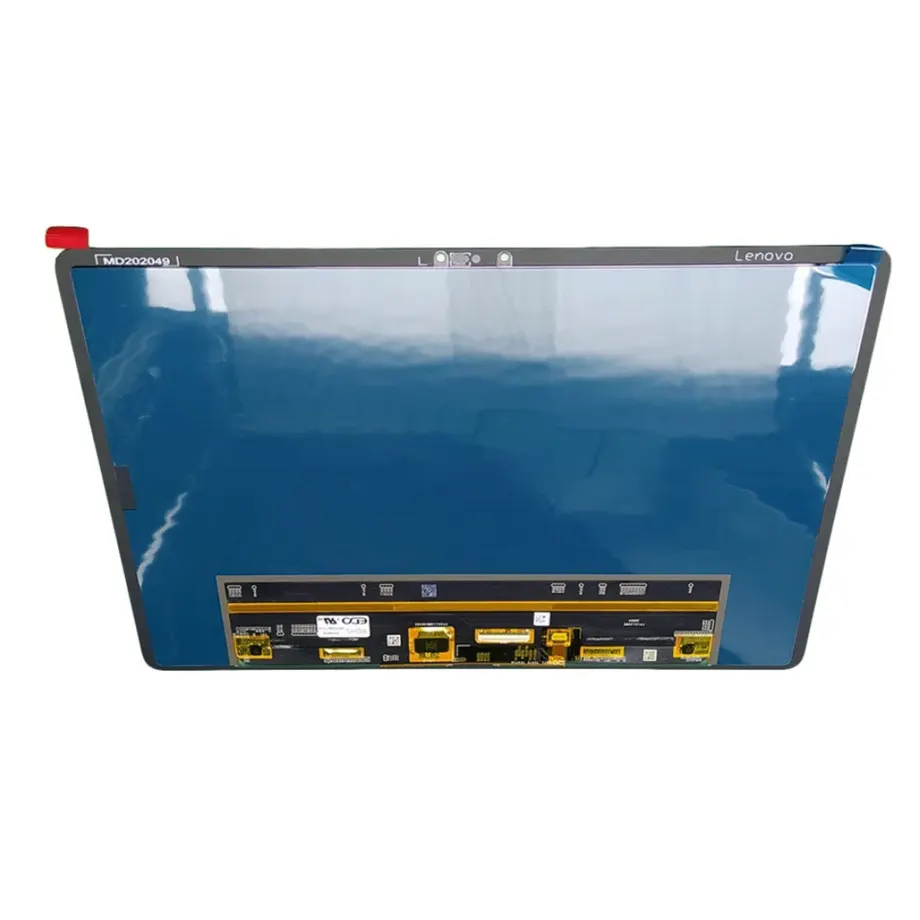
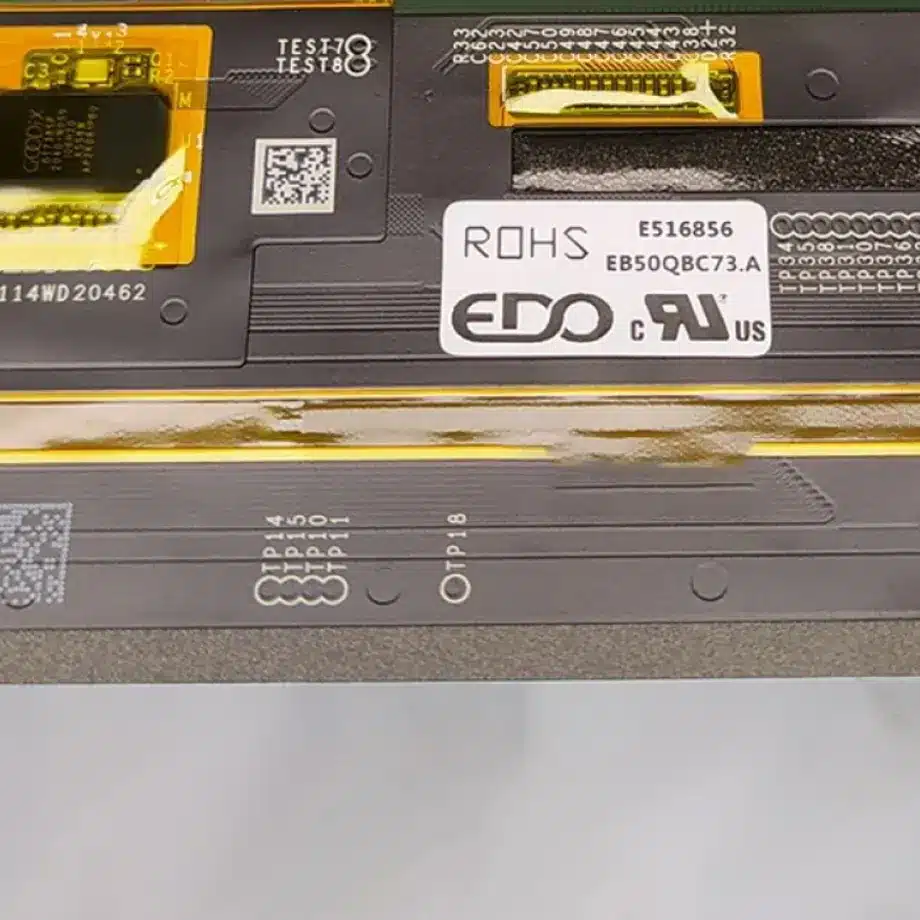
EB50QBC73.A Dual-MIPI WQXGA Touch Module OLED Tablet EDO
Model P/N
Size
Resolution
Brightness
Viewing Angle
Connector Type
Operating Temp
Overall(mm)
edo
EB50QBC73.A
Brand
Panel Size (inch)
Model P/N
Resolution
Brightness (nits)
Viewing Angle
Contrast Ratio
Response Time
Overall (mm)
Active Area (mm)
Refresh Rate
Display Colors
Panel Type
Connector Type
Operating Temp
Touchscreen Type
Storage Temp
Work Mode
Pixel Format
Input Voltage (V)
Touch Interface
Designed For
Product Details
Product Overview
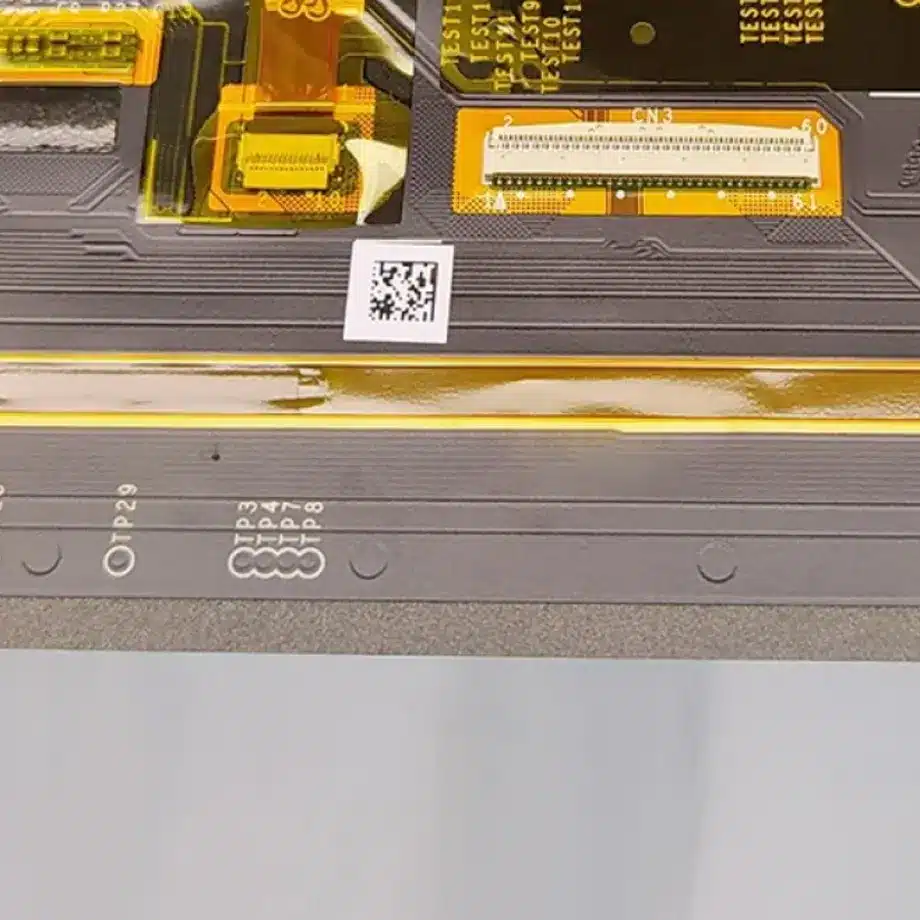
EB50QBC73.A Dual-MIPI WQXGA Touch Module is an 11.5-inch EDO AM-OLED full module for high-resolution tablet integration. The native image format is 2560(RGB)×1600 WQXGA at 16:10, with a 247.68 × 154.8 mm active area inside a 261.88 × 169 mm outline. The exact-model record specifies 350 cd/m² typical luminance, at least 60,000:1 contrast, 80/80/80/80 typical viewing-angle values at CR≥10, a maximum 2 ms Tr+Td response value and 16.7M colors with 100% DCI-P3 wording. Maximum module mass is 146 g. No reliable exact-model thickness or surface-treatment value is available in the approved evidence, so those fields remain blank rather than being borrowed from the closely related .C revision.
The module is self-emissive and uses On-Cell Touch with an I²C touch-control path. Display signaling is documented as MIPI with two channels and four data lanes on a 61-pin connector. A built-in RM69380 driver IC is identified, and the module requires five typical supply rails: 1.8 V VDDIO, 2.8 V VCI, 4.6 V ELVDD, 6.4 V AVDD and -3.5 V ELVSS. The exact-model power reference is 5.45 W typical, refresh rate is 60 Hz, and the operating/storage limits are -20 to 70 °C / -40 to 80 °C. The record also carries a 10K-hour self-emitting life reference; it should remain a component specification under its stated test basis, not a finished-tablet service-life guarantee.
Three Core Buyer Value Propositions
1. WQXGA 16:10 resolution gives a precise high-density tablet integration target
The 2560×1600 raster defines a premium 16:10 canvas that supports detailed user interfaces, documents, media and pen- or touch-driven applications when the host platform can render at native timing. For procurement, the resolution is only one part of the identity: the 247.68 × 154.8 mm active area, 261.88 × 169 mm outer envelope and exact 61-pin connection need to remain tied to the full suffix. A different 11.5-inch WQXGA OLED may use another driver, connector position, touch controller or supply sequence and should be treated as a separate engineering change.
2. On-cell I²C touch integrates interaction without turning touch into a generic plug-and-play feature
The touch function is integrated with the display module, reducing the need to add a separate external touch-panel assembly. That can simplify stack height and optical interfaces in a tablet, but firmware work remains. The host must validate I²C voltage, address, reset and interrupt behavior, coordinate mapping, orientation, sleep/wake and recovery after display power transitions. Cover glass, adhesive, grounding and electromagnetic noise can also influence real touch performance. The exact touch architecture therefore reduces physical complexity while increasing the importance of model-specific electrical and firmware qualification.
3. Dual MIPI links, RM69380 and five power rails make the electrical boundary explicit
The combination of two MIPI channels, four data lanes, the built-in RM69380 and five separate supply rails gives the board team a concrete architecture to design around. It also prevents a common sourcing mistake: treating “MIPI OLED” as sufficient compatibility evidence. Pin mapping, lane configuration, command initialization, power sequencing and touch coordination all remain exact-model requirements. These confirmed values let engineering identify regulators, connector constraints and bring-up tasks before prototype release instead of discovering them after mechanical tooling or motherboard routing is fixed.
Key Specifications at a Glance
| Parameter | Confirmed value |
|---|---|
| Manufacturer / model | EDO EB50QBC73.A |
| Display size | 11.5 inch |
| Panel type | AM-OLED, OLED full module |
| Native resolution | 2560(RGB)×1600 WQXGA, 16:10 |
| Active area | 247.68 × 154.8 mm |
| Outline | 261.88 × 169 mm; thickness unresolved |
| Weight | 146 g maximum |
| Brightness | 350 cd/m² typical |
| Contrast ratio | 60,000:1 minimum |
| Viewing-angle values | 80/80/80/80 typical at CR≥10 |
| Response time | 2 ms maximum Tr+Td |
| Colors | 16.7M, 100% DCI-P3 |
| Refresh rate | 60 Hz |
| Display interface | MIPI, 2 channels, 4 data lanes, 61-pin connector |
| Touch | On-Cell Touch, I²C |
| Driver IC | Built-in RM69380 |
| Panel input rails | 1.8 / 2.8 / 4.6 / 6.4 / -3.5 V typical |
| Power | 5.45 W typical |
| Operating / storage | -20 to 70 °C / -40 to 80 °C |
How should the dual-MIPI display path be brought up?
The MIPI Alliance describes Display Serial Interface as the high-bandwidth link between host processors and displays, with scalable lane configurations and low-power operating modes. That standards context is useful for host architecture, but the panel-specific command tables, timing, lane assignment and power sequence remain controlled by the EB50QBC73.A implementation. Engineers should distinguish standard-interface compatibility from exact module compatibility.
For EB50QBC73.A Dual-MIPI WQXGA Touch Module, bring-up should verify native 2560×1600 timing at 60 Hz, both MIPI channels, reset behavior, initialization, sleep/wake, display-on/off transitions and repeated power cycles. The connector has 61 contacts, so flex orientation and mechanical routing must be checked against the actual drawing. Do not assume a processor that supports a four-lane MIPI display can operate this module without the correct channel topology, command sequence and driver configuration.
On-cell touch needs coordinated display and input firmware
EDO positions medium-sized AMOLED products for tablet and notebook use, and its tablet/notebook AMOLED portfolio shows on-cell touch and MIPI as established architectural elements in this application space. That manufacturer context supports the application direction but does not add unlisted specifications to this exact model. EB50QBC73.A itself should be qualified from its controlled touch and display documents.
Touch validation should include edge accuracy, coordinate orientation, wake-up, reset recovery and operation while the display changes brightness or power state. If a finished product requires stylus behavior, glove use, moisture tolerance or a particular touch sampling rate, those features need separate evidence. The product record establishes On-Cell Touch and I²C; it does not establish every higher-level interaction mode a tablet vendor may want to market.
Five-rail OLED power requires sequencing rather than nominal-voltage matching
The supply set combines logic/control rails with positive and negative OLED-related rails. Each rail serves a different internal function, so matching the five nominal voltage numbers is not enough. Power-on order, ramp rate, power-off order, discharge behavior and reset timing should follow the exact electrical specification. A PMIC design copied from another 11.5-inch OLED could produce image artifacts or unreliable startup even when steady-state measurements look correct.
Typical module power is documented at 5.45 W, but that number should not be treated as a complete tablet power budget. Processor, touch host, system memory, conversion losses and application workload add their own consumption, while OLED load can vary with image content and brightness. Battery-life engineering should therefore use production-intent measurements across dark UI, mixed content, video and bright full-screen patterns.
How should the 100% DCI-P3 wording be used?
The exact-model record supports 100% DCI-P3 wording and 16.7M colors. Those are useful display-capability facts, but gamut coverage is not the same as color accuracy. A creator-oriented or media tablet should separately define white point, gamma, color error, uniformity and profile behavior. Host color management and display drive settings can change the measured result even when the physical panel is unchanged.
The 60,000:1 minimum contrast and self-emissive architecture also should not be converted into an HDR certification. Formal HDR tiers, peak-brightness behavior, tone mapping and certification status require their own evidence. The safest buyer interpretation is that the module offers a wide-gamut, high-contrast AMOLED base that must be integrated and calibrated to the target product requirements.
Mechanical fit and replacement control
The active area and outer width/height are confirmed, but exact module thickness is not. That missing dimension is a real procurement issue, not a reason to borrow the thickness from EB50QBC73.C or another related module. Before lid, chassis or cover tooling is frozen, request the controlled mechanical drawing for EB50QBC73.A and verify thickness, connector position, flex keep-outs and component height.
The 146 g maximum mass can be used in enclosure and drop-fixture planning, while the 261.88 × 169 mm outline sets the primary two-dimensional envelope. For replacement approval, match the full `.A` suffix, native timing, connector, touch implementation, driver and supply rails. Similar size, WQXGA resolution or even membership in the same EB50QBC73 family does not prove drop-in interchangeability.
Application fit for touch-enabled tablets and portable terminals
EB50QBC73.A Dual-MIPI WQXGA Touch Module is documented for Pad & Tablet use, and the exact-model combination of WQXGA 16:10, on-cell touch, 350-nit luminance and MIPI signaling is consistent with high-resolution tablet architectures. Exact-model market references also associate the module with Lenovo, but that should not be turned into a claim that it fits any named Lenovo device without platform-level mechanical, cable and firmware evidence.
Potential projects include premium tablets, detachable computing terminals and touch-centric portable products when the host supports the electrical, mechanical and thermal requirements. Those are application scenarios, not guaranteed compatibility. The finished device must qualify its cover stack, touch firmware, display commands, power sequencing and thermal performance.
Procurement and validation checklist
- Lock the complete EDO EB50QBC73.A suffix and reject unapproved `.C` or other family substitutions.
- Validate 2560×1600 at 60 Hz across the exact dual-MIPI implementation and 61-pin connector.
- Qualify On-Cell I²C touch, including reset, coordinate mapping and sleep/wake recovery.
- Design and sequence the five documented voltage rails according to the controlled specification.
- Verify 350 cd/m² luminance, 100% DCI-P3 wording and contrast on production-intent samples.
- Use 146 g maximum for mass planning and obtain the exact mechanical thickness before tooling.
- Confirm RM69380 initialization and any module-specific command requirements.
- Keep the 10K-hour self-emitting life reference tied to its stated test conditions.
- Request current revision and change-status information before volume sourcing without assuming price, MOQ, lead time or future availability.
For qualification of EB50QBC73.A Dual-MIPI WQXGA Touch Module, provide the target processor, dual-MIPI architecture, 61-pin flex drawing, five-rail PMIC sequence, touch requirements, cover-stack design, thermal limits, color acceptance criteria and quantity. Exact-model electrical and mechanical control should govern release so that a visually similar 11.5-inch OLED does not enter the design without a complete compatibility review.
Recommended: Same Size
(11.5")
Applications & Value of LCD Panel

- Fast sourcing with in-stock panels & cross-reference alternatives
- Stable supply chain with long-term availability
- Engineering-level support from panel to integration
- Custom solutions: cable, touch & optical bonding
- Strict quality control with IQC / OQC / aging test
- Full traceability system for quality assurance
- Complete technical documentation & drawings
- Compliance support: RoHS & certification files