Freya Yang
+86 18318948097
+852 62667476
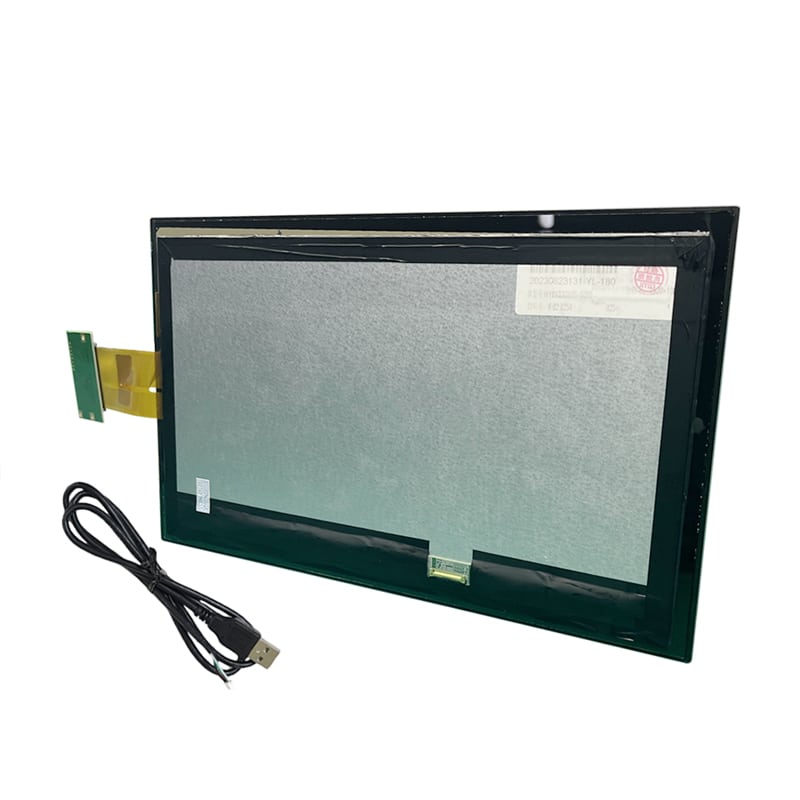
13.3 Inch eDP Control Console Touch Display for Industrial HMI


Model P/N
Size
Resolution
Brightness
Viewing Angle
Connector Type
Operating Temp
Overall(mm)
huisoar
HS13.3A1609V1
Brand
Panel Size (inch)
Model P/N
Resolution
Brightness (nits)
Viewing Angle
Contrast Ratio
Response Time
Overall (mm)
Active Area (mm)
Refresh Rate
Display Colors
Panel Type
Connector Type
Operating Temp
Touchscreen Type
Storage Temp
Work Mode
Pixel Format
Touch Interface
Control Type
Weight (g)
Protective Glass Specification
Operating Environment
Motherboard Type
Designed For
13.3 Inch eDP Control Console Touch Display for Industrial HMI
This Full HD IPS module combines 800 cd/m² luminance, a 30-pin eDP display path and I²C capacitive touch for information-rich control interfaces.
Product Summary
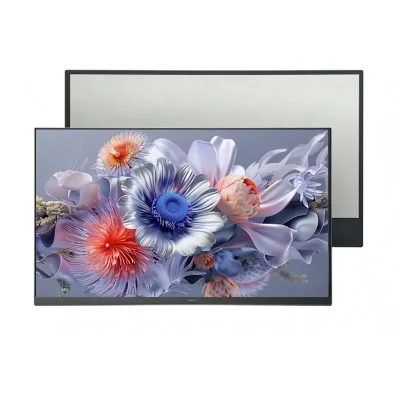
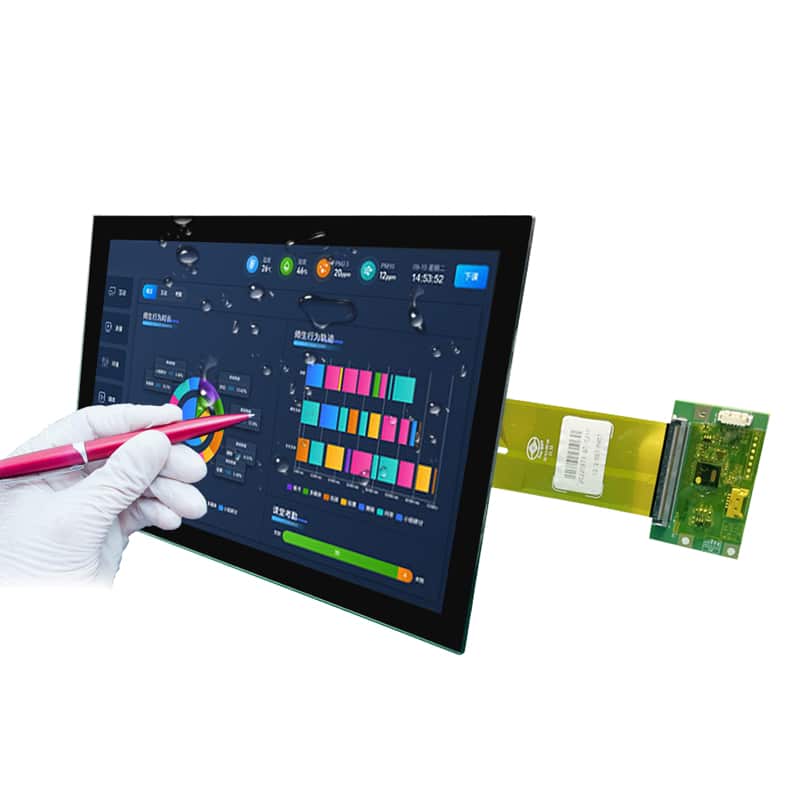
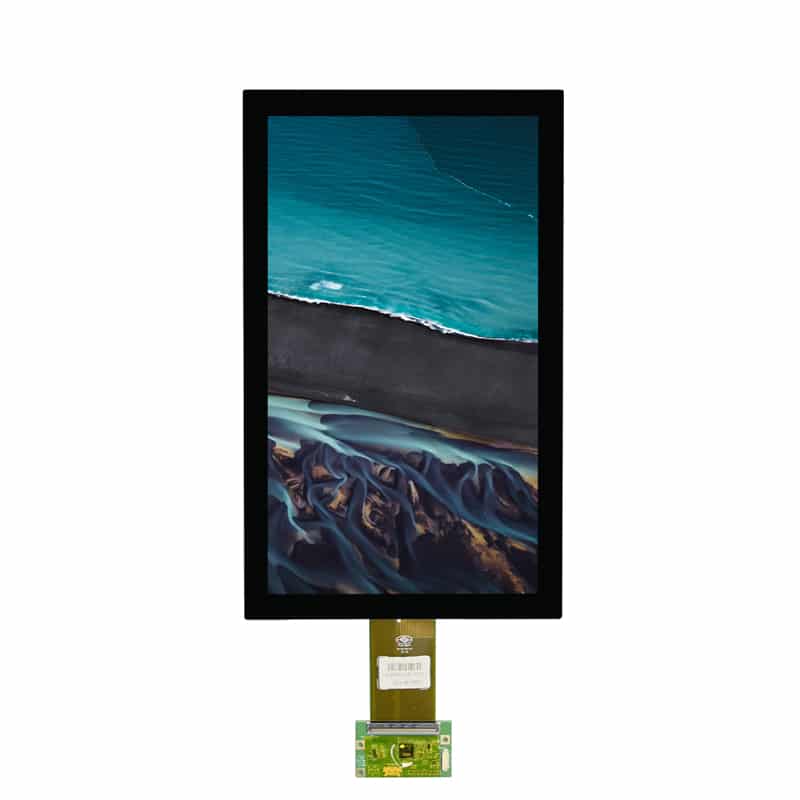
The eDP Control Console Touch Display provides a 13.3-inch Full HD workspace for industrial equipment that must present operating data, maps, diagrams, alarms and touch controls on one interface. Its 1920 × 1080 pixel matrix supports detailed control-console layouts without requiring the enclosure size of a larger monitor assembly.
The display uses an IPS TFT active-matrix panel with a normally black operating mode and full viewing-angle design. A luminance specification of 800 cd/m² supports use in bright indoor equipment environments, while the G+G capacitive-touch assembly provides direct control through a separate I²C touch path.
Key Specifications
| Specification | Value |
|---|---|
| Display size | 13.3 inch |
| Resolution | 1920 × 1080 pixels |
| Aspect ratio | 16:9 |
| Panel technology | IPS TFT active matrix |
| Display mode | Normally black |
| Pixel arrangement | RGB stripe |
| Pixel pitch | 0.153 × 0.153 mm |
| Active area | 293.76 × 165.24 mm |
| Module outline | 308 × 183.45 × 7.85 mm |
| Luminance | 800 cd/m² |
| Viewing type | Full viewing angle |
| Display interface | eDP |
| Display connector | 30 pins |
| Touch type | G+G capacitive touch |
| Touch controller | ILI2511 |
| Touch interface | I²C |
| Display IC identifier | RM97030 |
| Operating temperature | −20°C to +70°C |
| Storage temperature | −30°C to +80°C |
Full HD Workspace for Industrial Control
Information-Rich 1920 × 1080 Layouts
Full HD resolution provides sufficient pixel capacity for interfaces that combine several information zones. A control-console layout can place a navigation column, primary process view, alarm panel, status strip and touch controls on one screen.
Suitable interface elements include:
- Machine-status dashboards
- Process diagrams
- Geographic or site maps
- Equipment alarms
- Trend graphs
- Camera or image windows
- Configuration menus
- Maintenance instructions
- Numeric data tables
- Touch-enabled function controls
The 16:9 format is particularly useful where the interface needs a wide central information area with controls positioned along one or both sides.
UI scaling must still be evaluated at the intended viewing distance. Full HD resolution does not automatically ensure comfortable text or touch-target size.
IPS Viewing for Shared Operator Positions
Industrial consoles are not always viewed from one fixed position. Operators may stand, sit or approach the equipment from the side.
The IPS panel and full viewing-angle configuration support more stable visual performance across varied positions. Final viewing performance must nevertheless be tested after installation of the cover lens, adhesive, front frame and enclosure.
eDP Control Console Touch Display Integration
30-Pin eDP Host Qualification
The module uses a 30-pin eDP display connection. The host processor or controller must provide a compatible native eDP output or an appropriately engineered conversion path.
A matching 30-pin connector does not guarantee eDP timing, lane, voltage or pin compatibility.
Before schematic and cable release, verify:
- Connector part number
- Connector pitch
- Pin numbering
- Contact orientation
- eDP lane count
- Link rate
- Native timing
- Panel supply voltage
- Logic voltage
- Ground distribution
- Backlight power
- Backlight enable
- Brightness-control method
- Hot-plug or auxiliary signals
- FPC insertion direction
- Power-up sequence
- Power-down sequence
HDMI, standard DisplayPort, LVDS, MIPI and USB-video outputs should not be connected directly unless suitable bridge hardware is included.
Separate I²C Touch-Control Path
The display data path and touch-control path are separate integration items.
The LCD image uses eDP, while the capacitive-touch controller uses I²C. Engineering should obtain the complete touch specification for the ILI2511 implementation, including:
- I²C address
- Touch-controller supply voltage
- Interrupt definition
- Reset definition
- Touch FPC pinout
- Supported touch-point count
- Coordinate orientation
- Firmware version
- Cover-lens configuration
- Calibration requirements
- Noise-immunity settings
The eDP display path and I²C touch path must be qualified separately.
The confirmed I²C interface does not establish the number of simultaneous touch points or glove-operation capability.
Mechanical Integration and Front-Panel Design
Active Area and Module Outline
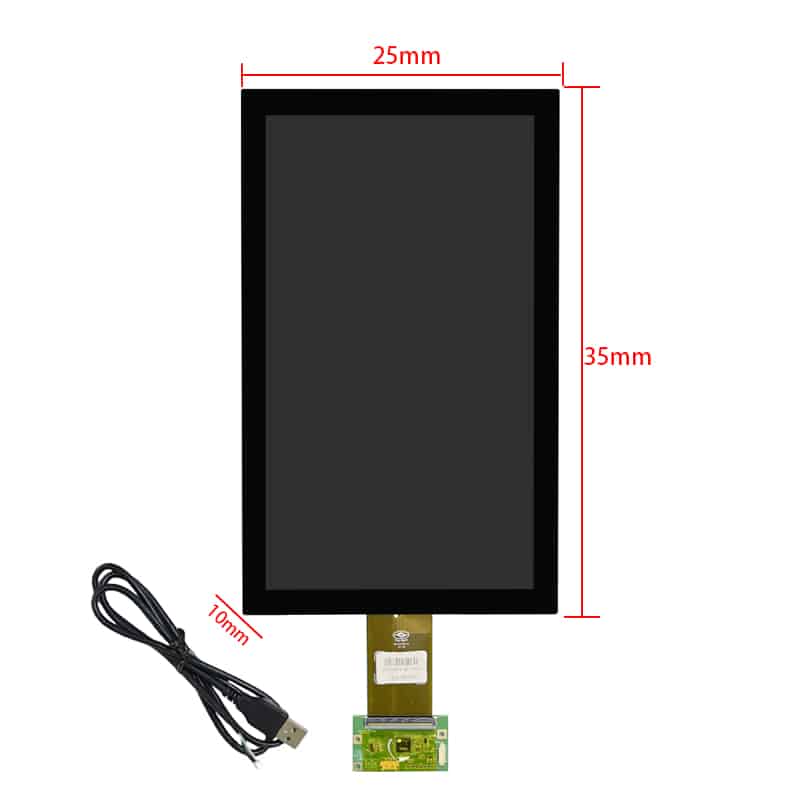
The active image area measures 293.76 × 165.24 mm. The complete module outline measures 308 × 183.45 × 7.85 mm.
Enclosure design should separately account for:
- Active image area
- Visible window
- Black border
- Touch-active region
- LCD outline
- Cover-lens outline
- Bottom FPC exit
- Touch-controller component region
- Connector clearance
- Adhesive or support frame
- Cable service space
The active-area dimensions should control the visible opening. The full outline and FPC geometry should control internal enclosure clearance.
FPC and Connector Clearance
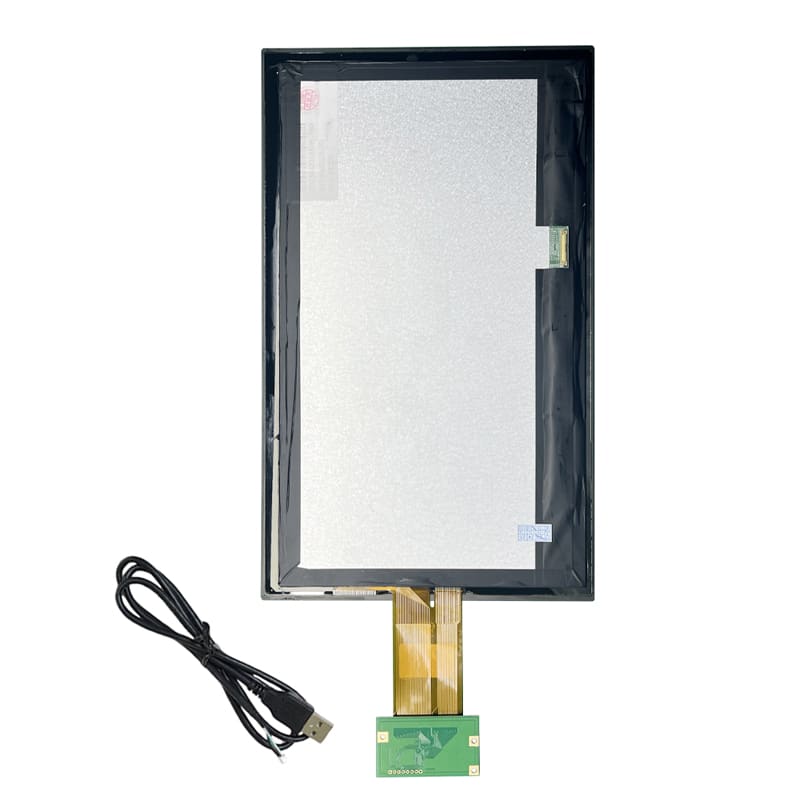
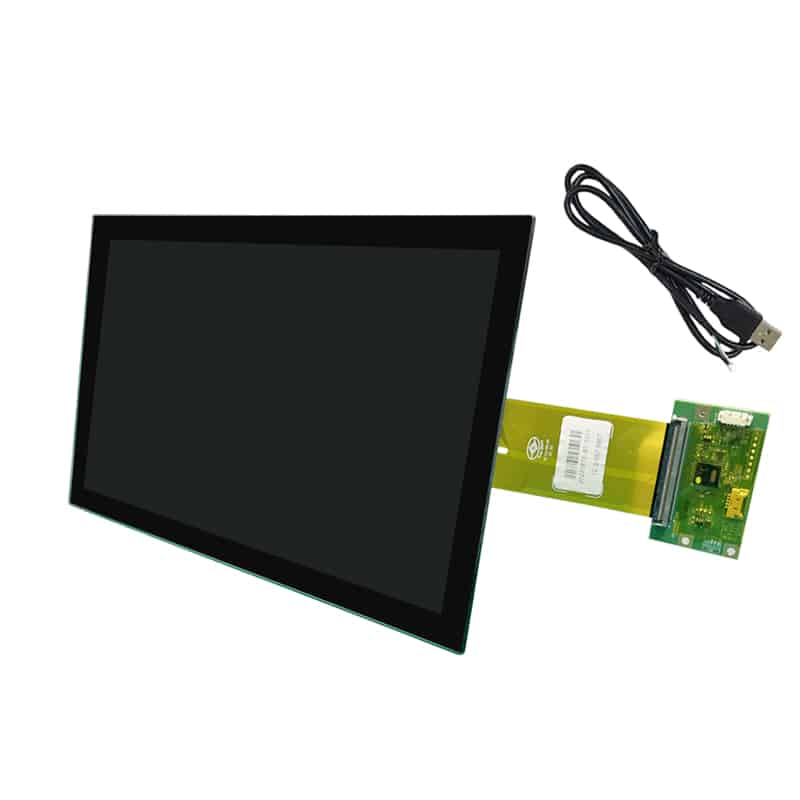
The product configuration uses bottom-mounted flexible circuits. Mechanical design must protect them from sharp folds, compression and contact with enclosure hardware.
Review:
- Minimum bend radius
- Connector insertion direction
- Cable folding sequence
- Component-height clearance
- Mounting-screw positions
- Metal-frame contact
- Adhesive overlap
- Front-frame pressure
- Controller-board placement
- Cable strain relief
- Assembly access
- Service removal path
The 7.85 mm outline thickness should not be treated as the complete installed depth until the final cover, adhesive, cable bend and support structure are included.
Optical Performance and Ambient-Light Limits
The module has an 800 cd/m² luminance specification. This supports high-visibility operation in bright indoor control rooms, factory areas and equipment enclosures with substantial ambient light.
An 800 cd/m² panel does not by itself establish finished-system sunlight readability behind the cover stack.
Finished visibility also depends on:
- Cover-lens reflection
- Surface treatment
- Optical or air bonding
- Air-gap thickness
- Printed border geometry
- Interface color palette
- Font weight
- Backlight-control range
- Viewing distance
- Ambient-light direction
- Enclosure shadowing
A physical sample should be tested with the final cover lens and representative user interface before the optical design is released.
Touch-System Qualification
The G+G capacitive-touch structure provides a rigid glass-based front stack. Final touch performance depends on the selected cover, controller firmware, grounding and electromagnetic environment.
Qualification should include:
- Tap accuracy
- Drag and swipe response
- Edge-touch detection
- Small-control selection
- Multi-control interaction
- Coordinate rotation
- Long-press recognition
- Accidental-touch rejection
- Touch after temperature cycling
- Touch near switching power supplies
- Touch with the final cover thickness
- Touch beside metal enclosure sections
- I²C communication recovery
- Controller-reset behavior
Do not claim ten-point touch, glove operation, stylus support or wet-finger operation until the approved touch specification and assembled sample confirm those functions.
Recommended Applications
Industrial HMI Consoles
The 13.3-inch Full HD format supports machine controls, alarm panels, diagrams and status information on a single operator interface.
Equipment Dashboards
The wide image area can present equipment state, operating parameters, warnings and control functions without excessive page switching.
Automation Workstations
The module can be integrated into production-line configuration panels, process controls and compact automation terminals that provide native eDP output.
Test and Measurement Equipment
The resolution supports waveform views, measurement tables, setup controls and diagnostic information within one display area.
Embedded Control Terminals
The module suits enclosed terminals where a high-resolution display and separate I²C touch interface are required.
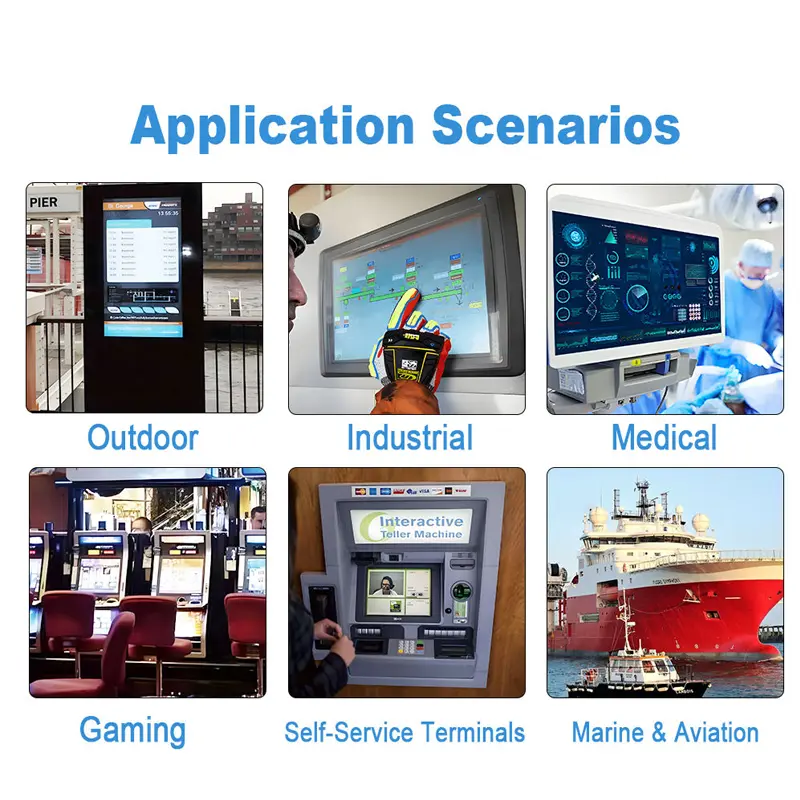
Application suitability must be verified at the finished-system level. The module data does not establish outdoor, medical, marine or vehicle qualification.
Customization Scope
Project-specific engineering review may cover:
- Cover-lens dimensions
- Cover printing
- Touch-active area
- Touch-controller configuration
- Touch FPC layout
- Display FPC length
- Connector orientation
- eDP pin definition
- Luminance target
- Surface treatment
- Optical or air bonding
- Cable assemblies
- Mechanical frame
- Packaging and labeling
- Operating-temperature targets
Custom configurations are generally reviewed from 500 pieces, subject to tooling requirements, material availability and the requested specification. Sample and standard-module quantities are confirmed separately.
Procurement Checklist
Submit:
- Approved display specification
- Complete 30-pin assignment
- eDP lane count
- eDP link rate
- Native display timing
- Panel supply requirements
- Backlight voltage and current
- Backlight enable and dimming definition
- Power-up and power-down sequence
- Host-processor information
- ILI2511 touch-controller documentation
- I²C address and timing
- Touch interrupt and reset definition
- Touch-point requirement
- Cover-lens drawing
- Visible-window drawing
- FPC orientation
- Connector part number
- Enclosure drawing
- Surface-treatment requirement
- Bonding requirement
- Ambient-light target
- Sample quantity
- Annual demand
- Development schedule
FAQ
About 13.3 Inch eDP Control Console Touch Display
What must be checked before connecting this module to a 30-pin eDP host?
Does the touch panel communicate through the eDP connector?
Is 800 cd/m² sufficient for direct-sunlight use?
Which dimensions should control the enclosure design?
What do the ILI2511 and RM97030 identifiers establish?
Freya Yang
+86 18318948097