Freya Yang
+86 18318948097
+852 62667476
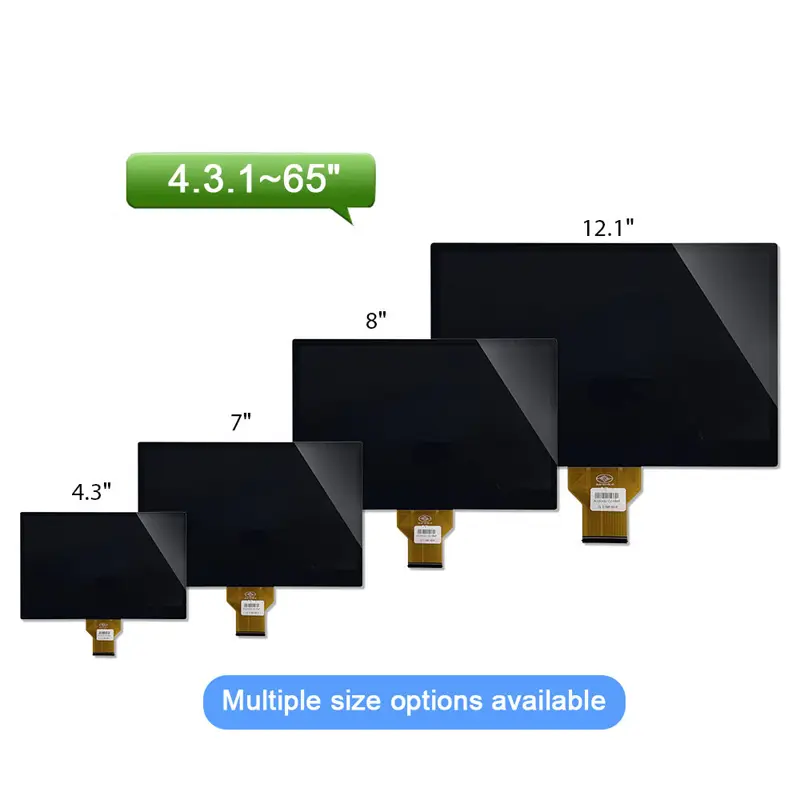
12.1 Inch Full HD Industrial Touch Display for HMI Panels
Model P/N
Size
Resolution
Brightness
Viewing Angle
Connector Type
Operating Temp
Overall(mm)
huisoar
HS12.1A1610V1
Brand
Panel Size (inch)
Model P/N
Resolution
Brightness (nits)
Viewing Angle
Contrast Ratio
Response Time
Overall (mm)
Active Area (mm)
Refresh Rate
Display Colors
Panel Type
Connector Type
Operating Temp
Touchscreen Type
Storage Temp
Work Mode
Input Voltage (V)
Touch Interface
Control Type
Weight (g)
Protective Glass Specification
Operating Environment
I/O Interface
Designed For
12.1 Inch Full HD Industrial Touch Display for HMI Panels
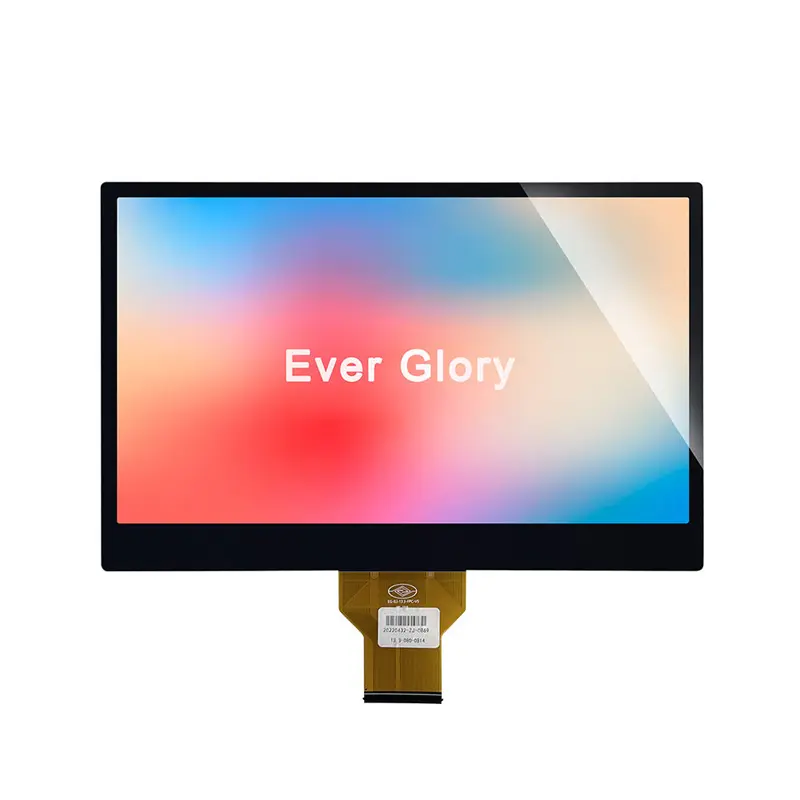
This 12.1-inch Full HD touch module combines 1000 cd/m² luminance, a 45-pin LVDS display path and ten-point G+G projected-capacitive touch for integrated operator interfaces.
Product Summary
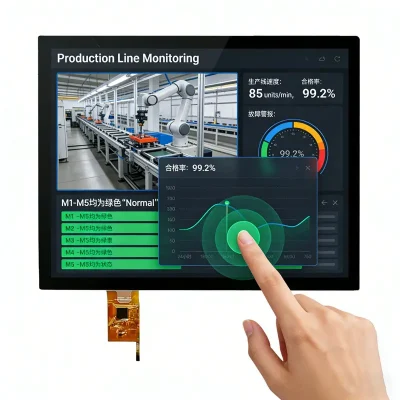
The Full HD Industrial Touch Display is designed for equipment that needs a detailed graphical interface, direct touch interaction and a compact 12.1-inch form factor. Its native 1920 × 1080 resolution provides space for process graphics, alarms, menus, trend charts and status information without forcing the interface into a low-resolution layout.
The TFT LCD uses a transmissive, normally black display mode with 1000 cd/m² luminance and a 1500:1 contrast ratio. Image data is carried through a 45-pin LVDS connection, while touch data can be handled through USB or I2C. Separating these two paths gives the system designer clear control over the display controller and touch-controller architecture.
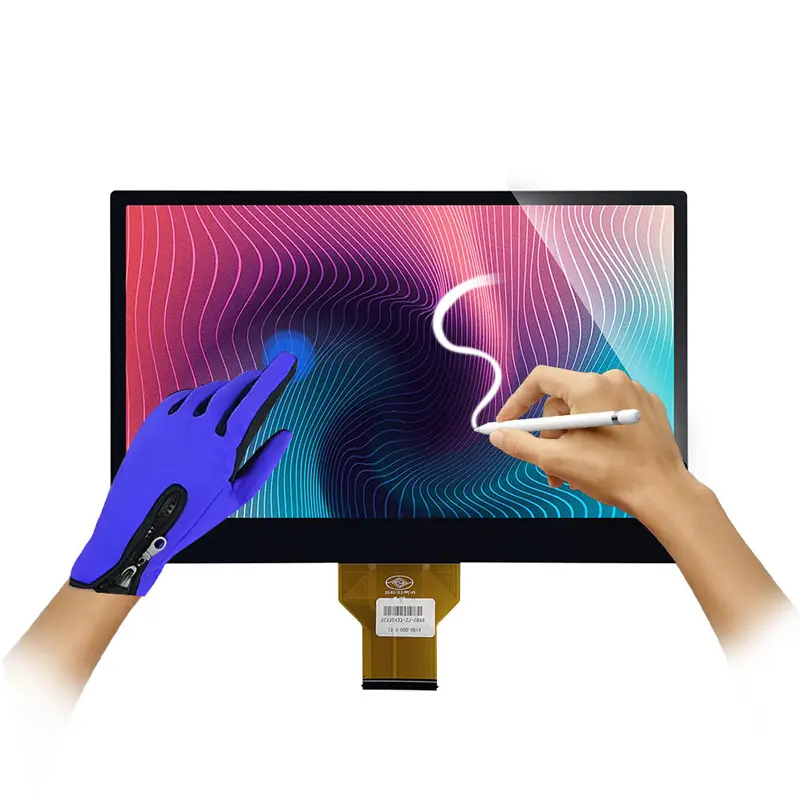
The module includes a ten-point projected-capacitive touch panel with a G+G structure, ≥85% transparency and ≥6H surface hardness. The standard configuration is intended for integration into a finished enclosure rather than use as a complete standalone monitor.
Key Specifications
| Specification | Value |
|---|---|
| Display size | 12.1 inches |
| Resolution | 1920 × 1080 pixels |
| Display technology | TFT LCD, transmissive, normally black |
| Luminance | 1000 cd/m² |
| Contrast ratio | 1500:1 |
| Viewing | Free viewing |
| Display colors | 7M colors |
| Display interface | 45-pin LVDS, 0.5 mm pitch |
| Panel input voltage | 3.3 V |
| Active area | 262.83 × 164.27 mm |
| Module outline | 305.00 × 200.00 × 8.65 mm |
| Touch technology | Ten-point projected capacitive |
| Touch structure | G+G |
| Touch interface | USB or I2C |
| Touch transparency | ≥85% |
| Touch hardness | ≥6H |
| Backlight reference | 24 V / 420 mA |
| Operating temperature | −20°C to +70°C |
| Storage temperature | −30°C to +80°C |
Full HD Optical Performance for Operator Interfaces
1920 × 1080 workspace
A Full HD pixel format gives interface designers more room for information-rich screens than a lower-resolution 12.1-inch module. It supports layouts with multiple operating zones, including navigation, process status, numerical data, alarms and touch controls.
The resolution is particularly useful when the interface must display several data groups at the same time. Text size, icon dimensions and touch-target spacing should still be validated on the final interface, but the native pixel count gives the development team a stronger starting point for detailed HMI design.
1000 cd/m² luminance and 1500:1 contrast
The 1000 cd/m² luminance is intended for equipment installed in high-ambient-light locations. It can provide greater optical headroom than a standard indoor panel when the display sits near factory lighting, windows or bright work areas.
Finished-system visibility depends on more than panel luminance. Cover-glass transmission, surface reflection, optical bonding, enclosure angle and thermal control all affect the result. For this reason, the display should be evaluated behind the intended cover lens rather than approved from the bare-panel luminance value alone.
The 1500:1 contrast ratio supports clear separation between interface backgrounds, text, graphs and status colors. The normally black operating mode also suits dark-themed control interfaces where illuminated information is presented against a darker background.
LVDS and PCAP Integration Architecture
45-pin LVDS display path
The panel uses a 45-pin LVDS connection with a 0.5 mm pitch. The connector count identifies the physical connection format, but it does not by itself confirm timing compatibility, channel mapping, bit assignment or cable orientation.
Before controller approval, engineering teams should compare:
- Native 1920 × 1080 timing
- LVDS channel and bit mapping
- Panel power requirements
- Connector pin assignment
- Cable contact orientation
- Backlight-driver requirements
- Enable and dimming control
- Mechanical FPC direction
A controller board should not be selected from resolution and connector count alone.
USB or I2C touch path
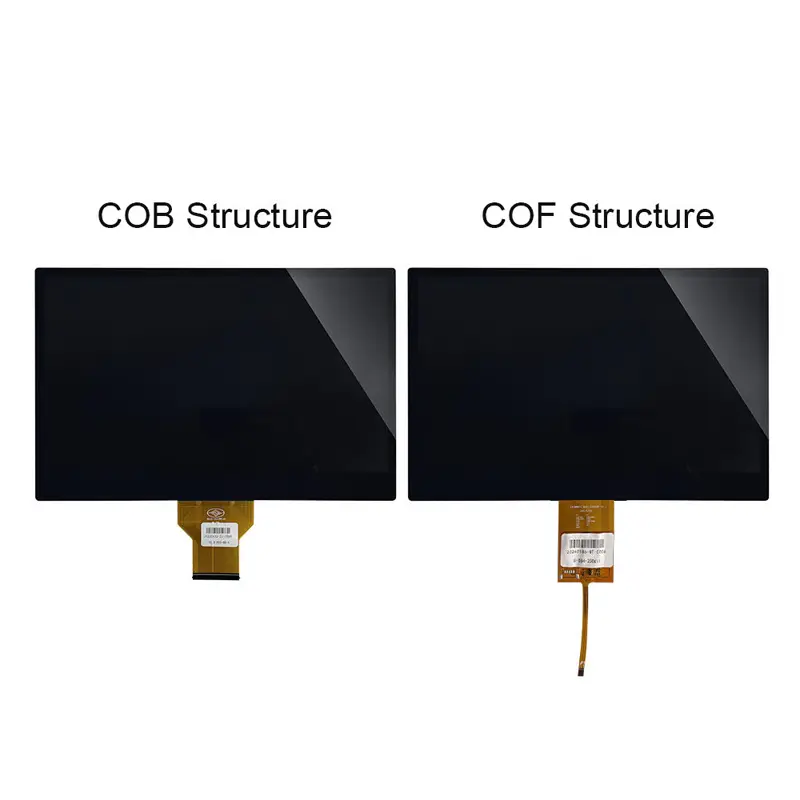
Touch communication is separate from the LVDS image path. The standard projected-capacitive touch assembly can use USB or I2C, allowing the system architecture to be selected according to the host platform.
USB is often convenient when the host already supports a standard external touch device. I2C may suit embedded controller designs where the touch controller is integrated more directly into the mainboard. Final compatibility depends on the required driver, connector assignment, operating system and firmware configuration.
The ten-point G+G touch stack has a stated transparency of at least 85%, haze of no more than 3% and surface hardness of at least 6H. These values should be reviewed together with the final cover-lens design and any additional optical treatment.
Mechanical Integration of the Full HD Industrial Touch Display
Module outline and active area
The module outline is 305.00 × 200.00 × 8.65 mm, while the active image area is 262.83 × 164.27 mm. These two dimensions establish the starting point for the enclosure opening, retaining structure, gasket position and visible border.
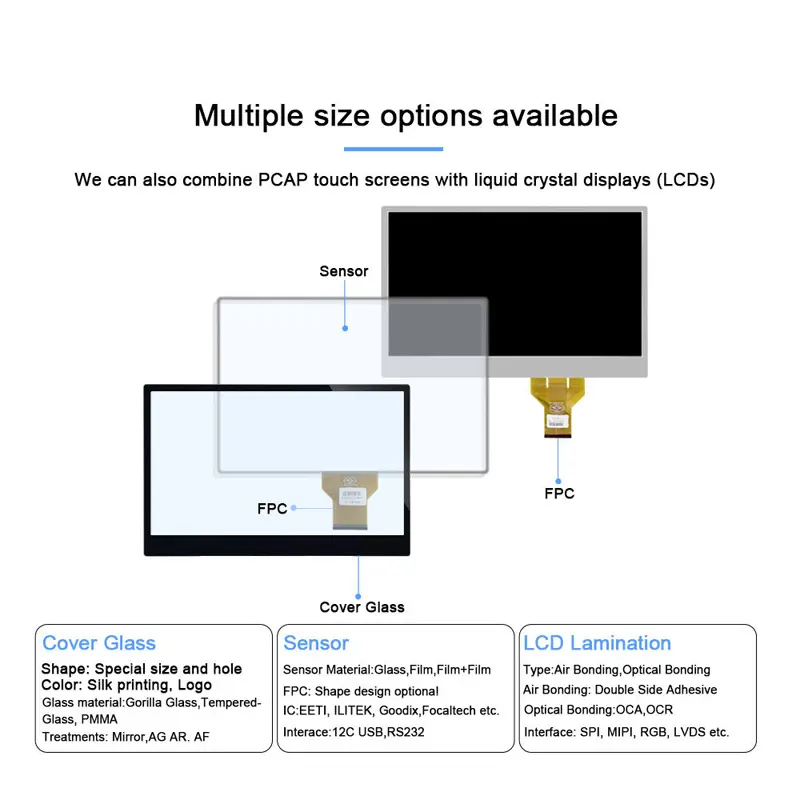
The touch assembly has a stated outline of 305.00 × 200.00 × 1.80 mm and a viewing area of 283 × 165.27 mm. The LCD active area, touch viewing area and final bezel opening should therefore be overlaid in the mechanical drawing before tooling approval.
The final design should also allow for:
- Cable bend radius
- Connector-access space
- Touch FPC routing
- Backlight heat dissipation
- Assembly tolerance
- Edge clearance
- Cover-lens support
- Service access
G+G touch-stack qualification
The G+G touch structure provides a rigid glass-based touch assembly, but final touch performance remains dependent on the complete mechanical and electrical stack. Cover thickness, air gaps, bonding adhesive, decorative printing and nearby grounded metal can influence sensitivity.
A production-intent sample should be tested inside the actual enclosure. Touch validation should cover the full active region, edge operation, repeated input, electrical noise conditions and the intended operating system.
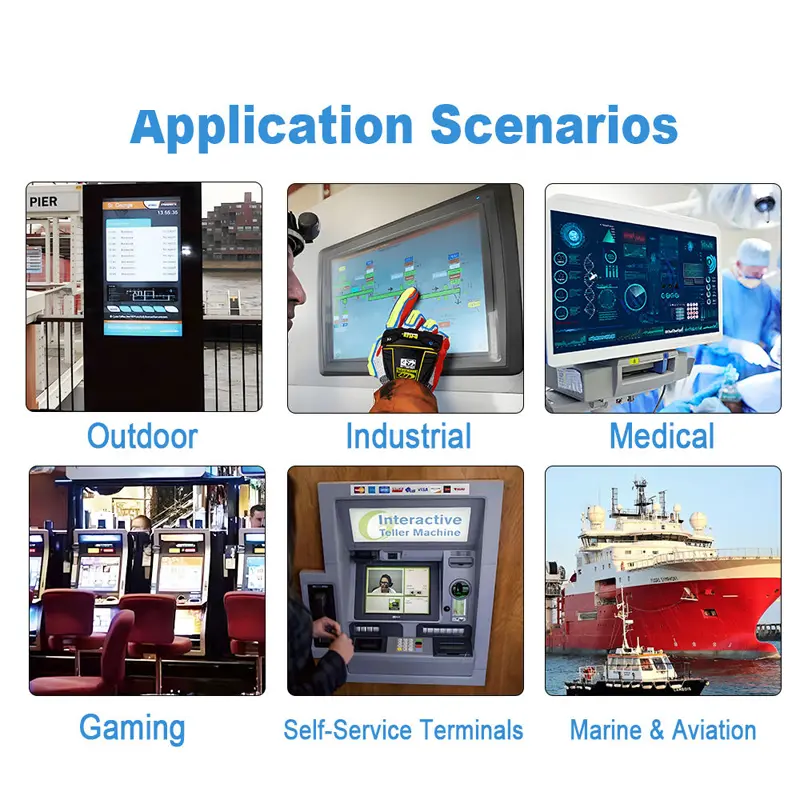
Suitable Equipment Applications
This module is suitable for projects that require a compact Full HD operator interface with projected-capacitive touch, including:
- Industrial HMI panels
- Factory control terminals
- Equipment operator stations
- Process-monitoring interfaces
- Interactive information terminals
- High-ambient indoor kiosks
- Test and service equipment
- Embedded control consoles
The Full HD Industrial Touch Display can also be evaluated for retail operator screens and other commercial-industrial interfaces, but complete-system requirements must be reviewed separately.
No product-specific waterproof, medical, automotive, marine or outdoor certification is assigned to the bare display assembly. Projects in regulated or exposed environments require enclosure-level protection, environmental testing and application-specific qualification.
Customization and Engineering Review
Custom FPC, touch-panel and cover-glass configurations may be reviewed for production projects. Common engineering discussions include:
- Cover-lens outline
- Decorative printing
- FPC length and orientation
- Touch interface selection
- Connector position
- Optical bonding
- Surface treatment
- Touch-controller configuration
- Mechanical mounting details
Custom configurations are generally reviewed from 500 pieces, subject to tooling requirements, material availability and the requested specification. Sample quantities and standard-module quantities are confirmed separately.
Customization approval should be based on a controlled drawing and specification revision. Verbal descriptions or marketplace option names are not sufficient for production release.
Procurement Checklist
Before requesting a quotation or sample, submit:
- Host processor or controller-board information
- Required 1920 × 1080 timing
- LVDS pin mapping and channel requirements
- Panel power-rail details
- Backlight-driver plan
- USB or I2C touch preference
- Operating-system information
- Enclosure drawing
- Cover-glass stack
- Cable orientation
- Operating environment
- Required compliance documents
- Sample-validation criteria
- Forecast quantity and project schedule
The engineering review should confirm the video path, touch path, connector mapping, mechanical fit, optical stack, thermal conditions and validation scope.
FAQ
About 12.1 Inch Full HD Industrial Touch Display
What must be checked before connecting this module to an LVDS controller?
How should USB and I2C touch options be selected?
Is 1000 cd/m² enough for an outdoor installation?
What mechanical documents are required before enclosure tooling?
When should a different display configuration be selected?
Freya Yang
+86 18318948097