Freya Yang
+86 18318948097
+852 62667476
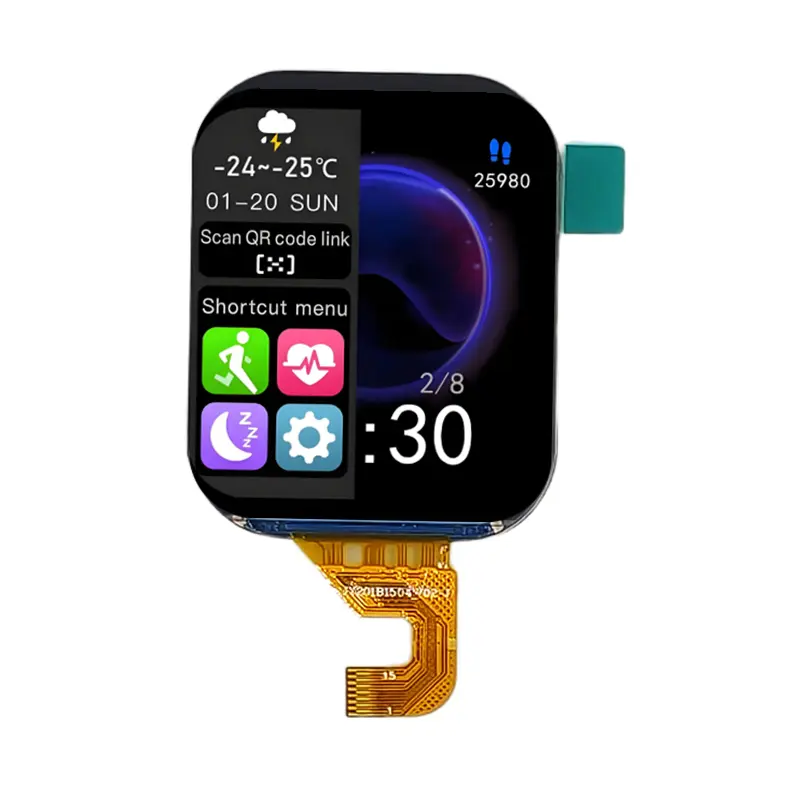
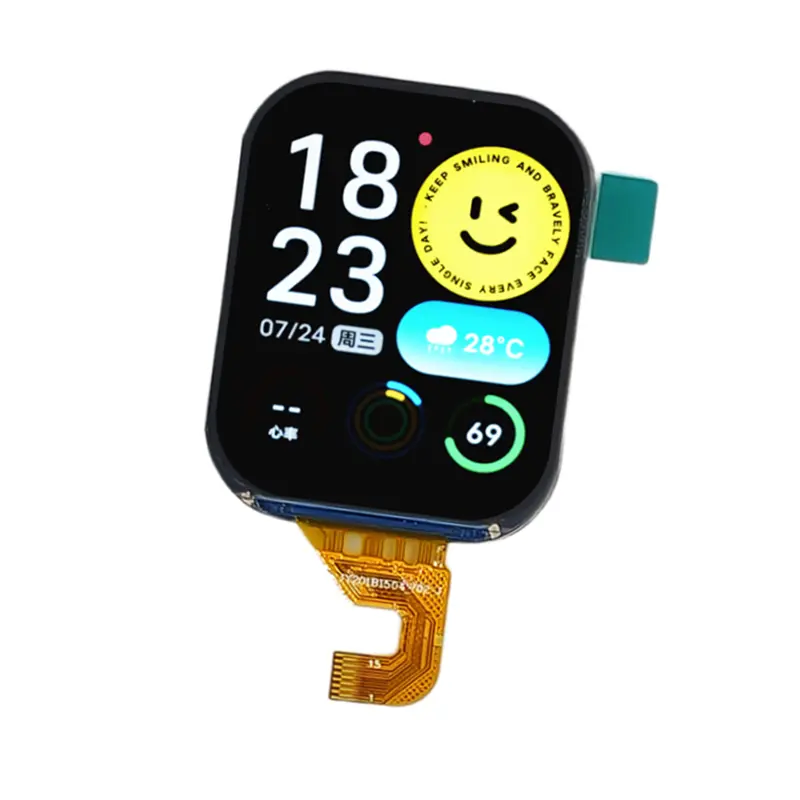
Smartwatch LCD Panel 2 Inch SPI 550 Nits IPS module for SPI Wearable Devices
Model P/N
Size
Resolution
Brightness
Viewing Angle
Connector Type
Operating Temp
Overall(mm)
huisoar
HS201B15S
Brand
Panel Size (inch)
Model P/N
Resolution
Brightness (nits)
Viewing Angle
Contrast Ratio
Response Time
Overall (mm)
Active Area (mm)
Refresh Rate
Display Colors
Panel Type
Connector Type
Operating Temp
Touchscreen Type
Storage Temp
Work Mode
Pixel Format
Input Voltage (V)
Vibration Resistance
Designed For
2.0-Inch 240×296 IPS TFT Module for Watches, Fitness Trackers, and Portable Terminals
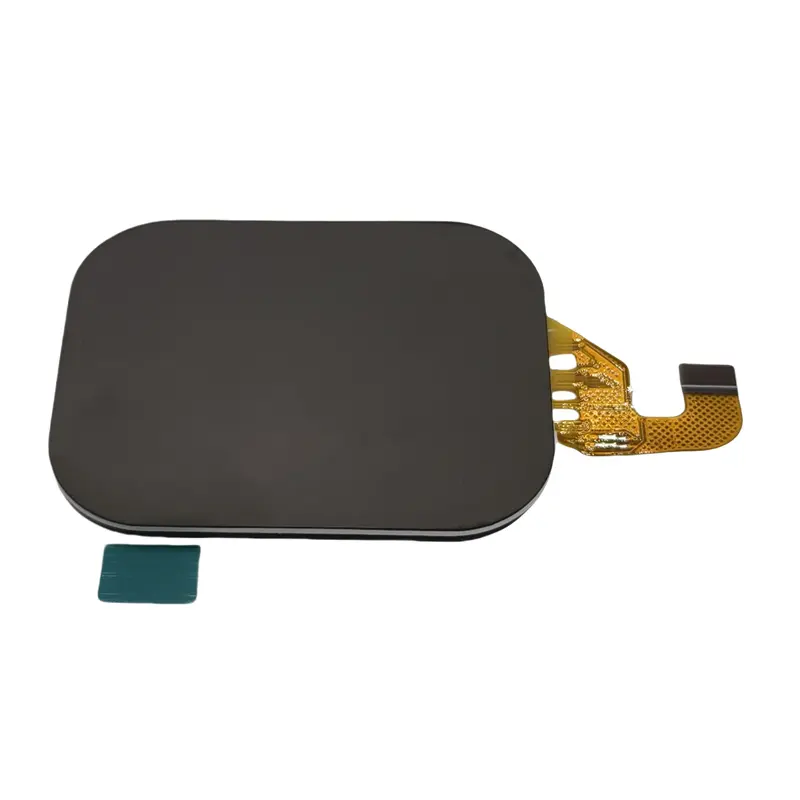
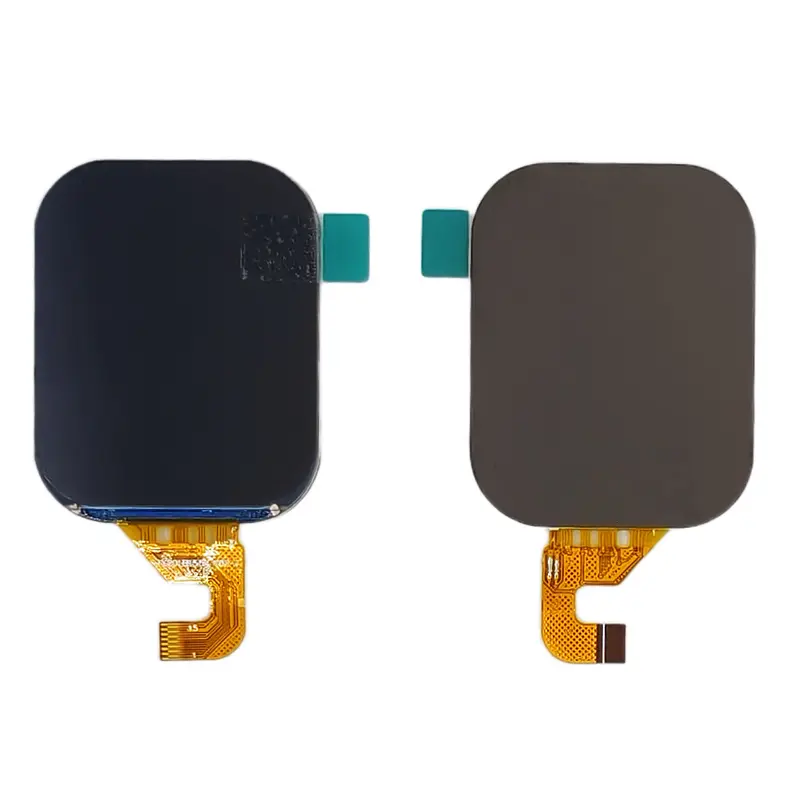
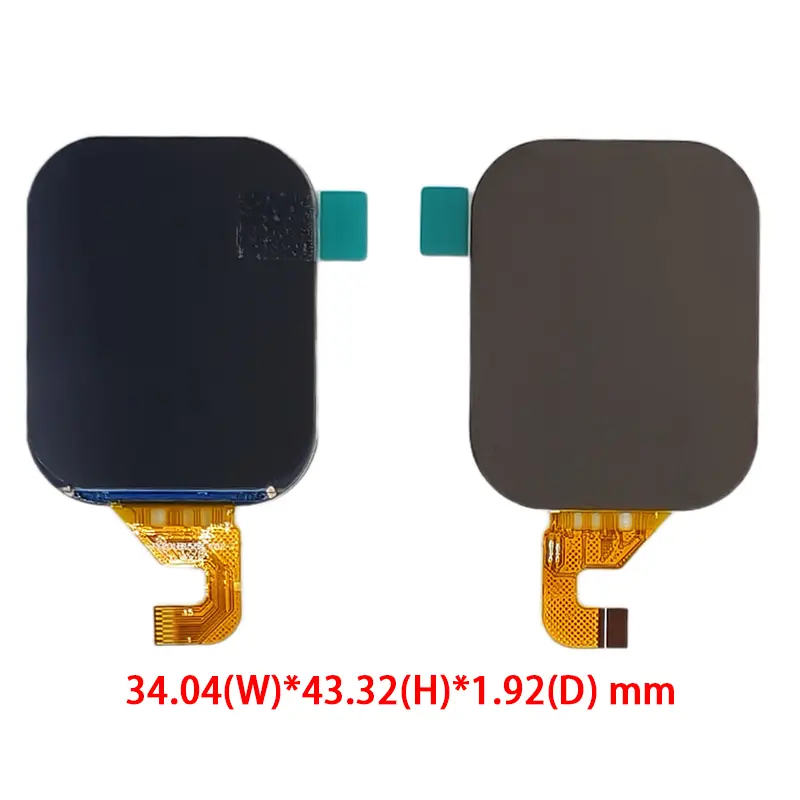
A Smartwatch LCD Panel is a compact 2.0-inch 240×296 IPS TFT-LCD module for watches, fitness trackers, portable health monitors, smart jewelry, and mini terminals. It combines 550 cd/m² typical luminance, 1200:1 typical contrast, 85-degree all-direction viewing, 262K colors, JD9853 driver support, 15-pin 4SPI control, 2.8V logic supply, and a slim 34.04 × 43.32 × 1.92 mm structure for wearable product integration.
At a Glance: 2.0-Inch Wearable TFT Highlights
- 2.0-inch display size fits compact watch and portable terminal enclosures.
- 240×296 resolution supports icons, status prompts, health metrics, menus, and short text.
- 550 cd/m² typical luminance improves readability in bright indoor and outdoor-use conditions.
- IPS full-view structure supports 85/85/85/85 viewing for wrist-angle readability.
- 1200:1 typical contrast helps small text and UI symbols remain distinguishable.
- 15-pin 4SPI interface simplifies integration with compact wearable controller boards.
- 34.04 × 43.32 × 1.92 mm module size supports thin device stacks.
Product Overview of the Smartwatch LCD Panel
The Smartwatch LCD Panel is built for small devices where screen space, power architecture, FPC routing, and mechanical thickness must be controlled carefully. A 2.0-inch module is large enough to display readable watch data, health indicators, battery status, alerts, and navigation prompts, but still compact enough for wrist-worn and handheld product designs.
Its 240×296 pixel format gives UI designers a taller-than-wide canvas that works well for wearable menus and compact data cards. Compared with simple status displays, this TFT-LCD module can show color icons, layered information, and small interface elements while keeping the module footprint practical for consumer and portable electronics.
The product is best evaluated as a module-level display component. Final performance depends on host controller timing, FPC layout, cover glass, enclosure stack, brightness target, operating temperature, and whether the project requires touch or a protective lens.
Key Features of the Smartwatch LCD Panel
| Feature | B2B Value |
|---|---|
| 2.0-inch compact form | Fits smartwatch, tracker, small terminal, and portable device layouts. |
| 240×296 resolution | Supports wearable UI cards, menus, alerts, and health-data screens. |
| 550 cd/m² typical luminance | Improves visibility for outdoor workouts and bright indoor use. |
| IPS full-view direction | Helps users read the display from different wrist and hand angles. |
| 1200:1 typical contrast | Supports clearer small text, icons, and status indicators. |
| 262K colors | Enables practical color UI design without moving to a larger display platform. |
| 15-pin 4SPI interface | Reduces signal complexity for compact embedded control boards. |
| JD9853 driver IC | Provides a defined driver route for firmware and initialization planning. |
| 2.8V typical logic supply | Supports low-voltage wearable electronics architecture. |
| 1.92 mm module thickness | Helps mechanical teams build slimmer watch and portable terminal designs. |
Technical Specifications of the 2.0-Inch SPI IPS TFT Module
| Specification | Confirmed Value |
|---|---|
| Display Size | 2.0 inch |
| Resolution | 240 × 296 |
| Active Area | 32.04 × 39.52 mm |
| Module Outline | 34.04 × 43.32 × 1.92 mm |
| LCD Type | Normally black transmissive LCD |
| Viewing Direction | IPS full view |
| Luminance | 550 cd/m² typical |
| Contrast Ratio | 1200:1 typical |
| Interface | 4SPI, 15 pins |
| Driver IC | JD9853 |
| Logic Supply | 2.8V typical |
| Operating Temperature | -10 ~ 60°C |
This public specification table uses only confirmed high-value parameters. For procurement and engineering review, the FPC pinout, host initialization code, cover-lens stack, and final touch/no-touch structure should be confirmed before sample approval.
Why Choose This 2.0-Inch Panel for Watch Interfaces?
240×296 Layout for Compact Wearable UI
The 240×296 resolution is suitable for watch-style layouts where vertical space is valuable. Product teams can arrange time, step count, heart-rate prompts, battery status, Bluetooth indicators, notifications, and simple navigation elements in a compact screen area. The aspect ratio also supports portrait-oriented wearable menus without forcing the device to use a round or square screen.
550 cd/m² Readability for Outdoor Wearable Use
A late-middle selection check should evaluate brightness in the real enclosure. For a Smartwatch LCD Panel used outdoors, 550 cd/m² typical luminance helps the screen stay more readable during running, cycling, factory inspection, logistics work, and other mobile use cases. Cover glass reflectance, UI color contrast, and backlight drive conditions still affect the final visibility.
IPS Full View for Wrist-Angle Viewing
Wearable users rarely look at a screen from one fixed angle. IPS full-view behavior and 85-degree all-direction viewing help maintain readable content when the wrist is tilted, the device is mounted on a strap, or the user glances quickly at the screen while moving.
SPI, FPC, and Mechanical Integration Notes
The module uses a 15-pin 4SPI interface, so engineering teams should review pin assignment, FPC direction, connector pitch, logic voltage, initialization code, and driver IC support before PCB layout. SPI can be a practical interface for compact wearable devices because it reduces wiring complexity compared with wider parallel interfaces.
Mechanical integration should start from the 32.04 × 39.52 mm active area and 34.04 × 43.32 × 1.92 mm outline. Designers should confirm the visible window, cover glass border, adhesive area, FPC bend radius, connector position, and allowable pressure on the LCD stack. If a touch layer is required, treat it as a project-specific add-on rather than assuming it is included in the standard no-touch table configuration.
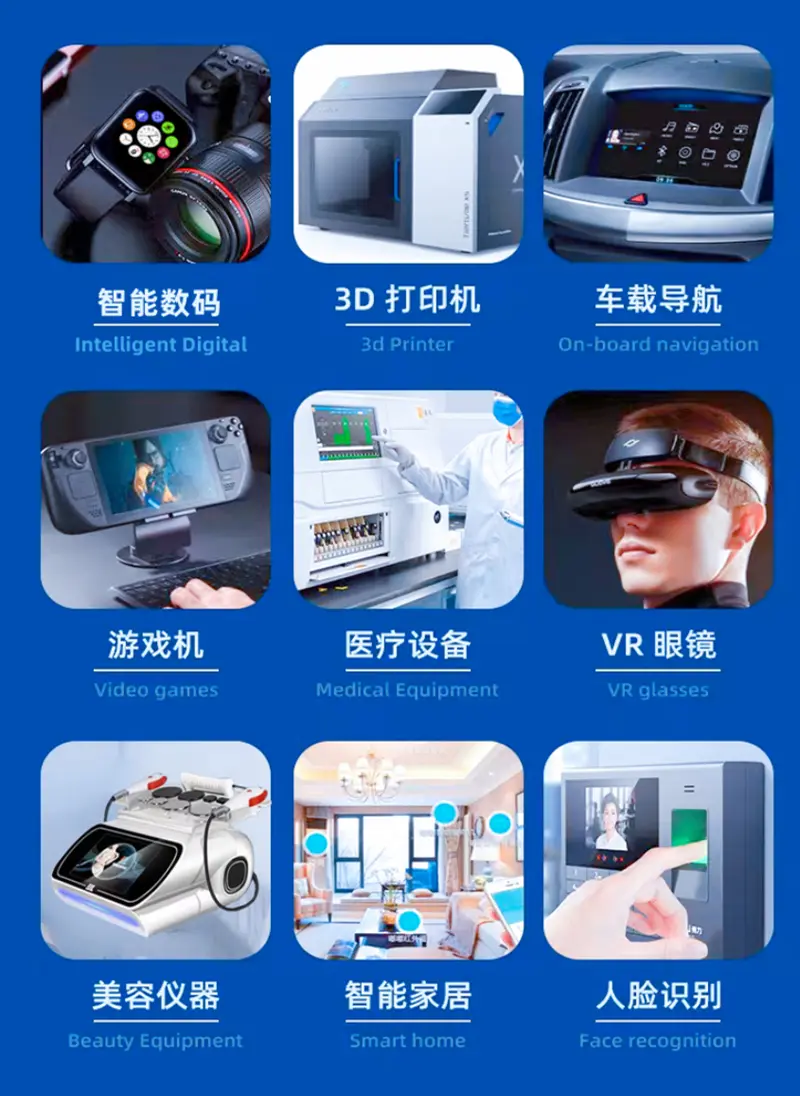
Recommended Applications for Wearable and Portable Devices
Smart Watches and Fitness Trackers
This display is a strong fit for watch-style devices that need a compact color screen for time, notifications, health metrics, sports data, and quick status prompts. The slim module structure helps reduce overall device thickness.
Portable Health Monitors
Portable medical and wellness devices can use the display for measurement results, alerts, mode selection, and battery status. Integrators should confirm regulatory, cover-lens, cleaning, and durability requirements for the finished device.
Mini IoT Terminals and Compact Controllers
Small connected devices often need a clear local interface without a large display. The 4SPI interface and compact outline make the module suitable for mini controllers, sensor terminals, handheld data loggers, and portable test tools.
Smart Jewelry and Specialty Wearables
For smart jewelry or compact lifestyle devices, the display can support short prompts, icons, and simple color-coded feedback. Mechanical teams should validate curvature, bezel design, and FPC routing carefully.
Customization Options for Wearable LCD Projects
Project evaluation can include cover glass, touch add-on assessment, FPC shape and direction, pinout adaptation, logo or packaging support, brightness review, enclosure-fit discussion, controller-board matching, and sample-based customization. The final stack should be confirmed with drawings because small wearable devices are sensitive to lens thickness, adhesive border, thermal path, and connector position.
Procurement and Engineering Checklist
- Confirm the 240×296 UI layout using real icons, font sizes, and watch screen content.
- Verify 4SPI host support, JD9853 driver initialization, and 15-pin FPC pinout.
- Check the 2.8V logic supply and allowable voltage range against the controller board.
- Confirm active area, outline, visible window, cover glass, and bezel design.
- Decide whether the project needs standard no-touch, protective glass, or touch add-on evaluation.
- Test brightness with the final cover lens and UI color scheme.
- Confirm operating temperature, storage temperature, humidity, impact, and drop requirements.
- Approve samples before tooling or volume procurement.
FAQ
About Smartwatch LCD Panel Integration
Is this Smartwatch LCD Panel a finished watch screen assembly?
What interface does it use?
Is touch included?
Why is 550 cd/m² important for wearable devices?
Can this display be used in portable terminals?
What should be checked before sample approval?
Freya Yang
+86 18318948097