Freya Yang
+86 18318948097
+852 62667476
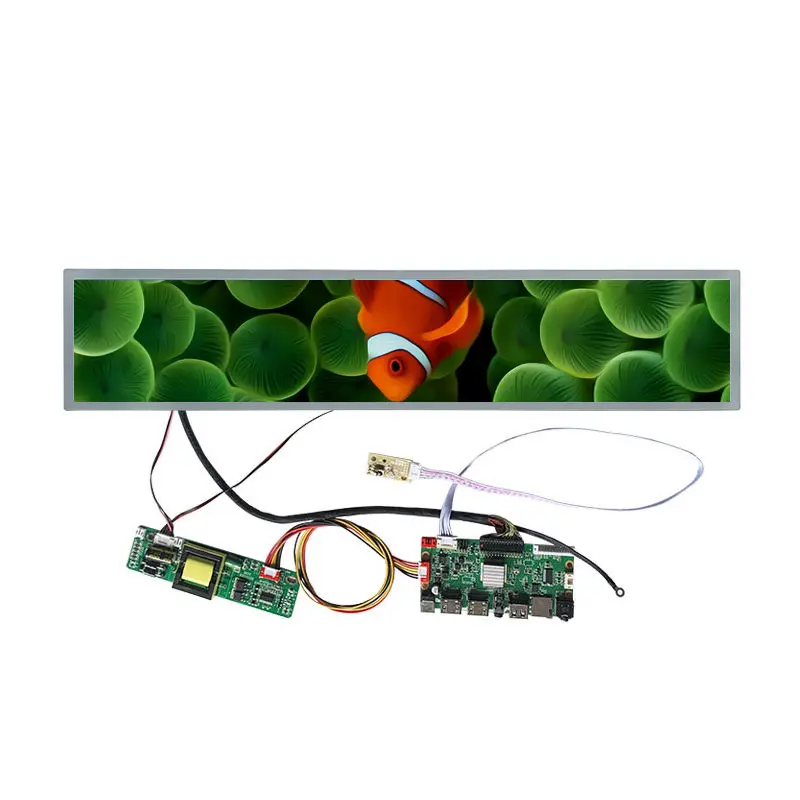
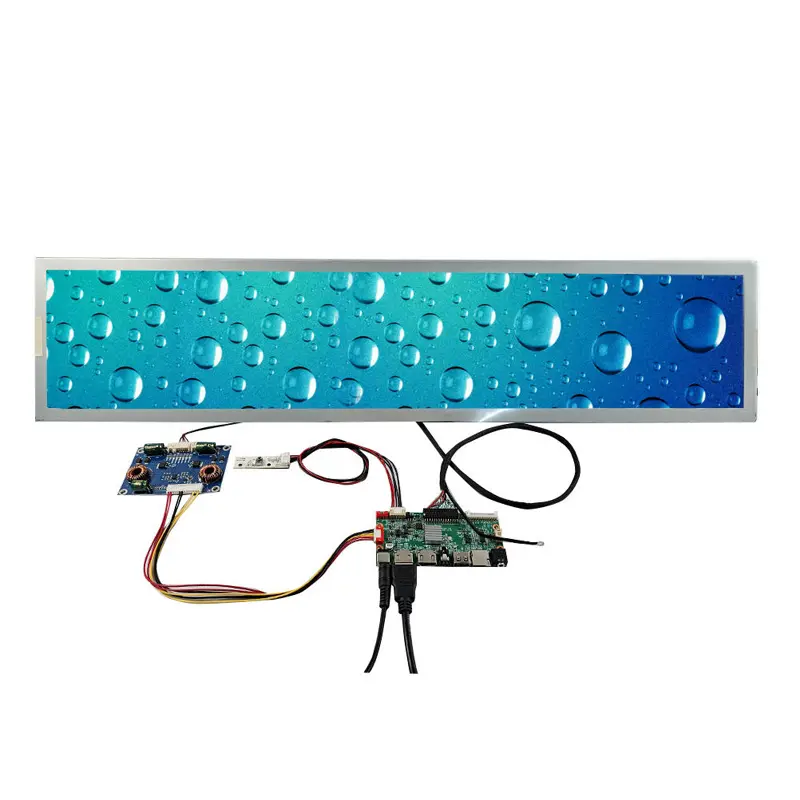
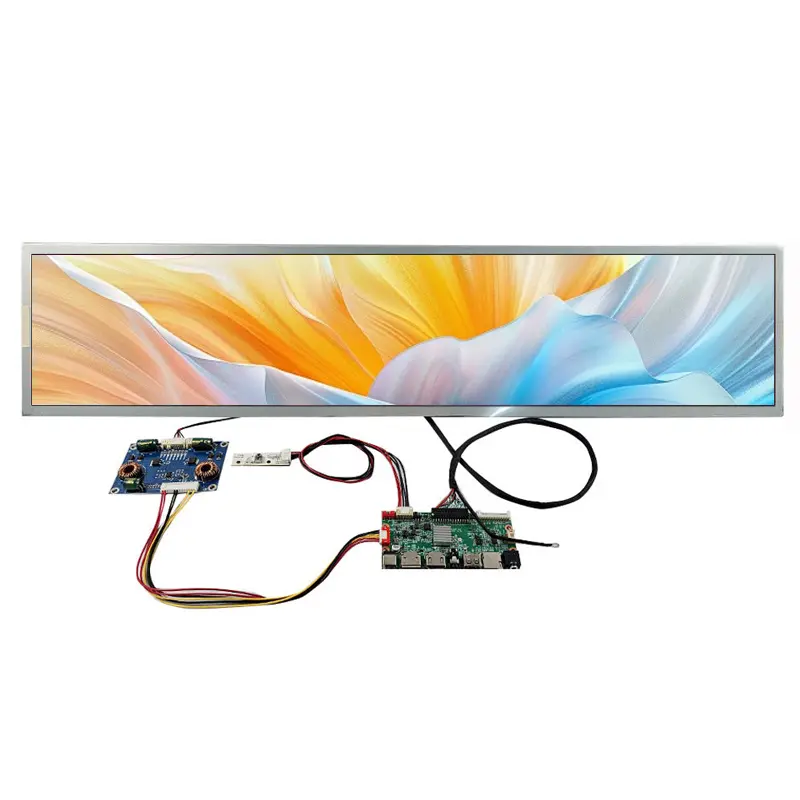
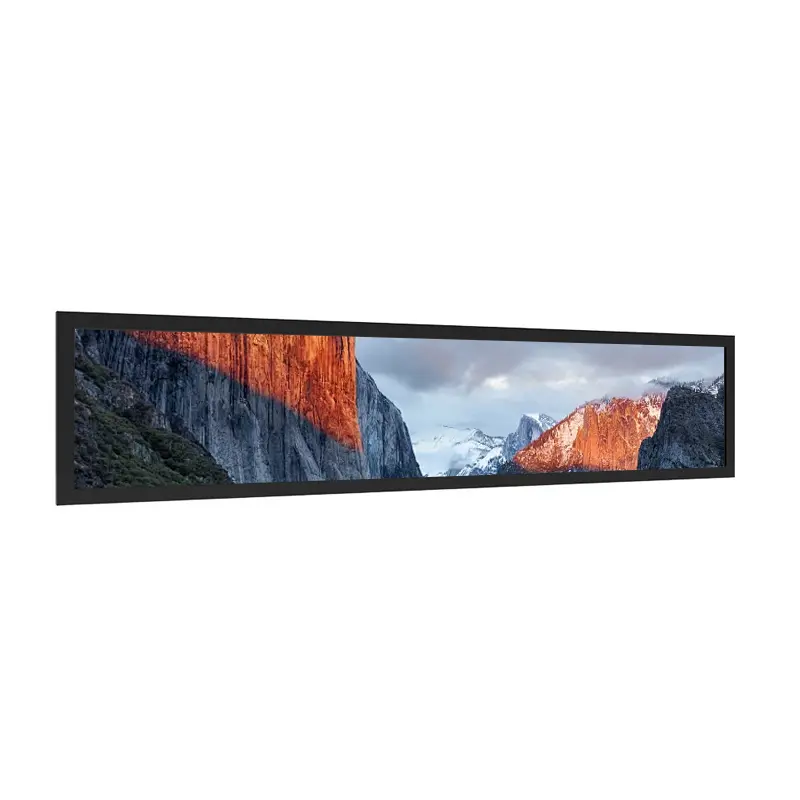
28 Inch Metro Timetable LCD Panel 4000:1 for LVDS Passenger Systems
Model P/N
Size
Resolution
Brightness
Viewing Angle
Connector Type
Operating Temp
Overall(mm)
huisoar
H280IVN-GE10
Brand
Panel Size (inch)
Model P/N
Resolution
Brightness (nits)
Viewing Angle
Contrast Ratio
Response Time
Overall (mm)
Active Area (mm)
Refresh Rate
Bezel Opening
Display Colors
Panel Type
Connector Type
Surface Treatment
Operating Temp
Touchscreen Type
Storage Temp
Work Mode
Pixel Format
Input Voltage (V)
Weight (g)
Designed For
1920×360 AMVA3 Stretched LCD for Railway Platforms, Metro Corridors, and Smart Bus Stops
A 28 Inch Metro Timetable LCD Panel is a stretched 1920×360 AMVA3 display module for railway platforms, metro corridors, smart bus stops, passenger buses, and outdoor-facing transit signage. It combines 69 PPI resolution, 2500/3000/4000/5000-nit brightness options, 4000:1 contrast, 89-degree viewing, matte haze 28% hard coating, 51-pin LVDS signaling, 12.0 V typical driving voltage, no-touch structure, and a 70,000-hour WLED backlight for long-duty public information systems.
At a Glance: 28 Inch Transit Timetable Panel Highlights
- 28.0-inch stretched LCD format supports long timetable, route, alert, and advertising layouts.
- 1920×360 resolution gives transit content designers a wide canvas for route names, arrival times, and public messages.
- 2500 / 3000 / 4000 / 5000-nit brightness options support bright station, shelter, and outdoor-facing use cases.
- AMVA3 normally black transmissive mode and 4000:1 contrast help improve text and symbol separation.
- Matte haze 28% hard coating reduces glare concerns in stations with strong lighting.
- LVDS 2-channel 8-bit 51-pin interface supports embedded transit display controller integration.
- No-touch structure fits timetable, route guidance, and passenger information screens where users read rather than interact.
Product Overview of the 28 Inch Metro Timetable LCD Panel
The 28 Inch Metro Timetable LCD Panel is designed for transportation display projects that need a long horizontal information window. Railway platforms, subway corridors, bus shelters, and passenger service areas often have wide but shallow installation spaces. A stretched LCD panel fits these openings better than a standard 16:9 monitor because it presents timetable and route data without wasting height.
The 1920×360 format is especially useful for content that moves from left to right: station names, arrival times, delay notices, gate changes, safety reminders, and banner-style advertising. With 69 PPI pixel density, the panel supports readable public-information layouts when the content size, viewing distance, and installation height are designed correctly.
This product is best understood as a module-level display component for OEM systems, not a complete sealed outdoor monitor. The panel provides high-brightness, wide-view, no-touch, LVDS-based display capability, while the final system must still validate enclosure sealing, cover glass, optical treatment, ventilation, cable routing, and thermal performance.
Key Features of the 28 Inch Metro Timetable LCD Panel
| Key Feature | B2B Value |
|---|---|
| 28-inch stretched format | Fits long metro, railway, bus shelter, and public-information openings. |
| 1920×360 resolution | Supports timetable, route, warning, and advertising layouts in one horizontal strip. |
| AMVA3 normally black mode | Helps improve contrast and readability for public information content. |
| 4000:1 typical contrast | Supports clearer text blocks, route symbols, and status messages. |
| 89/89/89/89 viewing angle | Helps passengers read the screen from different directions while moving through a station. |
| Matte haze 28% hard coating 3H | Reduces glare impact and supports surface durability in public environments. |
| 2500–5000-nit listed brightness options | Allows brightness selection for station interiors, shelters, and outdoor-facing deployments. |
| LVDS 51-pin terminal connector | Supports embedded controller-board integration after pinout and timing review. |
| WLED 70,000-hour backlight | Supports long daily operation requirements in passenger-information systems. |
| No-touch panel structure | Keeps the module focused on passive timetable and signage display use. |
Technical Specifications of the Transit Timetable LCD Panel
| Specification | Confirmed Value |
|---|---|
| Display Size | 28.0 inch |
| Product Type | Stretched passenger information LCD panel |
| Resolution | 1920 × 360, 69 PPI |
| Brightness | 2500 / 3000 / 4000 / 5000 nits; 500–5000 nits stated as customization range |
| Display Mode | AMVA3, transmissive, normally black |
| Contrast Ratio | 4000:1 typical |
| Viewing Angle | 89/89/89/89 |
| Surface Treatment | Matte, haze 28%, hard coating 3H |
| Interface | LVDS, 2-channel 8-bit, 51-pin terminal connector |
| Driving Voltage | 12.0 V typical |
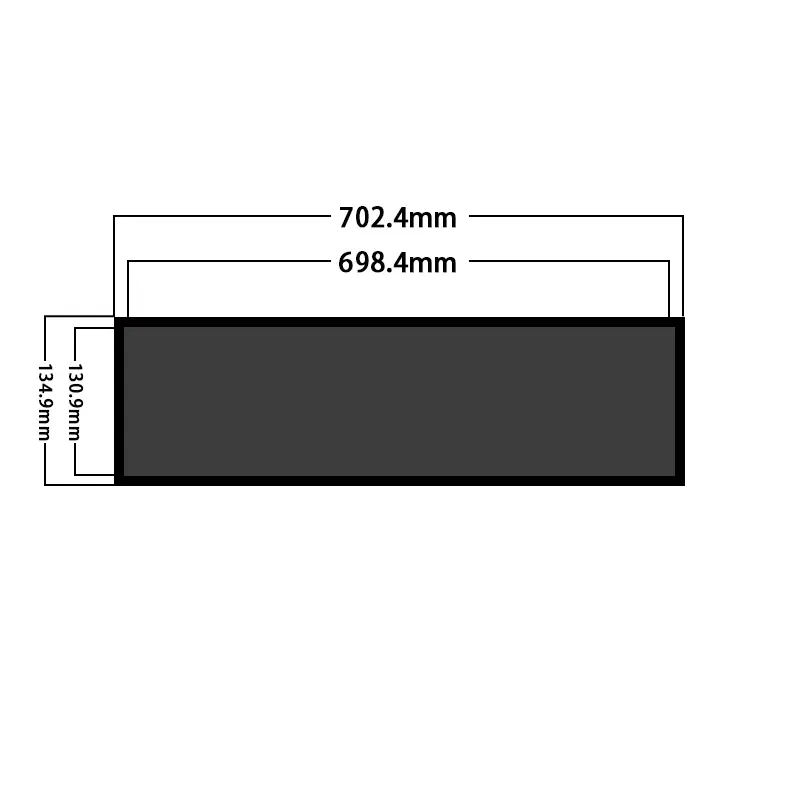
For engineering selection, the most important checks are the final drawing, LVDS timing, brightness version, and system-level thermal design. The display-area and active-area values appear inconsistently across the provided materials, so enclosure teams should confirm the official mechanical drawing before cutting glass, bezel, or metalwork.
Why Choose a Metro Timetable LCD Panel for Passenger Guidance?
1920×360 Format for Route Names and Arrival Times
The 1920×360 format is well matched to timetable panels because transport information is usually read in rows. A standard rectangular display can show the same information, but it may waste vertical space in platform headers, shelter fascia, train-car interiors, and long corridor signage. The stretched format lets designers arrange route numbers, arrival countdowns, service alerts, and directional icons in a cleaner horizontal structure.
AMVA3 Contrast for Moving Passenger Environments
Passengers often read displays while walking, waiting, or viewing from an angle. AMVA3 technology, 4000:1 typical contrast, and 89-degree viewing support clearer visibility from multiple positions. The matte haze 28% hard-coating surface also helps control reflections from overhead lighting, glass shelters, and bright public areas.
No-Touch Structure for Timetable and Notice Boards
A timetable display is usually a passive information system. The no-touch structure is therefore practical for railway platforms, metro systems, bus shelters, airport transit areas, EV charging stations, and fuel pumps. If a project requires cover glass, optical bonding, or protective front layers, those should be evaluated as system-level customization options.
2500–5000-Nit Brightness Planning for Transit Displays
Brightness selection should be matched to the real environment. Indoor metro corridors may not need the same luminance as outdoor bus shelters or station entrances with strong daylight. The provided material lists 2500 / 3000 / 4000 / 5000-nit options and also states a broader 500–5000-nit customization range, so the final quotation should specify the exact target luminance.
For integrators comparing brightness versions, the 28 Inch Metro Timetable LCD Panel should be evaluated with the final cover glass, enclosure, installation angle, and content theme. A 2500-nit configuration may suit many bright station interiors, while 3000/4000/5000-nit versions are better candidates for shelters, platform entrances, and outdoor-facing transit points where sunlight and reflection reduce perceived contrast.
LVDS 51-Pin Integration and Mechanical Review
The LVDS 2-channel 8-bit 51-pin terminal connector makes the panel suitable for embedded transit display controllers. Before PCB or harness design is finalized, engineers should request the pin assignment, timing table, recommended cable length, voltage requirements, and compatible controller-board information.
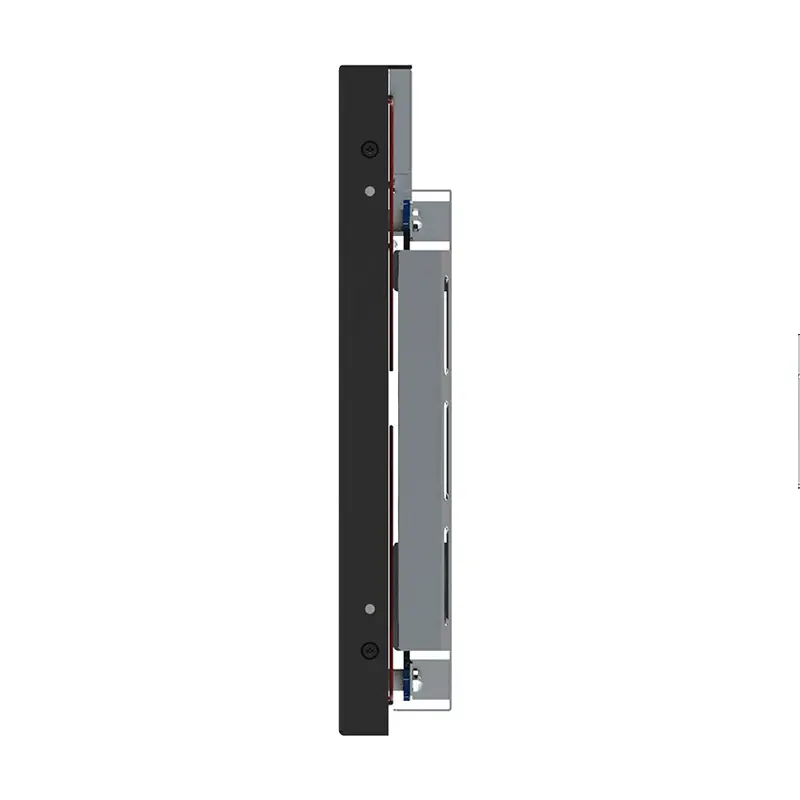
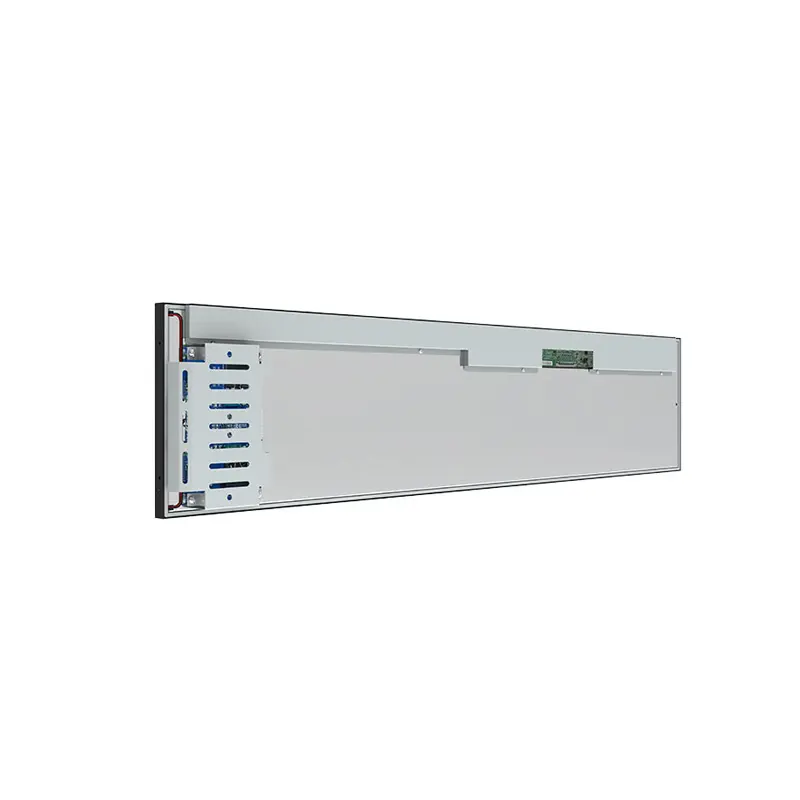
Mechanical review should confirm display area, active area, bezel opening, front-window dimensions, mounting pressure, and cable exit direction. Because the supplied materials show a conflict between 698.4 × 130.95 mm and 702.4 × 134.95 mm, the official drawing should control enclosure design.
Recommended Applications for Metro and Transit Timetable Screens
Railway Station Platforms
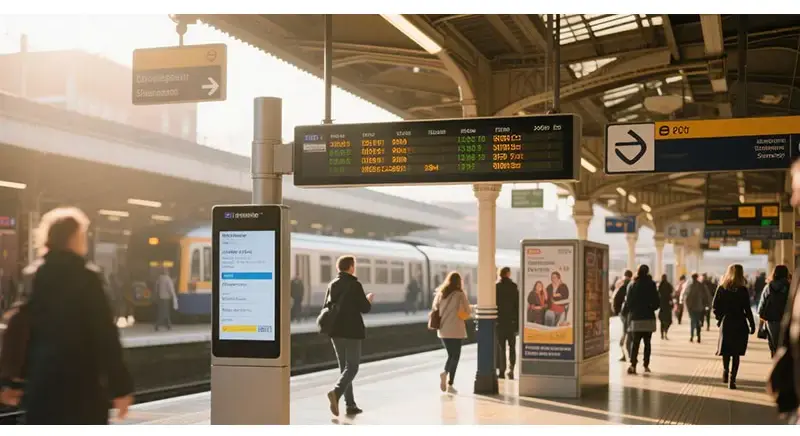
Railway platforms need long displays for train number, destination, platform status, arrival time, delay notices, and safety messages. This panel fits platform-header layouts where height is limited but horizontal visibility is important.
Subway and Metro Corridors
Metro corridors and transfer passages require quick-read route information. A stretched LCD module can show directional arrows, line names, and service updates without forcing passengers to stop in high-flow areas.
Smart Bus Stop Shelters
Smart shelters often combine route timetables, advertising, and public notices. High brightness, wide viewing, and matte surface treatment make this module a practical display candidate when paired with a proper outdoor shelter enclosure.
EV Charging and Fuel Pump Information
EV chargers and fuel pumps can use a stretched display for pricing, charging status, safety prompts, queue guidance, or advertising. Integrators should validate brightness, glass, enclosure, and thermal conditions for each installation.
Customization Options for 28 Inch Transit LCD Projects
Project evaluation can include brightness-level selection, anti-glare or anti-reflective cover glass, optical bonding, LVDS cable customization, controller-board matching, mechanical bracket design, front-window adaptation, enclosure review, and thermal planning. These options should be confirmed against the installation drawing, ambient light, target market, and production quantity.
Procurement and Engineering Checklist for LCD Timetable Panel Selection
- Confirm whether the display will be installed indoors, semi-outdoors, in a shelter, or in an outdoor-facing enclosure.
- Select the brightness version based on real station lighting and viewing distance.
- Validate the 1920×360 content layout with actual fonts, route names, and timetable data.
- Confirm LVDS 51-pin pinout, timing, cable length, controller compatibility, and 12.0 V driving requirements.
- Use the official mechanical drawing to resolve display-area and active-area conflicts.
- Review cover glass, optical bonding, matte surface, and front protection requirements.
- Validate operating and storage temperature requirements against the final datasheet.
- Test samples under representative brightness, temperature, enclosure, and content conditions.
FAQ
Why use a 28 Inch Metro Timetable LCD Panel instead of a standard 16:9 display?
What interface does the panel use?
Is touch included?
Which brightness should be selected?
What operating temperature should be used for design?
What mechanical dimensions should be confirmed?
Can it be used for outdoor digital signage?
Freya Yang
+86 18318948097