Freya Yang
+86 18318948097
+852 62667476
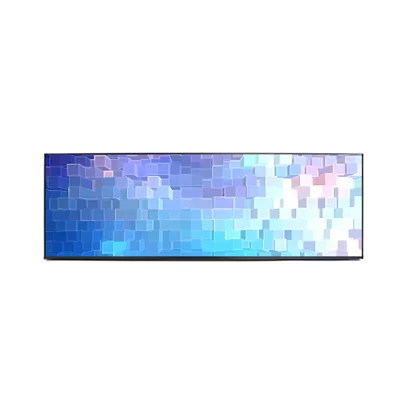
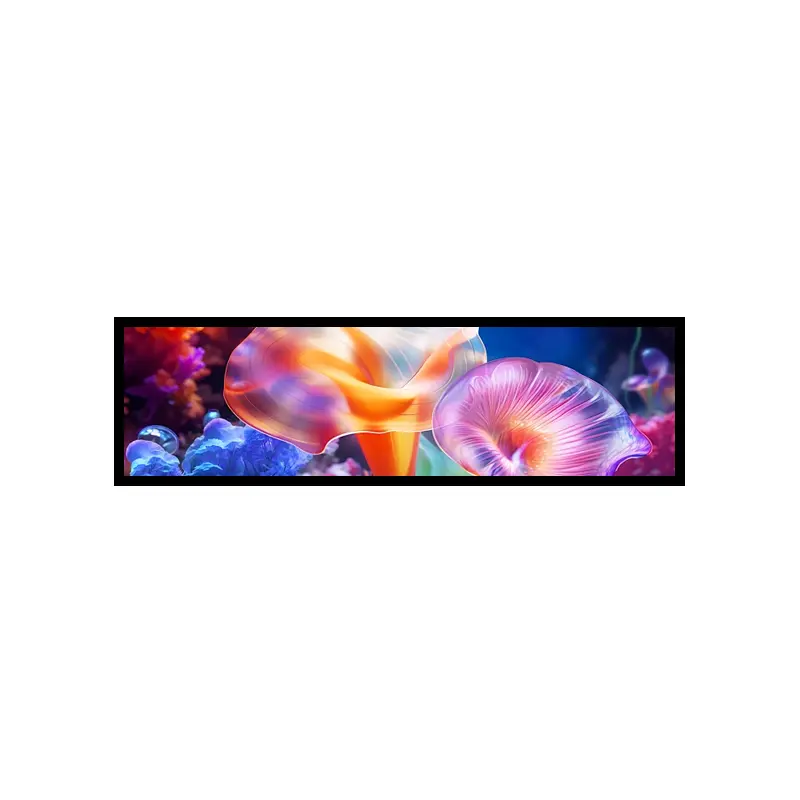
49.5 Inch Passenger Information Stretched Display Panel for Transit

Model P/N
Size
Resolution
Brightness
Viewing Angle
Connector Type
Operating Temp
Overall(mm)
huisoar
HS495ENT-GE20
Brand
Panel Size (inch)
Model P/N
Resolution
Brightness (nits)
Viewing Angle
Contrast Ratio
Response Time
Overall (mm)
Active Area (mm)
Refresh Rate
Display Colors
Panel Type
Connector Type
Surface Treatment
Operating Temp
Touchscreen Type
Storage Temp
Work Mode
Pixel Format
Input Voltage (V)
Weight (g)
Operating Environment
Designed For
49.5 Inch Passenger Information Stretched Display Panel for Transit
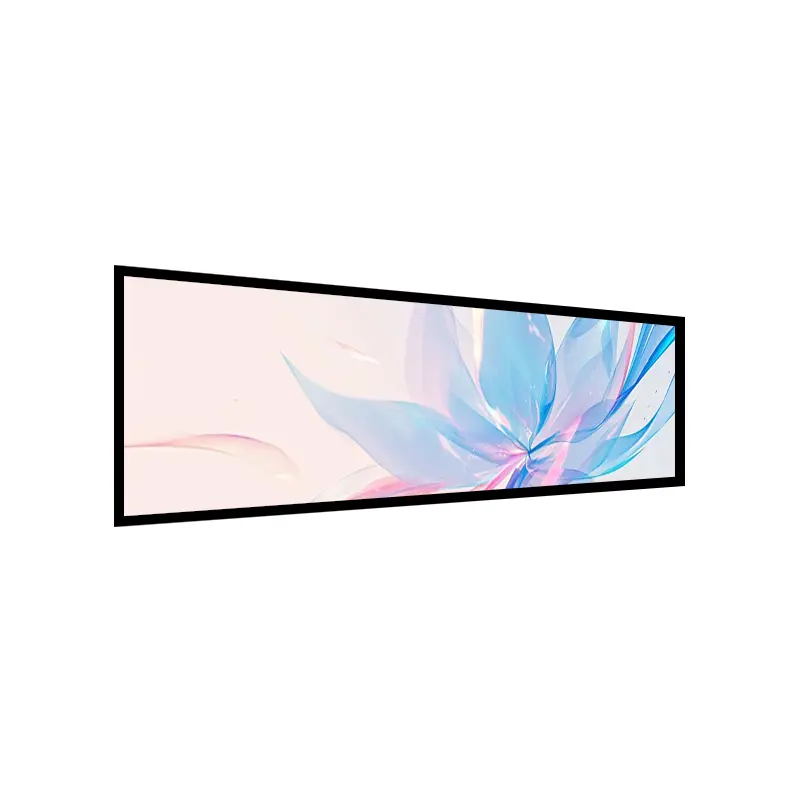
This 49.5-inch Hi-Tni bar panel combines 2000 cd/m² luminance, 51-pin LVDS and a 16:4.5 format for transit information systems.
Product Summary
The Passenger Information Stretched Display Panel provides a 49.5-inch ultra-wide image area for train stations, metro platforms, bus terminals and other long-format public-information systems. Its confirmed configuration combines 1920 × 540 resolution, 2000 cd/m² typical luminance, a 4000:1 typical contrast ratio and two-channel, 8-bit LVDS through a 51-pin connector.
Unlike a finished signage monitor, this component allows the system developer to choose the controller, enclosure, mounting structure, protective front stack and media architecture. The panel includes a WLED backlight and LED driver but does not include a standard touch system.
A 51-pin LVDS connector does not guarantee timing, voltage, two-channel mapping, bit depth or pin compatibility with another controller.
Key Specifications at a Glance
| Parameter | Confirmed value |
|---|---|
| Display size | 49.5 inches |
| Resolution | 1920 × 540 pixels |
| Aspect ratio | 16:4.5 |
| Panel structure | a-Si TFT-LCD Hi-Tni LCM |
| Pixel structure | RGB vertical stripe, 40 PPI |
| Interface | 51-pin LVDS, two-channel, 8-bit |
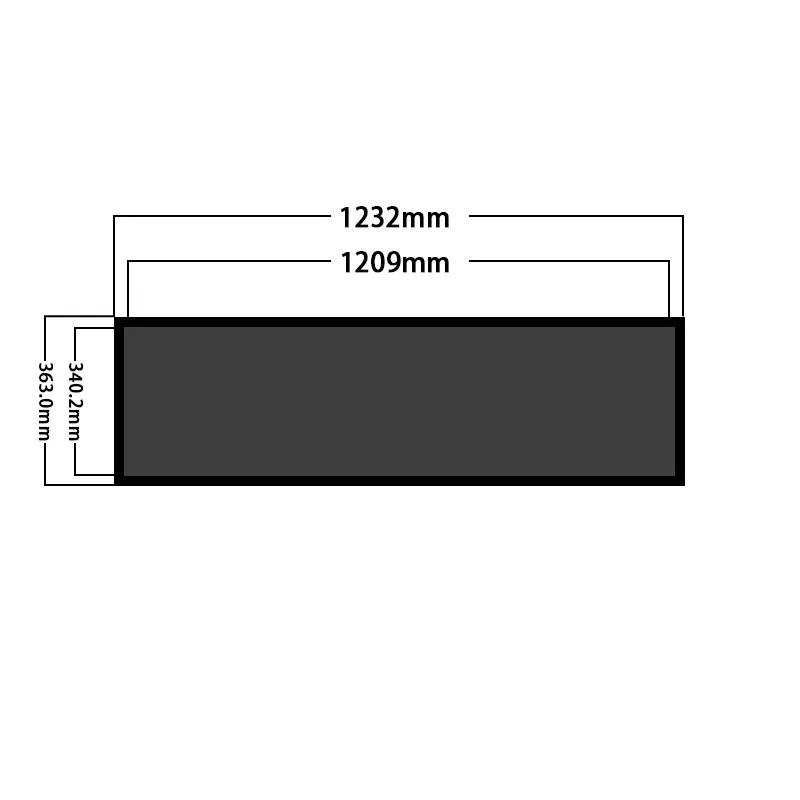
| Active area | 1209.6 × 340.2 mm |
| Panel outline | 1232.4 × 363 × 29 mm |
| Luminance | 2000 cd/m² typical |
| Contrast ratio | 4000:1 typical |
| Viewing angle | 89/89/89/89° typical, L/R/U/D |
| Response time | 8 ms typical, G-to-G |
| Refresh rate | 60 Hz |
| Colors | 16.7M colors, 72% NTSC |
| Surface | Anti-glare, 28% haze, 3H |
| Panel input | 12 V typical |
| Backlight | WLED with integrated LED driver |
| Listed backlight life | ≥70,000 hours |
| Weight | 6.4 kg typical |
| Touch | Non-touch |
| Operating temperature | −20°C to +70°C |
| Storage temperature | −30°C to +80°C |
Ultra-Wide Content Design for Transit Systems
Preparing a Native 1920 × 540 Canvas
The native raster provides a horizontal workspace suited to stop names, route numbers, arrival times, platform changes, safety alerts, directional arrows and advertising zones. Passenger-information projects using stretched displays commonly need display-specific content dimensions rather than conventional 16:9 assets.
Content should be authored at 1920 × 540 rather than cropped from a standard Full HD layout. This keeps text and symbols sharp and avoids unpredictable scaling at the controller.
Using the 16:4.5 Format Efficiently
The 16:4.5 aspect ratio supports narrow installation zones where a standard screen would create unused height or require excessive masking. Typical layouts can divide the display into:
- Route and destination information
- Current and next-stop messages
- Time and service-status fields
- Emergency or disruption alerts
- Directional graphics
- Commercial media zones
Critical information should remain readable at the farthest intended viewing position. Font height, contrast, scrolling speed and dwell time require testing with representative passengers and installation distances.
Optical Performance in Bright Public Environments
2000 cd/m² Use Boundary
The fixed 2000 cd/m² typical luminance provides substantial optical headroom for station concourses, platform headers, entrance areas and sheltered outdoor-facing installations. The panel page positions the model as a high-brightness, sunlight-readable stretched display.
A 2000 cd/m² panel can support bright-ambient passenger-information systems, but finished readability still depends on cover-glass reflection, bonding, installation angle and thermal conditions.
Cover glass and internal air gaps can add significant reflection. Optical bonding and reflection-control treatments can improve perceived contrast without changing the panel’s nominal luminance.
Wide Viewing and Anti-Glare Surface
The confirmed viewing sequence is 89/89/89/89° typical for left, right, up and down at CR ≥ 10. This supports installations viewed by passengers approaching from different positions.
The anti-glare surface uses 28% haze and a 3H hard coating. The 4000:1 typical contrast ratio provides a strong basis for route information, status fields and advertising graphics, although the finished result still depends on the front stack and controller output.
Integrating the Passenger Information Stretched Display Panel
51-Pin Two-Channel LVDS Qualification
The interface is two-channel, 8-bit LVDS through a 51-pin connector. Engineering approval should cover:
- Native 1920 × 540 timing
- 60 Hz output
- Pixel-clock requirements
- Two-channel LVDS mapping
- 8-bit color mapping
- Complete 51-pin assignment
- Connector pitch and contact side
- Cable orientation and length
- Grounding and shielding
- Enable and control signals
A cable or controller labeled “51-pin LVDS” is not sufficient evidence of compatibility because the pin definition, timing and voltage requirements can differ.
Panel and Backlight Power
The panel input is 12 V typical. The source also confirms an integrated WLED backlight and LED driver, but it does not publish the complete backlight voltage, current, dimming or maximum-power requirements.
The controller, panel rail and brightness-control path should be reviewed together. System input voltage should not be inferred from generic OEM options elsewhere on the page.
HDMI, DisplayPort, Ethernet or media-player outputs require a controller that generates the approved panel LVDS timing. They are not direct interfaces of the bare panel.
Mechanical and Wide-Temperature Planning
Active Area, Outline and Structural Support
The active image area measures 1209.6 × 340.2 mm. The complete panel measures 1232.4 × 363 × 29 mm and weighs 6.4 kg typical.
Enclosure design should address:
- Visible opening
- Mounting-point locations
- Distributed structural support
- Connector and cable clearance
- Rear-component keep-out zones
- Panel deflection
- Landscape or portrait orientation
- Service access
The active area and complete outline serve different design purposes and should not be treated as interchangeable.
Hi-Tni and Operating-Range Boundaries
The exact module operating range is −20°C to +70°C, with storage from −30°C to +80°C. The broader −20°C to +110°C language on the page describes a Hi-Tni or customized LC capability rather than the confirmed operating specification for this module.
Thermal validation should include panel heat, backlight heat, solar loading, enclosure ventilation and the highest expected ambient condition. Brightness may need to be managed if the system approaches its thermal limit.
The listed backlight life is at least 70,000 hours. That value should be verified against the relevant brightness, temperature and duty-cycle reference conditions before it is used in a finished-system maintenance calculation.
Recommended Transit and Signage Applications
The Passenger Information Stretched Display Panel is suitable for:
- Train and metro platform headers
- Passenger-information displays
- Bus-terminal schedule boards
- Route and destination strips
- Station guidance systems
- Queue and service-status displays
- Sheltered outdoor-facing transit signage
- Long-format public-information equipment
Stretched displays are used in passenger-information projects where standard aspect ratios do not fit the available installation zone. Transit examples commonly combine custom display parameters, LVDS and Hi-Tni technology.
The panel is not a finished waterproof signage product. Enclosure sealing, impact protection, front-glass safety, condensation control, controller hardware and mounting compliance require separate system qualification.
Customization and Project Qualification
The standard panel is non-touch, so touch requires a separately engineered sensor, controller and front stack.
Project review may include:
- LVDS controller and cable matching
- Brightness calibration
- Ambient-light dimming
- AR, AG or AF front treatment
- Optical bonding
- Cover-glass specification
- Enclosure adaptation
- Landscape or portrait mounting
- Thermal design
- Touch development
- Branding and packaging
Generic complete-system options shown elsewhere on the manufacturer page—including sealed enclosures, wide-voltage system inputs, operating systems and network interfaces—require separate configuration-specific confirmation and should not be treated as standard panel features.
Custom configurations are generally reviewed from 500 pieces, subject to tooling requirements, material availability and the requested specification. Sample and standard-panel quantities are confirmed separately.
Procurement Checklist
Confirm the following before sample or production approval:
- Native 1920 × 540 timing
- 60 Hz controller output
- Two-channel, 8-bit LVDS mapping
- Complete 51-pin assignment
- Connector pitch, contact side and cable orientation
- 12 V panel rail
- WLED voltage, current, dimming and control data
- 1209.6 × 340.2 mm active opening
- Approved 1232.4 × 363 × 29 mm outline
- Structural support for the 6.4 kg panel
- Landscape or portrait installation
- Cover-glass transmission and reflection
- Anti-glare and optical-bonding target
- 2000 cd/m² ambient-light requirement
- Controller and media architecture
- Non-touch standard or separate touch route
- −20°C to +70°C operating limit
- Backlight-life reference conditions
- Compliance documents
- Sample criteria, quantity and annual demand
FAQ
About 49.5 Inch Passenger Information Stretched Display Panel
What must be checked before connecting a 51-pin LVDS controller?
Does 2000 cd/m² guarantee readability behind transit cover glass?
How should 1920 × 540 passenger-information content be prepared?
Does the listed ≥70,000-hour backlight life apply under every operating condition?
Freya Yang
+86 18318948097