Freya Yang
+86 18318948097
+852 62667476
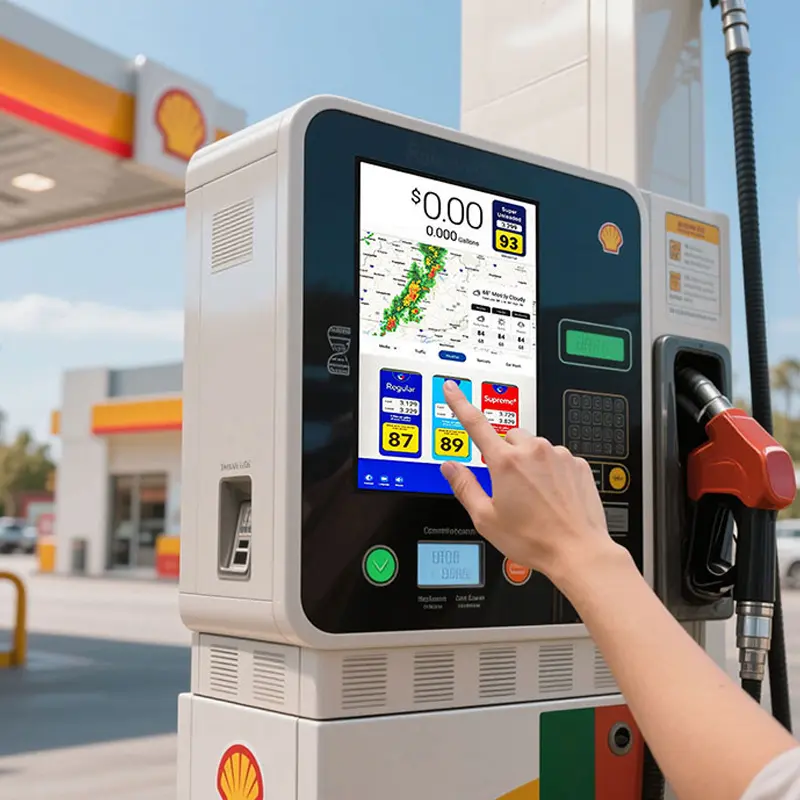
21.5 Inch Fuel Dispenser Touch Monitor for EV Charging
Model P/N
Size
Resolution
Brightness
Viewing Angle
Connector Type
Operating Temp
Overall(mm)
huisoar
HS215ENT-GE10-OP
Brand
Panel Size (inch)
Model P/N
Resolution
Brightness (nits)
Viewing Angle
Contrast Ratio
Response Time
Overall (mm)
Active Area (mm)
Refresh Rate
Display Colors
Panel Type
Connector Type
Surface Treatment
Operating Temp
Touchscreen Type
Storage Temp
Work Mode
Pixel Format
Input Voltage (V)
Control Type
Weight (g)
Product Appearance Size
Operating Environment
I/O Interface
Designed For
21.5 Inch Fuel Dispenser Touch Monitor for EV Charging
A 21.5-inch Full HD open-frame touchscreen for fuel pumps and charging equipment, with 1000 cd/m² standard luminance and wide-temperature operation.
Product Summary
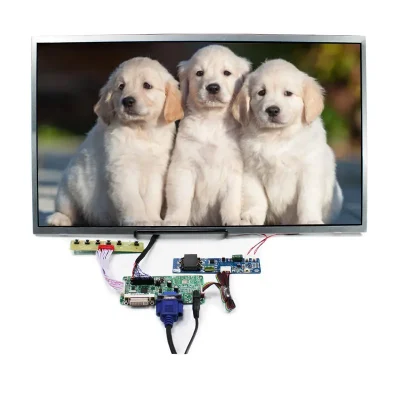
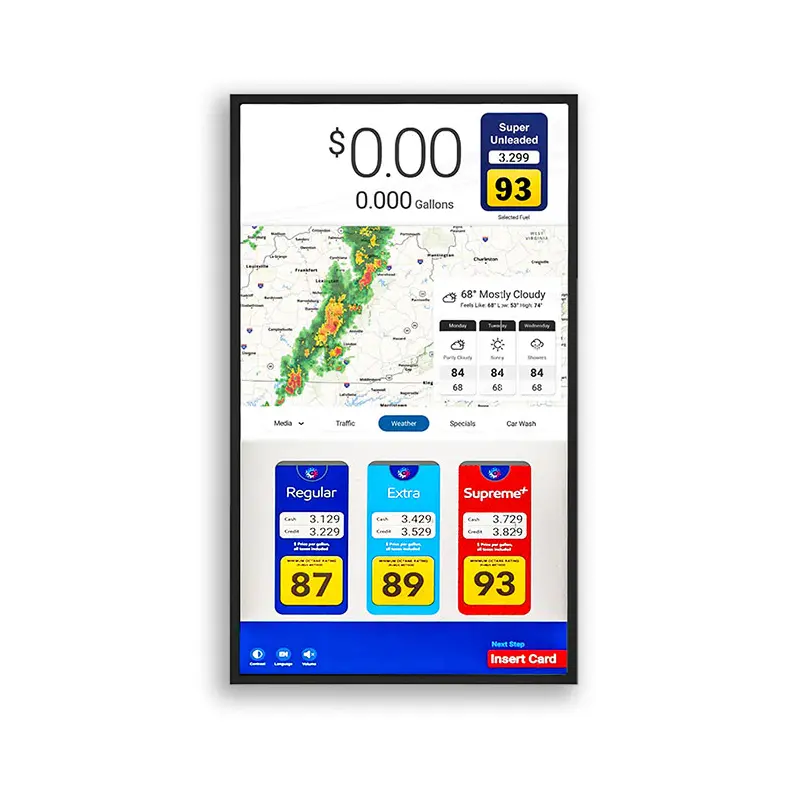
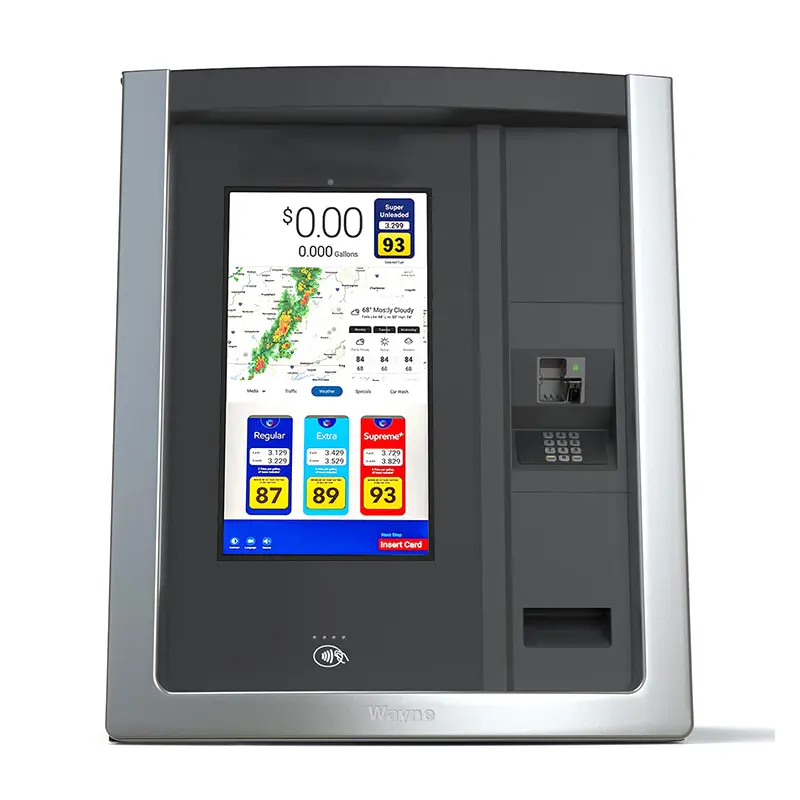
The Fuel Dispenser Touch Monitor is a 21.5-inch open-frame interface for fuel pumps, pay-at-pump kiosks, EV charging stations and related self-service equipment. Its native 1920 × 1080 resolution provides room for fueling instructions, charging status, loyalty content, product selections, safety messages and customer-facing media within one interface.
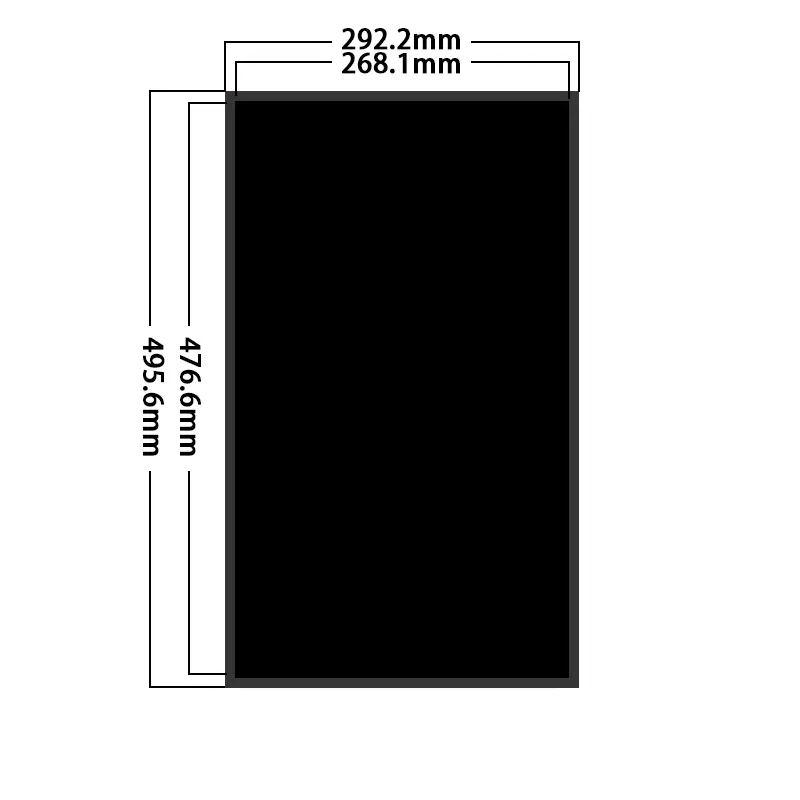
The standard configuration uses 1000 cd/m² typical luminance, projected capacitive touch and a wide operating range of −20°C to +70°C. The 476.64 × 268.11 mm active image area is housed within a 495.6 × 292.2 × 51.8 mm monitor structure, providing defined dimensions for cabinet, bezel and support planning.
Key Specifications
| Parameter | Confirmed value |
|---|---|
| Screen size | 21.5 inches |
| Product form | Open-frame touch monitor |
| Resolution | 1920 × 1080 pixels |
| Standard luminance | 1000 cd/m² typical |
| Contrast ratio | 3000:1 |
| Response time | 13/5 ms typical, Tr/Td |
| Refresh rate | 60 Hz |
| Viewing-angle sequence | 89/89/89/89° typical, CR ≥ 10 |
| Display colors | 16.7 million colors; 72% sRGB |
| Active area | 476.64 × 268.11 mm |
| Monitor dimensions | 495.6 × 292.2 × 51.8 mm |
| Weight | 1.67 kg typical |
| Internal panel interface | 30-pin, two-channel, 8-bit LVDS |
| Panel input reference | 5.0 V typical |
| Touch technology | Projected capacitive touch |
| Surface | Matte, hard coating 3H |
| Operating temperature | −20°C to +70°C |
| Storage temperature | −30°C to +80°C |
Alternative brightness, touch-controller, external-input and protective configurations should be defined in the approved project specification.
Full HD Interface Design for Fueling Equipment
Use the Native 1920 × 1080 Raster
The interface should be prepared at native Full HD resolution to preserve text detail, button geometry, icons and media quality. Scaling a lower-resolution interface may soften small operating instructions or produce inconsistent touch-target dimensions.
A 21.5-inch screen can combine transactional guidance with branding or media zones, but critical operating controls should remain visually separated from advertising content.
Design Touch Targets for Standing Users
Fuel-pump and charger interfaces are often viewed from different heights and distances. Button size, spacing, contrast and information hierarchy should be tested from the expected standing positions.
Price, volume, charging status and safety information should remain readable without requiring the user to move close to the cover window. Touch controls should also account for users wearing work gloves or interacting during rain or cold conditions.
Optical Planning for the Fuel Dispenser Touch Monitor
Qualify the Standard 1000 cd/m² Configuration
The standard 1000 cd/m² typical luminance provides a high-brightness platform for sheltered forecourts, canopy-covered pumps and bright outdoor-facing installations. It does not guarantee equal performance behind every front window.
The 1000 cd/m² standard luminance supports bright-environment evaluation but does not guarantee readability through every front-window stack.
Window tint, coating, reflection, air gap, optical bonding, screen angle and direct solar exposure can materially alter apparent brightness and contrast. Outdoor-display manufacturers similarly treat luminance, front protection, reflection control and installation geometry as system-level design variables.
Control Reflection and Viewing Geometry
The display has a raw 89/89/89/89° viewing-angle sequence. The direction order should be confirmed before the cabinet angle is finalized.
The matte 3H surface helps define the standard panel treatment, but the finished optical stack may include a separate touch layer, protective window or bonding layer. A representative assembly should be evaluated in the actual cabinet rather than approving visibility from the bare display alone.
PCAP Touch Qualification for Pump and Charger Use
Validate Wet and Glove Operation
Projected capacitive touch is the stated interaction technology. Wet-hand and glove operation depend on the touch controller, firmware sensitivity, glove material, water condition, cover thickness and bonding structure.
PCAP touch capability does not prove wet or glove performance for every controller and cover configuration.
Approval testing should include dry fingers, water droplets, the required glove types, edge touches, multi-touch behavior, false-trigger resistance and recovery after the surface is wiped. Industrial outdoor-touch products commonly define glove, water, front-protection and controller behavior as configuration-specific requirements.
Confirm the Touch Controller and Host Interface
The display interface and touch interface are separate signal paths. The internal display path is identified as 30-pin, two-channel, 8-bit LVDS, while the exact PCAP controller and host interface must be confirmed.
USB is commonly used for touch control in finished monitor configurations, but it should not be assumed unless the ordered board and cable set define it. Confirm operating-system support, enumeration, touch-point count, firmware and service access before production release.
Open-Frame Mechanical and Electrical Integration
Plan Around the 51.8 mm Depth
The monitor measures 495.6 × 292.2 × 51.8 mm and weighs approximately 1.67 kg. Cabinet design should provide structural support, rear clearance, cable access, ventilation and a service-removal path.
The 476.64 × 268.11 mm active area should be aligned with the visible window without placing critical graphics under the bezel or cover-frame overlap.
Separate the Internal LVDS and External I/O Paths
A 30-pin LVDS interface does not guarantee controller compatibility without timing, mapping, voltage and pinout confirmation.
The complete LVDS definition should include native timing, channel mapping, connector orientation, cable assignment, panel voltage and backlight-control requirements.
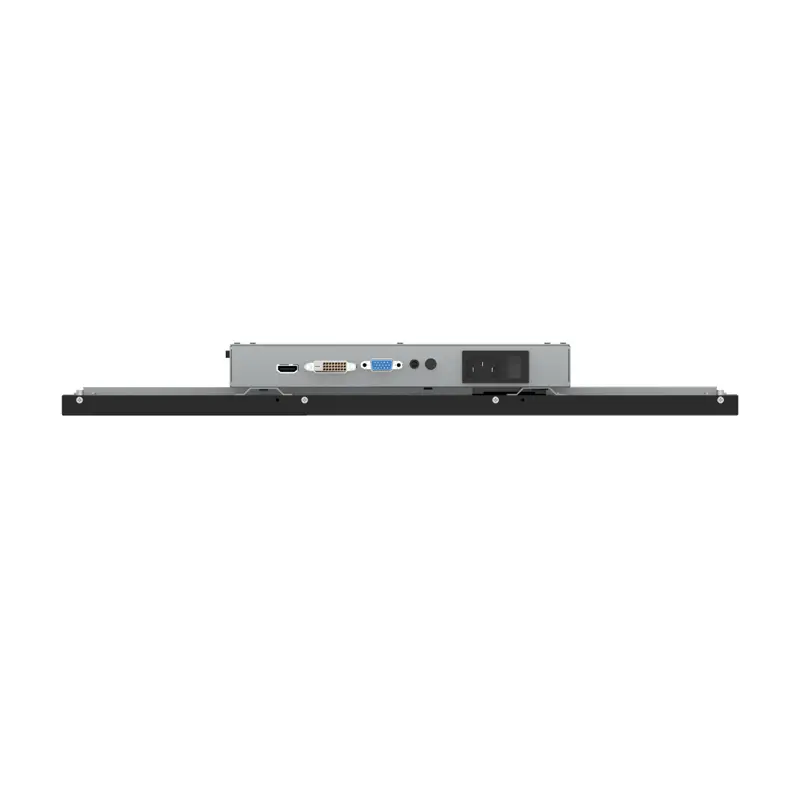
The 5.0 V value is a panel-level reference and should not be treated as the complete open-frame monitor input. HDMI, VGA, USB, RS232 and Ethernet may be available through selected controller configurations, but the ordered I/O board and system power input must be defined separately.
Outdoor System Boundaries
The wide temperature range supports integration into demanding fueling and charging equipment, but the monitor alone does not establish a complete outdoor-rated machine.
An open-frame touch monitor is not a finished weatherproof fuel dispenser.
The final cabinet must address water and dust entry, drainage, condensation, solar loading, fuel-vapor requirements, cooling, cable glands, access panels and corrosion exposure. An IP-rated description should not be converted into a specific finished-system rating without documentation for the exact enclosure and connector configuration. Outdoor kiosk manufacturers commonly specify protection at the front-monitor or assembled-system level rather than treating panel specifications as cabinet certification.
Application Fit
The Fuel Dispenser Touch Monitor is suited to:
- Fuel-pump user interfaces
- Pay-at-pump guidance screens
- Gas-pump media displays
- EV charging control and status interfaces
- Loyalty-program and promotional screens
- Outdoor-facing self-service kiosks
- Car-wash and forecourt service terminals
Transactional or payment use still requires separate validation of the host computer, payment hardware, software, cybersecurity and applicable compliance requirements.
Configuration Options
Project review may include:
- Approved brightness configuration
- PCAP controller and firmware
- Wet or glove touch tuning
- Touch interface and cable
- External HDMI, VGA, USB, RS232 or Ethernet board
- System power module
- Cover glass and protective coatings
- Optical bonding
- Front sealing and cabinet integration
- Custom brackets and bezel design
- Thermal management
- Branding and packaging
Custom configurations are generally reviewed from 500 pieces, subject to tooling requirements, material availability and the requested specification. Sample and standard-monitor quantities are confirmed separately.
Procurement Checklist
Before sample approval, confirm:
- Native 1920 × 1080 timing and 60 Hz requirement
- Complete 30-pin, two-channel, 8-bit LVDS assignment
- Connector pitch, contact side, orientation and cable route
- 5.0 V panel rail and complete backlight electrical requirements
- PCAP controller, touch interface, touch-point count and operating-system support
- Required wet-hand and glove conditions
- Standard 1000 cd/m² lighting target or approved alternative
- Front-window tint, reflection, transmittance and bonding structure
- 476.64 × 268.11 mm active image opening
- 495.6 × 292.2 × 51.8 mm monitor fit
- Support for the 1.67 kg assembly
- External I/O board and complete system power input
- Cabinet ventilation, heat rejection and service access
- Required sealing or IP evidence
- Sample criteria, quantity, annual demand and production schedule
FAQ
About 21.5 Inch Fuel Dispenser Touch Monitor
What must be checked before using the 30-pin LVDS connection?
Is 1000 cd/m² sufficient for a fuel pump in direct sunlight?
How should wet and glove PCAP performance be approved?
Which dimensions control cabinet design?
Does IP-rated sealing make the complete fuel dispenser waterproof?
Freya Yang
+86 18318948097