Freya Yang
+86 18318948097
+852 62667476
4.3 Inch 1000 Nits Small LCD Screen for Embedded HMI
Model P/N
Size
Resolution
Brightness
Viewing Angle
Connector Type
Operating Temp
Overall(mm)
huisoar
HS043003
Brand
Panel Size (inch)
Model P/N
Resolution
Brightness (nits)
Viewing Angle
Contrast Ratio
Response Time
Overall (mm)
Active Area (mm)
Refresh Rate
Display Colors
Panel Type
Connector Type
Operating Temp
Touchscreen Type
Storage Temp
Work Mode
Pixel Format
Input Voltage (V)
Weight (g)
Unit Input Voltage
Operating Environment
I/O Interface
Designed For
4.3 Inch 1000 Nits Small LCD Screen for Embedded HMI
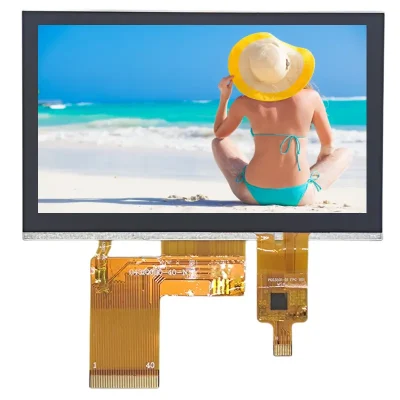
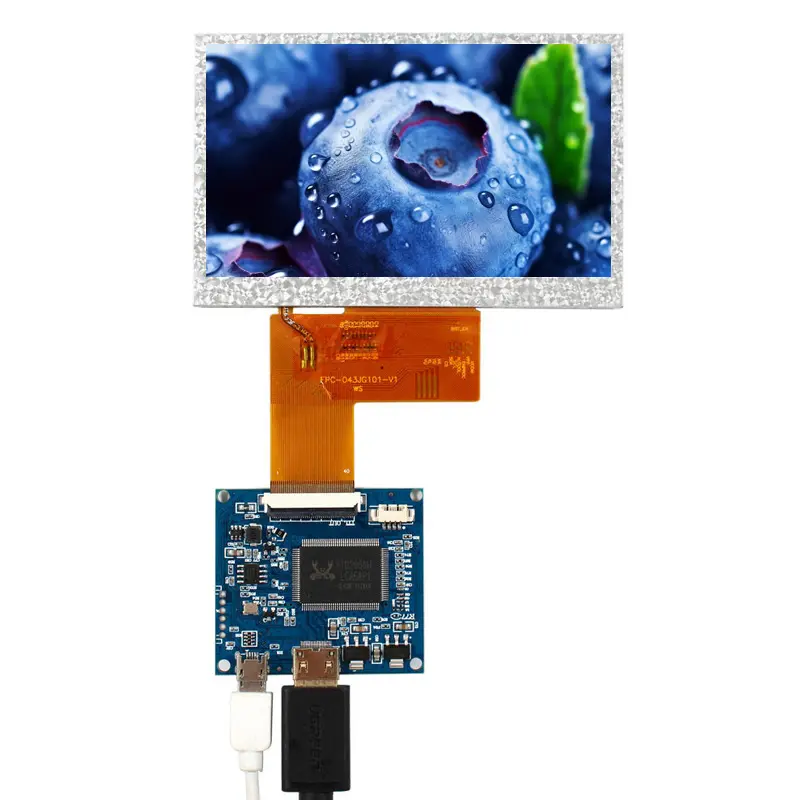
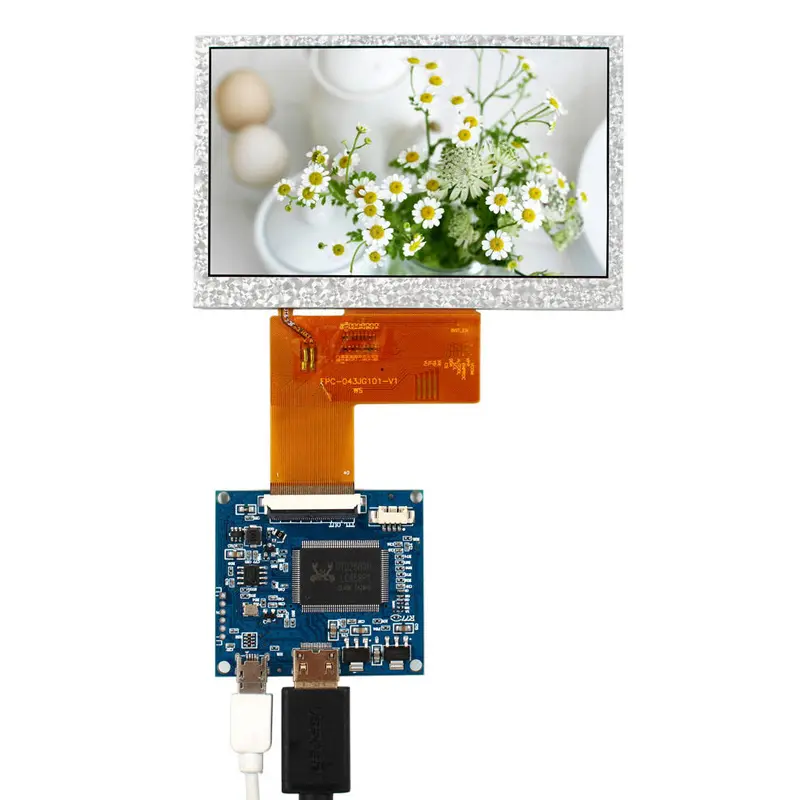
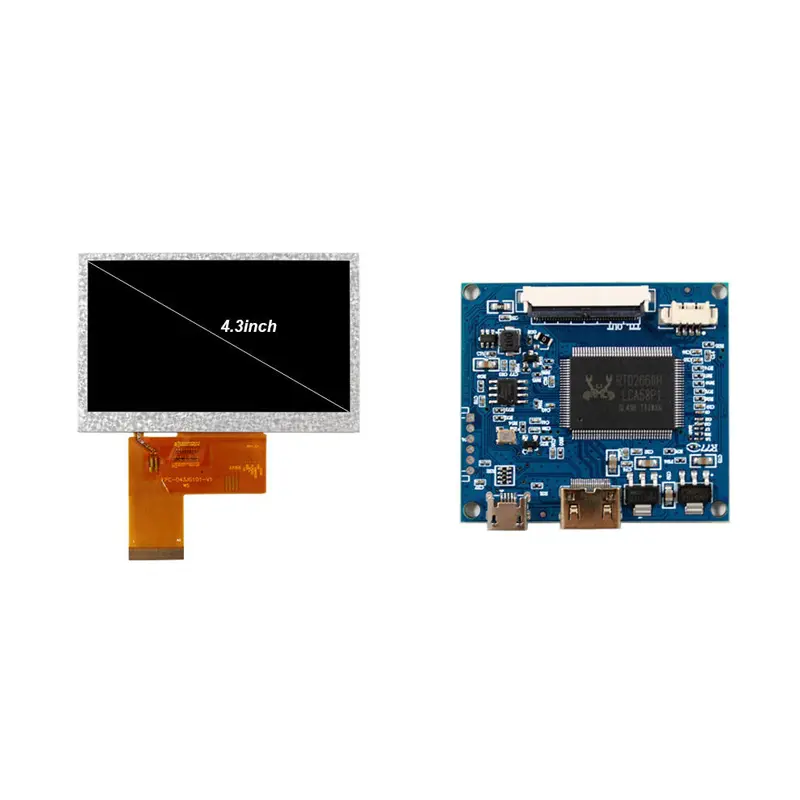
This compact 800 × 480 IPS screen pairs a 40-pin RGB panel with an HDMI-mini controller board for embedded HMI evaluation. The 4.3 Inch 1000 Nits Small LCD Screen combines a 95.04 × 53.86 mm active area, 1000 cd/m² typical luminance, wide 80° viewing in four directions and a thin 105.5 × 67.2 × 3.1 mm panel outline. It is designed for projects that need a small visual interface without moving to a larger display format.
Product Summary
The 4.3 Inch 1000 Nits Small LCD Screen provides an 800 × 480 native workspace for icons, status information, menus, instrument readings and compact control graphics. Its IPS panel is specified as Normally White and Transmissive, with a 600:1 typical contrast ratio and WLED backlight.
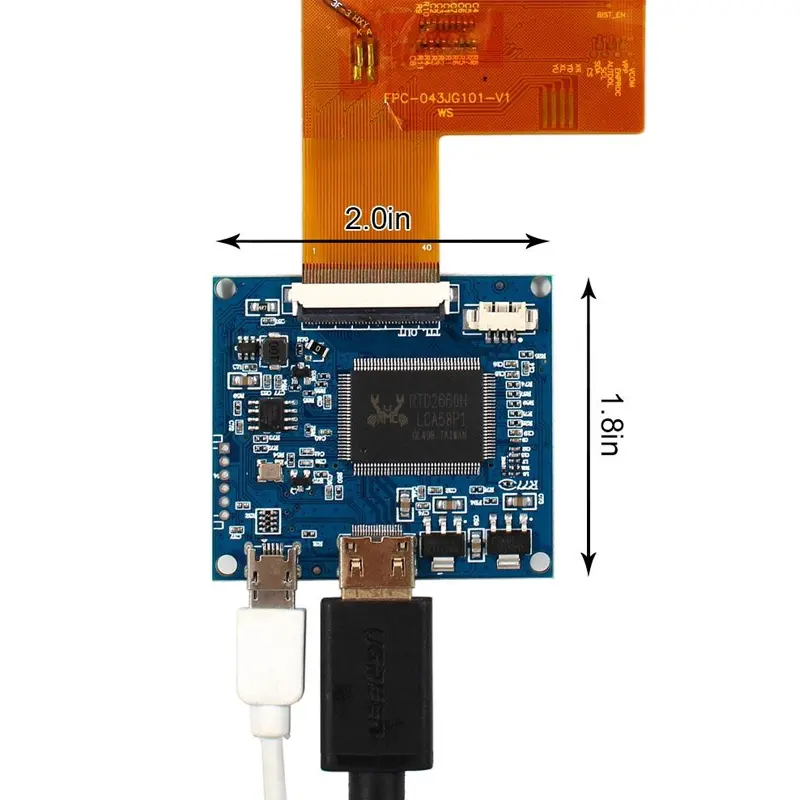
A compact controller board is supplied with the screen, giving engineering teams a practical evaluation path from HDMI-mini video input to the panel's native parallel RGB connection. The board measures 52 × 46 × 6 mm, making it suitable for bench testing and compact enclosure development.
A matching 40-pin connector alone does not establish RGB compatibility. Timing, voltage levels, pin assignments and signal configuration still need to match the approved panel definition.
Key Specifications
| Specification | Value |
|---|---|
| Display size | 4.3 inches |
| Resolution | 800 × 480 pixels |
| Panel technology | IPS TFT LCD |
| Display mode | Normally White, Transmissive |
| Luminance | 1000 cd/m² typical |
| Contrast | 600:1 typical |
| Viewing angle | 80° / 80° / 80° / 80° L/R/U/D at CR ≥10 |
| Active area | 95.04 × 53.86 mm |
| Panel outline | 105.5 × 67.2 × 3.1 mm |
| Signal interface | Parallel RGB, single-channel, 8-bit |
| Connector | 40-pin FPC |
| Panel input | 3.3 V typical |
| Backlight | WLED |
| Controller size | 52 × 46 × 6 mm |
| Controller OSD | No |
800 × 480 IPS Graphics for Compact UI Layouts
The native 800 × 480 raster gives embedded developers enough horizontal space for status bars, graphical controls, measurement values and menu structures while maintaining a compact physical footprint.
Active Area and Panel Envelope
The 95.04 × 53.86 mm active area defines the visible image region, while the full LCD outline is 105.5 × 67.2 × 3.1 mm. These values serve different mechanical purposes. The active area controls the visible opening, while the complete outline and FPC exit must be used when checking bezel clearance and internal housing space.
IPS Viewing for Multi-Angle Equipment Use
The panel is specified at 80° / 80° / 80° / 80° for left, right, up and down viewing at CR ≥10. This is useful for portable instruments and small equipment interfaces that may not always be viewed from a single fixed eye position.
The specified optical mode is Normally White and Transmissive. Product teams should retain that ordered optical definition when qualifying equivalent or replacement panels instead of assuming that every 4.3-inch IPS screen uses the same operating mode.
Brightness and Optical Planning
A typical luminance of 1000 cd/m² gives this screen significantly more optical output than many basic small embedded LCDs. It can therefore be evaluated for bright indoor equipment, window-adjacent interfaces and other installations where standard lower-luminance modules may be difficult to read.
1000 cd/m² Is a Panel-Level Specification
High panel luminance does not automatically make the finished assembly sunlight readable. Cover glass, air gaps, reflections, surface treatment, installation angle and ambient lighting can all change final readability.
For an outdoor-facing or strongly illuminated device, evaluate the complete front stack rather than qualifying the project from panel luminance alone.
Contrast and Viewing Must Be Evaluated Together
The 600:1 typical contrast ratio should be considered together with luminance and front-surface reflection. A highly reflective cover can reduce perceived contrast even when the backlight is strong. Mechanical and optical design therefore remain part of the display-selection process.
4.3 Inch 1000 Nits Small LCD Screen Integration
Integration starts with the native panel interface rather than the external video connector on the controller board.
40-Pin Parallel RGB Signal Path
The LCD uses a single-channel, 8-bit parallel RGB path through a 40-pin FPC. Matching pin count is not sufficient for replacement or controller reuse. Pixel clock, sync or DE mode, signal order, electrical levels, connector orientation and complete pin assignment should be checked before first power-up.
The HDMI-mini connector belongs to the controller side of the system. The controller converts the external video signal to the RGB timing required by the LCD.
Separate Panel and Controller Power Requirements
The LCD panel uses a 3.3 V typical input. The controller board has a separate listed 5–9 V DC input requirement, with an adapter capacity above 20 W specified for the board configuration.
These values should not be combined into one supply rail. Power planning should separately cover the panel logic, controller input and WLED backlight requirements.
HDMI-Mini Controller Board for Faster Evaluation
The supplied controller path makes the display practical for engineering evaluation when a native RGB host is not yet available.
HDMI-Mini Input and No-OSD Architecture
The board provides an HDMI-mini input and works with the 40-pin TTL/RGB-class display connection. The controller is specified without OSD, so applications that need menu-based display adjustment should account for that limitation during controller selection.
The board can enter standby when no video signal is present. Standby behavior should not be interpreted as a maximum operating-power specification.
Compact 52 × 46 × 6 mm Board Size
The controller's 52 × 46 × 6 mm dimensions support compact development assemblies, but the housing must still accommodate the board, HDMI connector, power connector, FPC bend radius and cable-access direction.
For a production enclosure, use the approved screen and controller drawings rather than assuming that the visible display dimensions represent the total internal space requirement.
Mechanical Planning for Small Embedded Devices
When the 4.3 Inch 1000 Nits Small LCD Screen is installed in a compact housing, the 3.1 mm panel depth is only one part of the mechanical stack.
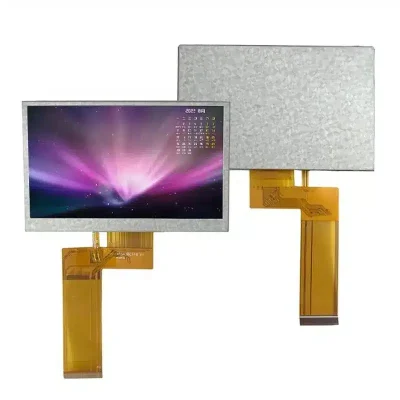
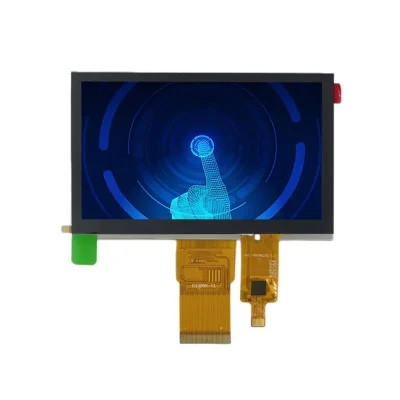
The designer should also reserve space for the orange display FPC, connector engagement, controller board, incoming HDMI cable, power wiring and any front cover or bonding stack. A touch overlay is not shown as part of the standard supplied screen-and-board package, so interactive projects require separate touch-structure and interface qualification.
Application Fit and Qualification Boundaries
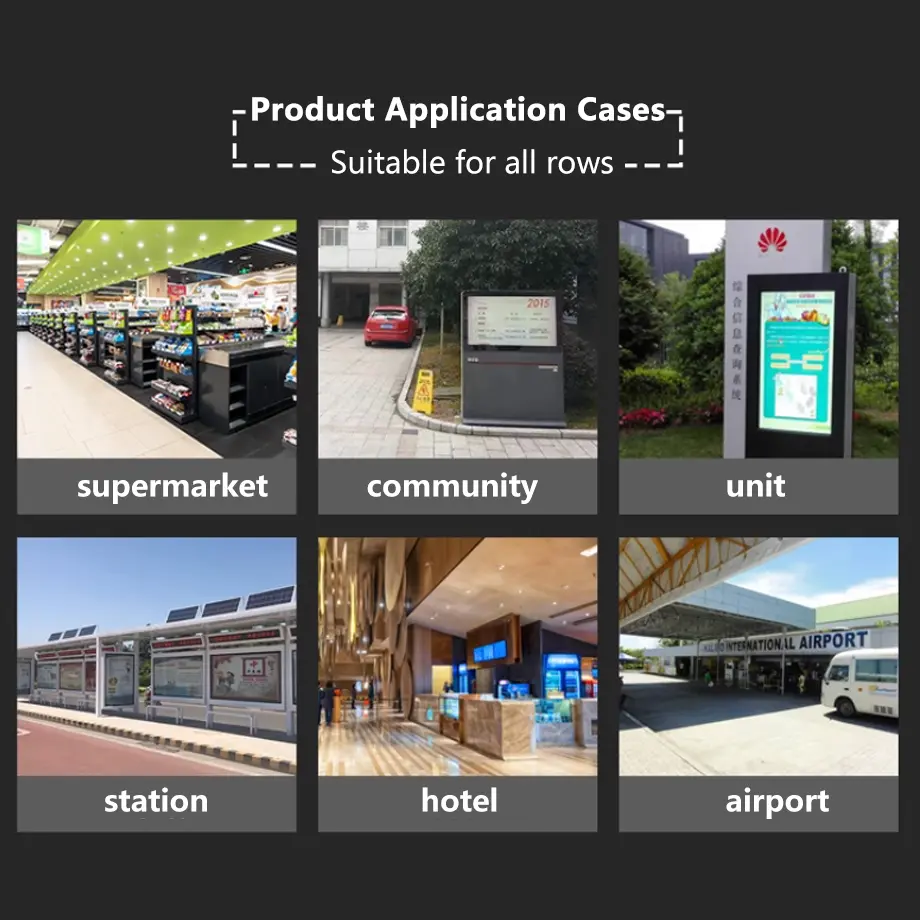
The 4.3 Inch 1000 Nits Small LCD Screen is suited to embedded HMI panels, portable instruments, handheld service equipment, compact industrial controllers, smart-control interfaces and test or measurement devices where a small high-luminance visual area is useful.
The standard configuration should not automatically be described as weatherproof, IP-rated, automotive-grade, medically certified or guaranteed sunlight readable. Those classifications require additional product- or system-level documentation.
A controller board also does not make the LCD universally compatible with every computer, SBC or embedded processor. Native RGB hosts and HDMI-based evaluation paths have different electrical and firmware requirements.
Configuration and Customization Review
Project review can cover the complete 40-pin RGB definition, FPC orientation, controller revision, brightness target, cover glass, anti-glare or anti-reflective treatment, optical bonding, enclosure adaptation, cable routing, mounting and separately engineered touch.
Custom configurations are generally reviewed from 500 pieces, subject to tooling requirements, material availability and the requested specification. Sample and standard-kit quantities are confirmed separately.
Procurement Checklist
Before production approval, confirm the exact LCD and controller revisions; native 800 × 480 timing; complete 40-pin single-channel 8-bit RGB assignment; signal-voltage levels; 3.3 V panel requirement; WLED voltage, current, enable and dimming requirements; 1000 cd/m² tolerance; 600:1 contrast; 95.04 × 53.86 mm active area; 105.5 × 67.2 × 3.1 mm panel outline; 52 × 46 × 6 mm controller clearance; controller input-power requirement; HDMI-mini source format; FPC orientation; front-window optics; touch requirement; environmental limits; sample quantity and annual demand.
FAQ
About 4.3 Inch 1000 Nits Small LCD Screen
What must be checked before using another 40-pin RGB controller?
Is 1000 cd/m² sufficient when the screen is installed behind cover glass?
Does HDMI connect directly to the LCD panel?
Why are 3.3 V and 5–9 V both specified?
Which dimensions should be used when designing the enclosure?
Freya Yang
+86 18318948097