Freya Yang
+86 18318948097
+852 62667476
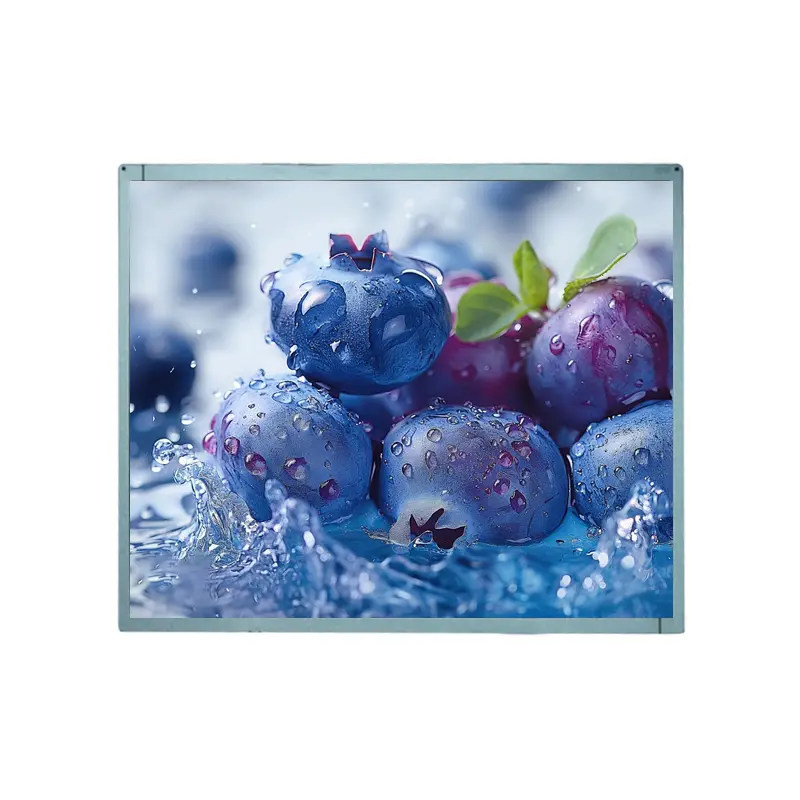
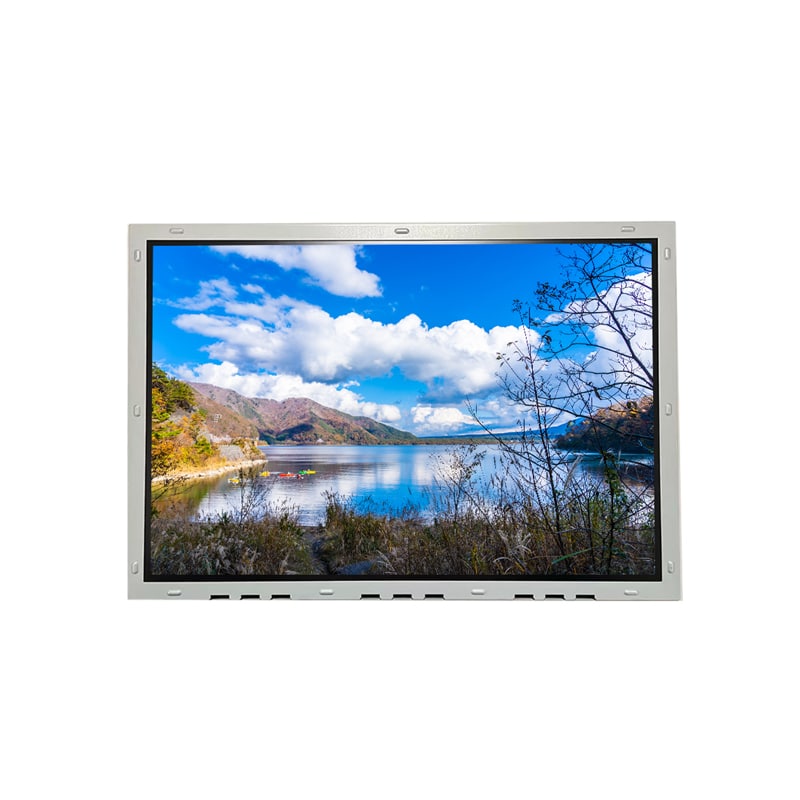
17″ 1280×1024 5:4 Industrial Customized TFT LCD Display Module

Model P/N
Size
Resolution
Brightness
Viewing Angle
Connector Type
Operating Temp
Overall(mm)
huisoar
HS17S001B0
Brand
Panel Size (inch)
Model P/N
Resolution
Brightness (nits)
Viewing Angle
Contrast Ratio
Response Time
Overall (mm)
Active Area (mm)
Refresh Rate
Display Colors
Panel Type
Connector Type
Operating Temp
Touchscreen Type
Storage Temp
Work Mode
Pixel Format
Operating Environment
Designed For
17" 1280x1024 5:4 Industrial Customized TFT LCD Display Module
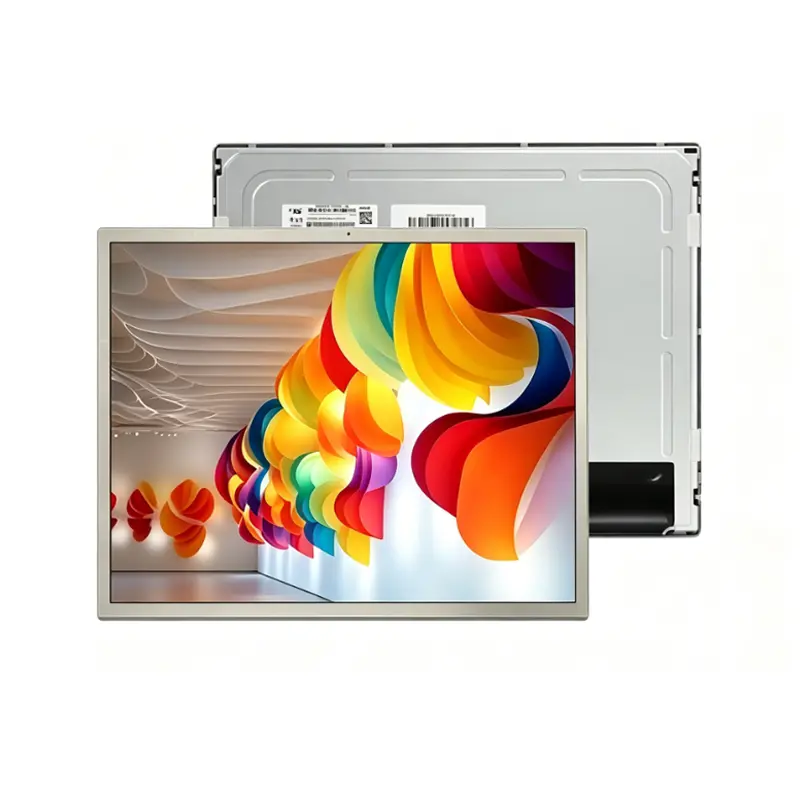
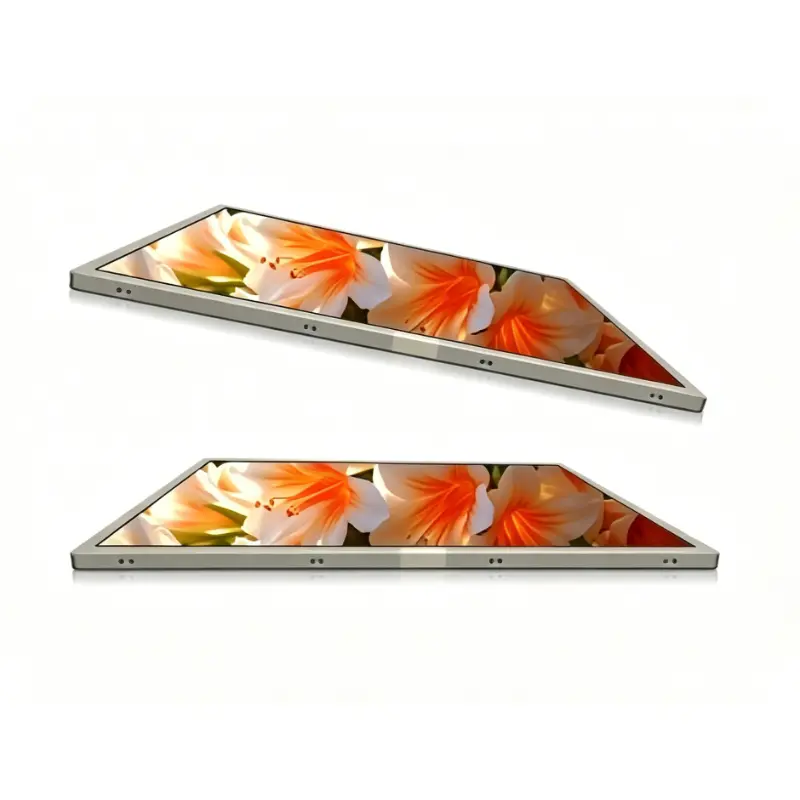
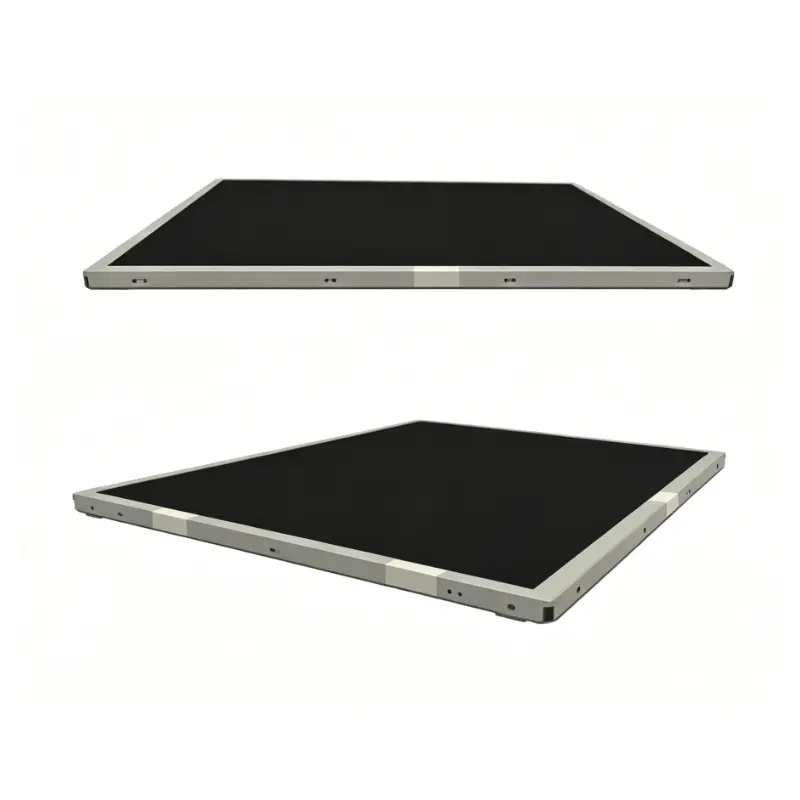
A 1280x1024 5:4 Industrial Customized TFT LCD Display Module is a practical base for equipment projects that need a conventional 17-inch screen format together with project-specific integration review. The panel combines a 1280 × 1024 native raster, 500 cd/m² typical luminance, IPS viewing, a 30-pin LVDS connection and a 337.92 × 270.336 mm active area in a 358.5 × 296.5 × 7.7 mm module envelope. The standard configuration is non-touch.
Product Summary
This 17-inch module is built around the established 5:4 screen format rather than a modern widescreen ratio. That is valuable in equipment where the user interface, cabinet opening or software has already been designed around a taller SXGA workspace.
5:4 SXGA Workspace for Equipment Interfaces
Native 1280 × 1024 resolution provides more vertical workspace than a widescreen layout of similar width. Industrial software can use that space for status tables, machine parameters, alarm histories, menu trees and control panels without restructuring the complete interface.
For replacement-oriented programs, preserving the native 5:4 raster can also reduce unnecessary software scaling when the existing application was designed for SXGA.
IPS Viewing and 500 cd/m² Luminance
The panel uses an IPS structure with a confirmed 80°/80°/80°/80° viewing-angle sequence for left, right, up and down in the supplied configuration. Its 500 cd/m² typical luminance is appropriate for brighter indoor professional environments while remaining below true high-brightness outdoor classes.
The 1000:1 typical contrast ratio and 16.7M-color capability support text, diagrams, graphical control pages and professional monitor content.
Key Specifications
| Parameter | Specification |
|---|---|
| Display Size | 17 inches |
| Resolution | 1280 × 1024 pixels |
| Aspect Ratio | 5:4 |
| Panel Type | IPS TFT-LCD |
| Optical Mode | Transmissive |
| Brightness | 500 cd/m² typical |
| Contrast Ratio | 1000:1 typical |
| Viewing Angle | 80°/80°/80°/80° L/R/U/D |
| Display Colors | 16.7M |
| Pixel Arrangement | RGB stripe |
| Active Area | 337.92 × 270.336 mm |
| Module Outline | 358.5 × 296.5 × 7.7 mm |
| Signal Interface | LVDS |
| Connector | 30 pins |
| Backlight | WLED |
| Touch | Standard non-touch |
Why 1280×1024 Still Matters in Industrial Systems
The value of a 17-inch SXGA display is not simply its resolution. Many industrial computers, diagnostic consoles and professional equipment platforms were developed around a 5:4 display opening and 1280 × 1024 application canvas.
Native 5:4 UI and Legacy Layout Continuity
Moving an existing system to 16:9 can require interface redesign, new scaling rules or mechanical changes. A native 5:4 module lets an engineering team evaluate a display replacement or customized equipment platform without automatically changing the original layout philosophy.
That makes this form factor especially relevant when enclosure continuity and application-software continuity matter more than adopting a widescreen format.
1280x1024 5:4 Industrial Customized TFT LCD Display Module Integration
Customization should begin with the existing panel architecture rather than assuming that every property of the LCD can be changed independently. The base module already defines the native raster, display area, general optical structure and overall mechanical envelope.
30-Pin LVDS Qualification
A 30-pin connector alone does not prove electrical compatibility with another LVDS module.
Before releasing the controller or cable, confirm:
- native 1280 × 1024 timing;
- complete 30-pin assignment;
- LVDS channel and bit mapping;
- VESA/JEIDA convention where applicable;
- panel voltage requirements;
- connector pitch, contact side and orientation;
- backlight electrical requirements.
A matching 30-pin LVDS connector does not guarantee timing, voltage, channel mapping, bit width or pin compatibility.
Defining the Customization Scope
A customized display project should specify the actual engineering change required. That may involve integration around the cable, controller, front structure, optical stack or enclosure rather than changing the LCD glass itself.
Current custom-display engineering practice commonly treats interface, connector/FPC, backlight, touch, cover glass and mechanical structure as separate design variables that must be reviewed against the host and enclosure.
Do not assume that a requested customization is automatically available on the standard module. Feasibility should be established after the project requirements and drawings are defined.
Mechanical and Optical Integration
The active image region and complete module outline serve different design functions.
Active Area Versus Module Outline
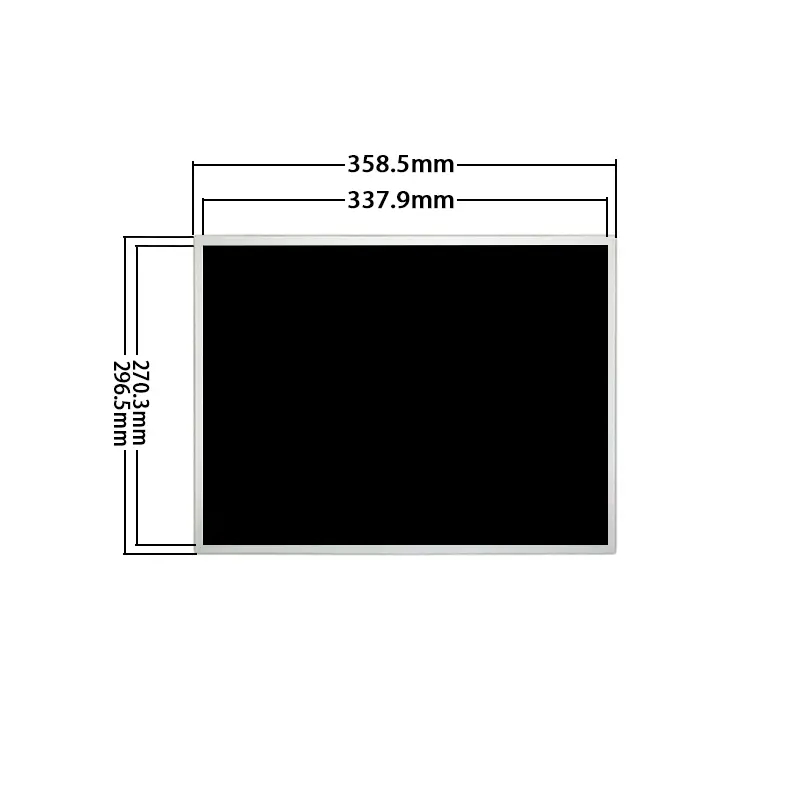
The active image area is 337.92 × 270.336 mm, while the LCD module envelope is 358.5 × 296.5 × 7.7 mm.
The active area controls visible image placement. The module outline controls bracket clearance, bezel depth, cable routing and enclosure interference. Tooling should therefore use the approved mechanical drawing rather than the active area alone.
500 cd/m² Behind the Final Front Stack
The 500 cd/m² typical value describes the panel configuration, not the finished equipment after adding protective glass or another optical layer.
A cover window can change reflection, transmission and apparent contrast. The finished assembly should therefore be evaluated under the real installation lighting before final optical approval.
The 500 cd/m² panel rating should be validated behind the final cover stack under actual installation lighting.
Viewing and Environmental Qualification
Two model-specific data sets currently differ on environmental range and viewing orientation. One gives 0°C to +50°C operation with −20°C to +60°C storage and full-view IPS behavior, while another exact-model record gives −20°C to +70°C operation, −30°C to +80°C storage and a 12-o'clock direction.
Environmental qualification must therefore use the approved production revision rather than combining the most favorable values from different records.
The standard module is non-touch.
Application Fit
Industrial Control and Professional Displays
The 17-inch 5:4 layout works well for industrial operator interfaces, equipment monitors, embedded computers, inspection stations and professional display assemblies where vertical UI space remains valuable.
A late-stage 1280x1024 5:4 Industrial Customized TFT LCD Display Module evaluation should confirm the original UI raster, LVDS host path and enclosure before sample release.
Medical-Equipment Interfaces
The module can also be evaluated as a display component inside medical-equipment interfaces where the optical, mechanical and environmental requirements match the device design.
Medical application wording does not establish regulatory certification, diagnostic-image compliance or suitability for a particular clinical function. Those requirements belong to the finished regulated system.
Custom Configuration Planning
Custom configurations are generally reviewed from 500 pieces, subject to tooling requirements, material availability and the requested specification. Sample and standard-module quantities are confirmed separately.
Useful project inputs include:
- controller or host-board model;
- LVDS specification and pin assignment;
- enclosure drawing;
- required visible opening;
- proposed cover structure;
- touch requirement, if any;
- target installation lighting;
- environmental range;
- sample quantity;
- annual demand.
This allows the engineering review to determine whether the project needs a standard panel match, cable/interface work, mechanical adaptation or a more extensive customized assembly.
Procurement Checklist
Before sample approval, confirm:
- ordered module revision;
- native 1280 × 1024 timing;
- complete LVDS assignment and mapping;
- panel voltage/current;
- WLED voltage/current and driver requirements;
- connector orientation and mating cable;
- 337.92 × 270.336 mm active area;
- 358.5 × 296.5 × 7.7 mm module envelope;
- 500 cd/m² luminance target and tolerance;
- 1000:1 typical contrast;
- viewing-angle and viewing-direction revision;
- operating and storage temperature revision;
- standard non-touch status;
- required customized functions;
- enclosure/front-window geometry;
- sample acceptance criteria.

FAQ
About Industrial Customized TFT LCD Display Module
What must be checked before replacing another 30-pin LVDS panel?
What information is required for a customized TFT LCD module project?
Which dimensions should control enclosure release?
Is 500 cd/m² sufficient behind protective glass?
Which temperature and viewing data should be used for qualification?
Freya Yang
+86 18318948097