Freya Yang
+86 18318948097
+852 62667476
17 Inch Flexible OLED Display for 2K eDP Integration in Smart Devices
Model P/N
Size
Resolution
Brightness
Viewing Angle
Connector Type
Operating Temp
Overall(mm)
huisoar
HS17002S
Brand
Panel Size (inch)
Model P/N
Resolution
Brightness (nits)
Viewing Angle
Contrast Ratio
Response Time
Overall (mm)
Active Area (mm)
Refresh Rate
Display Colors
Panel Type
Connector Type
Operating Temp
Touchscreen Type
Storage Temp
Work Mode
Control Type
Operating Environment
Designed For
17 Inch Flexible OLED Display for 2K eDP Integration in Smart Devices
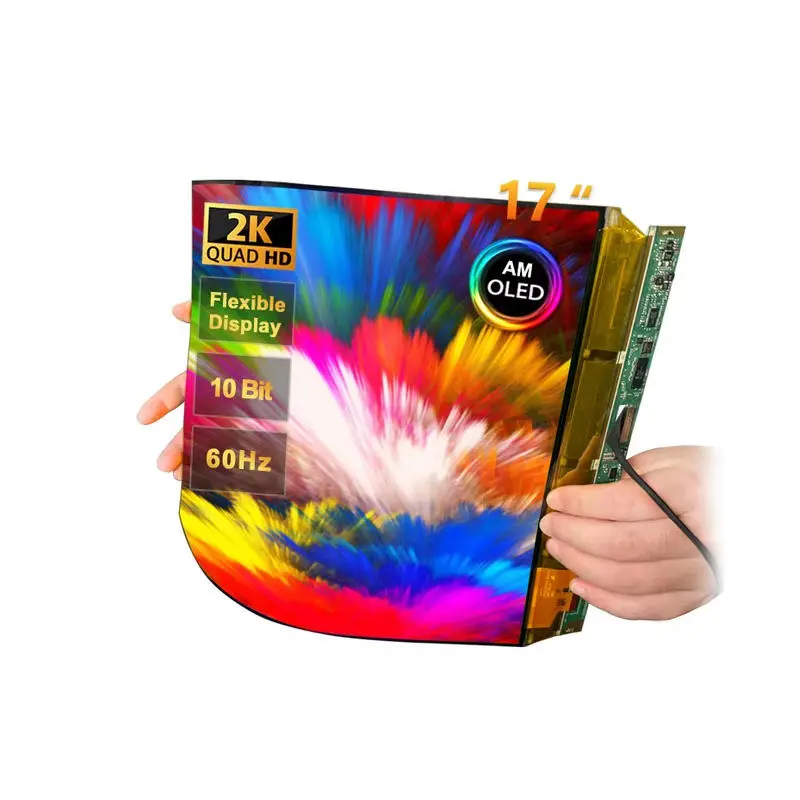
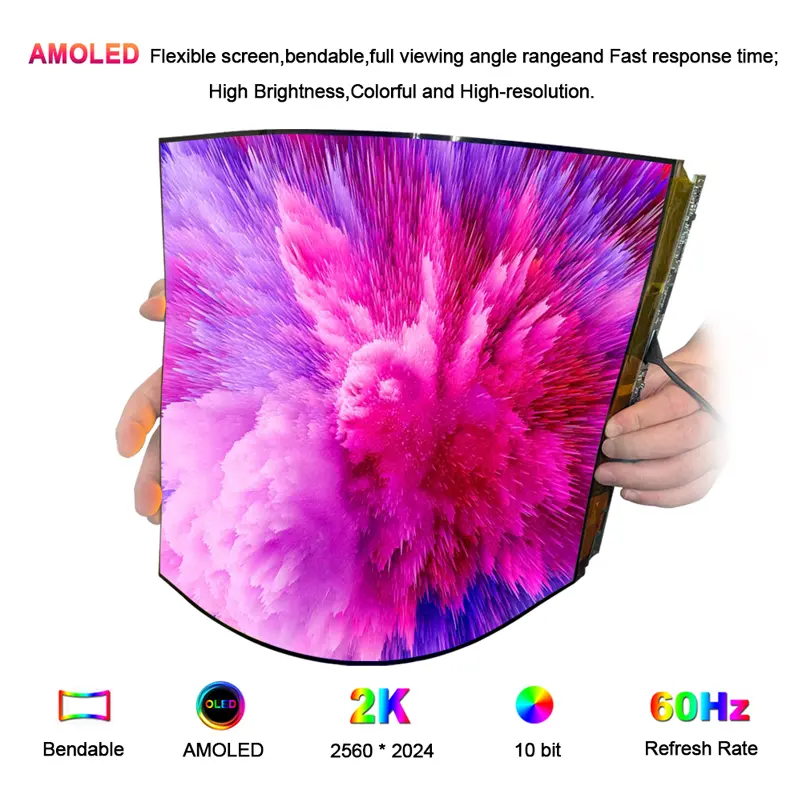
A 17 Inch Flexible OLED Display for 2K eDP Integration gives product teams an AMOLED platform for smart-device concepts that need a bendable visual surface, high contrast, and an eDP signal path. The nominal 17-inch product is shown operating while curved and is specified with 100000:1 contrast, 60 Hz refresh, 85/85/85/85 viewing values at CR 10, and a 257.15 × 325.25 mm active area. Several mechanical, resolution, and color-depth fields conflict, so the ordered revision should be locked before tooling or electrical release.
Key Specifications at a Glance
| Specification | Value |
|---|---|
| Nominal display size | 17 inches |
| Display technology | Flexible AMOLED / OLED |
| Resolution | 2024 × 2560 pixels in detailed product data; another table lists 2040 × 2560 |
| Interface | eDP |
| Active area | 257.15 × 325.25 mm |
| Overall size | 262 × 331 mm |
| Contrast ratio | 100000:1 |
| Viewing angle | 85°/85°/85°/85° typical at CR 10; direction order not specified |
| Refresh rate | 60 Hz |
| Color | 16.7M colors, 90% CIE1931 listed |
| Operating temperature | −20°C to +60°C |
| Intended use | Smart devices |
| Emission mode | Self-luminous OLED |
Flexible Form Factor for Large Smart Devices
Bendable construction changes mechanical qualification
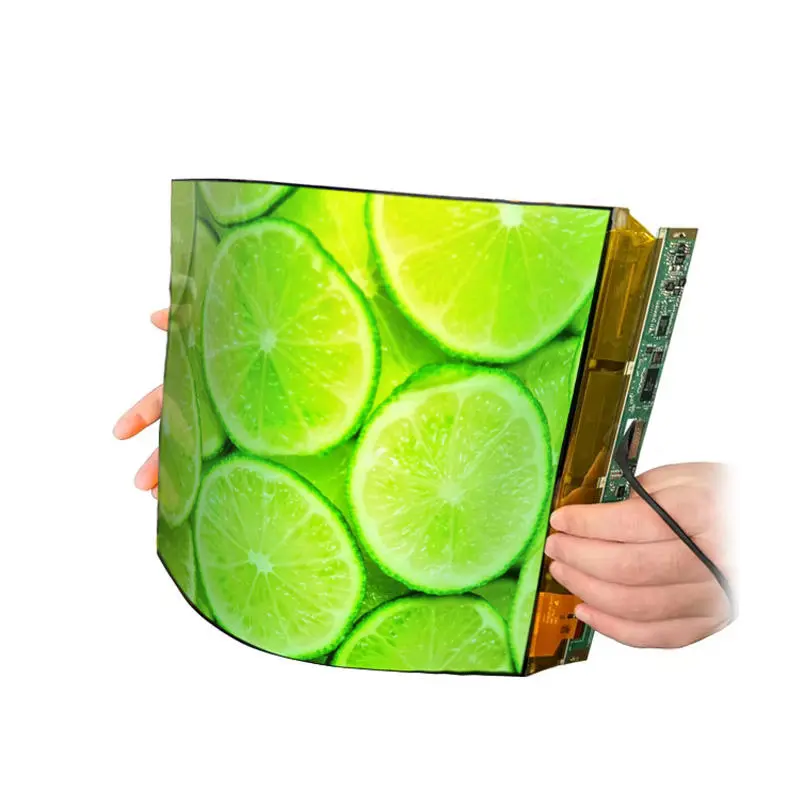
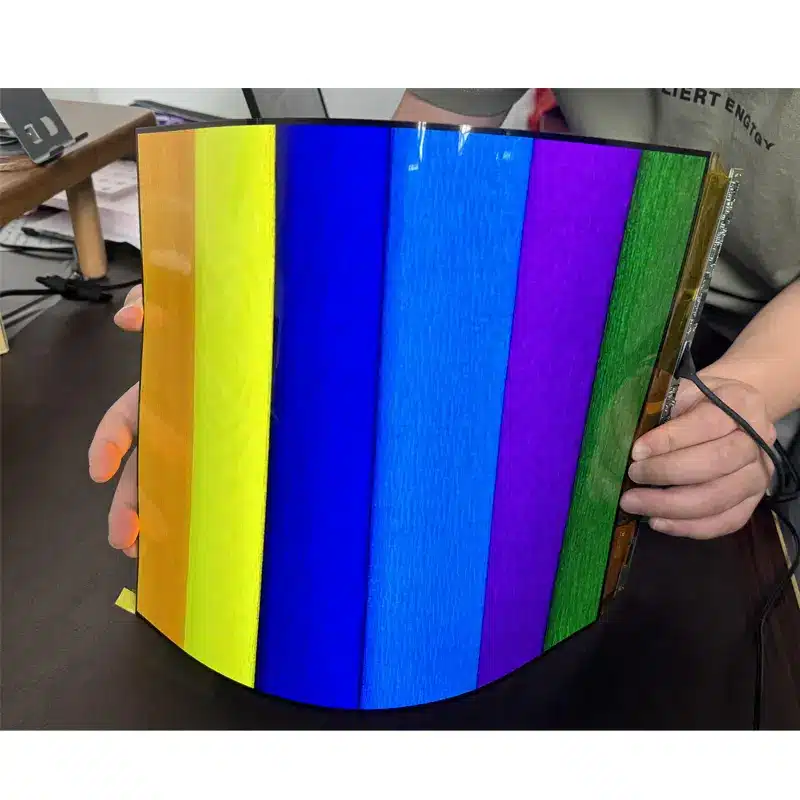
The flexible OLED structure supports curved or bendable product concepts where a rigid glass panel would restrict enclosure geometry. It is relevant to large smart terminals, rollable-monitor development, and custom equipment where the display surface is part of the industrial design.
Flexibility does not define an unlimited folding condition. Minimum bend radius, static versus dynamic bending, cycle count, bending zone, and edge-electronics stress limits are not specified. These items should be approved before a hinge, roller, curved support, or repeated-bend mechanism is released.
Nominal 17-inch size requires drawing control
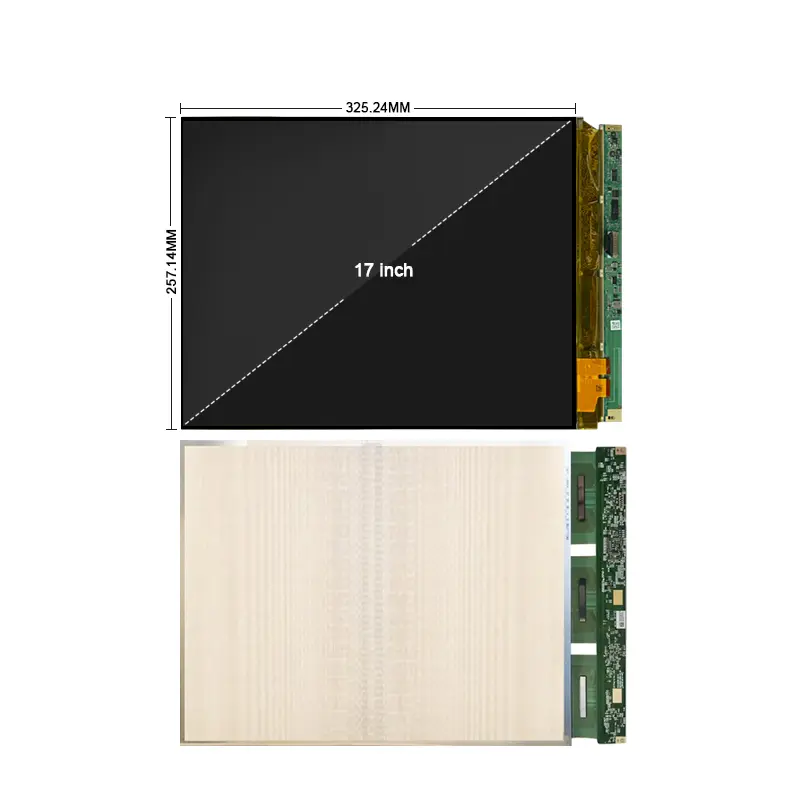
The product is identified as 17 inches, while the 257.15 × 325.25 mm active area corresponds to about a 16.32-inch diagonal, which is also shown in a dimension graphic. Use the nominal size for product identification, but use the approved drawing for visible opening, active diagonal, and enclosure geometry.
High-Contrast OLED Image Performance
100000:1 contrast supports high-impact interfaces
The 100000:1 contrast ratio is a key optical characteristic of this AMOLED configuration. Combined with self-luminous operation, it supports dark-background interfaces, bright status elements, high-contrast graphics, and dense layouts.
No numeric luminance is confirmed, so brightness should not be promoted as a fixed specification. Final optical qualification should use the ordered panel, final curve geometry, cover structure, ambient lighting, and driving configuration.
Resolution and color data require revision confirmation
One technical set identifies 2024 × 2560 pixels, while another table uses 2040 × 2560. The 2024 × 2560 value is also repeated in the detailed product naming. Until the ordered revision is confirmed, UI assets and timing files should not be frozen around the conflicting horizontal pixel count.
Color data also conflict: specifications list 16.7M colors and 90% CIE1931, while a product graphic states 10 bit. Confirm native input color depth and eDP pixel format instead of assuming the 10-bit statement defines the electrical input path.
17 Inch Flexible OLED Display for 2K eDP Integration and eDP Host Integration
eDP is confirmed, but the full link definition is not
The panel uses eDP. However, lane count, link rate, connector pin count, pin assignment, AUX definition, panel power rails, sequencing, connector orientation, and cable specification are not confirmed. The interface document should be obtained before selecting a host board or releasing a custom cable.
An eDP interface label does not by itself establish host compatibility.
Controller-board scope must be locked separately
The product is presented with a controller-board configuration, but the exact board model, external video ports, power input, firmware, and cable set are not defined in the core panel specifications.
Separate native eDP panel requirements from controller-board functions. HDMI, USB-C, audio, or other ports should be specified and confirmed at system level rather than inferred from the panel interface.
Mechanical Planning and Self-Luminous Architecture
Active area and overall dimensions serve different functions
The main mechanical set lists a 257.15 × 325.25 mm active area and a 262 × 331 mm overall size. A separate dimensional value gives 325.24 × 257.14 mm, closely matching the active-area dimensions with orientation reversed.
The approved production drawing should control enclosure tooling.
Resolve the conflicting WLED field before electrical design
The display is identified as AMOLED/OLED and self-luminous. A separate light-source field references a 6S3P WLED configuration without a driver, which conflicts with self-emissive OLED architecture.
Do not create a WLED backlight circuit from that field. Require the ordered electrical documentation to resolve the light-source entry before power architecture is released.
Smart-Device Application Direction
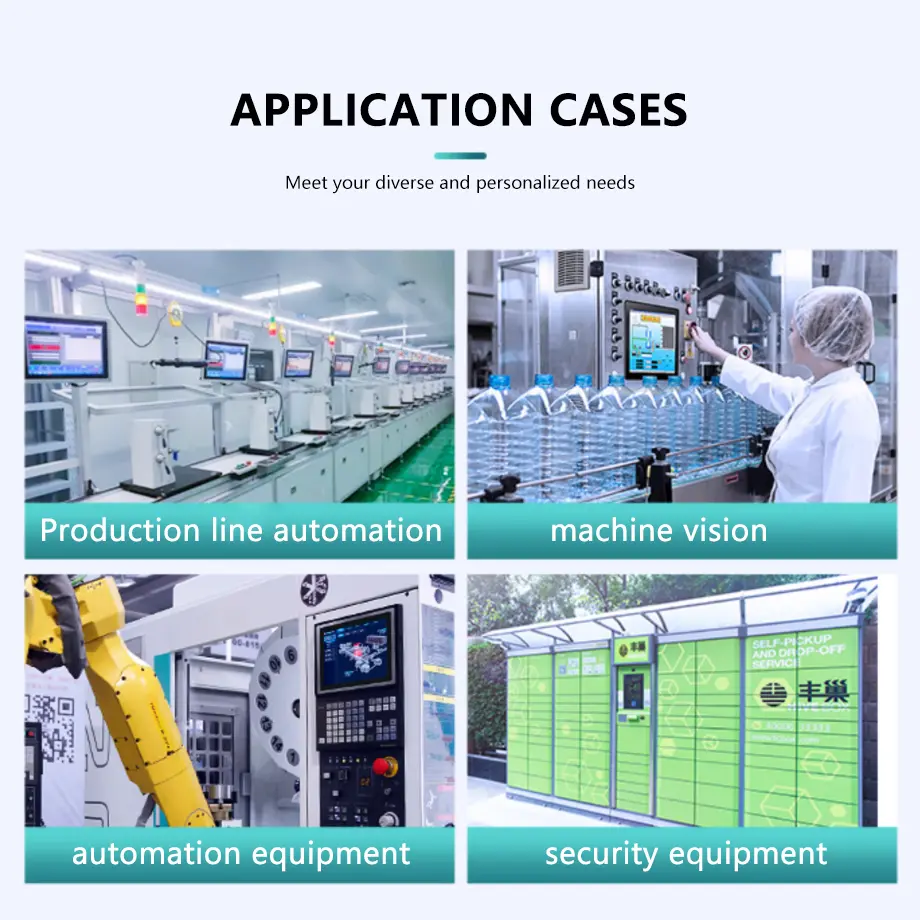
The 5:4-format display can support smart-device projects that benefit from more vertical working area than a conventional widescreen screen. Suitable directions include premium embedded terminals, curved control surfaces, large portable visual products, concept hardware, and custom equipment.
A 17 Inch Flexible OLED Display for 2K eDP Integration is most valuable when the enclosure is intentionally designed around curvature and when the eDP host path is known. A rigid flat product may not justify the extra mechanical qualification required by a flexible display.
Customization and Procurement Planning
Custom configurations are generally reviewed from 500 pieces, subject to tooling requirements, material availability, and the requested specification. Sample and standard-module quantities are confirmed separately.
Define the bend condition, eDP host, controller-board requirement, final resolution revision, visible opening, support structure, operating environment, and expected annual demand before customization review. Touch, cover structure, bonding, external I/O, and enclosure mechanics should be treated as separate requirements unless specifically included in the ordered configuration.
Procurement Checklist
Confirm nominal size and approved active diagonal; resolve 2024 × 2560 versus 2040 × 2560; obtain the approved active-area and overall drawing; define static or dynamic bend condition, minimum radius, bending zone, and cycle requirement; confirm eDP lane count, link rate, pinout, connector, cable, power rails, and sequencing; verify 60 Hz operation; resolve 16.7M versus 10-bit color wording; confirm 90% CIE1931 scope, 100000:1 contrast, and −20°C to +60°C operating limits; define controller-board I/O and touch status; and submit sample criteria, quantity, and annual demand.
FAQ
About 17 Inch Flexible OLED Display for 2K eDP Integration
What bend information must be approved before a curved enclosure is released?
What must be checked before connecting an eDP host or controller board?
Which resolution should engineering use when two values appear?
Which dimensions should control the opening and enclosure?
Does the controller-board configuration define HDMI, USB-C, or other ports?
Freya Yang
+86 18318948097