Freya Yang
+86 18318948097
+852 62667476
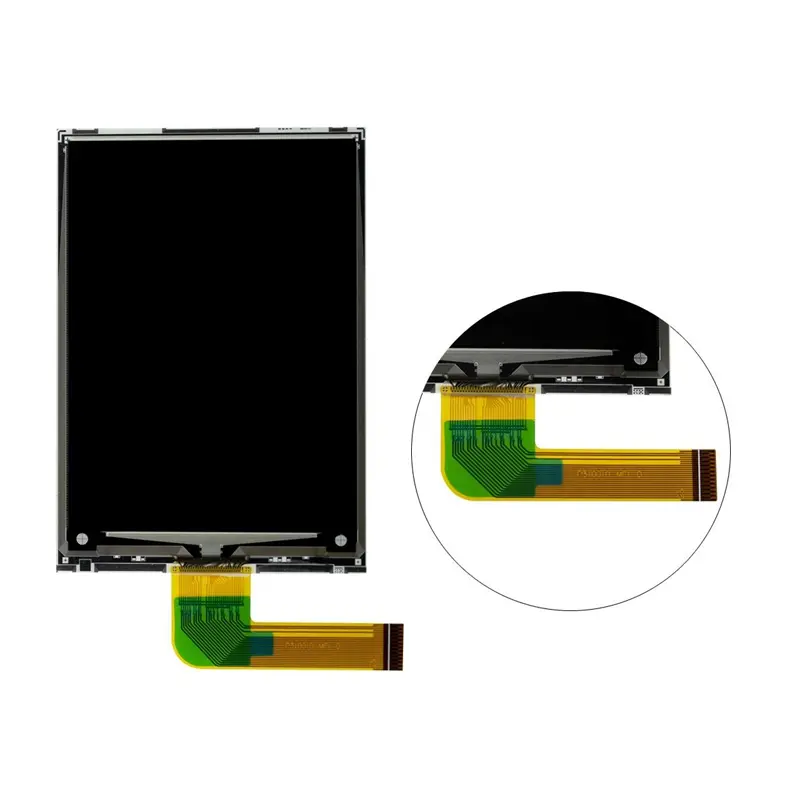
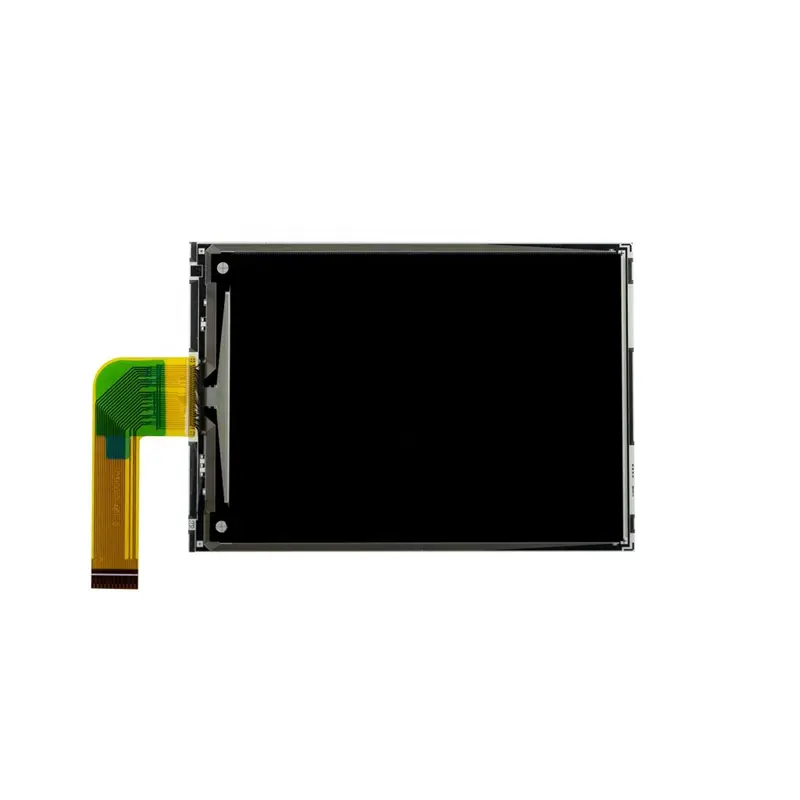
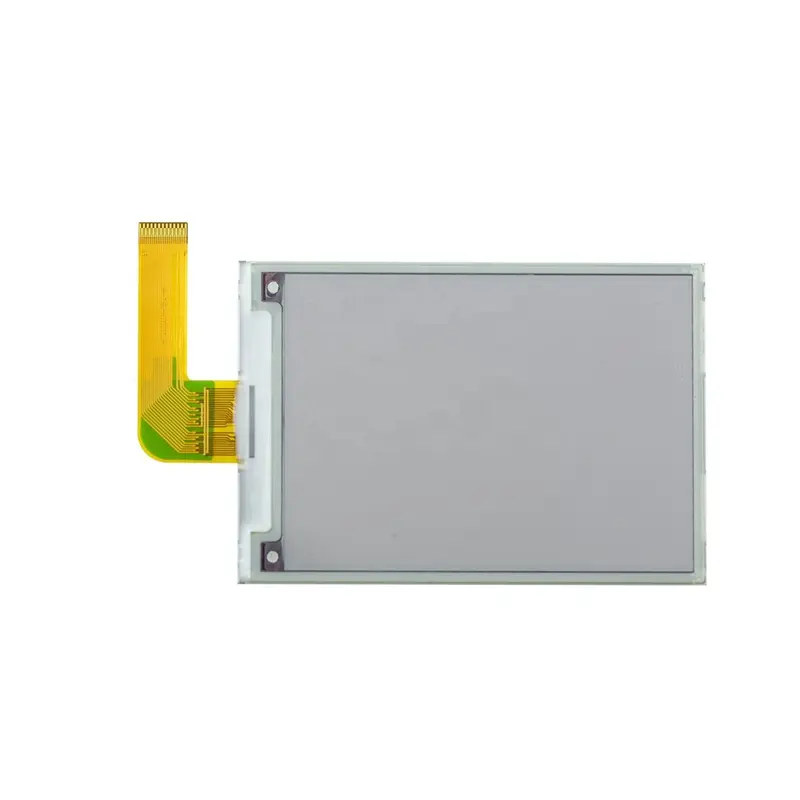
3.1 Inch SPI E Paper Shelf Label Panel for Retail
Model P/N
Size
Resolution
Brightness
Viewing Angle
Connector Type
Operating Temp
Overall(mm)
huisoar
HS031001T01
Brand
Panel Size (inch)
Model P/N
Resolution
Viewing Angle
Contrast Ratio
Response Time
Overall (mm)
Active Area (mm)
Refresh Rate
Display Colors
Panel Type
Connector Type
Operating Temp
Touchscreen Type
Storage Temp
Work Mode
Pixel Format
Input Voltage (V)
Control Type
Weight (g)
Operating Environment
Designed For
3.1 Inch SPI E Paper Shelf Label Panel for Retail
A reflective 296×168 electronic-paper panel with black/white or black/white/red output and a 24-pin SPI FPC for compact retail labels.
Product Summary
This 3.1-inch SPI E Paper Shelf Label Panel is a raw electronic-paper component for retail price tags, reusable information labels, and other low-update displays. It combines a 296×168 pixel raster, a 38.81 × 68.38 mm active area, a 45.83 × 80.78 × 1.20 mm envelope, and selectable 3-wire or 4-wire SPI. Two ordered color versions are available: black/white and black/white/red.
A 24-pin FPC does not guarantee SPI pin, voltage, timing, or waveform compatibility.
The black/white and black/white/red versions require separate approved color and waveform packages.
Touch and an integrated frontlight are not confirmed for the standard panel.
Key Specifications at a Glance
| Parameter | Confirmed value |
|---|---|
| Product class | 3.1-inch electronic-paper panel |
| Resolution | 296 × 168 pixels |
| Active area | 38.81 × 68.38 mm |
| Module outline | 45.83 × 80.78 × 1.20 mm |
| Total-thickness tolerance | 1.20 ± 0.10 mm |
| Interface | 3-wire or 4-wire SPI |
| FPC | 24 pins, 0.50 mm pitch |
| Operating voltage | 3.0 V |
| Controller IC | SSD1680 |
| Viewing designation | Full visual angle |
| Color versions | Black/white or black/white/red |
| Operating temperature | 0°C to +50°C |
| Storage temperature | 0°C to +60°C |
| Standard touch/frontlight | Not confirmed |
296×168 Artwork and Color-Version Planning
Native Raster and Installation Orientation
Prepare label artwork at the native 296×168 raster. The mechanical drawing places the active area within a narrow 45.83 × 80.78 mm panel envelope, but rotation should be approved against the controller settings and artwork workflow. Confirm scan direction and FPC position before finalizing text, barcodes, icons, or shelf-facing graphics.
Black/White and Black/White/Red Versions
The monochrome version suits black text and graphics on white. The tri-color version adds red for promotions, warnings, or status emphasis. Do not assume that monochrome firmware can drive the red version correctly. The ordered variant, LUT or waveform files, and image-conversion process must match.
SPI E Paper Shelf Label Panel Integration
The interface is identified as COG plus FPC with selectable 3-wire or 4-wire SPI. This does not establish a drop-in match with a particular MCU board, wireless shelf-label controller, or existing 24-pin EPD cable.
3-Wire and 4-Wire SPI Selection
Confirm how command and data states are represented and which interface-selection level applies. Review the complete assignment for chip select, clock, serial data, data/command, reset, busy, power, ground, and additional panel-drive or temperature-related pins.
SSD1680 Documentation Boundary
SSD1680 is the identified controller IC. Its name does not replace the approved initialization sequence, command set, waveform data, timing limits, or power requirements. Firmware should follow the exact ordered panel revision, not a generic example from another size or color version.
24-Pin FPC Qualification
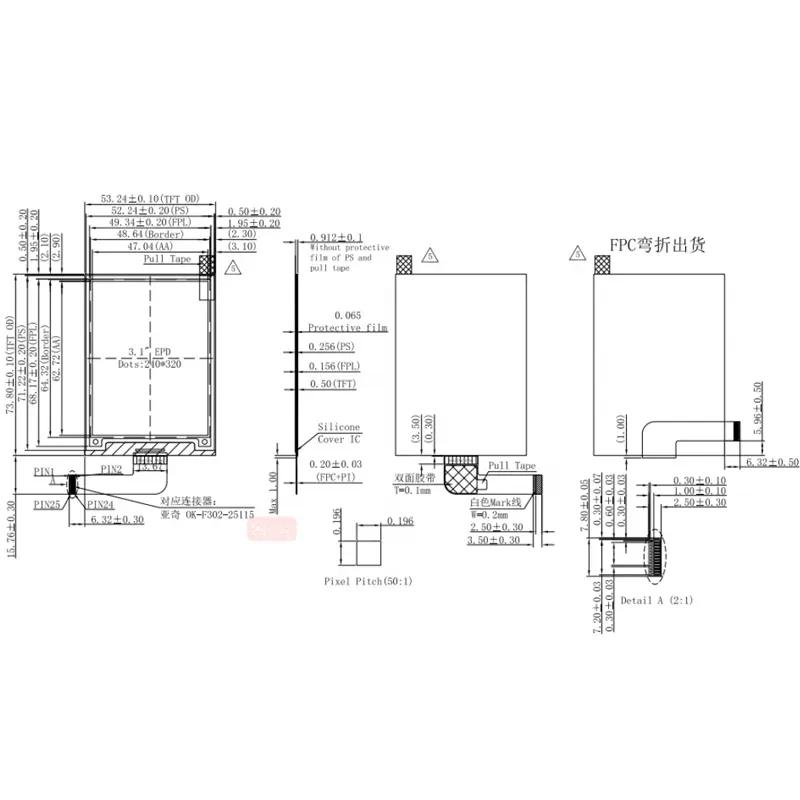
The drawing identifies a 24-pin FPC with 0.50 mm pitch and an approximately 12.50 mm width. Check contact side, insertion direction, connector height, bend radius, restraint, and keep-out space. Do not place bending or clamping force on the glass-to-FPC transition.
Reflective Display Behavior and Refresh Qualification
Static and Low-Update Content
Electronic paper is suited to prices, product names, room labels, inventory states, and other intermittently updated content. The image can remain visible without continuous rewriting, but system power still depends on the MCU, radio, regulator, sensors, and update frequency. No battery-life figure should be released without a complete calculation.
Full Refresh, Ghosting, and Waveform Control
Full-refresh flashing is normal for many electronic-paper panels because the waveform clears residual image states. Partial refresh, refresh time, ghosting limits, and update intervals are not confirmed for this configuration. Approve them with the ordered color version, matching waveform package, representative artwork, and repeated temperature testing.
Temperature Boundary
The operating range is 0°C to +50°C, and the storage range is 0°C to +60°C. This configuration is not suitable for sub-zero updating. Projects outside the range require a separately qualified panel rather than an assumption that slower refreshing will be acceptable.
Mechanical Fit and Front-Window Design
Active Area Versus Module Outline
The 38.81 × 68.38 mm active area controls the graphic region, while the 45.83 × 80.78 mm outline controls the cavity. The SPI E Paper Shelf Label Panel also needs clearance for the lower FPC and glass edge. Use the approved drawing for bezel overlap, adhesive, support surfaces, and tolerances.
Thickness and Protective Structure
The total panel thickness is 1.20 ± 0.10 mm. That value does not include a project-specific front window, enclosure wall, gasket, touch sensor, or frontlight. Avoid point pressure, twisting, and unsupported glass edges.
Application Fit and Configuration Boundaries
The SPI E Paper Shelf Label Panel is suitable for electronic shelf labels, retail price tags, inventory labels, room or asset identifiers, and compact low-update information panels after controller and enclosure qualification. It is a display component rather than a complete wireless ESL; the radio, battery, MCU, antenna, management platform, and enclosure must be provided separately.
It should not be promoted as a touchscreen, illuminated reader display, fast-animation screen, freezer label, or complete smart-price-tag system without additional validated hardware.
Customization and Variant Control
Specify the black/white or black/white/red version, FPC requirements, artwork workflow, controller and waveform package, and housing constraints. Branding, packaging, and graphic-customization programs are generally reviewed from 50,000 pieces. FPC, touch, frontlight, alternate-temperature, or controller changes require separate feasibility and quantity confirmation.
Procurement Checklist
Confirm before sample approval:
- Exact black/white or black/white/red version.
- Native 296×168 artwork, orientation, scan direction, and color mapping.
- Complete 24-pin assignment, 0.50 mm FPC pitch, contact side, and connector.
- 3-wire or 4-wire SPI selection, mode, clock, reset, busy, and data/command behavior.
- 3.0 V operating requirement and all panel-drive electrical conditions.
- SSD1680 command set, LUT or waveform package, and temperature handling.
- Full-refresh time, partial-refresh support, ghosting test, and update interval.
- 38.81 × 68.38 mm active area and 45.83 × 80.78 × 1.20 mm fit.
- Front-window lighting, touch or frontlight requirement, sample quantity, annual demand, and schedule.
FAQ
About 3.1 Inch SPI E Paper Shelf Label Panel
What must be checked before connecting the 24-pin FPC to an SPI controller?
When should the black/white/red version be selected instead of black/white?
Does the standard panel include touch or an integrated frontlight?
Why can the display flash during a full refresh or show residual images?
Can this panel be used in refrigerated or freezer shelf labels?
Freya Yang
+86 18318948097