Freya Yang
+86 18318948097
+852 62667476
7.5 Inch Four Color Electronic Paper Panel for Shelf Labels

Model P/N
Size
Resolution
Brightness
Viewing Angle
Connector Type
Operating Temp
Overall(mm)
huisoar
HS075WVO5A-V
Brand
Panel Size (inch)
Model P/N
Resolution
Viewing Angle
Response Time
Overall (mm)
Active Area (mm)
Refresh Rate
Display Colors
Panel Type
Connector Type
Operating Temp
Touchscreen Type
Storage Temp
Work Mode
Operating Environment
Designed For
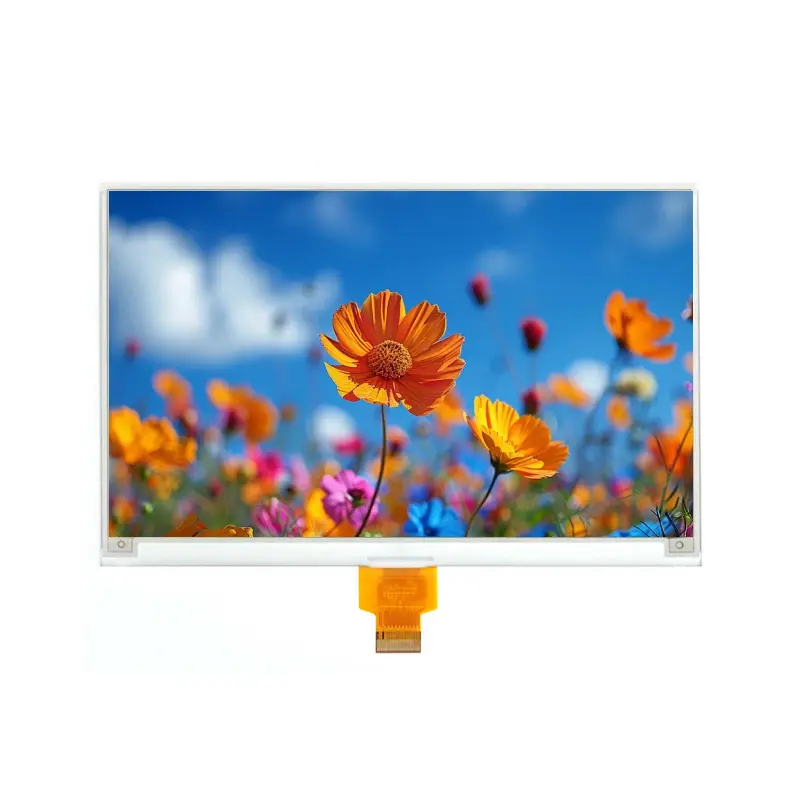
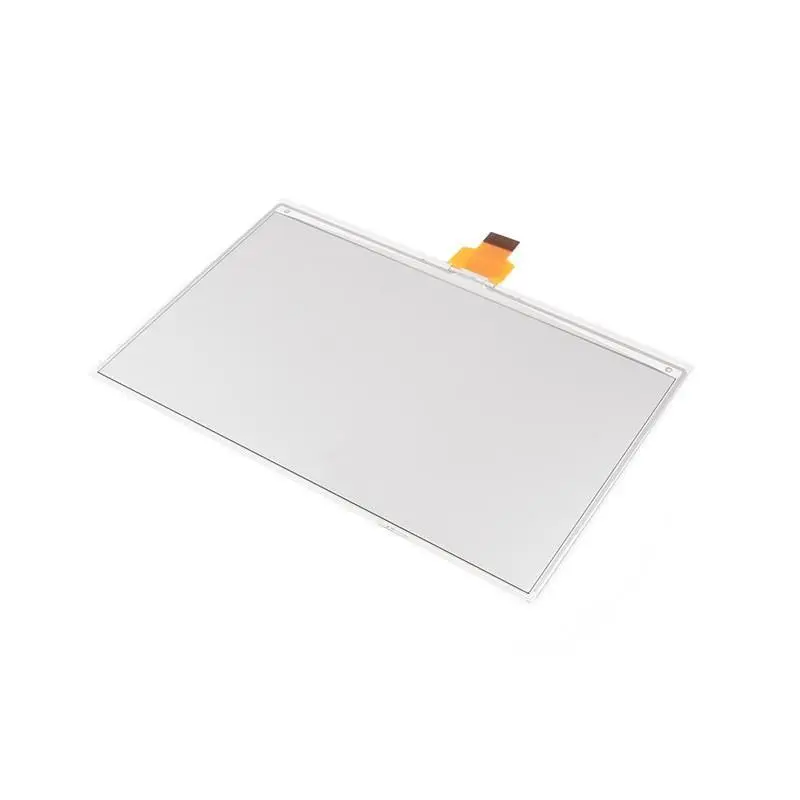
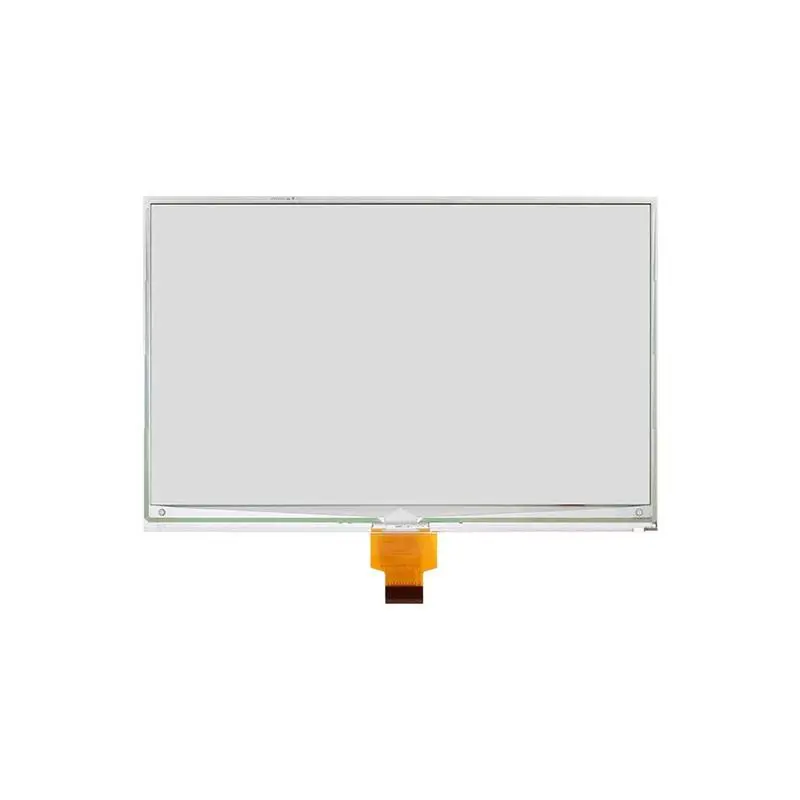
7.5 Inch Four Color Electronic Paper Panel for Shelf Labels
A reflective SPI panel for larger price labels, promotions, and retail information.
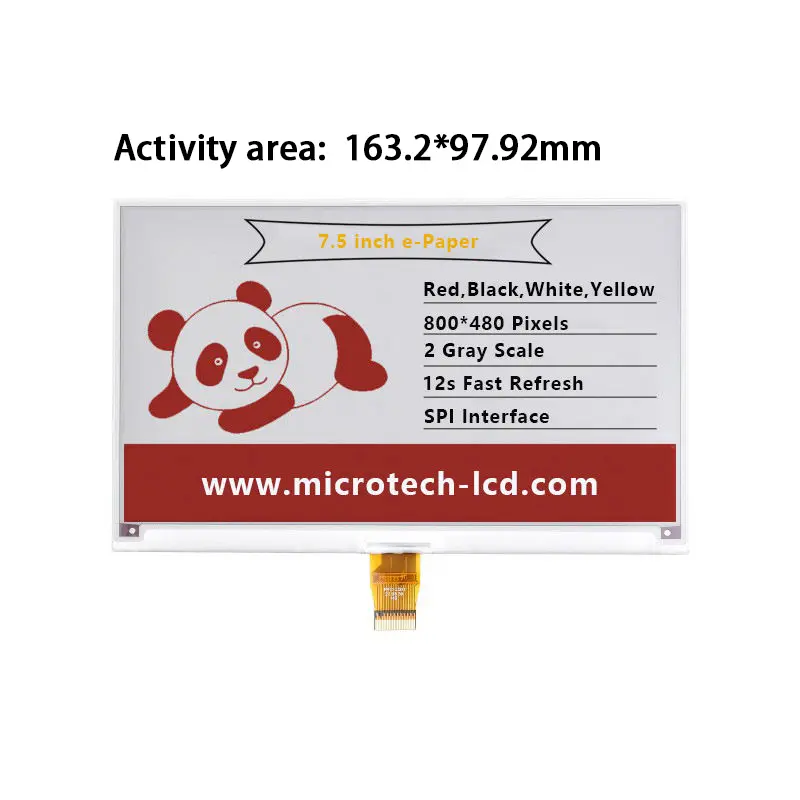
The 7.5 Inch Four Color Electronic Paper Panel is an 800×480 reflective display component for shelf labels, promotional price boards, inventory signs, and other retail information that changes intermittently. Its red, black, white, and yellow output provides more visual hierarchy than a monochrome panel, while the 163.2 × 97.92 mm active area supports larger text, product graphics, barcodes, and promotional messaging.
This is a bare display panel, not a complete wireless electronic shelf label with a battery, radio, enclosure, or retail-management platform.
Key Specifications at a Glance
| Parameter | Value |
|---|---|
| Display size | 7.5 inch |
| Resolution | 800 × 480 pixels |
| Display technology | Reflective electronic paper |
| Color output | Red, black, white, and yellow |
| Active area | 163.2 × 97.92 mm |
| Interface | SPI |
| Driver IC | JD79686 |
| Refresh statement | 12 s shown; qualification required |
| Gray-level statement | 2 gray levels shown; implementation requires confirmation |
| Primary application | Shelf labels and retail information |
Final electrical limits, connector details, waveform resources, refresh grade, and mechanical outline must be defined in the approved module specification.
Product Overview
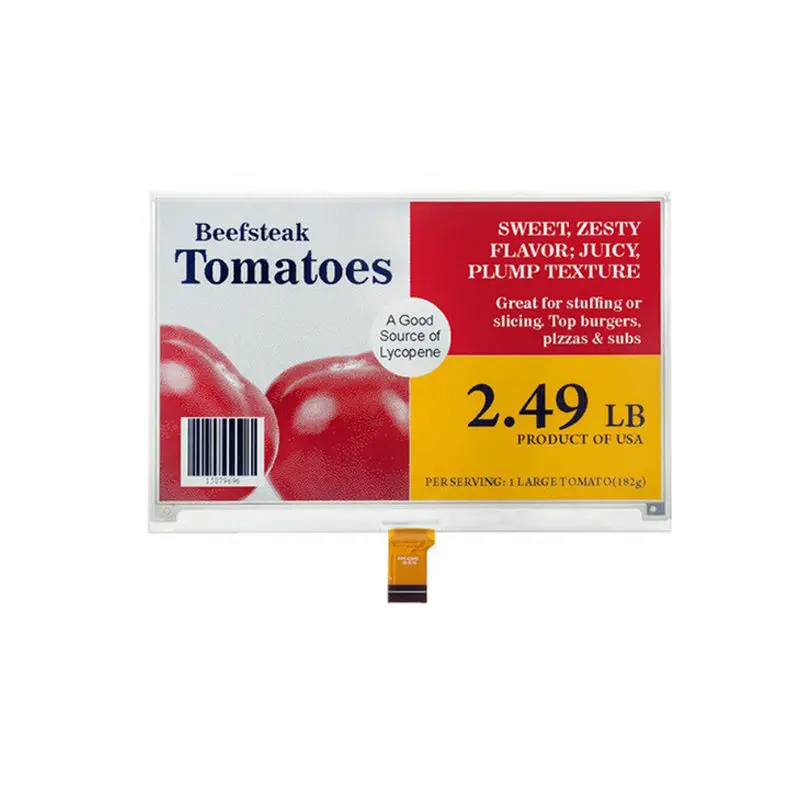
The 800×480 canvas provides enough space for product names, larger prices, promotion blocks, unit information, product imagery, and scannable identifiers. The four-color configuration can separate normal text, warnings, discounts, and highlighted content without relying on a backlight.
Electronic paper retains a static image without continuous display power. Power remains necessary during image updates and for the controller, wireless communications, sensing, and power-management electronics in the finished system.
Four-color content hierarchy
Red and yellow can be reserved for discounts, stock warnings, product categories, or promotional accents. Black can carry primary text and barcodes, while white provides the background.
Artwork should be prepared for the panel’s exact color capabilities. Conventional full-color photographs, gradients, and unrestricted RGB graphics cannot be assumed to reproduce as they would on an LCD or OLED.
Native 800×480 artwork
Content should be generated at 800×480 pixels to avoid unnecessary scaling. Font weight, barcode module width, QR-code size, image dithering, and color separation should be tested on actual samples.
Larger shelf-label format
The 163.2 × 97.92 mm active area is more appropriate for larger shelf bays, promotional displays, counter signs, product-feature cards, and warehouse information than a compact price-only label.
Four-Color Shelf Label Integration
The 7.5 Inch Four Color Electronic Paper Panel can serve as the visual component of an electronic shelf label, but it does not provide the complete ESL architecture.
A finished shelf-label system also needs host electronics, power, wireless communication, housing, mounting hardware, software, and a label-management platform.
Retail information layout
Potential content includes:
- Product and brand names
- Standard and promotional prices
- Unit-pricing information
- Product features
- Barcodes and suitably sized QR codes
- Inventory or replenishment status
- Limited-color product graphics
- Promotional callouts
- Shelf or warehouse location data
Readability depends on font size, viewing distance, artwork contrast, panel orientation, and the final protective structure.
Wireless-system boundary
SPI is the local panel-control interface. It does not establish Bluetooth, Wi-Fi, NFC, RFID, infrared, sub-GHz, or proprietary ESL-network compatibility.
The selected wireless platform must be implemented separately by the finished-label designer.
Low-update-rate positioning
Electronic paper is suited to static or intermittently changing content. It should not be treated as a video, animation, or continuously refreshing display.
SPI Compatibility and JD79686 Considerations
The SPI interface allows a host controller to transfer display commands and image data, but the word “SPI” alone does not guarantee compatibility.
A generic SPI library or connector cannot confirm voltage, pin assignment, clock behavior, busy signaling, reset requirements, data/command control, waveform resources, or refresh sequencing.
Host integration checks
Confirm:
- Exact panel pin assignment
- FPC pitch and contact orientation
- Host and panel voltage requirements
- SPI clock and chip-select behavior
- Data/command signal handling
- Reset and busy-signal operation
- Full and partial update support
- Required image-data format
- Four-color plane or buffer organization
- Waveform and temperature dependencies
JD79686 role boundary
JD79686 is identified as the driver IC. Its presence alone does not establish a universal initialization process, register map, waveform table, power sequence, or software-library match.
The complete module specification must control the host design.
Non-SPI video interfaces
HDMI, USB video, MIPI DSI, LVDS, eDP, and parallel RGB cannot drive this raw panel directly. They require suitable conversion and an electronic-paper controller capable of generating the required update sequence.
Mechanical Fit of the 7.5 Inch Four Color Electronic Paper Panel
The confirmed active image area measures 163.2 × 97.92 mm. Overall outline, border dimensions, thickness, rear-component clearance, FPC location, and connector geometry are not yet confirmed.
Enclosure window
The front opening must be based on the approved mechanical drawing rather than the active area alone. The design should protect panel edges without covering useful pixels.
Flexible-connector routing
Provide clearance for the FPC exit, connector insertion, and bend radius. Avoid sharp folding, compression under fasteners, or adhesive pressure near the active panel and rear components.
Front protection
No cover glass, abrasion grade, impact rating, waterproofing, or cleaning-chemical resistance is confirmed. Retail installations exposed to customer contact, carts, products, or cleaning processes require a separately engineered front structure.
Refresh Performance and Artwork Qualification
A product image states a 12-second fast-refresh value. The statement does not identify whether this is typical, maximum, full refresh, partial refresh, room-temperature performance, or a particular waveform.
The 12-second duration should therefore be treated as a qualification target until test conditions are documented.
Four-color refresh performance may differ from monochrome or two-color e-paper. Artwork complexity, controller resources, temperature, waveform selection, and color-plane handling may affect the actual update experience.
The panel is not intended for smooth motion or frequently animated content.
Recommended Applications
Appropriate project directions include:
- Large electronic shelf labels
- Promotional shelf-edge signs
- Smart retail price boards
- Supermarket product-information panels
- Warehouse and inventory labels
- Reusable logistics signs
- Counter and aisle information displays
- Low-update-rate equipment status panels
- Meeting-room or asset-status signs
Outdoor, refrigerated, freezer, vehicle, and industrial-temperature applications require separate environmental qualification.
Customization and Procurement Scope
Project review may include color-artwork preparation, FPC and connector definition, firmware or waveform support, mechanical adaptation, front protection, packaging, and integration with a customer-designed ESL platform.
Commercial quantities, tooling requirements, material availability, and sample terms are confirmed separately for the requested configuration.
Procurement and Sample Approval Checklist
Confirm:
- Required red, black, white, and yellow configuration
- Native 800×480 artwork
- SPI host architecture
- Exact pin assignment
- Voltage and timing requirements
- FPC pitch, contact side, and orientation
- JD79686 module requirements
- Full and partial refresh targets
- 12-second test conditions
- Four-color image-buffer format
- Overall outline and thickness
- Front protection and enclosure drawing
- Sample quantity
- Estimated annual demand
- Production timing
- Controller-board requirement
FAQ
About 7.5 Inch Four Color Electronic Paper Panel
Is this a complete electronic shelf label?
Does every SPI controller work with it?
Is the refresh time definitely 12 seconds?
Can it connect directly to HDMI or MIPI DSI?
Does the panel include wireless communication?
Freya Yang
+86 18318948097