Freya Yang
+86 18318948097
+852 62667476
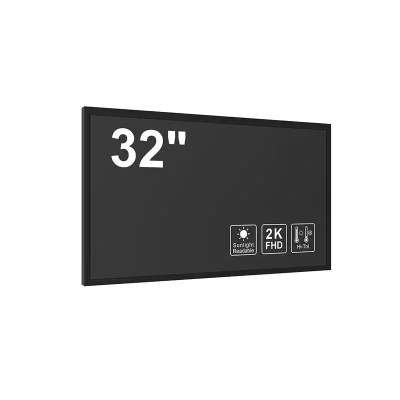
32 Inch High Brightness Gas Pump Touch Monitor for Fuel Dispensers
Model P/N
Size
Resolution
Brightness
Viewing Angle
Connector Type
Operating Temp
Overall(mm)
huisoar
HS320FHB-GD20-OP
Brand
Panel Size (inch)
Model P/N
Resolution
Brightness (nits)
Viewing Angle
Contrast Ratio
Response Time
Overall (mm)
Active Area (mm)
Refresh Rate
Display Colors
Panel Type
Connector Type
Surface Treatment
Operating Temp
Touchscreen Type
Storage Temp
Work Mode
Pixel Format
Input Voltage (V)
Weight (g)
Operating Environment
Designed For
32 Inch High Brightness Gas Pump Touch Monitor for Fuel Dispensers
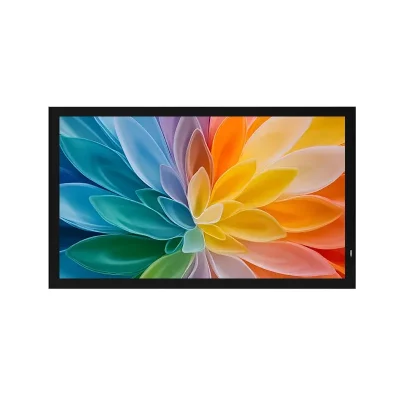
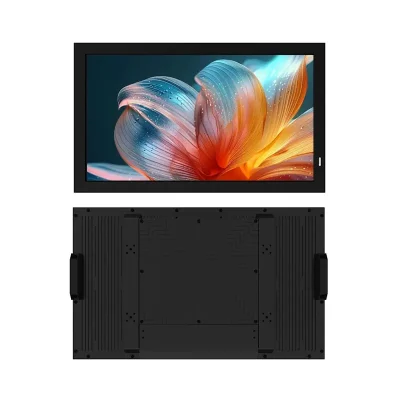
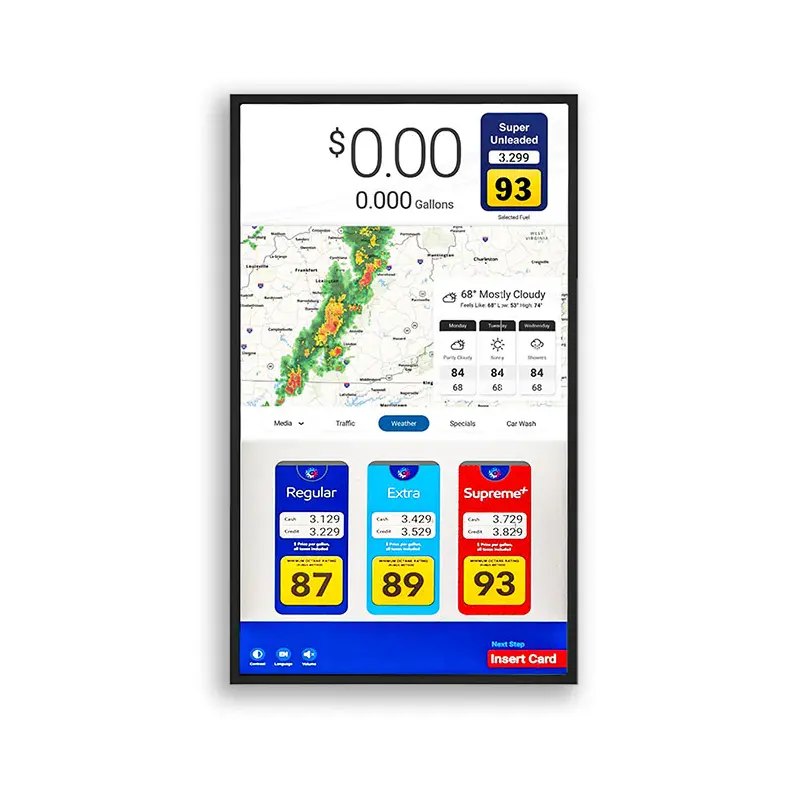
This High Brightness Gas Pump Touch Monitor combines a 32-inch FHD open-frame design with PCAP interaction and front-side protection for fuel-dispenser projects.
Product Summary
A High Brightness Gas Pump Touch Monitor gives fuel-equipment designers a larger interactive surface for customer guidance, operational information and promotional media while retaining the integration flexibility of an open-frame format. The 32-inch configuration uses 1920 × 1080 Full HD resolution with a 2000 cd/m² typical embedded-panel reference, projected capacitive touch and wide-temperature operation.
The design is intended for fuel dispensers and other outdoor-facing self-service equipment where screen visibility, front-surface durability and reliable user interaction must be considered together. Internal LCD integration and external system interfaces are treated separately so engineering teams can qualify the display around the actual controller, enclosure and power architecture.
Key Specifications
| Item | Confirmed configuration |
|---|---|
| Screen size | 32 inches |
| Resolution | 1920 × 1080 pixels, FHD |
| Typical panel brightness | 2000 cd/m² |
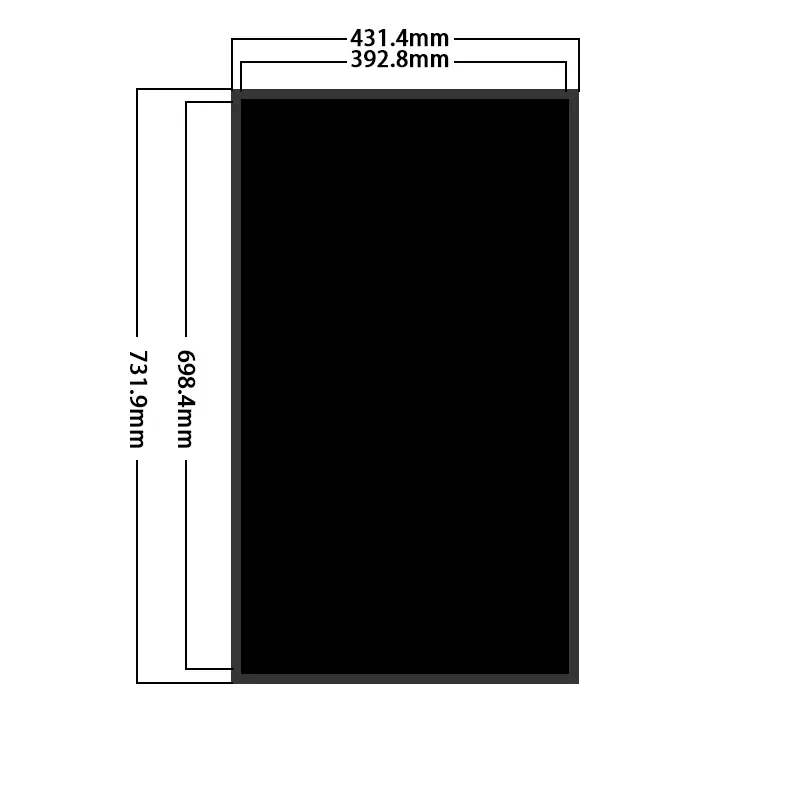
| LCD active-area reference | 698.4 × 392.85 mm |
| Touch technology | Projected Capacitive Touch, PCAP |
| Front glass | 3–6 mm tempered, anti-glare, anti-UV |
| Front protection | IP65 |
| Impact resistance | IK10 |
| Viewing performance | 178° H × 178° V |
| Response time | 15 ms typical, G-to-G |
| Color | 16.7M colors, 72% NTSC |
| Refresh rate | 60 Hz |
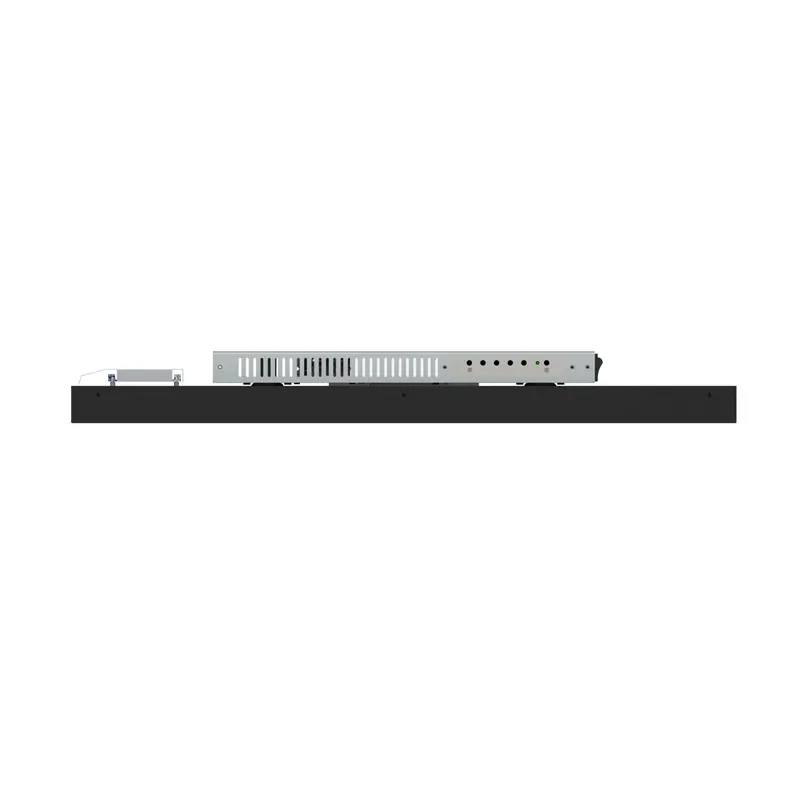
| Internal panel interface | 51-pin LVDS, 2-channel, 8-bit |
| Panel input | 12.0 V typical |
| System power route | 12 V / 24 V DC |
| Configurable system I/O | HDMI / VGA / USB / RS232 |
| Operating temperature | −20°C to +70°C |
| Storage temperature | −30°C to +80°C |
| Backlight-life reference | 50,000 hours |
| Mounting | Recessed / chassis / VESA |
| Housing | Aluminum alloy |
Outdoor Readability for Fuel Dispensers
2000 cd/m² Typical Panel Configuration
The standard panel reference uses 2000 cd/m² typical luminance, giving system designers a high-output starting point for outdoor fuel-equipment interfaces. Final readability still depends on the complete optical stack.
The dispenser window, cover glass, air gaps, optical films, viewing angle and direct-sun exposure all influence apparent contrast. Evaluate the completed front assembly at the brightest expected site condition rather than qualifying the display from luminance alone.
Anti-Glare Glass and Wide Viewing
The front structure supports 3–6 mm tempered glass with anti-glare and anti-UV treatment. Wide 178° horizontal and vertical viewing performance helps maintain interface visibility when users approach the dispenser from different positions.
Optical bonding can be reviewed when the project requires a different reflection or front-stack strategy, but it should be confirmed as part of the ordered configuration rather than assumed automatically.
PCAP Touch and Front-Side Protection
Glove and Wet-Hand Touch Qualification
The display uses projected capacitive touch and supports glove, wet-hand and multi-touch operation. Those capabilities are relevant to public fueling environments where users may interact with the screen under changing weather and working conditions.
PCAP performance should be tested after the final front glass, grounding, bezel and enclosure are defined. Cover thickness, bonding, electrical noise and mechanical stack-up can all influence touch sensitivity.
Front IP65 and IK10 Protection Boundary
Front IP65 protection provides a defined user-facing sealing level, while IK10 addresses impact resistance at the display front. These are useful requirements for public-access equipment.
Front IP65 does not automatically establish the environmental rating of the complete fuel dispenser. Cable entries, rear electronics, enclosure seams, ventilation openings and system assembly remain part of finished-equipment qualification.
High Brightness Gas Pump Touch Monitor Integration
The display provides both an internal panel-level connection route and configurable system-level interfaces, which should be kept separate during electrical design.
51-Pin LVDS Panel Connection
The embedded LCD reference uses a 51-pin, two-channel, 8-bit LVDS interface with a 12.0 V typical panel input. The Full HD timing is specified at 60 Hz.
Before controller release, confirm the complete LVDS pin definition, timing, cable architecture, power sequencing requirements from the approved engineering document and the exact ordered panel revision.
Configurable External Video and Control I/O
HDMI, VGA, USB and RS232 are configurable system-side interface options. They should not be interpreted as evidence that every ordered monitor contains all ports simultaneously.
Define the required host, video source, touch connection, service interface and remote-control architecture before the I/O configuration is frozen.
Separate Panel and System Power Paths
Panel-level documentation gives a 12.0 V typical LCD reference, while the open-frame system supports a 12 V / 24 V DC input route with an optional AC adapter.
Keeping those power domains distinct helps avoid treating the internal LCD requirement as the complete monitor input specification. The final wiring drawing should identify the controller, touch electronics, backlight subsystem and external supply route independently.
Wide-Temperature Operation and Service Planning
Operating and Storage Temperature
The operating range is −20°C to +70°C, with storage from −30°C to +80°C. These values support equipment development across a broad range of outdoor and semi-outdoor locations.
Actual cabinet temperature still depends on solar load, ventilation, power dissipation, surrounding equipment and installation geometry. Validate the complete dispenser rather than assuming the LCD temperature range alone defines the finished-system environmental limit.
LED Backlight Life Reference
The LED backlight carries a listed 50,000-hour life reference. Long service schedules still require thermal design, appropriate luminance settings and qualified power electronics.
For continuous public operation, engineering review should consider airflow, screen temperature, brightness target and expected daily runtime together.
Application Fit for Fuel and Energy Equipment
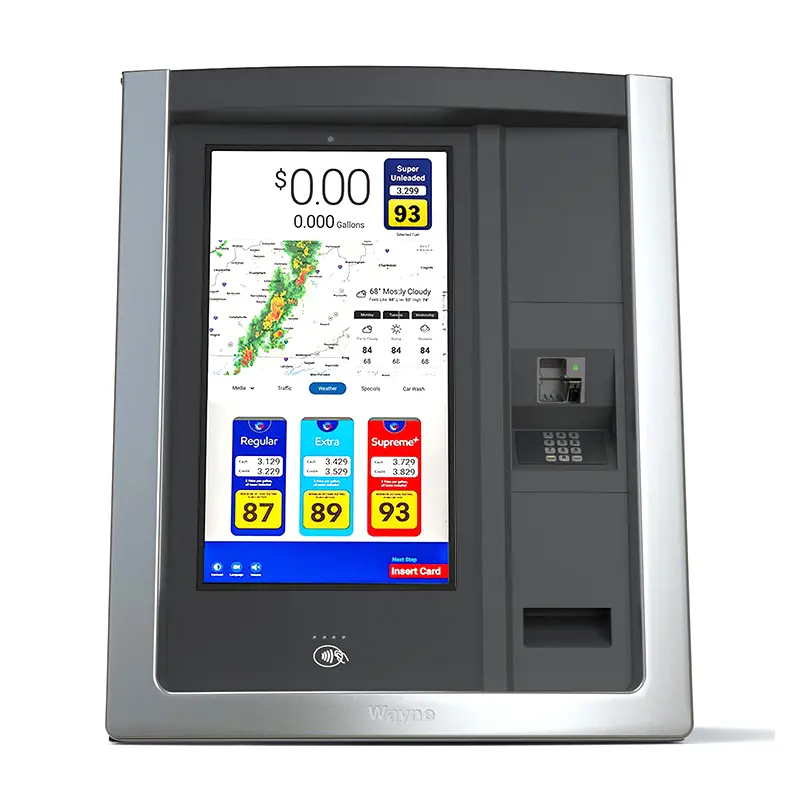
Fuel Dispensers and Gas-Pump Interfaces
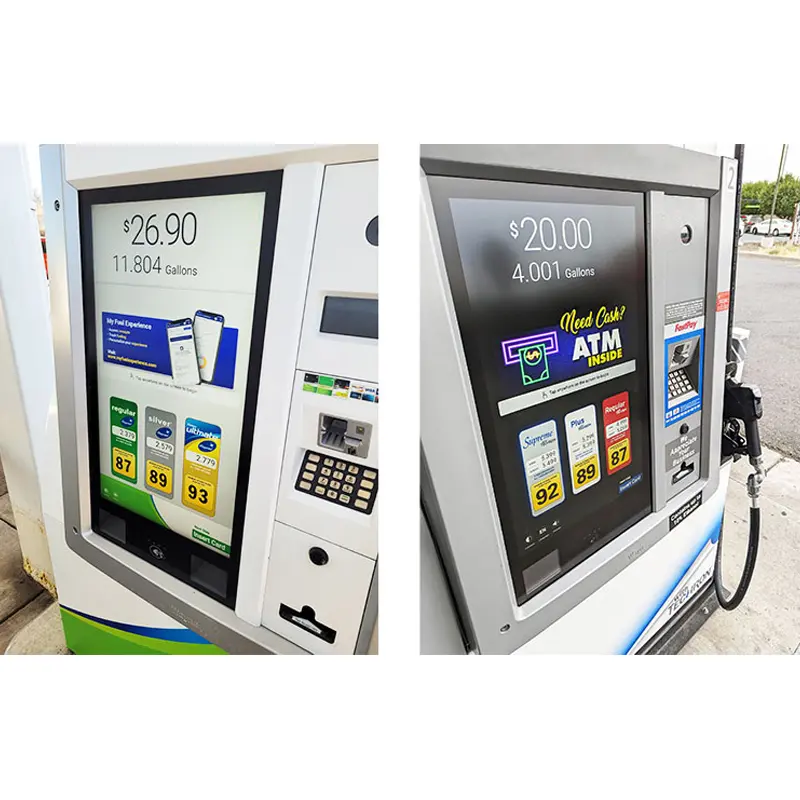
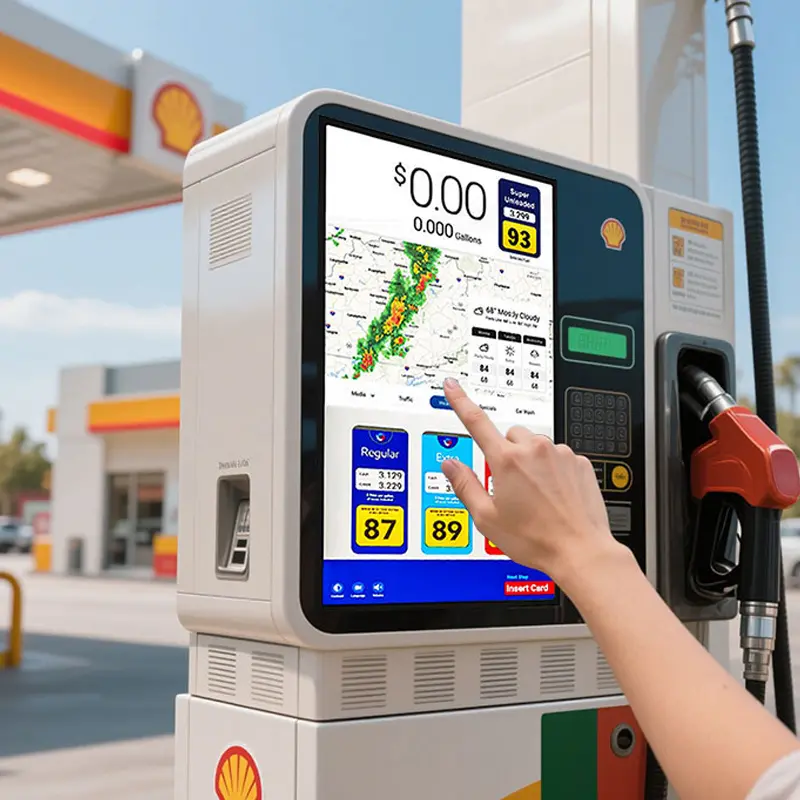
The 32-inch format provides enough screen area for guided customer interaction, fueling instructions, status information, loyalty content, safety messaging and promotional media within a single interface.
Its open-frame architecture is especially useful where the screen must be integrated into a custom dispenser fascia rather than installed as a standalone desktop monitor.
EV Charging and Outdoor Self-Service Equipment
The same combination of FHD content, PCAP interaction, wide temperature range and front protection can also support EV charging terminals and other protected self-service equipment after system-specific qualification.
The High Brightness Gas Pump Touch Monitor should still be evaluated against the final enclosure, mounting, electrical, environmental and touch requirements of each application.
Customization Options
Project review can cover brightness grade, external video and control interfaces, optical bonding, cover-glass structure, housing dimensions, mounting and front-enclosure adaptation.
Generic higher-protection housings, industrial connectors, wide-voltage electronics and embedded communication platforms are separate engineering routes rather than automatic standard features.
Custom configurations are generally reviewed from 500 pieces, subject to tooling requirements, material availability and the requested specification. Sample and standard-monitor quantities are confirmed separately.
Procurement Checklist
- Confirm the exact production revision before enclosure tooling.
- Lock one ordered luminance target and tolerance.
- Confirm native 1920 × 1080 timing and 60 Hz operation.
- Approve the 698.4 × 392.85 mm LCD active-area reference.
- Obtain the exact finished open-frame outline and weight drawing.
- Confirm the 51-pin two-channel 8-bit LVDS definition.
- Confirm the 12.0 V panel power requirement.
- Define the 12 V / 24 V DC system power architecture.
- Specify which HDMI, VGA, USB and RS232 functions are required.
- Confirm PCAP multi-touch, glove and wet-hand acceptance criteria.
- Define the touch-interface connection.
- Approve the 3–6 mm cover-glass stack.
- Verify front IP65 and IK10 test scope.
- Confirm −20°C to +70°C operation and −30°C to +80°C storage.
- Resolve the contrast specification before final documentation.
- Confirm the 50,000-hour backlight-life basis.
- Define recessed, chassis or VESA mounting.
- Specify the complete dispenser environmental-protection requirement.
- Require separate hazardous-location documentation where applicable.
- Submit sample criteria, order quantity and annual demand.
FAQ
About 32 Inch High Brightness Gas Pump Touch Monitor
What should be checked before approving the 2000 cd/m² configuration behind a dispenser window?
Does front IP65 mean the complete fuel dispenser is IP65?
How should glove and wet-hand PCAP operation be validated?
How does the 51-pin LVDS connection differ from HDMI, VGA, USB and RS232?
What power information should be fixed before wiring design?
Freya Yang
+86 18318948097