Freya Yang
+86 18318948097
+852 62667476
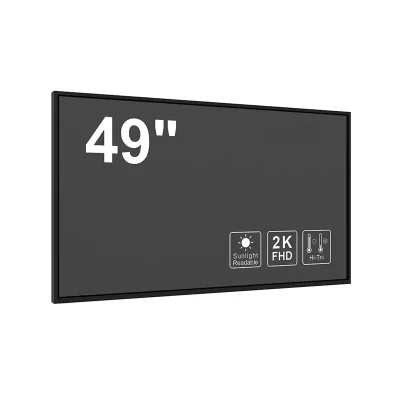
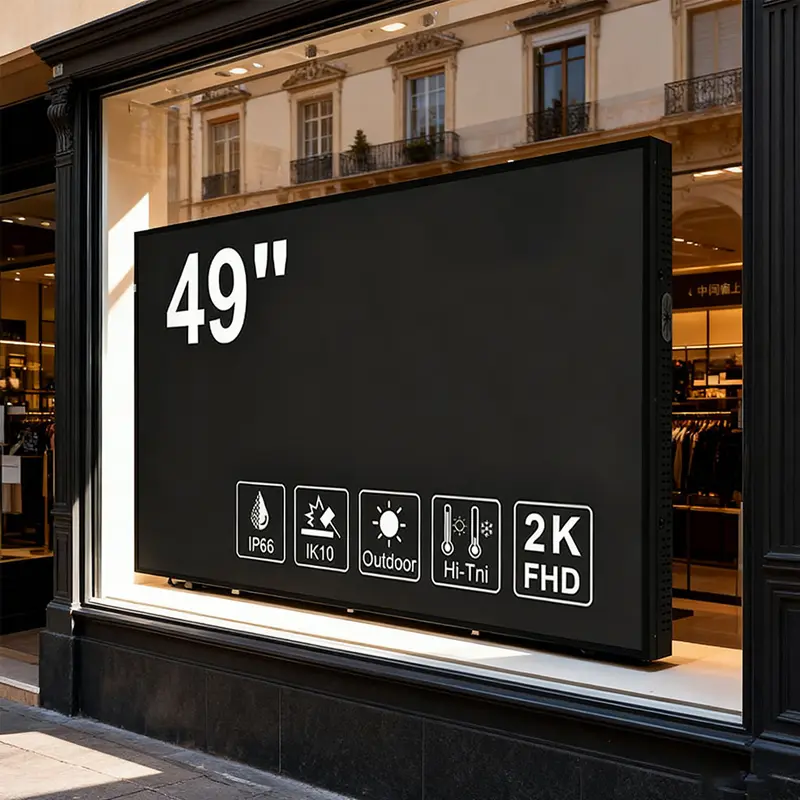
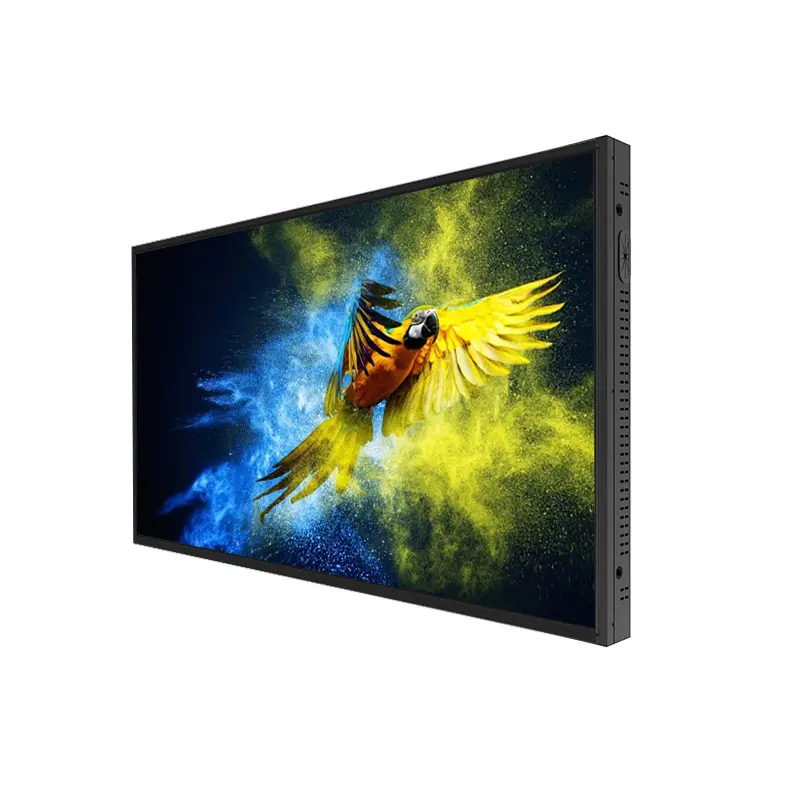
49 Inch Sunlight Viewable Storefront Digital Signage Display
Model P/N
Size
Resolution
Brightness
Viewing Angle
Connector Type
Operating Temp
Overall(mm)
huisoar
HS490MNX02D01-BK
Brand
Panel Size (inch)
Model P/N
Resolution
Brightness (nits)
Viewing Angle
Contrast Ratio
Response Time
Overall (mm)
Active Area (mm)
Refresh Rate
Display Colors
Panel Type
Connector Type
Operating Temp
Touchscreen Type
Storage Temp
Work Mode
Operating Environment
Designed For
49 Inch Sunlight Viewable Storefront Digital Signage Display
Built for glass-facing advertising, this 49-inch Full HD display combines 2500 cd/m² luminance with a slim 50 mm enclosure and commercial AV inputs. The Sunlight Viewable Storefront Digital Signage Display is designed for window-facing installations where daylight and reflections can overpower ordinary indoor signage. Its standard configuration uses AC 100–240 V input and a 400 × 400 mm mounting pattern for commercial installation.
Product Summary
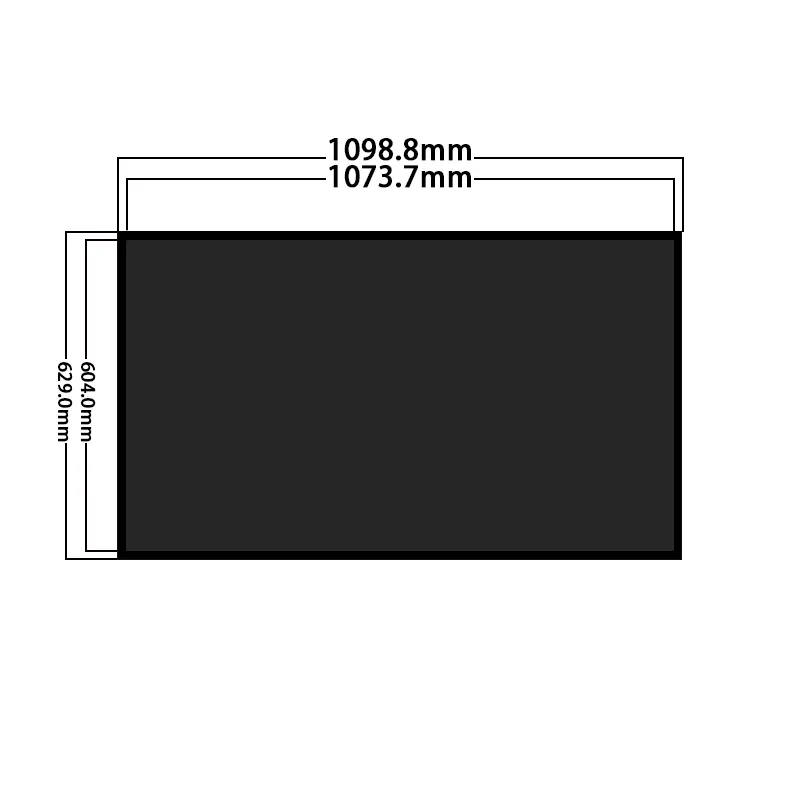
The 49-inch screen uses a 1920 × 1080 image format with a 1073.78 × 604 mm display area. A specified 1100:1 contrast ratio, 16.7M display colors, and a raw 89/89/89/89 viewing-angle sequence at CR ≥ 10 support advertising layouts viewed by pedestrians approaching from different directions.
The specification profile is that of a finished window-facing display rather than a bare LCD panel: it includes HDMI, DVI, VGA, PC audio input, earphone output, and AC input. The standard table identifies no operating system, no standard touch function, and no product-specific IP rating.
Key Specifications
| Parameter | Confirmed value |
|---|---|
| Screen size | 49 inches |
| Resolution | 1920 × 1080 pixels |
| Display area | 1073.78 × 604 mm |
| Brightness | 2500 cd/m² |
| Contrast ratio | 1100:1 |
| Viewing angle | 89/89/89/89 at CR ≥ 10; direction order unassigned |
| Display colors | 16.7M |
| Response time | 6 ms typical, Tr/Td |
| Input power | AC 100–240 V |
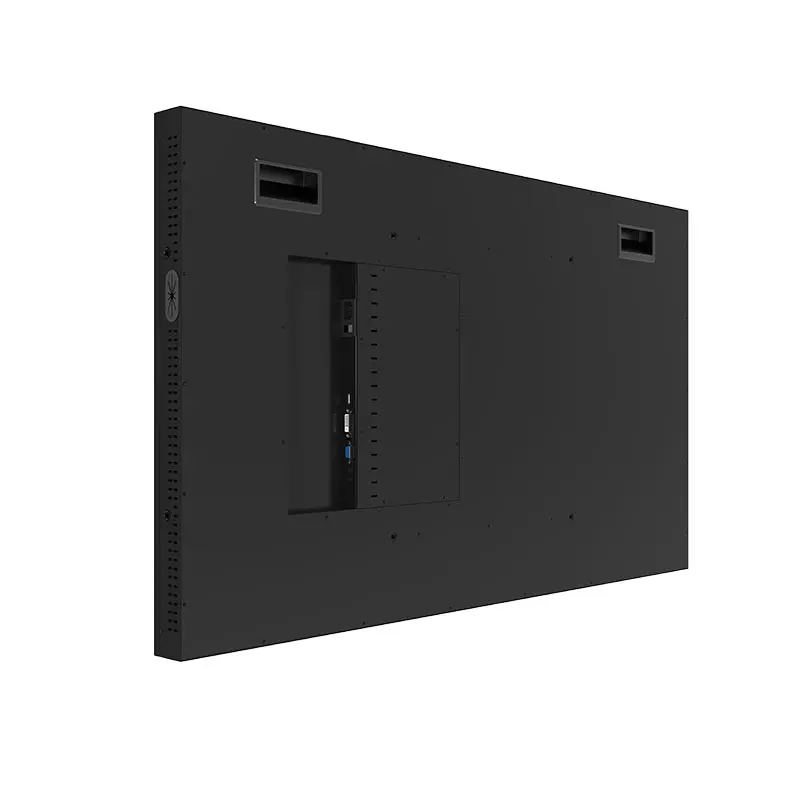
| I/O | HDMI ×1, DVI ×1, VGA ×1, PC Audio In ×1, Earphone Out ×1, AC In ×1 |
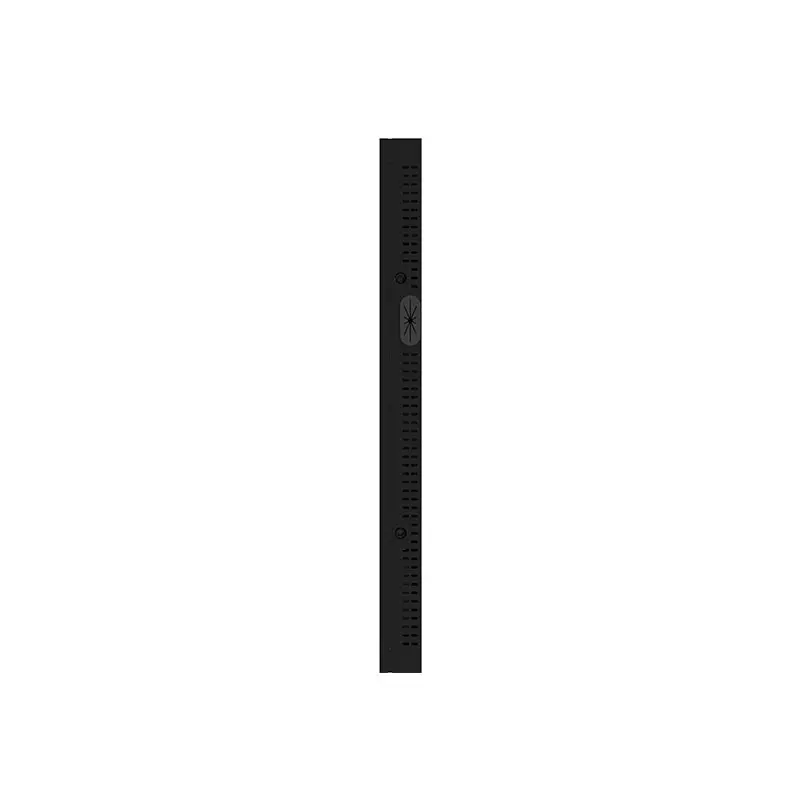
| Overall dimensions | 1098.8 × 629 × 50 mm |
| Mounting | 400 × 400 mm, 4 × M8, maximum screw depth 10 mm |
| Operating temperature | −20°C to +70°C |
| Storage temperature | −30°C to +80°C |
| Touch | No standard touch function specified |
| Product IP rating | No product-specific rating specified |
These values correspond to the current exact configuration rather than the broader OEM customization blocks.
Why 2500 cd/m² Matters Behind Storefront Glass
Brightness Must Be Qualified Through the Final Window
A 2500 cd/m² rating provides a substantially stronger optical starting point for a window-facing screen than ordinary indoor signage, but finished readability depends on more than luminance. Storefront-glass transmission, reflections, screen setback, viewing direction, direct-sun duration, and indoor lighting can all affect the contrast seen from outside. Current window-facing guidance similarly treats glazing and reflection as part of the optical decision rather than relying on nits alone.
For procurement, define the actual glazing and installation position before approving the optical target. A sample should reproduce the intended glass stack and daytime viewing condition rather than rely only on bare-display luminance.
Wide-Angle Public Viewing
Window advertising is commonly viewed while people are walking past the storefront rather than standing directly in front of the screen. The specified 89/89/89/89 viewing-angle values therefore provide a useful off-axis qualification point, but the directional order should remain unassigned until approved technical documentation confirms it.
Integrating a Sunlight Viewable Storefront Digital Signage Display
Full HD Content and External Media Integration
The display accepts HDMI, DVI, and VGA video inputs, so a signage player or dedicated playback device can feed the native 1920 × 1080 canvas. PC audio input and earphone output are also specified. Because the standard configuration identifies no operating system, CMS and player functions should be treated as separate system components unless a project-specific embedded configuration is ordered.
Before release, confirm the selected player output, native timing, cable length, connector access, audio requirements, and service routing. Physical connector availability alone does not complete signage-system commissioning.
AC Power and VESA-Style Mounting
The unit is specified for AC 100–240 V input. Its 1098.8 × 629 × 50 mm enclosure and 400 × 400 mm mounting pattern with four M8 fixing points provide concrete references for retail-window framing, wall structures, or suspended support designs. The mounting specification limits screw depth to 10 mm.
Power consumption and net weight are not fixed, so structural load and circuit sizing should be completed after the approved production revision provides those values.
Thermal and Environmental Planning
Wide-Temperature Window-Facing Operation
The confirmed operating range is −20°C to +70°C, with storage from −30°C to +80°C. These limits matter behind sun-exposed glazing, where heat can accumulate between the display and storefront glass.
Thermal qualification should account for solar load, display setback, airflow, ambient indoor temperature, operating schedule, and any decorative structure surrounding the display.
Window-Facing Does Not Mean Weatherproof Outdoor
The standard specification lists no product-specific IP rating and no protective glass. This distinction matters because an outward-facing screen behind building glass is different from a fully exposed outdoor display. Dedicated outdoor signage products commonly carry explicit weatherproof IP classifications, while this exact configuration does not.
If the display will be exposed directly to rain, dust, washdown, or public impact, the required enclosure, sealing, protective glass, and environmental qualification must be defined separately.
Retail and Public-Facing Applications
The Sunlight Viewable Storefront Digital Signage Display is a strong fit for retail windows, shopping-center storefronts, restaurants, showrooms, service counters, and other glass-facing commercial locations where promotional content must remain visible in high ambient light. Current commercial window-signage ranges target the same storefront and retail environments.
The same 49-inch Full HD format can also be evaluated for bright smart-city information points when the installation protects the unit from weather exposure. The exact product description explicitly includes window-facing displays and smart-city screens.
Customization Boundaries
Project review can cover optical bonding, AR or AG treatment, alternative enclosure architecture, sensors, industrial connectors, power adaptation, embedded control hardware, and communication options. These are optional engineering routes rather than standard features of the base 49-inch configuration.
Custom configurations are generally reviewed from 500 pieces, subject to tooling requirements, material availability, and the requested specification. Sample and standard-display quantities are confirmed separately.
Procurement Checklist
Before sample approval or production release, confirm:
- 49-inch, 1920 × 1080 content format and player output;
- 2500 cd/m² acceptance target and measurement condition;
- storefront-glass type, transmission, reflection, tint, and screen setback;
- 1073.78 × 604 mm display area and 1098.8 × 629 × 50 mm enclosure fit;
- 400 × 400 mm mounting pattern, four M8 fixing points, and 10 mm maximum screw depth;
- HDMI, DVI, VGA, audio, and AC connector access;
- AC 100–240 V power architecture and final power-consumption value;
- final product weight and structural support;
- −20°C to +70°C operating and −30°C to +80°C storage requirements;
- whether standard non-touch operation is correct;
- whether an IP-rated enclosure or protective glass is required;
- sample-validation criteria, quantity, and annual demand.
The dimensional, electrical, mounting, interface, and environmental values above are the current confirmed product data.
FAQ
About 49 Inch Sunlight Viewable Storefront Digital Signage Display
Is 2500 cd/m² enough for a storefront window?
Can this display be installed fully outdoors?
What mechanical data should be checked before installation?
Does the Display include a built-in signage operating system?
How should the 50,000-hour backlight figure be interpreted?
Freya Yang
+86 18318948097