Freya Yang
+86 18318948097
+852 62667476
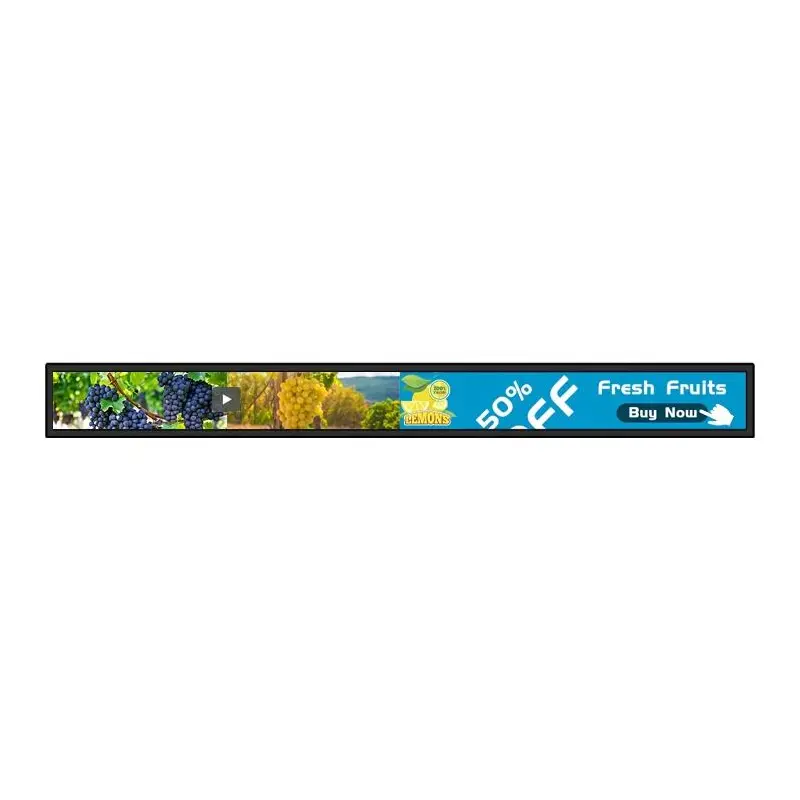
34 Inch Android Ultra Wide Stretched Bar Screen for Retail Signage
Model P/N
Size
Resolution
Brightness
Viewing Angle
Connector Type
Operating Temp
Overall(mm)
huisoar
HS034lcd-Bar
Brand
Panel Size (inch)
Model P/N
Resolution
Brightness (nits)
Viewing Angle
Contrast Ratio
Response Time
Overall (mm)
Active Area (mm)
Refresh Rate
Display Colors
Panel Type
Connector Type
Operating Temp
Touchscreen Type
Storage Temp
Work Mode
Pixel Format
Weight (g)
I/O Interface
Designed For
34 Inch Android Ultra Wide Stretched Bar Screen for Retail Signage
An Android Ultra Wide Stretched Bar Screen gives signage integrators a long, narrow display format for retail racks, shelf headers, promotional bands, and other spaces where a conventional 16:9 monitor is too tall. The 34-inch configuration combines a 1920 × 228 TFT LCD, 500 cd/m² luminance, 4000:1 contrast, Android operation, and optional Wi-Fi, LAN, 3G, or 4G networking. Its panoramic format is useful for message-led content, but the unusual raster, optional network hardware, and mechanical data should be locked before enclosure and content release.
Key Specifications at a Glance
| Specification | Value |
|---|---|
| Display size | 34 inches |
| Display technology | TFT LCD |
| Native resolution | 1920 × 228 pixels |
| Brightness | 500 cd/m² |
| Contrast ratio | 4000:1 |
| Viewing angle | 89° / 89° / 89° / 89° R/L/U/D |
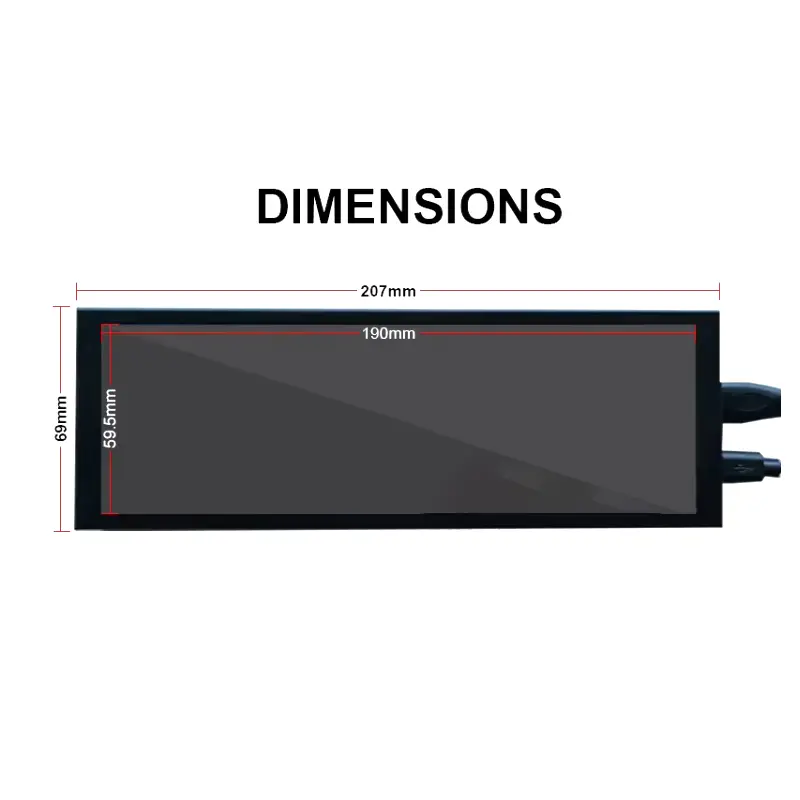
| Overall size | 921 × 105 × 46 mm |
| Operating system | Android |
| Network options | Wi-Fi / LAN / 3G / 4G, optional |
Why the 1920 × 228 Format Fits Narrow Signage Zones
Native panoramic content should be designed for the actual raster
The 1920 × 228 canvas is far wider than a conventional 16:9 screen. That makes it suitable for horizontal promotions, pricing bands, product messages, queue information, and other content that benefits from a long visual line. Artwork should be prepared for the native raster instead of simply shrinking a standard 1920 × 1080 layout, because text and graphics can become too small when normal widescreen creative is forced into a much shorter vertical space.
500 cd/m² supports controlled commercial lighting
The 500 cd/m² configuration provides a useful luminance level for indoor retail and other controlled commercial installations. It should not be treated as proof of direct-sun or exposed-outdoor readability. Final visibility still depends on viewing distance, ambient light, reflections, enclosure glazing, and the brightness setting used in the installed system.
Android-Based Signage Architecture
Android provides an integrated software environment
Android operation allows the 34-inch unit to function as an integrated signage platform rather than only a bare LCD panel. The exact Android version, processor, memory, storage, application package, and content-management software are not confirmed for the ordered configuration, so those items should be specified when the system is released.
Network hardware is configuration-dependent
Wi-Fi, LAN, 3G, and 4G are optional network routes. A buyer planning remote content updates should define which connection method is required and whether the project needs local playback, LAN access, wireless networking, or cellular connectivity. Network capability should be tied to the approved motherboard and software package rather than assumed from the Android label alone.
Integrating the Android Ultra Wide Stretched Bar Screen
Physical I/O must be confirmed for the ordered version
The 34-inch configuration does not establish a complete physical port list. Do not release a player, cable set, or enclosure cutout until the actual USB, HDMI, audio, Ethernet, power, or other required connections are confirmed for the production unit. This is especially important when the project depends on an external media source or service-access port.
Content workflow and network workflow should be approved together
For distributed signage, define whether media will be updated locally, over LAN or Wi-Fi, or through a cellular route, then confirm the Android software environment and required application.
Mechanical Planning for the 34-Inch Bar Display
The 921 × 105 × 46 mm outline controls early enclosure planning
The overall size is 921 × 105 × 46 mm, giving the unit a long, shallow front profile compared with conventional monitors. Rack openings, support rails, cable clearance, and service access should follow the approved mechanical drawing rather than only the nominal 34-inch diagonal.
The active-area figure needs drawing confirmation
An 885 × 70 mm active-area figure is associated with the product, but its aspect ratio does not align with the 1920 × 228 pixel raster. It should therefore not control tooling, bezel openings, or artwork-to-window calculations until an approved drawing confirms the visible image area. The 27.0 kg value belongs to the gross package and should not be used as the product mounting load.
Optical Performance and Panel-Type Control
4000:1 contrast supports high-separation signage content
The 4000:1 contrast ratio supports clear separation between text, graphics, and backgrounds. Together with 500 cd/m² luminance, it suits indoor commercial presentation without implying outdoor readability.
Wide viewing does not by itself confirm IPS
The viewing-angle sequence is explicitly 89° / 89° / 89° / 89° in R/L/U/D order. That supports wide-angle viewing around public-facing installations. The controlled technical classification is TFT LCD; buyers who require IPS technology should confirm the ordered panel revision before approval.
Application Direction
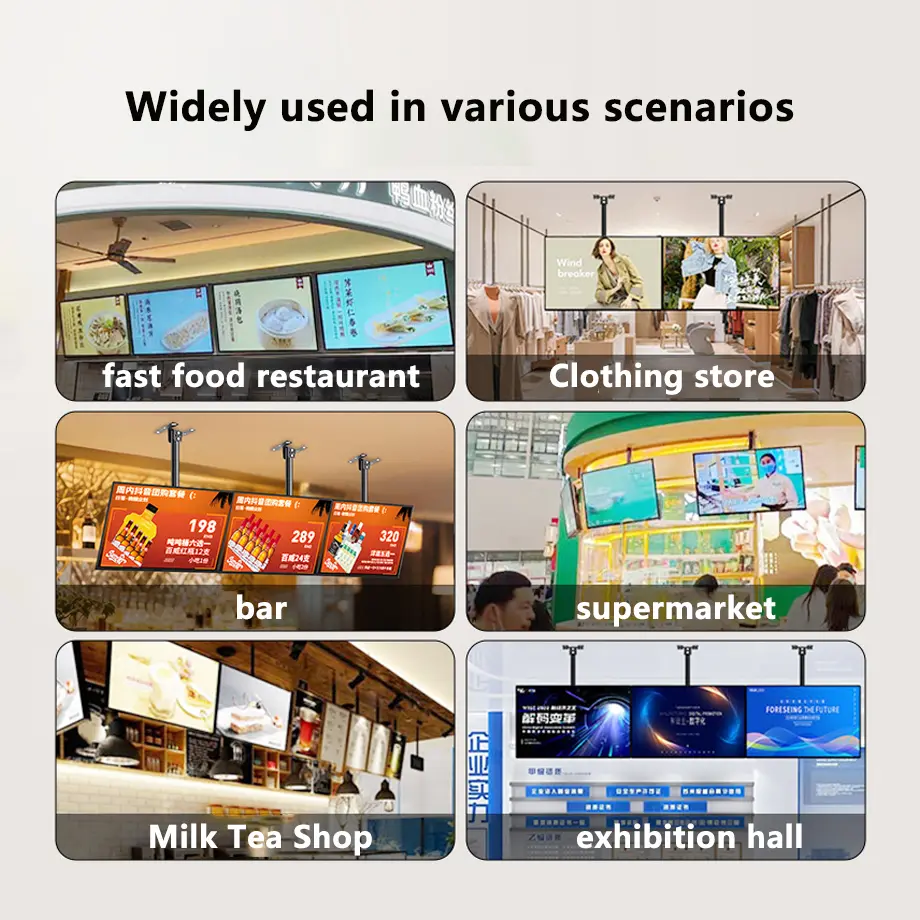
The Android Ultra Wide Stretched Bar Screen is well aligned with retail rack signage, shelf-header promotions, branded information strips, menu or service-message bands, and other networked commercial displays that need a very wide format. It can also be evaluated for industrial or equipment information strips when the project needs Android-based content presentation, provided the required environmental, mounting, power, and interface conditions are separately qualified.
Customization and Project Scope
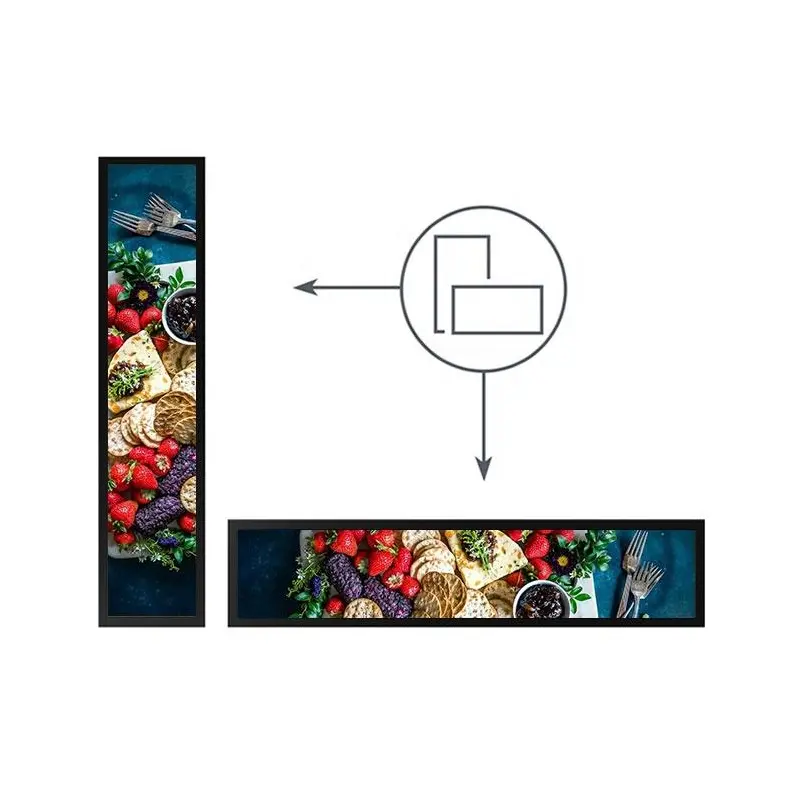
Network configuration, Android software, housing details, orientation, mounting, content workflow, and other system-level changes should be defined by project. Custom configurations are generally reviewed from 500 pieces, subject to tooling requirements, material availability, and the requested specification. Sample and standard-display quantities are confirmed separately.
Procurement Checklist
Before releasing the Android Ultra Wide Stretched Bar Screen, confirm the 1920 × 228 native content layout, 500 cd/m² luminance target, 4000:1 contrast, 89° / 89° / 89° / 89° R/L/U/D viewing condition, 921 × 105 × 46 mm overall size, approved active-area drawing, final product weight, Android version, motherboard/CPU/RAM/storage, required Wi-Fi/LAN/3G/4G option, physical I/O, power input and maximum power, mounting pattern, operating and storage environment, touch requirement if any, sample criteria, quantity, and annual demand.
FAQ
About 34 Inch Android Ultra Wide Stretched Bar Screen
What must be checked before creating content for the 1920 × 228 screen?
What should be confirmed before using Android for remote signage updates?
Which dimensions should control a rack or enclosure design?
Is 500 cd/m² sufficient for window-facing or direct-sun use?
Does the 89° / 89° / 89° / 89° viewing angle confirm an IPS panel?
Freya Yang
+86 18318948097