Freya Yang
+86 18318948097
+852 62667476
36.6 Inch Stretched Bar LCD Panel Touch Display for Transit Information
Model P/N
Size
Resolution
Brightness
Viewing Angle
Connector Type
Operating Temp
Overall(mm)
huisoar
HS366-SBL-FHD
Brand
Panel Size (inch)
Model P/N
Resolution
Brightness (nits)
Viewing Angle
Contrast Ratio
Response Time
Overall (mm)
Active Area (mm)
Refresh Rate
Display Colors
Panel Type
Connector Type
Surface Treatment
Operating Temp
Touchscreen Type
Storage Temp
Work Mode
Pixel Format
Input Voltage (V)
Weight (g)
Designed For
36.6 Inch Stretched Bar LCD Panel for Transit Information
An ultra-wide 1920 × 290 LVDS panel with 700 cd/m² luminance, wide viewing and long-life WLED for passenger-information equipment.
Product Summary
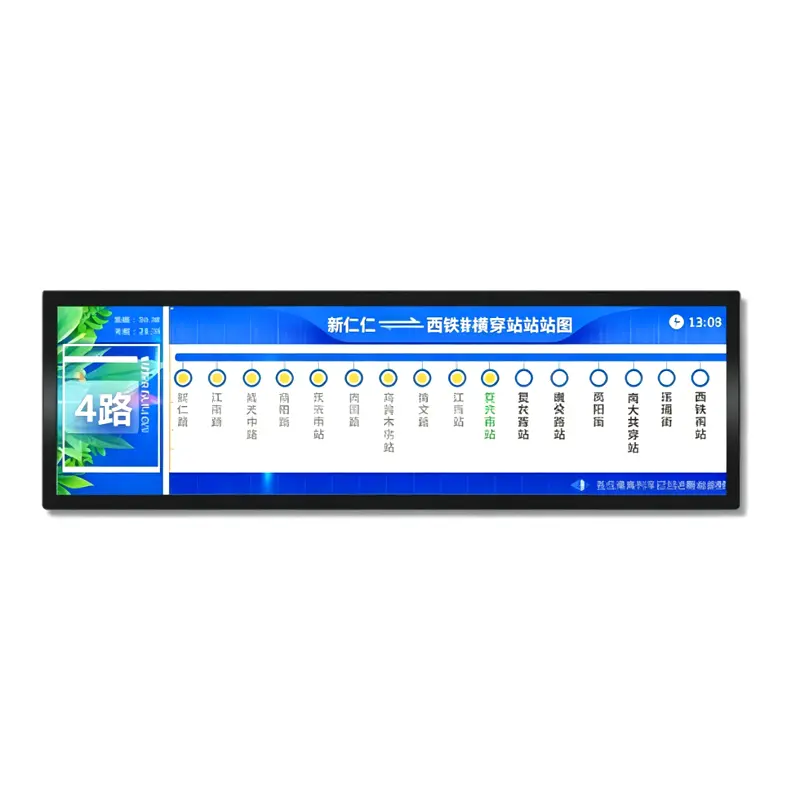
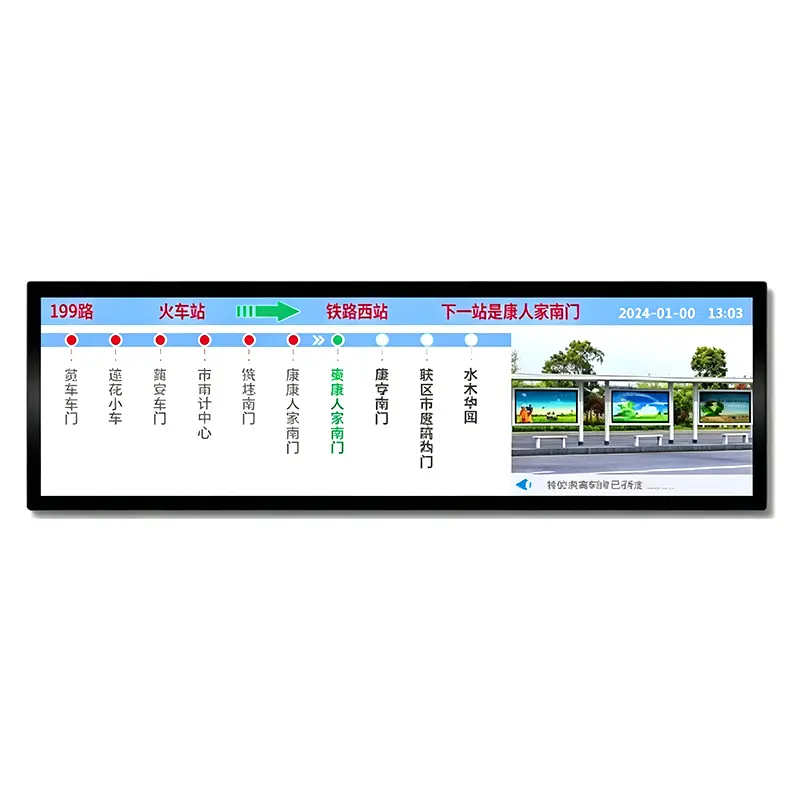
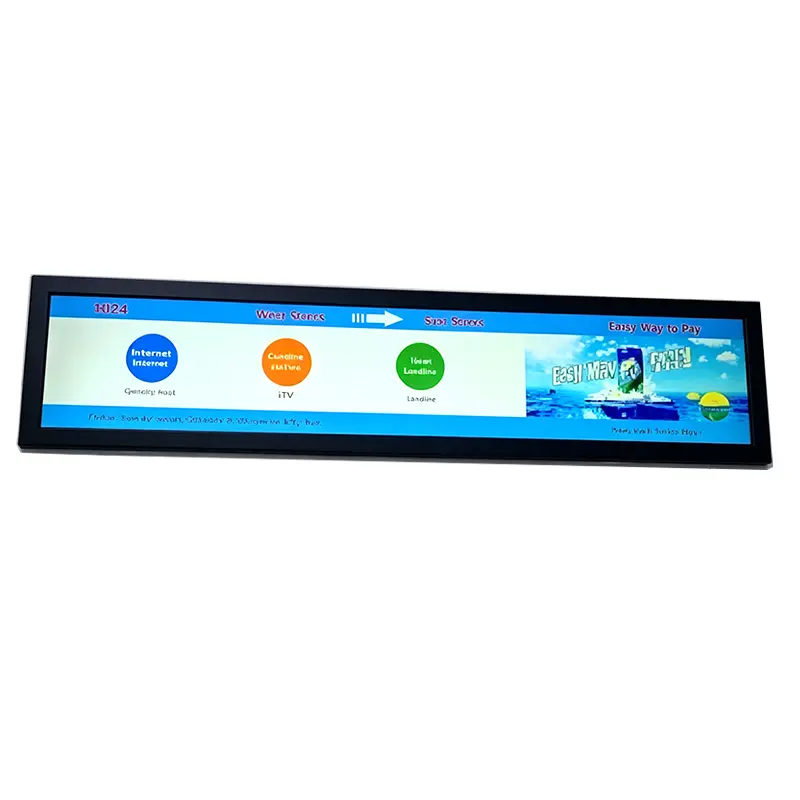
The 36.6 Inch Stretched Bar LCD Panel provides a long, shallow display canvas for route maps, stop sequences, timetable bands, carriage information and public-status graphics. Its native 1920 × 290 resolution is designed for interfaces that need substantial horizontal space without the height of a conventional 16:9 screen.
The panel combines 700 cd/m² typical luminance, 4000:1 typical contrast, 89-degree viewing in all four directions, anti-glare 3H treatment and a 51-pin LVDS connection. It is supplied as a non-touch LCD component and requires a compatible host, cable, panel-power supply, backlight driver and mechanical enclosure.
Key Specifications
| Specification | Value |
|---|---|
| Display size | 36.6 inch |
| Resolution | 1920 × 290 pixels |
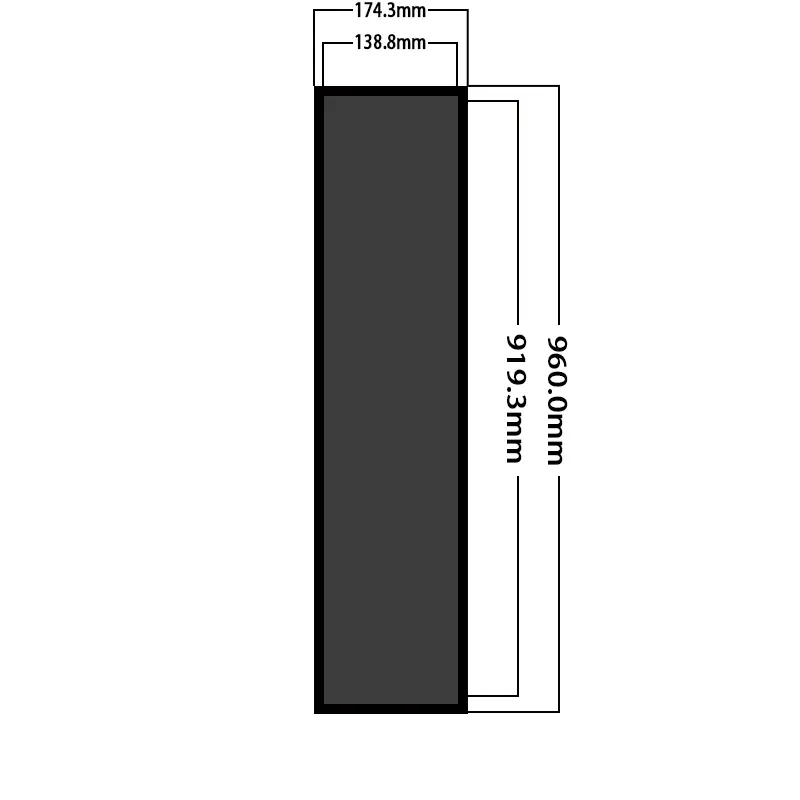
| Active area | 919.296 × 138.852 mm |
| Outline | 960 × 174.35 × 15.7 mm nominal |
| Display mode | Normally Black |
| Luminance | 700 cd/m² typical |
| Contrast ratio | 4000:1 typical |
| Viewing angle | 89°/89°/89°/89°, R/L/U/D |
| Response time | 8 ms typical, G-to-G |
| Display colors | 16.7 million, 8-bit |
| Color gamut | NTSC 72% typical |
| Surface | Anti-glare, 3H, 2% haze |
| Frame rate | 60 Hz |
| Interface | LVDS, 51 pins |
| Panel input | 12 V typical |
| Backlight | Two-light-bar WLED |
| Backlight life | 50,000 hours |
| Touch | None |
| Recommended operating range | 0°C to +50°C |
| Weight | 3 kg |
Ultra-Wide 1920 × 290 Content Layout
Route and Timetable Composition
The ultra-wide raster supports content that is naturally arranged from left to right. Transit applications can divide the display into route identity, current location, upcoming stops, transfer information, service messages, clock data and advertising regions.
Industrial equipment can use the same format for production status, alarm sequences, process values or horizontally ordered machine states.
The user interface should be designed specifically for 1920 × 290 rather than cropped from a conventional video layout. Font height, stop spacing, icon scale and viewing distance should be validated on a physical sample.
Native Raster and Pixel Geometry
The active area measures 919.296 × 138.852 mm, with a 0.4788 × 0.4788 mm pixel pitch.
The 1920 × 290 raster should be driven natively to preserve route text and long-format graphics.
A graphics source that does not expose the native mode may require custom timing, EDID handling, scaling hardware or a controller board configured for the exact panel raster.
Optical Performance for Public Information
700 cd/m² Luminance Boundary
The panel is rated at 700 cd/m² typical, with a 560 cd/m² minimum reference. This brightness grade is useful for controlled public spaces, vehicle interiors, covered stations and indoor signage with significant ambient lighting.
A 700 cd/m² panel does not independently establish direct-sunlight readability. Cover glass, reflection, mounting angle, dimming, ambient light and temperature all affect the completed display.
Projects using front glass should define:
- Glass transmission
- Surface reflectance
- Decorative printing
- Air gap or bonding
- Required finished-front luminance
- Day and night dimming targets
- Expected ambient-light range
Contrast, Viewing and Surface Treatment
The panel provides a 4000:1 typical contrast ratio and 89-degree viewing specifications in the right, left, up and down directions. This supports information displays that must be read by multiple passengers across a wide approach area.
The anti-glare treatment uses a 2% haze reference with 3H surface hardness. These properties help control sharp reflections and provide a basic handling surface, but they do not establish impact resistance, vandal resistance or weather protection.
LVDS and Power Integration
51-Pin Host Qualification
The panel uses a 51-pin LVDS connection.
A 51-pin LVDS connector does not guarantee timing, voltage, mapping or pin compatibility with another panel.
Before connecting a host, verify:
- Native 1920 × 290 timing
- Pixel clock
- Horizontal and vertical blanking
- LVDS channel count
- Color-bit mapping
- JEIDA or VESA assignment
- Connector manufacturer and pitch
- Pin-1 orientation
- Complete 51-pin assignment
- Ground and shielding arrangement
- Panel-enable signals
The host schematic, cable drawing, controller specification and approved panel pinout should be reviewed together before power is applied.
Panel and Backlight Power Separation
The panel electronics use a 12 V typical input, with an operating range of 10.8–13.2 V. Typical panel-electronics consumption is 2.4 W for black or white patterns and 3.6 W for the H-stripe power-check pattern.
The backlight is a separate, substantially higher-power load. It uses two light bars, with 300 mA typical current per bar, a 34–45.6 V light-bar voltage range and 25.2 W typical total backlight power.
The backlight driver must therefore be selected from the confirmed light-bar voltage, current, dimming and startup requirements rather than from the 12 V panel-logic input alone.
Mechanical Integration of the 36.6 Inch Stretched Bar LCD Panel
Outline and Bezel Planning
The nominal module outline is 960 × 174.35 × 15.7 mm. The detailed mechanical table gives a 15.2 mm minimum depth and a 16.2 mm maximum depth depending on the measurement boundary.
The bezel opening is 924.3 × 143.55 mm, while the active image area is 919.296 × 138.852 mm. These values should be used separately when defining:
- Front window
- Visible image margin
- Support frame
- Gasket overlap
- Rear clearance
- Cable routing
- Connector access
- Service-removal path
Weight, Support and Service Clearance
The module weighs 3 kg. The mounting structure should support the panel across its long width without twisting the frame or concentrating force near the active area.
The enclosure review should include:
- Mounting-point location
- Long-span deflection
- Vibration from the complete system
- Rear-cover clearance
- Backlight-driver placement
- Ventilation
- Cable strain relief
- Service access
- Front-glass support
The 36.6 Inch Stretched Bar LCD Panel should be validated in a representative enclosure before brackets, bezels or molded components are released.
Temperature and Qualification Boundaries
The recommended operating range is 0°C to +50°C. Storage is specified from −20°C to +60°C.
The −20°C to +60°C operating values appear in the absolute maximum ratings. They identify potential damage boundaries, not the preferred normal operating range.
The recommended operating range is 0°C to +50°C; the −20°C to +60°C values are absolute maximum ratings, not normal operating targets.
The complete system should be qualified for:
- Internal temperature rise
- Backlight heating
- Cold startup
- Humidity and condensation
- Cable performance
- Enclosure ventilation
- Continuous duty
- Cleaning conditions
- Expected service life
Application and Configuration Review
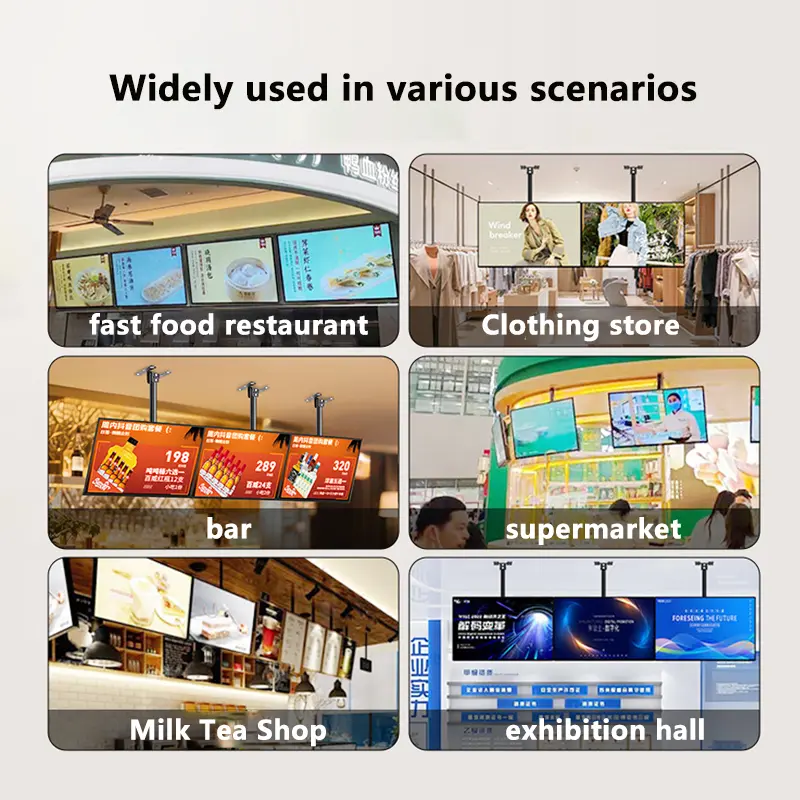
This panel can be evaluated for:
- Bus route-information displays
- Rail and metro passenger-information systems
- Station timetable bands
- Vehicle-interior stop displays
- Platform wayfinding strips
- Queue and service-information panels
- Industrial status displays
- Long-format digital signage
The module is not a finished monitor. HDMI input, media playback, touch, network connectivity, audio, enclosure protection and system power conversion require additional hardware.
Configuration Scope
Project review may cover:
- LVDS cable and controller matching
- Front cover glass
- Anti-reflective treatment
- Optical or perimeter bonding
- Enclosure and bezel adaptation
- Mounting brackets
- Backlight driver
- Brightness-control method
- Branding
- Optional touch development
- Qualification documentation
Custom configurations are generally reviewed from 500 pieces, subject to tooling requirements, material availability and the requested specification. Sample and standard-module quantities are confirmed separately.
Procurement Checklist
Submit:
- Host processor or controller-board model
- Native 1920 × 290 timing
- LVDS channel and bit mapping
- JEIDA or VESA assignment
- Complete 51-pin pinout
- Connector manufacturer, pitch and orientation
- 12 V panel-power design
- Backlight-driver output for two light bars
- Enable and dimming method
- Enclosure and bezel-opening drawings
- 3 kg mounting structure
- Front-glass requirements
- Ambient-light target
- Recommended operating environment
- Sample quantity
- Forecast annual demand
FAQ
About 36.6 Inch Stretched Bar LCD Panel
What must be checked before connecting the panel to a 51-pin LVDS host?
How should content be prepared for the 1920 × 290 raster?
Is 700 cd/m² sufficient behind protective glass?
Which temperature range should be used for product design?
What mechanical details are required before enclosure release?
Freya Yang
+86 18318948097