Freya Yang
+86 18318948097
+852 62667476
48 Inch Transit Signage LCD Module for Passenger Displays
Model P/N
Size
Resolution
Brightness
Viewing Angle
Connector Type
Operating Temp
Overall(mm)
huisoar
HS480-SBL-FHD-200
Brand
Panel Size (inch)
Model P/N
Resolution
Brightness (nits)
Viewing Angle
Contrast Ratio
Response Time
Overall (mm)
Active Area (mm)
Refresh Rate
Display Colors
Panel Type
Connector Type
Operating Temp
Touchscreen Type
Storage Temp
Work Mode
Control Type
Operating Environment
Motherboard Type
Designed For
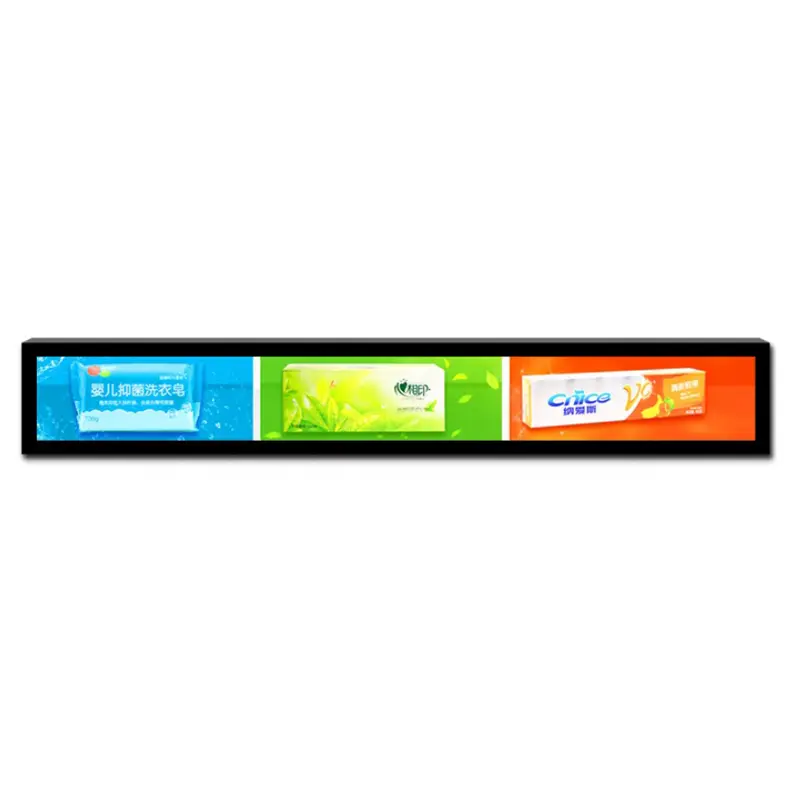
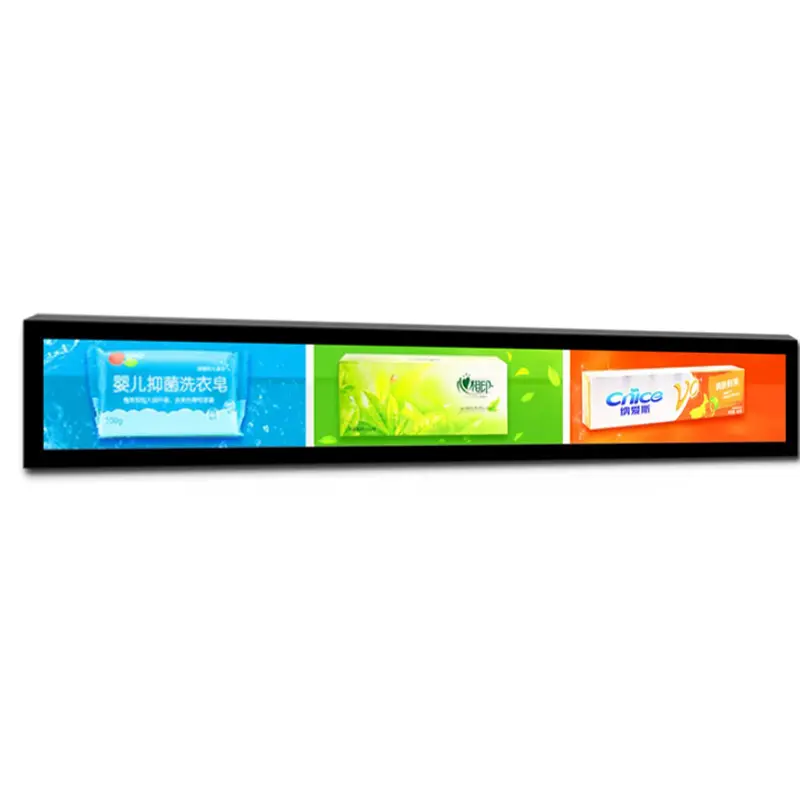
48 Inch Transit Signage LCD Module for Passenger Displays
This long-format 48-inch panel combines a native 1920 × 317 canvas, 600-nit luminance and 51-pin LVDS integration for passenger-information systems.
Product Summary
The Transit Signage LCD Module provides a wide, shallow display area for railway information bands, station guidance screens and commercial-signage systems that cannot accommodate a conventional monitor format. Its native 1920 × 317 raster supports route names, stop sequences, timing data, service messages and advertising content across a continuous horizontal canvas.
The module combines a normally black VA TFT LCD structure, 600-nit luminance, a 5000:1 typical contrast ratio and 1.07B color support. It uses a 51-pin LVDS connection and operates at 60 Hz. The standard configuration is non-touch.
Key Specifications
| Parameter | Value |
|---|---|
| Size | 48 inch |
| Resolution | 1920 × 317 pixels |
| Panel type | VA a-Si TFT LCD |
| Display mode | Normally black |
| Luminance | 600 nits |
| Contrast ratio | 5000:1 typical |
| Viewing data | 89/89/89/89 raw sequence |
| Colors | 1.07B |
| Refresh rate | 60 Hz |
| Interface | 51-pin LVDS |
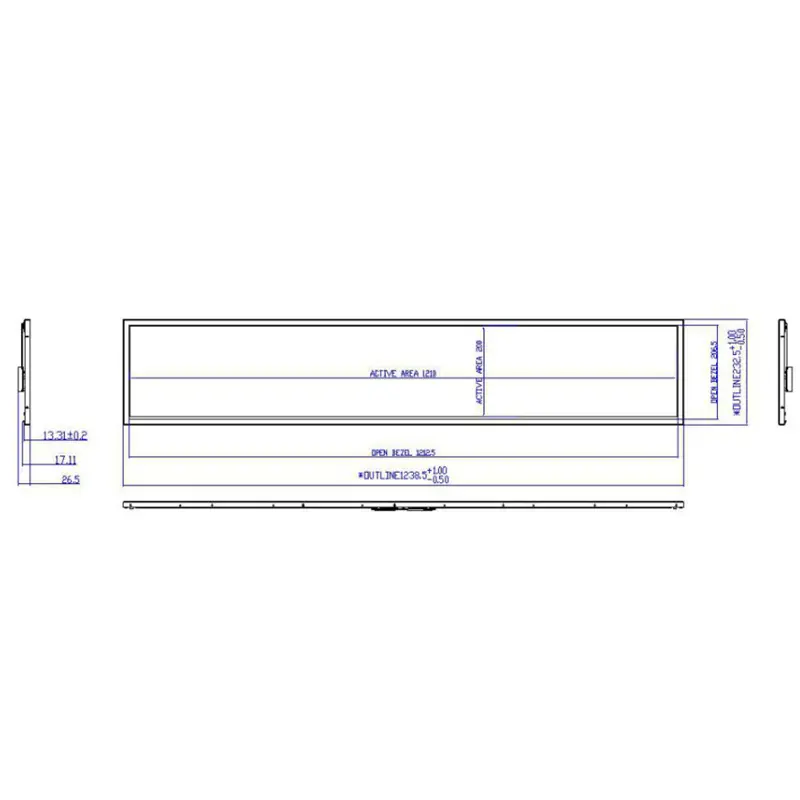
| Active area | 1209.60 × 200.00 mm |
| Outline | 1238.5 × 232.5 × 26.5 mm |
| Backlight | WLED |
| Touch | Non-touch |
| Operating temperature | 0°C to +50°C |
| Storage temperature | −20°C to +60°C |
Native 1920 × 317 Content Design
Route and Passenger-Information Layouts
The 1920 × 317 raster is designed for information that extends horizontally rather than vertically. Suitable layouts include:
- station and stop sequences
- route-direction arrows
- departure and arrival timing
- service notices
- platform guidance
- transfer information
- warning bands
- commercial advertising zones
The display can divide the canvas into fixed content regions so route information remains visible while service messages or promotional graphics update independently.
Native-Raster Content Preparation
The 1920 × 317 raster should be driven natively to preserve route text and long-format graphics.
A host designed only for common 16:9 resolutions may scale, crop or letterbox the content. Software and controller teams should verify:
- native output timing
- aspect-ratio handling
- text size
- content-zone width
- image scaling
- animation speed
- multilingual character support
- safe margins near the bezel
The UI should be approved on a physical sample because long viewing distances and passenger movement affect practical text sizing.
Optical Performance for Controlled Public Spaces
600-Nit Luminance Boundary
The standard panel is specified at 600 nits. This level supports many indoor transit areas, station corridors and controlled public spaces where ambient light exceeds ordinary office conditions.
A 600-nit panel does not by itself establish outdoor readability after cover glass and installation conditions are applied.
Protective glass, air gaps, optical adhesive, reflections, lighting direction and installation angle can reduce finished-system contrast. Outdoor or direct-sunlight projects require a separate optical and environmental review.
VA Contrast and Viewing Data
The panel uses normally black VA operation with a 5000:1 typical contrast ratio. This can improve visual separation between dark backgrounds, white route text, colored status elements and warning graphics.
The viewing-angle data is listed as 89/89/89/89. The directional order is not explicitly identified, so the values should remain as an unassigned raw sequence until the approved specification confirms orientation.
Wide-angle performance is useful in passenger areas because viewers may approach from different positions, but front glass and mounting geometry still affect the final result.
51-Pin LVDS Integration
Timing, Mapping and Pinout Qualification
A 51-pin LVDS connector does not guarantee timing, voltage, bit-depth or pin compatibility with another 51-pin panel.
Before selecting a controller or releasing a cable, confirm:
- native 1920 × 317 timing
- LVDS channel count
- bit configuration
- signal mapping
- signal voltage
- complete 51-pin assignment
- connector pitch
- contact side
- connector orientation
- panel power
- backlight power and control
- cable length and routing
The controller must support the unusual raster directly or provide verified scaling without distorting passenger-information content.
Non-LVDS Sources Require Conversion
HDMI, DisplayPort, eDP, MIPI DSI, USB and parallel RGB sources cannot connect directly to the panel unless a controller converts the input into the required LVDS timing.
A controller-board review should cover:
- accepted input format
- native 1920 × 317 output
- refresh-rate support
- LVDS mapping
- color-depth handling
- panel and backlight power
- startup behavior
- thermal conditions
- cable layout
Resolution alone is not enough to prove compatibility.
Transit Signage LCD Module Mechanical Planning
Active Area and Visible Opening
The active display area is 1209.60 × 200.00 mm. This should control:
- visible enclosure opening
- content-safe margins
- front-glass window
- bezel printing
- module alignment
- passenger viewing distance
Important text and route markers should remain inside the final approved opening after frame overlap and assembly tolerances are considered.
Enclosure Depth and Mounting Support
The overall module measures 1238.5 × 232.5 × 26.5 mm. Its length creates different mechanical requirements from a smaller conventional panel.
The enclosure review should include:
- distributed mounting support
- frame straightness
- torsional control
- rear clearance
- cable exit
- connector access
- thermal airflow
- front-glass support
- transport and installation handling
Long modules should not be supported only at the ends unless the approved mechanical design explicitly permits that arrangement.
60 Hz and Color-Handling Requirements
The panel is listed for 60 Hz operation and 1.07B display colors.
The complete host path must support the required timing and color configuration. A controller that outputs the correct pixel dimensions but uses an incompatible refresh rate, LVDS mapping or color-depth mode may produce no image, unstable operation or incorrect colors.
Confirm:
- native 60 Hz timing
- graphics-controller output
- LVDS bit configuration
- dithering or color-processing method
- cable signal integrity
- controller thermal performance
The 1.07B-color specification does not independently establish color calibration, gamut or professional color accuracy.
Non-Touch Application Architecture
The standard module is non-touch. This suits passive information systems where viewers read content but do not interact directly with the screen.
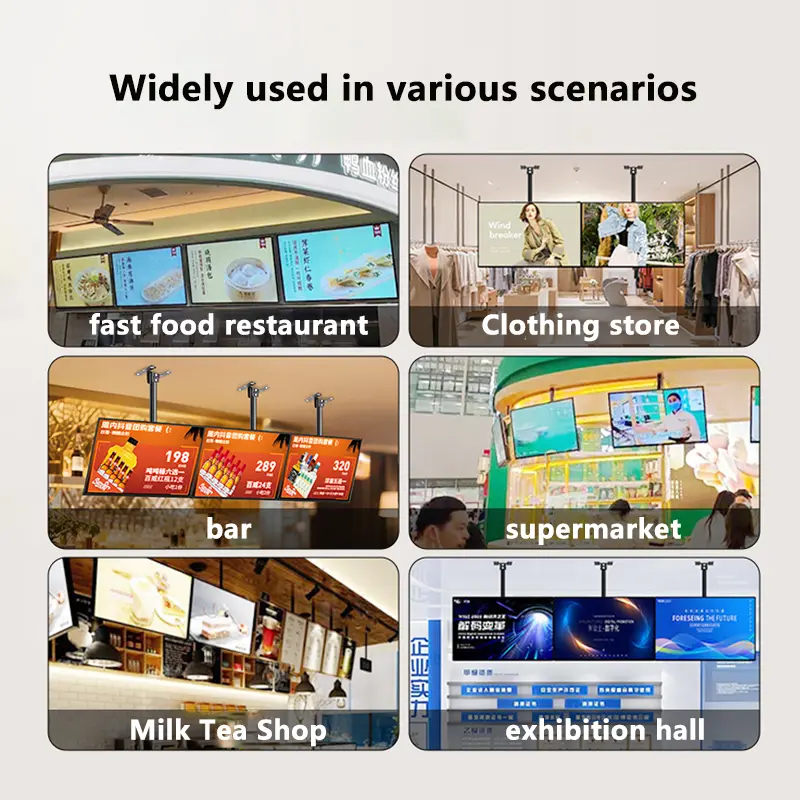
Potential applications include:
- rail and metro passenger information
- station route guidance
- public-transport service notices
- digital-signage headers
- commercial advertising bands
- retail information strips
- building wayfinding
- equipment status banners
A non-touch design avoids touch-controller integration and additional optical layers. Projects requiring interaction need a separately defined touch sensor, controller, cover lens and mechanical stack.
Custom Integration Options
Project review may include:
- 51-pin LVDS controller matching
- custom LVDS cable
- interface and timing verification
- brightness review
- cover-glass sizing
- anti-glare or anti-reflection treatment
- optical bonding
- enclosure adaptation
- long-panel mounting support
- logo and graphic printing
- optional touch development
- packaging and labeling
Custom configurations are generally reviewed from 500 pieces, subject to tooling requirements, material availability and the requested specification. Sample and standard-module quantities are confirmed separately.
Procurement Checklist
Before requesting samples or production approval, submit or confirm:
- native 1920 × 317 timing
- LVDS channel count and mapping
- bit configuration
- signal voltage
- complete 51-pin assignment
- connector pitch and orientation
- panel and backlight power requirements
- controller-board model
- 60 Hz output support
- color-path requirements
- active-area and outline drawing
- mounting-support design
- front-glass stack
- 600-nit lighting environment
- touch or non-touch requirement
- operating temperature
- original manufacturer model
- sample quantity
- annual demand
Sample approval should precede controller release, cable manufacture, front-glass tooling and enclosure production.
FAQ
About 48 Inch Transit Signage LCD Module
What must be checked before connecting a 51-pin LVDS controller?
How should content be prepared for the 1920 × 317 display?
Is 600-nit luminance sufficient behind cover glass?
Which dimensions should control enclosure release?
When should the non-touch configuration be selected?
Freya Yang
+86 18318948097