Freya Yang
+86 18318948097
+852 62667476
43.9 Inch Vertical Digital Signage Display for Transit Wayfinding

Model P/N
Size
Resolution
Brightness
Viewing Angle
Connector Type
Operating Temp
Overall(mm)
huisoar
HS439ZJ01-C070
Brand
Panel Size (inch)
Model P/N
Resolution
Brightness (nits)
Viewing Angle
Contrast Ratio
Response Time
Overall (mm)
Active Area (mm)
Refresh Rate
Display Colors
Panel Type
Connector Type
Operating Temp
Touchscreen Type
Storage Temp
Work Mode
Designed For
43.9 Inch Vertical Digital Signage Display for Transit Wayfinding
This vertical bar display combines a native 1920 × 540 canvas, 700 cd/m² typical luminance and remote-control support for narrow information and promotional installations.
Product Summary
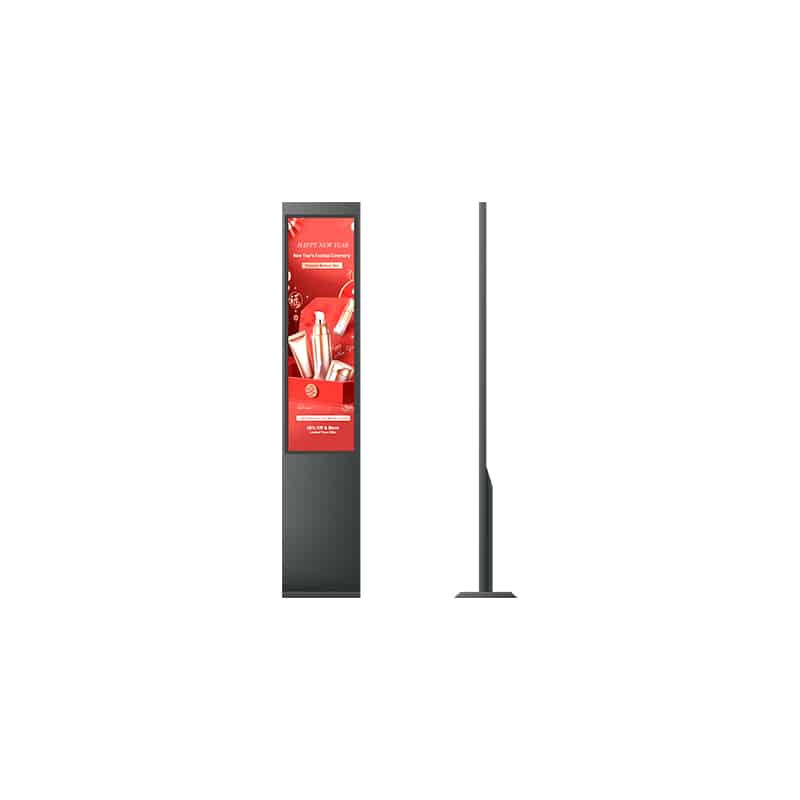
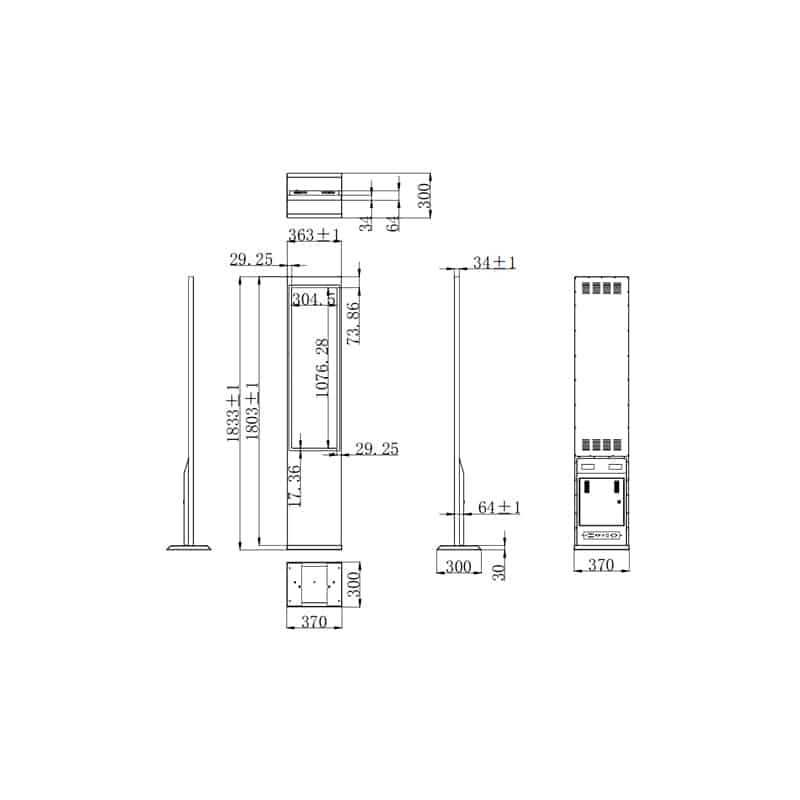
The Vertical Digital Signage Display is a 43.9-inch bar-format unit intended for locations where a tall, narrow visual area is more useful than a conventional widescreen monitor. Its reported enclosure measures 1833 × 363 × 34 mm, making it suitable for columns, narrow wall zones, entrance structures, transit-information points and vertical guidance installations.
A native resolution of 1920 × 540 provides a stretched 32:9 content canvas. When the enclosure is installed vertically, the playback system must rotate or map that canvas according to the final screen orientation. Content should therefore be designed specifically for the deployed layout instead of being adapted at the last moment from standard 16:9 advertising material.
The display provides 700 cd/m² typical luminance, a 1100:1 contrast ratio, WLED backlighting, remote-control support and labelled USB OTG, USB 2.0 and HDMI OUT connections. It is a non-touch configuration with a confirmed operating range of 0°C to +50°C.
Key Specifications
| Specification | Value |
|---|---|
| Display size | 43.9 inches |
| Native resolution | 1920 × 540 pixels |
| Overall dimensions | 1833 × 363 × 34 mm |
| Luminance | 700 cd/m² typical |
| Contrast ratio | 1100:1 |
| Backlight | WLED |
| Connections | USB OTG, USB 2.0, HDMI OUT |
| Remote control | Supported |
| Wireless reference | 4G/Wi-Fi antenna, 50 mm |
| Touch | Non-touch |
| Operating temperature | 0°C to +50°C |
The published media labels must be interpreted exactly. HDMI OUT describes an output connection and must not be represented as a confirmed HDMI content input.
Native 1920 × 540 Content Planning
Prepare Content for the Installed Orientation
The native canvas is 1920 pixels by 540 pixels. For a vertical installation, the system may display this content in a rotated 540 × 1920 orientation, but the exact playback behavior depends on the internal hardware and software.
Content teams should prepare test files using the intended:
- portrait orientation
- text hierarchy
- logo placement
- directional arrows
- route-information structure
- animation direction
- viewing distance
- update method
Conventional 1920 × 1080 artwork should not simply be compressed into the narrower canvas. This can distort graphics, reduce text height and create poor spacing.
Current stretched-signage products commonly use 1920 × 540 for narrow retail, transit and public-information applications, but the final orientation and playback method remain system-specific.
Confirm Playback and Signal Functions
USB OTG and USB 2.0 labels suggest USB-based service, media or peripheral functions, but supported file systems, codecs, storage capacity and automatic playback behavior must be confirmed.
HDMI OUT should be treated as an output path only. It may be intended for forwarding content to another display, but daisy-chain behavior, synchronization and supported resolutions require model-specific confirmation.
Before a deployment is approved, request:
- media-file formats
- maximum file resolution and bitrate
- USB playback procedure
- startup behavior after power interruption
- content scheduling method
- portrait-rotation controls
- HDMI OUT behavior
- supported remote-control functions
Vertical Mechanical Integration
Enclosure, Support and Cable Access
The reported overall dimensions are 1833 × 363 × 34 mm. The installation design must account for the complete enclosure, mounting structure, cable exits and maintenance access.
A tall display should not be supported from a small unsupported section of the housing. The mechanical plan should define:
- mounting points
- wall or floor support
- load distribution
- cable bend radius
- power access
- rear ventilation
- service clearance
- anti-tip measures for floor installations
- orientation of control and connection areas
The 34 mm depth is the display enclosure depth, not necessarily the total installed depth after brackets, cables, power equipment and structural supports are added.
Validate the Unresolved Display Area
The supplied active-area figure does not align with the confirmed native aspect ratio and bar-screen geometry. Enclosure openings, masks and printed cover windows should not be manufactured from that value.
Engineering should obtain a controlled mechanical drawing showing:
- visible display opening
- actual active area
- bezel dimensions
- display center
- enclosure outline
- mounting-hole positions
- cable locations
- dimensional tolerances
Physical sample measurement is recommended before tooling or fixture production.
Vertical Digital Signage Display Optical Planning
Interpreting the 700 cd/m² Rating
The display is rated at 700 cd/m² typical. This supports use in many well-lit indoor and controlled covered locations, but it does not independently establish direct-sunlight readability.
Finished visibility depends on:
- protective-front transmission
- surface reflections
- viewing angle
- ambient-light direction
- content contrast
- mounting height
- observer distance
- screen orientation
- brightness controls
A site evaluation should use the final enclosure and protective front. The page therefore does not classify the display as sunlight readable or outdoor rated.
Environmental Qualification
The confirmed operating range is 0°C to +50°C. Installations outside this range require a different qualification route.
The operating-temperature value does not prove:
- waterproof protection
- condensation resistance
- UV resistance
- salt-fog resistance
- vibration qualification
- operation in unconditioned outdoor enclosures
Transit platforms, bus shelters and semi-exposed locations should be reviewed at system level, including the enclosure, ventilation, ingress protection and local temperature profile.
Remote Control and Connectivity Boundaries
Remote-control support is confirmed, but the functions available from the remote must be checked. It may control power, volume, source selection, menu functions or playback, depending on the final electronics.
A 4G/Wi-Fi antenna reference is also provided. This establishes the presence or planned use of an antenna component, but it does not establish:
- installed cellular modem
- Wi-Fi protocol
- regional frequency support
- SIM compatibility
- cloud CMS access
- Ethernet capability
- remote monitoring
- over-the-air software updates
Network requirements should be submitted before sample approval. The final quotation and technical package should state which network module, operating system and content platform are included.
Suitable Transit and Commercial Applications
Station and concourse wayfinding
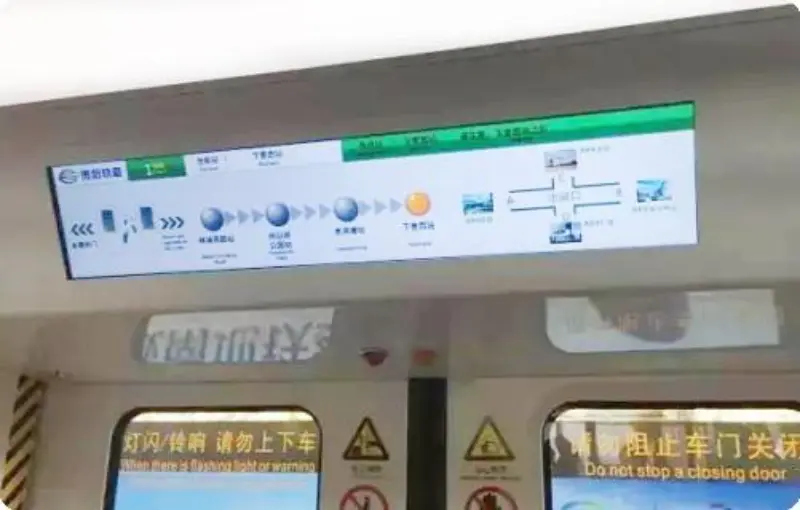
A tall narrow format can present arrows, platform identifiers, service notices and directional information near entrances, columns or passageways.
Elevator and building guidance
The enclosure can be considered for floor directories, tenant information and facility notices where horizontal wall space is restricted.
Retail entrance messaging
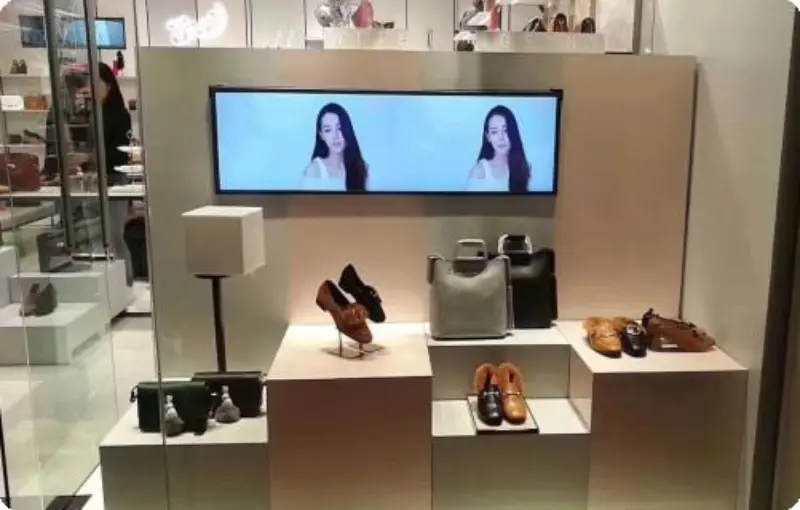
The display can present promotional artwork, brand information and campaign messages beside doorways or narrow fixture zones.
Bank and service-counter notices
Queue information, service instructions and call notices can be arranged vertically, subject to software and data-integration confirmation.
Covered transportation information
The display may be evaluated for station, bus-stop or vehicle-information projects where the enclosure and confirmed 0°C to +50°C range are adequate. Environmental protection must come from a separately qualified installation.
Corporate and public directories
Vertical information hierarchies can be used for building navigation, event schedules and public notices in controlled indoor environments.
Stretched and vertical displays are commonly applied to transport hubs, stations, retail environments, door headers and public-information systems because they fit spaces unsuitable for conventional screens.
Customization and Engineering Review
Potential project options may include:
- enclosure color and branding
- mounting structure
- media-player configuration
- remote-control functions
- wireless communication module
- content software
- cable routing
- brightness selection
- protective front
- power-supply configuration
- portrait startup behavior
These options are not automatically included in the standard display.
Custom scope, tooling, materials and order quantity are reviewed after the functional specification and mechanical drawing are defined. Sample and standard-unit quantities are confirmed separately.
Procurement Checklist
Submit the following before sample selection:
- required vertical orientation
- native 1920 × 540 content examples
- media-file formats
- USB playback workflow
- required HDMI OUT function
- remote-control functions
- wireless and network requirements
- operating-system or CMS requirements
- mounting and enclosure drawing
- cable and power locations
- ambient-light conditions
- required operating environment
- compliance-document requirements
- sample validation criteria
- annual demand and deployment schedule
FAQ
About 43.9 Inch Vertical Digital Signage Display
How should 1920 × 540 content be prepared for a vertical installation?
Can HDMI OUT be used as the main video input?
Is 700 cd/m² enough for an outdoor bus-stop installation?
What must be confirmed about the 4G/Wi-Fi antenna?
Which dimensions should be used for fixture design?
Is this display suitable for an interactive wayfinding interface?
Freya Yang
+86 18318948097