Freya Yang
+86 18318948097
+852 62667476
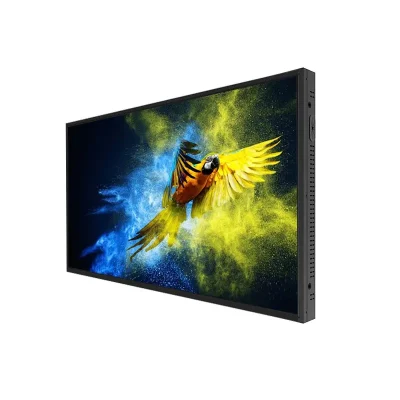
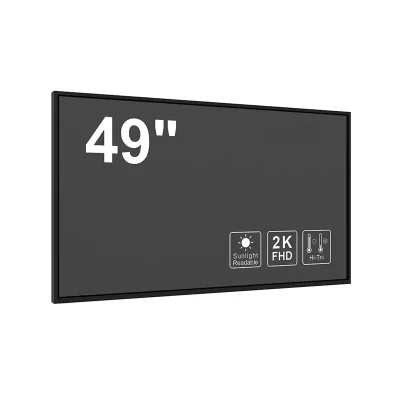
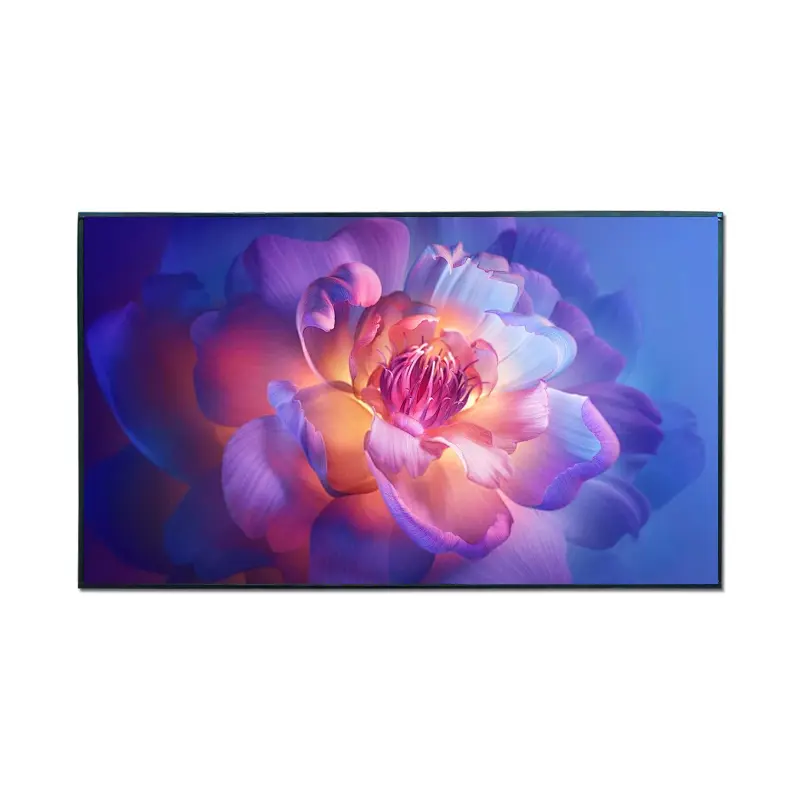
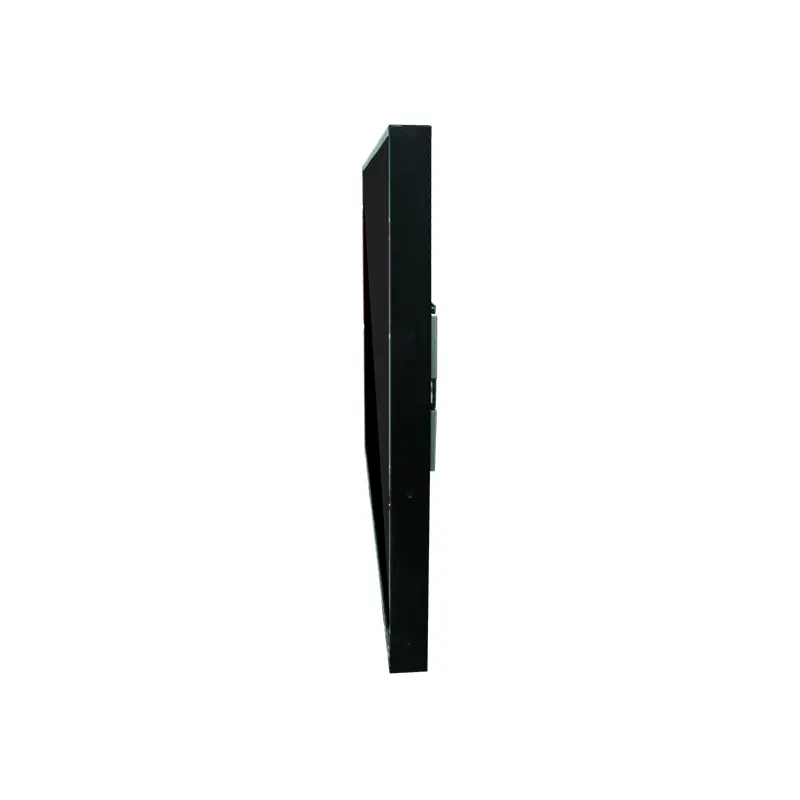
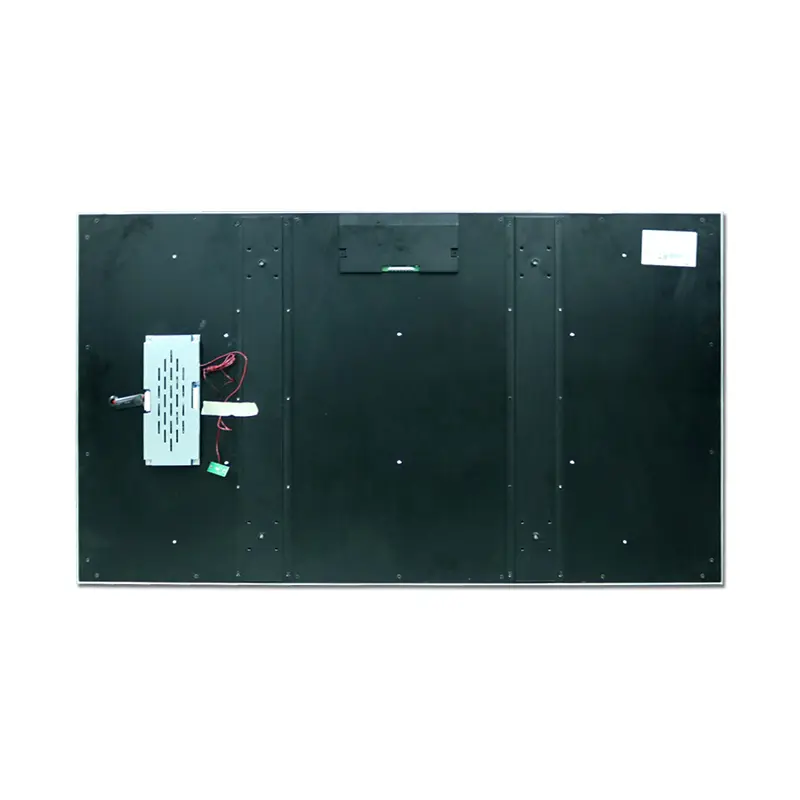
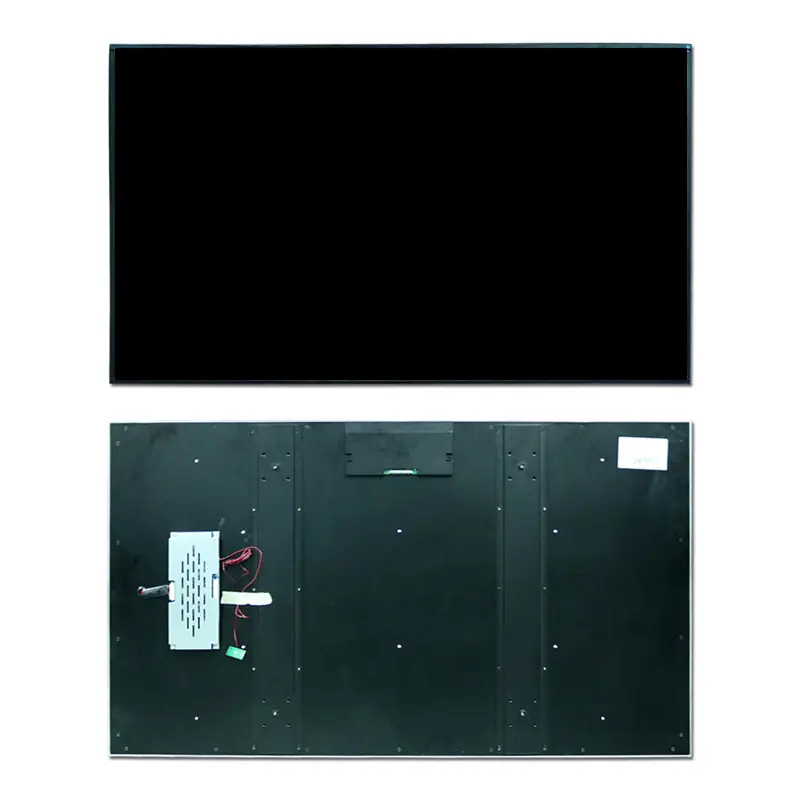
49 Inch Sunlight Readable Outdoor Signage Display Module for Kiosks
Model P/N
Size
Resolution
Brightness
Viewing Angle
Connector Type
Operating Temp
Overall(mm)
huisoar
HS0490GL04-Z250
Brand
Panel Size (inch)
Model P/N
Resolution
Brightness (nits)
Viewing Angle
Contrast Ratio
Response Time
Overall (mm)
Active Area (mm)
Refresh Rate
Display Colors
Panel Type
Connector Type
Operating Temp
Touchscreen Type
Storage Temp
Work Mode
Operating Environment
Designed For
49 Inch Sunlight Readable Outdoor Signage Display Module for Kiosks
This sunlight readable LCD module combines a 49-inch FHD IPS panel, 2500 cd/m² luminance, and 51-pin LVDS for outdoor advertising and public-information systems.
The Sunlight Readable Outdoor Signage Display Module provides a large 1920 × 1080 image area for advertising, passenger information, public guidance, production dashboards, and other high-ambient-light interfaces. Its transmissive a-Si TFT-LCD construction uses IPS wide-view optics, a WLED backlight, and a standard non-touch configuration. Engineering approval should cover LVDS timing and pin mapping, panel and backlight power, cabinet mechanics, front-window optics, thermal management, and environmental protection before production release.
Product Summary
The 49-inch 16:9 format supports standard Full HD media and information layouts without nonstandard content scaling. The 1073.8 × 604 mm active area provides substantial space for video, promotional graphics, route information, status dashboards, and multi-zone public-information content.
Full HD Content Planning
The native 1920 × 1080 resolution supports standard landscape media and digital-signage content. Artwork should be prepared at the native raster, with critical text and logos kept inside the approved visible region. The host controller must output the correct timing, color mapping, and refresh parameters for the ordered module.
IPS Wide-View Performance
The panel lists a minimum viewing-angle sequence of 89/89/89/89° at CR ≥ 10 for left, right, up, and down directions. The 1000:1 typical contrast ratio supports readable graphics and video when reflections from the front window and surrounding environment are controlled.
Key Specifications
| Parameter | Specification |
|---|---|
| Display size | 49 inch |
| Resolution | 1920 × 1080 pixels |
| Aspect ratio | 16:9 |
| Panel technology | a-Si TFT-LCD, IPS |
| Optical mode | Transmissive |
| Brightness | 2500 cd/m² typical |
| Contrast ratio | 1000:1 typical |
| Viewing angle | 89/89/89/89° minimum, CR ≥ 10, L/R/U/D |
| Display colors | 16.7M |
| Backlight | WLED |
| Display interface | 51-pin LVDS |
| Active area | 1073.8 × 604 mm |
| Module outline | 1098 × 628 × 55 mm maximum |
| Touch | No touch in the standard configuration |
| Operating temperature | 0°C to +50°C |
| Storage temperature | −20°C to +60°C |
Bright-Ambient Optical Planning
Treat 2500 cd/m² as a System Starting Point
The 2500 cd/m² typical luminance provides a strong basis for outdoor-facing signage and bright public spaces. It does not independently guarantee direct-sun readability after installation. Front-window transmission, reflections, air gaps, bonding, surface treatment, viewing distance, shading, dimming range, solar load, and cabinet temperature all influence the finished contrast. High luminance, reflection control and optical-stack design must be assessed together.
Qualification should use the intended front window, cabinet, content, and installation orientation under representative ambient light. A higher or lower brightness target should be treated as a separately approved configuration rather than inferred from a product-family range.
Preserve Contrast Through the Front Stack
The 1000:1 typical panel contrast can be reduced by reflected ambient light. Front glass, protective overlays, touch layers, adhesive interfaces, and internal spacing should therefore be reviewed as one optical stack. Reflection control and thermal management are as important as nominal panel luminance for a large outdoor-facing screen.
LVDS Integration for the Sunlight Readable Outdoor Signage Display Module
A 51-Pin Connector Is Not a Compatibility Guarantee
The module uses a 51-pin LVDS connection, but matching the pin count or connector shape does not establish compatibility. The host must match native timing, channel count, bit mapping, voltage levels, connector orientation, cable construction, grounding, and control signals. VESA/JEIDA or color-depth mapping mismatches can produce incorrect or distorted colors even when the physical connector fits.
Define Panel and WLED Power Separately
The exact panel-input voltage, WLED voltage and current, enable signal, dimming method, and power sequence are not established in the product table. These values must come from the approved electrical specification. The LVDS image path and the high-brightness backlight circuit should be qualified as separate integration items.
Mechanical Fit and Cabinet Planning
Active Area Versus Module Envelope
The active image area measures 1073.8 × 604 mm, while the complete module outline is 1098 × 628 mm with a maximum thickness of 55 mm. The active area controls content-window alignment; the larger outline controls cabinet clearance. Final mechanical approval also needs mounting points, tolerances, connector projection, cable bends, support structure, lifting method, and service access.
Standard Non-Touch Configuration
The standard module is specified without touch. Adding projected-capacitive or other touch technology changes the front stack, overall thickness, optical transmission, controller requirements, cable routing, grounding, and mechanical support. Touch should be engineered as a separate assembly and must not be assumed from the signage application.
Temperature and Outdoor-System Boundaries
The panel is specified for operation from 0°C to +50°C and storage from −20°C to +60°C. These component limits do not establish an IP rating, condensation resistance, UV stability, vibration performance, impact resistance, salt-spray resistance, or finished-system weatherproofing.
Outdoor signage requires a separately engineered cabinet, front protection, cooling path, drainage strategy, structural support, and compliance plan. Validation should include cold start within the approved range, high-temperature luminance, prolonged backlight operation, solar loading, and cable behavior in the final assembly.
Recommended Applications
The Sunlight Readable Outdoor Signage Display Module can be evaluated for outdoor advertising kiosks, public-information boards, transport-hub signage, retail promotion structures, industrial monitoring walls, station guidance screens, and other large high-ambient-light installations. Each application requires system-level optical, electrical, mechanical, thermal, and environmental qualification.
The module is not a finished monitor. HDMI, DisplayPort, eDP, USB video, media playback, networking, automatic brightness control, and content management require a suitable controller or external electronics.
Customization and Sample Qualification
A modified Sunlight Readable Outdoor Signage Display Module project may include brightness review, controller-board matching, cable adaptation, touch integration, front-window design, bonding, cabinet-specific mechanics, or thermal-management changes. Custom configurations are generally reviewed from 500 pieces, subject to tooling requirements, material availability, and the requested specification. Sample and standard-module quantities are confirmed separately.
The qualification sample should use the intended host, LVDS cable, power architecture, front window, cabinet, cooling system, content, and installation orientation. Approval should include image stability, dimming behavior, optical readability, temperature operation, mechanical fit, and any touch functions included in the ordered build.
Procurement Checklist
- Confirm the assigned model and approved product revision.
- Submit native 1920 × 1080 timing and the complete 51-pin LVDS assignment.
- Confirm LVDS channel and bit mapping, voltage levels, connector orientation, and cable design.
- Obtain panel and WLED voltage, current, enable, dimming, and power-sequence requirements.
- Approve the 1073.8 × 604 mm active area and 1098 × 628 × 55 mm maximum envelope.
- Define front-window transmission, reflection, bonding, shading, and luminance targets.
- Confirm standard non-touch status or specify a separate touch assembly.
- Define operating, storage, sealing, humidity, vibration, structural-load, and compliance requirements.
- Provide sample quantity, annual demand, project schedule, and acceptance criteria.

FAQ
About 49 Inch Sunlight Readable Outdoor Signage Display Module
What must be checked before connecting an existing 51-pin LVDS controller?
Is 2500 cd/m² sufficient behind a protective front window?
Which dimensions should control the cabinet design?
Can touch be added to the standard module?
Does the operating-temperature range prove the module is outdoor-ready?
Freya Yang
+86 18318948097