Freya Yang
+86 18318948097
+852 62667476
6 Inch Game Console LCD Module for High-Refresh Handhelds
Model P/N
Size
Resolution
Brightness
Viewing Angle
Connector Type
Operating Temp
Overall(mm)
huisoar
HS6D0005
Brand
Panel Size (inch)
Model P/N
Resolution
Brightness (nits)
Viewing Angle
Contrast Ratio
Response Time
Overall (mm)
Active Area (mm)
Refresh Rate
Bezel Opening
Display Colors
Panel Type
Connector Type
Operating Temp
Touchscreen Type
Storage Temp
Work Mode
Pixel Format
Input Voltage (V)
Touch Interface
Weight (g)
Designed For
6 Inch Game Console LCD Module for High-Refresh Handhelds
A 1080×1920 IPS panel with a MIPI 4-lane interface, 450-nit luminance, and selectable refresh-rate configurations for compact gaming hardware.
Product Summary
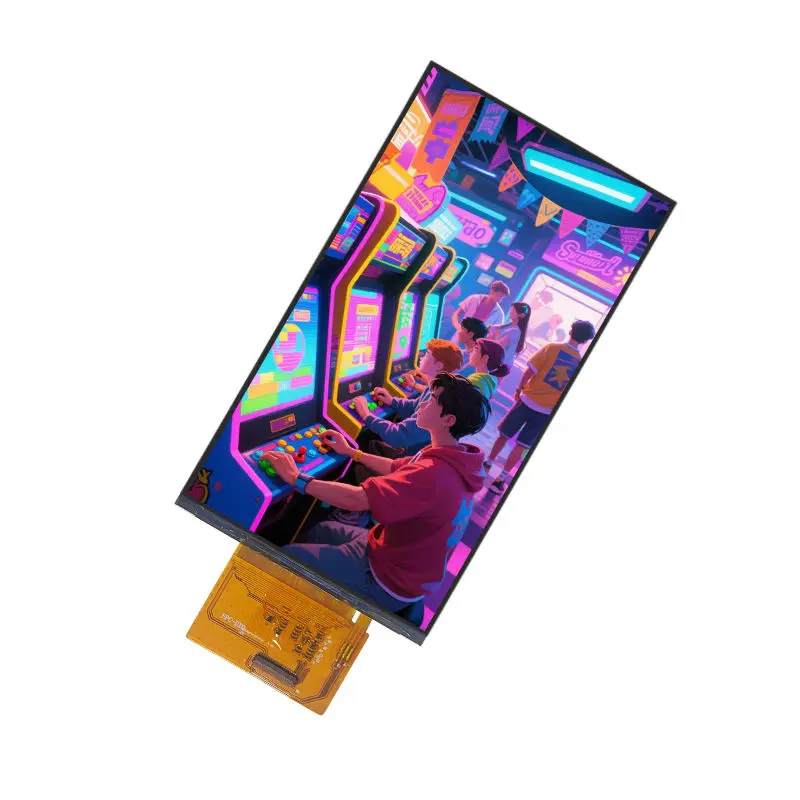
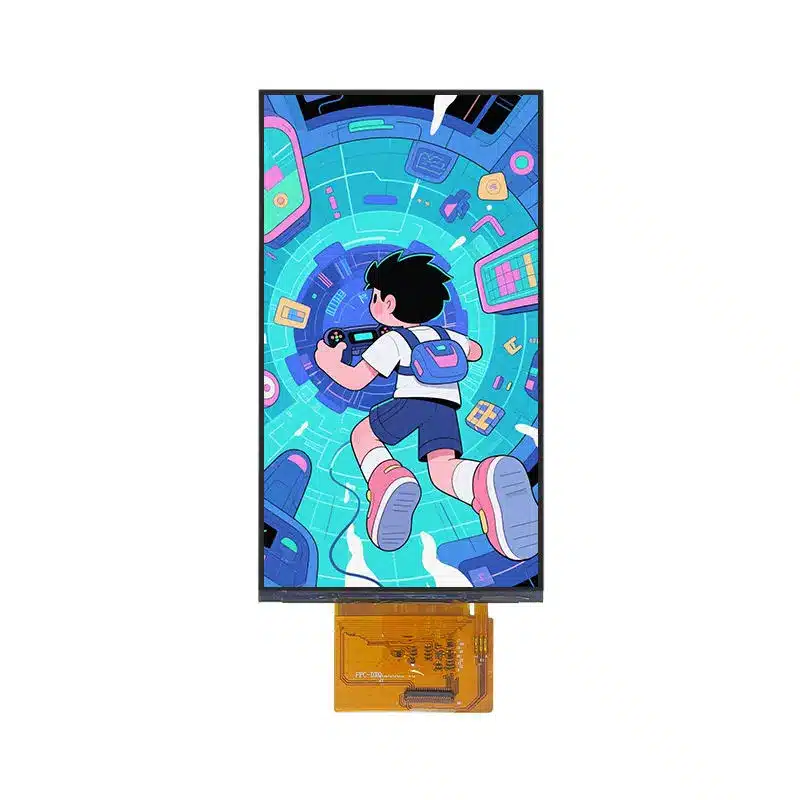
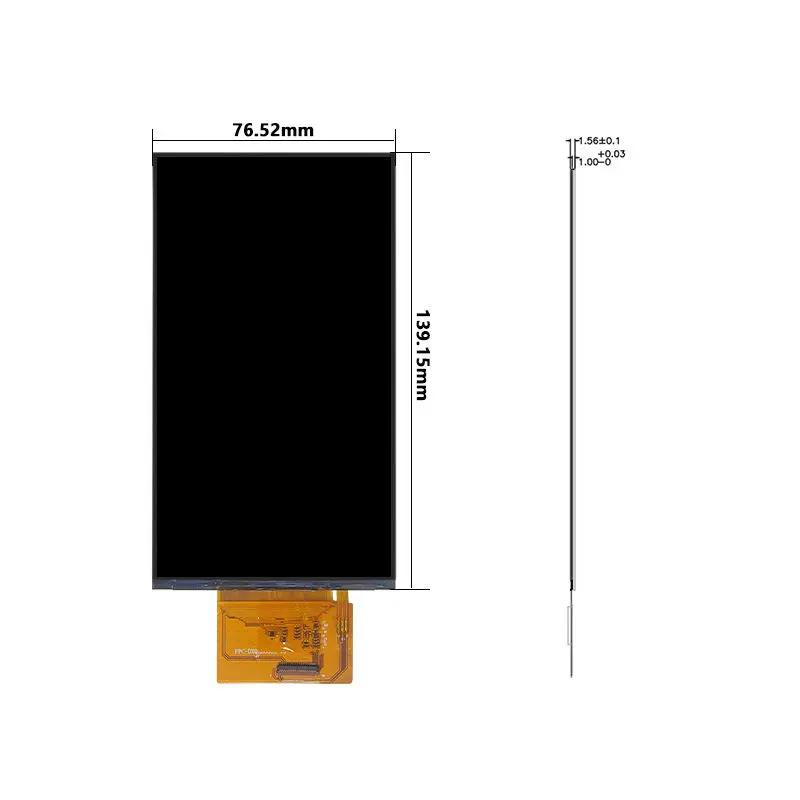
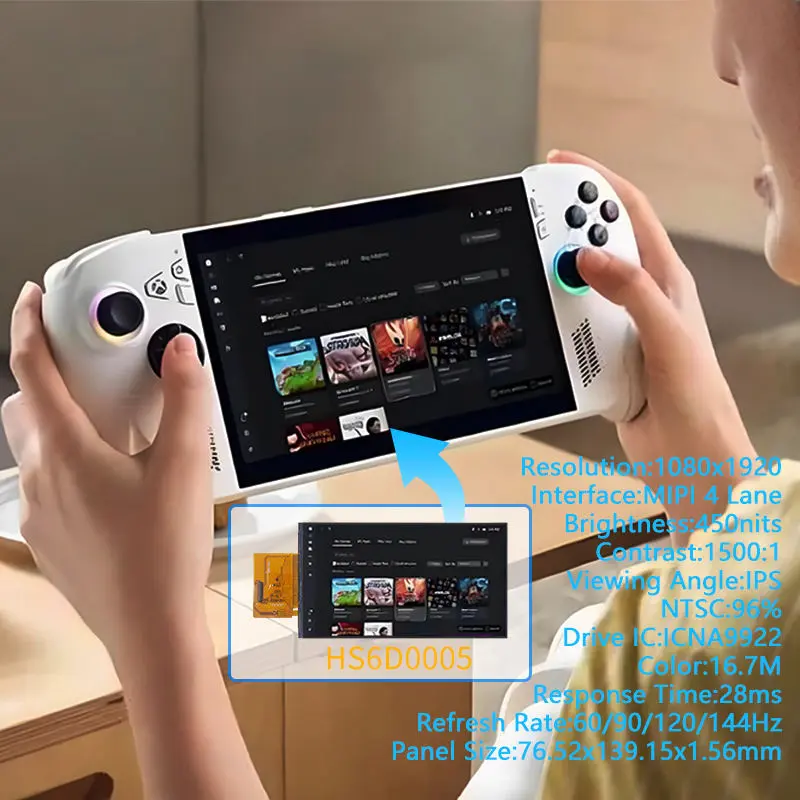
This 6-inch TFT component is designed for compact gaming hardware that needs a sharp portrait image area and slim mechanical envelope. The Game Console LCD Module combines 1080×1920 resolution, an IPS all-view designation, 450-nit luminance, 1500:1 contrast, 16.7 million colors, and a MIPI 4-lane connection. Its outline is 76.52 × 139.15 × 1.56 mm, with a 74.52 × 132.48 mm active area and bottom FPC.
A 39-pin connector does not guarantee MIPI compatibility with an existing mainboard.
Refresh rate and pixel response time must be evaluated separately during motion testing.
The 450-nit panel is intended primarily for indoor or controlled-light handheld equipment after cover-glass losses are considered.
Key Specifications at a Glance
| Parameter | Confirmed value |
|---|---|
| Display size | 6.0 inches |
| Resolution | 1080 × 1920 pixels |
| Panel technology | TFT, IPS all-view designation |
| Interface | MIPI, 4 data lanes |
| Connector | 39-pin, FH26-39S-0.3SHW |
| Active area | 74.52 × 132.48 mm |
| Module outline | 76.52 × 139.15 × 1.56 mm |
| Luminance | 450 nits |
| Contrast ratio | 1500:1 |
| Response time | 28 ms |
| Display colors | 16.7M colors |
| Color gamut | 96% NTSC |
| Refresh-rate options | 60 / 90 / 120 / 144 Hz; ordered configuration to be confirmed |
| Driver IC identifier | ICNA9922 |
| Touch configuration | Standard touch status not confirmed; custom CTP option available |
1080×1920 Image Area for Gaming Interfaces
Native Raster and UI Layout
The native 1080×1920 raster provides a dense portrait canvas for menus, game libraries, status overlays, and streaming interfaces. Prepare the UI at native resolution and confirm whether the finished console keeps the portrait orientation or rotates output in the host. The approved drawing should control the visible opening and FPC direction before enclosure tooling.
Color, Contrast, and Viewing Behavior
The panel is specified with 16.7 million colors, 96% NTSC color gamut, and a 1500:1 contrast ratio. Final appearance also depends on gamma tuning, cover transmission, reflections, and the host image pipeline. The IPS all-view designation supports off-axis viewing; numeric directional angles require confirmation in the production specification.
Game Console LCD Module Refresh-Rate Planning
The refresh-rate family includes 60, 90, 120, and 144 Hz targets. The ordered module revision must state the supported mode because not every configuration necessarily includes every rate.
Refresh Rate Is Not Pixel Response Time
A higher refresh rate increases how frequently a new frame can be presented, while the specified 28 ms response time describes pixel transition behavior. A 120 or 144 Hz timing mode can improve frame cadence, but a 28 ms transition may still produce visible blur. Approve the display with representative game footage and motion tests under the intended temperature and brightness conditions.
Host Bandwidth and Timing Approval
Higher refresh modes at 1080×1920 require more link bandwidth than 60 Hz. Confirm the host’s MIPI lane count, lane rate, timing, pixel format, operating mode, voltage rails, control signals, and any required command package. Do not rely only on connector shape or nominal resolution.
MIPI 4-Lane and 39-Pin FPC Integration
Connector and Pinout Checks
The module uses a 39-pin connection and identifies FH26-39S-0.3SHW as the connector reference. Compatibility requires the complete pin assignment, FPC contact side, connector orientation, lane mapping, power rails, grounds, reset signals, backlight connections, and control definitions. Another 39-pin MIPI display may use a different arrangement.
ICNA9922 Documentation Boundary
ICNA9922 is identified as the panel driver IC. The part number alone does not establish a host-side initialization, register-programming, or power-sequence requirement. Interface timing, voltage levels, control signals, and command data should come from the approved module specification.
Optical Performance and 450-Nit Use Conditions
The 450-nit luminance level is suitable for indoor handheld consoles, portable gaming units, and controlled-light equipment. It should not be presented as sunlight-readable without system testing. Cover glass, air gaps, touch layers, treatments, fingerprints, and enclosure shadows can reduce front-of-screen brightness.
For a Game Console LCD Module installed behind custom glass, evaluate transmission, reflection, viewing angle, black level, thermal load, and brightness uniformity. Bright-window or outdoor-facing products may need a separately validated higher-luminance configuration.
Mechanical Fit and FPC Orientation
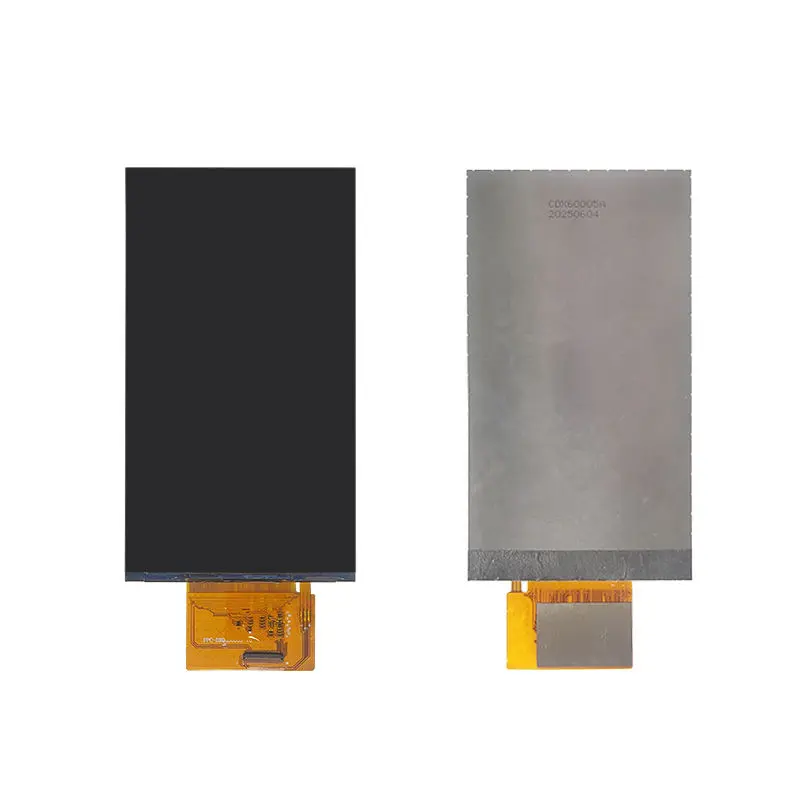
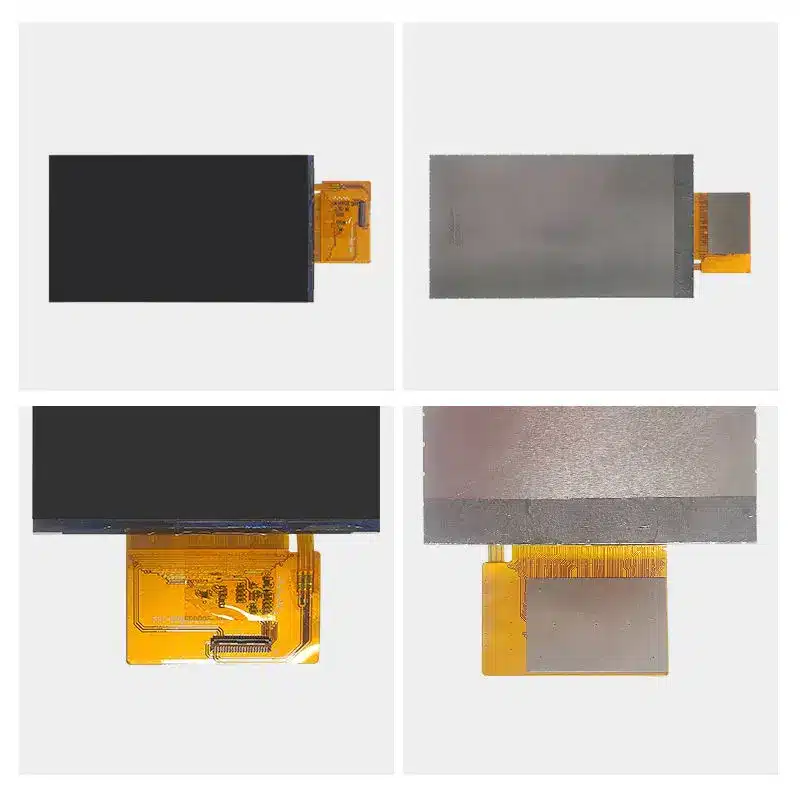
The 76.52 × 139.15 × 1.56 mm outline supports slim handheld assemblies, while the 74.52 × 132.48 mm active area defines the image region. The drawing shows a bottom FPC. Enclosure design should account for bend radius, connector access, tolerances, bezel overlap, and service clearance.
Do not use the 0.35 mm FPC-layer notation as total LCD thickness. The confirmed module thickness is 1.56 mm; touch, cover glass, adhesive, gasket, and frame thicknesses must be added separately.
Application Fit and Customization
The standard configuration is suited to handheld game consoles, compact gaming terminals, and portable monitor assemblies that can provide the required MIPI host interface. The Game Console LCD Module should be selected only after the processor output, mechanical envelope, optical stack, and refresh target are aligned.
Custom FPC, capacitive touch panel, and cover-glass projects are available for evaluation. The stated minimum for these customization options is 1,000 pieces. Standard-module samples and qualification quantities are confirmed separately.
Procurement Checklist
Before sample approval, submit and verify:
- Native 1080×1920 timing and ordered refresh-rate configuration.
- MIPI lane count, lane rate, operating mode, and pixel format.
- Complete 39-pin assignment, FPC orientation, contact side, and connector.
- Panel, logic, and backlight electrical requirements.
- Approved command package when required by the module specification.
- Active area, outline, bezel opening, tolerance, and enclosure drawing.
- Cover transmission, touch requirement, bonding method, and target luminance.
- Operating environment, thermal path, sample quantity, annual demand, and schedule.
FAQ
About 6 Inch Game Console LCD Module
What must be checked before connecting this 39-pin panel to an existing handheld mainboard?
Which refresh-rate configuration should be selected for a 1080×1920 console design?
Does the 28 ms response time prevent effective 120 or 144 Hz operation?
Is 450 nits sufficient behind custom cover glass?
What information is required to add capacitive touch or a custom FPC?
Freya Yang
+86 18318948097