Freya Yang
+86 18318948097
+852 62667476
15.6 Inch Industrial Touchscreen LCD Module for HMI Panels
Model P/N
Size
Resolution
Brightness
Viewing Angle
Connector Type
Operating Temp
Overall(mm)
huisoar
HS156S003HX500CT1
Brand
Panel Size (inch)
Model P/N
Resolution
Brightness (nits)
Viewing Angle
Contrast Ratio
Response Time
Overall (mm)
Active Area (mm)
Refresh Rate
Display Colors
Panel Type
Connector Type
Surface Treatment
Operating Temp
Touchscreen Type
Storage Temp
Work Mode
Pixel Format
Input Voltage (V)
Touch Interface
Protective Glass Specification
Operating Environment
Designed For
15.6 Inch Industrial Touchscreen LCD Module for HMI Panels
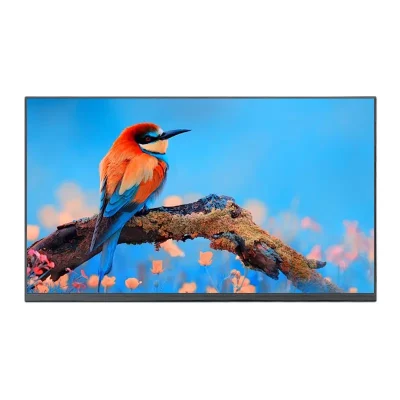
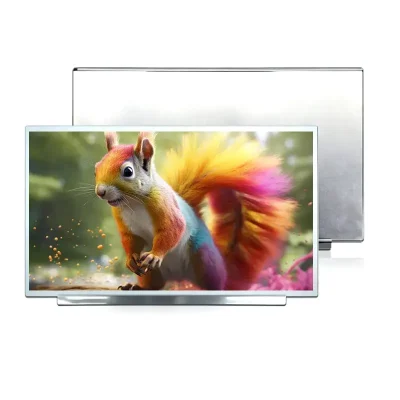
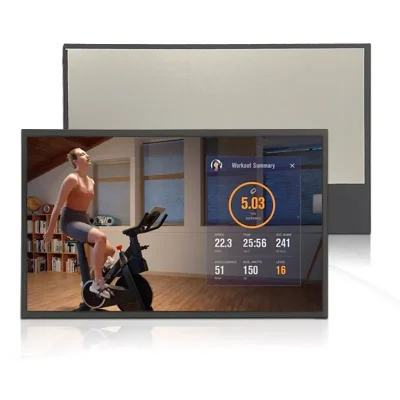
A 15.6-inch FHD HVA module pairs LVDS image input with USB 10-point capacitive touch for control-console and embedded HMI integration.
This Industrial Touchscreen LCD Module combines a 1920 × 1080 TFT panel, normally-black HVA optics, and a G+G projected-capacitive touch layer. The 500 cd/m² configuration supports industrial interfaces that need Full HD workspace and direct touch operation without treating the component as a finished monitor. Engineering approval should cover the LVDS host, USB touch path, mechanical stack, backlight requirements, and enclosure before production release.
Product Summary
The 16:9 Full HD canvas supports process graphics, trend displays, alarm lists, service menus, and multi-window operator interfaces. A 3000:1 typical contrast ratio supports dark-state separation for dashboards and control screens. The raw viewing-angle sequence is 89/89/89/89° typical at CR > 10; its directional order should remain tied to the approved specification.
FHD HVA Image Format
The native 1920 × 1080 resolution supports Full HD UI design without lower-resolution scaling. The display uses LVDS video and a 12 V typical panel supply. LVDS timing, connector definition, cable construction, voltage levels, and backlight control must match the ordered revision.
USB PCAP Interaction
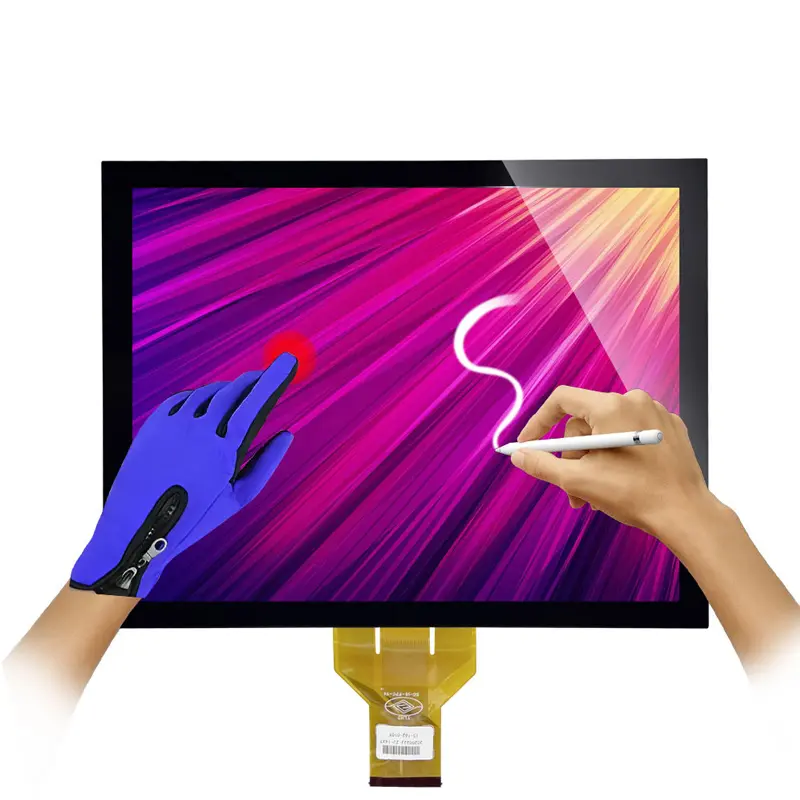
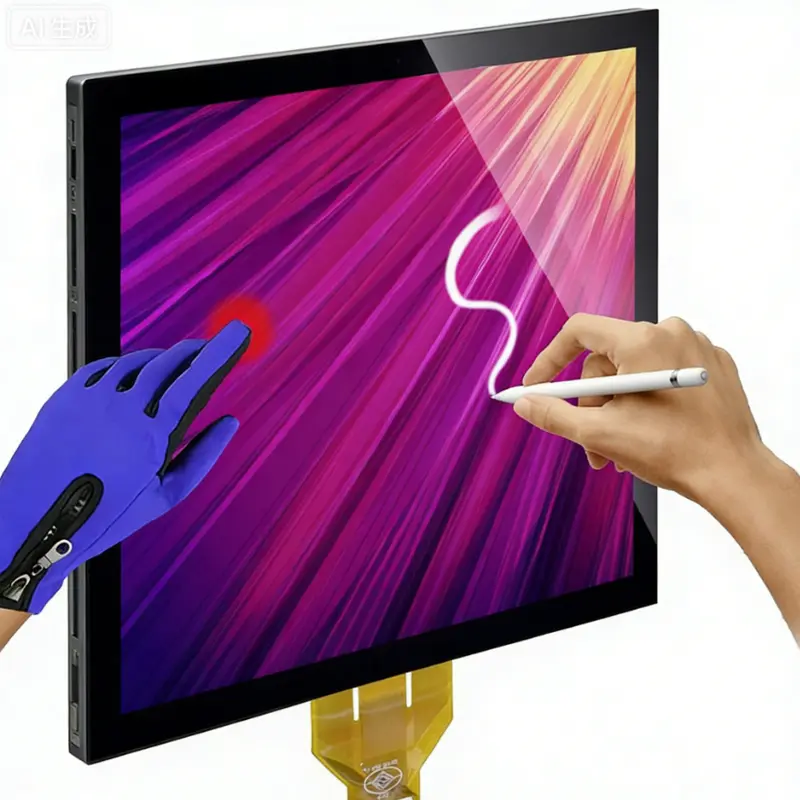
The projected-capacitive layer supports 10-point touch through USB and uses an ILI2510 controller reference. The touch path is separate from the video path, so USB does not replace LVDS. Host support, firmware behavior, gesture handling, and noise performance should be validated with the final cable and enclosure.
Key Specifications at a Glance
| Parameter | Specification |
|---|---|
| Display size | 15.6 inch |
| Resolution | 1920 × 1080 pixels |
| Panel mode | HVA TFT, normally black |
| Brightness | 500 cd/m² configuration |
| Contrast / response | 3000:1 typical / 30 ms typical |
| Viewing angle | 89/89/89/89° typical, CR > 10; order not assigned |
| Display colors | 16.7M |
| Video / panel supply | LVDS / 12 V typical |
| Touch | G+G projected capacitive, 10-point |
| Touch interface / controller | USB / ILI2510 |
| Touch transmittance | ≥85% |
| View area | 344.0(H) × 194.0(V) mm |
| Outer size | 387.0(H) × 231.0(V) mm |
| Surface / cover | Anti-glare 3H / 1.8 mm glass, 6H |
| Bonding | Air bonding; optical bonding available by project |
| Backlight | WLED; listed life 30,000 hours, grade not stated |
| Temperature | 0°C to +50°C operating; −20°C to +60°C storage |
Optical Performance and Brightness Selection
500 cd/m² Configuration Boundary
The assigned configuration uses a 500 cd/m² brightness target. It can suit indoor industrial areas and controlled high-ambient-light locations, but the finished result depends on cover transmission, reflections, air gaps, enclosure geometry, and viewing distance. The 500 cd/m² configuration is not automatically qualified for direct-sun readability behind a finished cover stack.
Higher-luminance versions are separate configurations. Selection should be based on the exact model, electrical load, thermal design, backlight driver, and lifetime requirement rather than applying family-level 1000- or 1500-nit language to this assembly.
Viewing, Contrast, and Surface Treatment
The HVA normally-black panel, 3000:1 typical contrast, and anti-glare 3H surface provide a practical basis for dense HMI graphics. The touch layer lists ≥85% transmittance, so complete-stack testing should control the final brightness decision.
LVDS and USB Integration for the Industrial Touchscreen LCD Module
Separate Video and Touch Paths
The display channel uses LVDS, while touch data uses USB. A USB touch interface does not carry the LCD video signal. The host therefore needs an LVDS-compatible output or a qualified controller path, plus a separate USB connection.
A matching connector shape does not establish compatibility. The engineering package should define timing, pin assignment, connector part number, cable pitch and contact side, panel and backlight power, USB definition, grounding, shielding, and FPC orientation.
Controller and Cable Qualification
ILI2510 identifies the touch-controller reference but does not prove firmware, operating-system, glove, stylus, water-rejection, or electromagnetic-immunity performance. Those functions require controller documentation and system testing. Cable routing near switching supplies and the final grounding scheme should be included in sample validation.
Mechanical Fit, Touch Stack, and Bonding
View Area, Outer Size, and Cover Glass
The 344.0 × 194.0 mm view area and 387.0 × 231.0 mm outer size serve different enclosure purposes. The larger value governs the assembly envelope; the view area supports window and content alignment. A 15.6-inch diagonal and 1920 × 1080 resolution do not by themselves guarantee mechanical or electrical interchangeability.
The G+G touch construction lists 1.8 mm cover glass and 6H surface hardness. Full thickness, mounting datum, tolerance stack, FPC keep-out, connector projection, and controller-board placement require the approved mechanical package.
Air Bonding and Optional Optical Bonding
Air bonding is the standard construction. Optical bonding is a project option that requires an updated optical and mechanical review. Bonding changes may affect finished thickness, tolerances, repair strategy, and tooling, so the selected construction should be frozen before enclosure release.
Recommended HMI and Control-Panel Applications
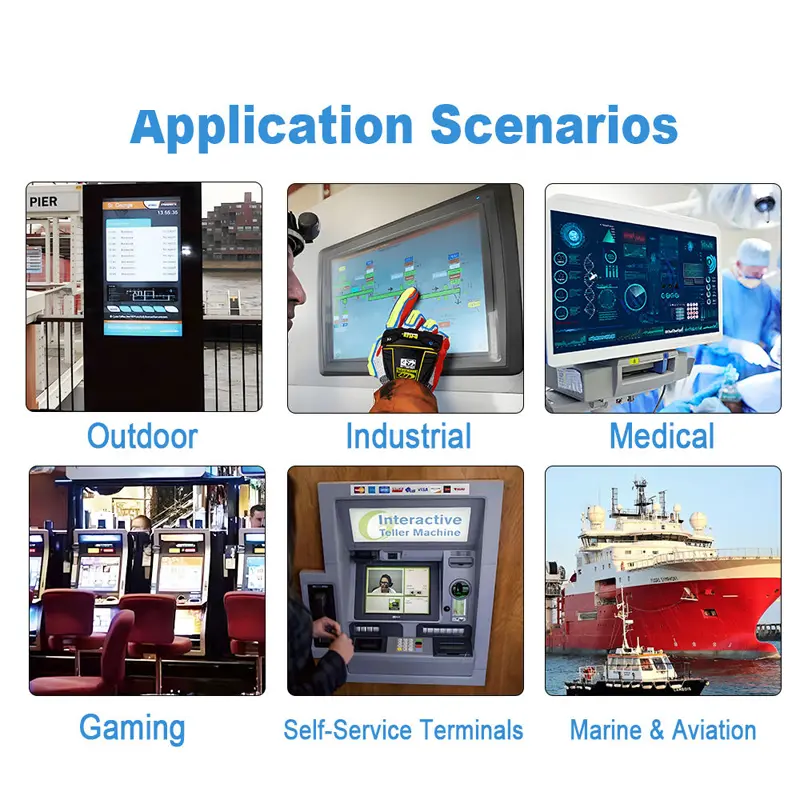
Suitable applications include industrial control panels, production-monitoring consoles, building-automation interfaces, laboratory and test equipment, smart terminals, and embedded operator stations with LVDS video and USB touch support. Sheltered service terminals may be evaluated when enclosure sealing, brightness, temperature, and environmental requirements are engineered separately.
No front-panel IP rating, outdoor certification, medical qualification, automotive grade, or direct-sun performance is established for the standard configuration.
Customization and Sample Qualification
For programs needing a modified Industrial Touchscreen LCD Module, project review may cover brightness version, cover-lens geometry and printing, FPC length or orientation, touch-controller choice, bonding method, surface treatment, controller-board matching, and enclosure adaptation. Custom configurations are generally reviewed from 500 pieces, subject to tooling, materials, and specification scope. Samples and standard-module quantities are confirmed separately.
A production sample should use the actual host, LVDS cable, USB connection, power architecture, enclosure, cover stack, grounding, and target UI. Approval should include touch accuracy, edge response, image timing, backlight behavior, temperature operation, and mechanical fit.
Procurement Checklist
- Confirm the assigned model and ordered brightness configuration.
- Submit LVDS timing, pin assignment, connector, cable, and FPC orientation.
- Confirm the 12 V panel supply and backlight-control requirements.
- Submit the USB touch definition and host environment.
- Approve the 344.0 × 194.0 mm view area and 387.0 × 231.0 mm envelope.
- Provide enclosure opening, mounting datum, tolerances, and keep-outs.
- State the bonding method, cover graphics, surface treatment, and brightness target.
- Provide sample quantity, annual demand, compliance needs, and validation criteria.
FAQ
About 15.6 Inch Industrial Touchscreen LCD Module
What must be checked before connecting this module to an existing LVDS controller?
Does the USB connection carry both touch data and display video?
Which dimensions should control the enclosure design?
How should the 500 cd/m² configuration be evaluated behind cover glass?
Freya Yang
+86 18318948097