Freya Yang
+86 18318948097
+852 62667476
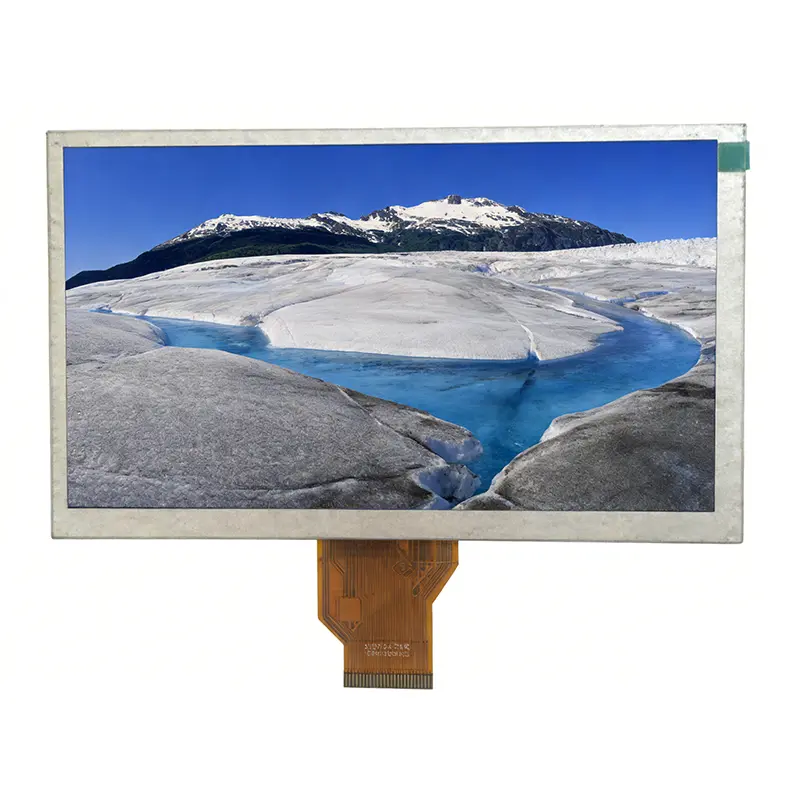
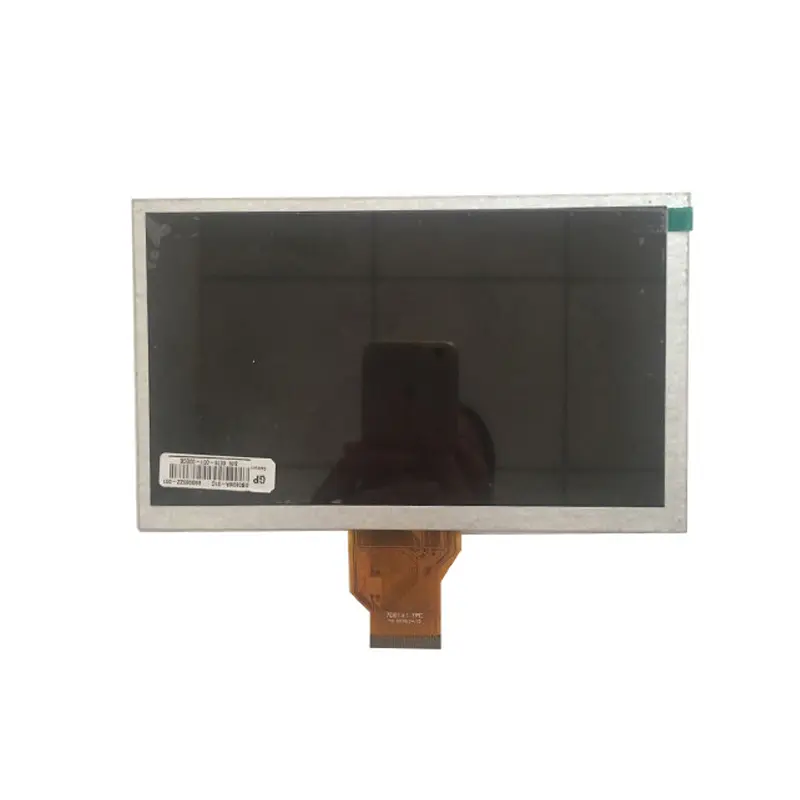
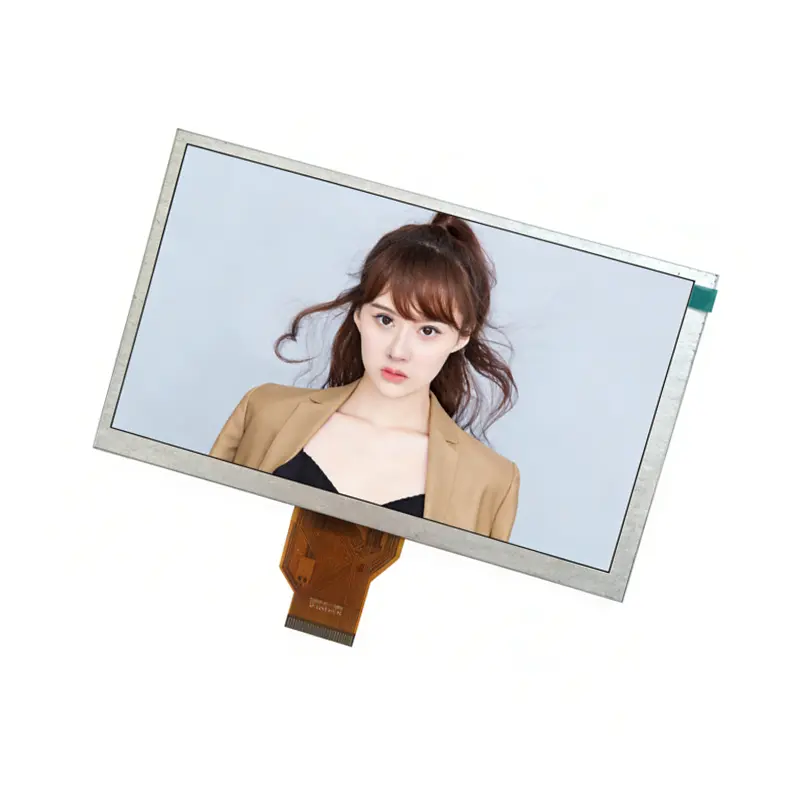
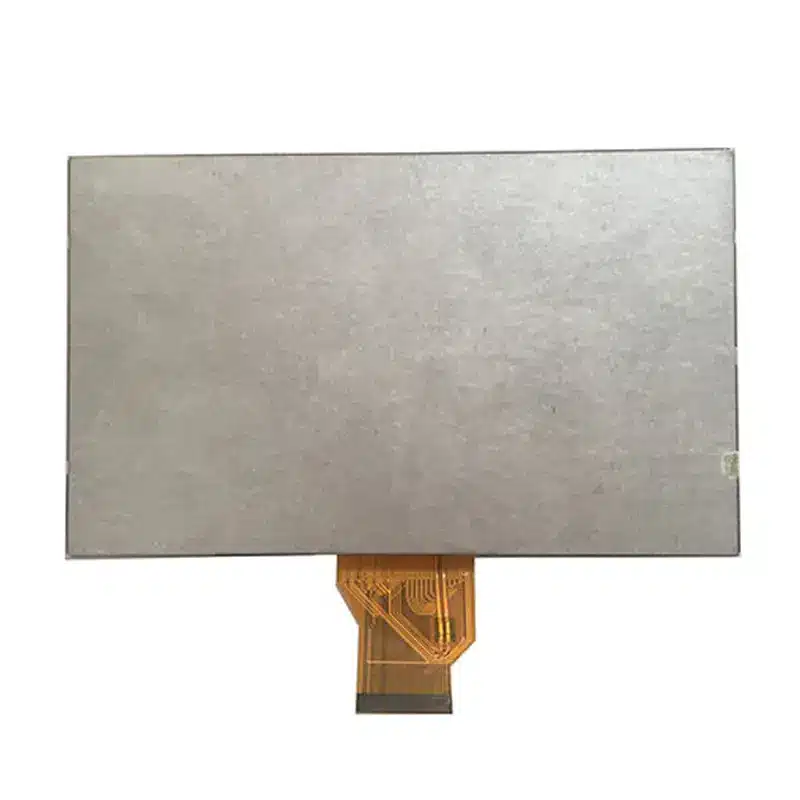
8 Inch Portable HMI LCD Module Industrial Screen for Field Service Equipment
Model P/N
Size
Resolution
Brightness
Viewing Angle
Connector Type
Operating Temp
Overall(mm)
huisoar
HS80050LY 64
Brand
Panel Size (inch)
Model P/N
Resolution
Brightness (nits)
Viewing Angle
Contrast Ratio
Response Time
Overall (mm)
Active Area (mm)
Refresh Rate
Bezel Opening
Display Colors
Panel Type
Connector Type
Surface Treatment
Operating Temp
Touchscreen Type
Storage Temp
Work Mode
Pixel Format
Input Voltage (V)
Control Type
Operating Environment
Motherboard Type
Designed For
8 Inch Portable HMI LCD Module Industrial Screen for Field Service Equipment
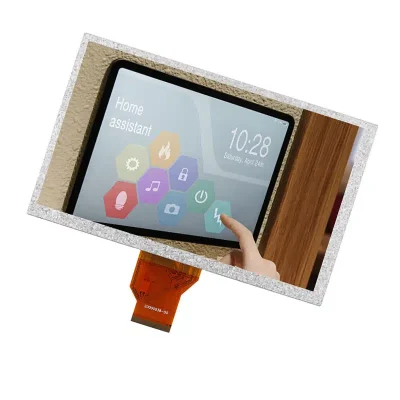
This 8-inch TN display provides an 800 × 480 canvas and 50-pin digital RGB input for field terminals that need compact mechanical integration and 400 cd/m² typical luminance.
Product Summary
The Portable HMI LCD Module is an 8.0-inch a-Si TFT component for field-service terminals, portable test equipment and compact operator interfaces. Its native 800 × 480 raster, normally white transmissive TN mode and anti-glare surface support status pages, menus, measurements and basic graphics in controlled-light equipment.
The module uses a 50-pin, 0.50 mm-pitch FPC for digital TTL/parallel RGB image data. It has a 176.64 × 99.36 mm active area within a 192.8 × 116.9 × 6.4 mm outline. Typical luminance is 400 cd/m², with 350 cd/m² minimum. The standard configuration is non-touch.
Key Specifications
| Parameter | Value |
|---|---|
| Display size | 8.0 inches |
| Native resolution | 800 × 480 pixels |
| Panel technology | a-Si TN TFT active matrix |
| Display mode | Normally white, transmissive |
| Dot pitch | 0.0736 × 0.2070 mm per subpixel |
| Active area | 176.64 × 99.36 mm |
| Module outline | 192.8 × 116.9 × 6.4 mm |
| Bezel-opening reference | 180.10 × 103.40 mm |
| Luminance | 400 cd/m² typical; 350 cd/m² minimum |
| Contrast ratio | 500:1 typical; 400:1 minimum |
| Viewing angles | 70°/70°/50°/70° typical, L/R/T/B |
| Response time | 10 ms on + 15 ms off typical |
| Surface treatment | Anti-glare |
| Color depth | 16.7M colors |
| Interface | 50-pin digital TTL/parallel RGB FPC |
| Preferred view | 6 o’clock |
| Operating temperature | −20°C to +70°C |
| Storage temperature | −30°C to +80°C |
| Standard touch status | Non-touch |
800 × 480 UI and Physical Aspect Planning
Native Raster and Non-Square Pixel Geometry
The active area has a physical 16:9 proportion, while the 800 × 480 raster has a 5:3 numerical ratio. Three horizontal subpixels form an approximately 0.2208 mm full-pixel width, while vertical pitch is 0.2070 mm. Circles, square icons and dimensional graphics should therefore be checked on the actual module instead of approved only from a desktop preview.
Drive the native raster without unnecessary scaling. Validate text size, line weight and controls at the intended viewing distance.
Viewing Direction for Fixed Operator Positions
The viewing sequence is 70° left, 70° right, 50° top and 70° bottom at CR≥10, with a 6 o’clock preferred direction. Match the enclosure angle to the operator’s normal line of sight. TN performance is directional, so evaluate it in the final mounting position rather than assuming IPS-like behavior.
Portable HMI LCD Module Interface Integration
Qualify the 50-Pin Digital RGB Connection
A matching 50-pin connector does not prove compatibility. Confirm RGB data width and mapping, pixel clock, data-enable or synchronization mode, supply rails, signal levels, connector orientation, FPC contact side and backlight requirements before releasing the host PCB.
The drawing identifies a 0.50 mm-pitch FPC and suggests a Hirose FH12A-50S-0.5H mating connector. The approved pin assignment and timing table still control the electrical design. Keep the FPC bending radius above 0.8R and provide strain relief.
Plan Raspberry Pi DPI or Controller-Board Integration
A Raspberry Pi can generate parallel RGB through DPI when GPIO allocation, timing, voltage and software configuration are matched. This LCD does not plug directly into the Raspberry Pi header because its 50-pin FPC, power rails and backlight path require adaptation.
Use a purpose-designed DPI adapter or a controller board that outputs the approved timing. Verify GPIO availability, backlight power and the operating-system display configuration.
Optical Performance for Controlled-Light Equipment
Use the 400 cd/m² Luminance Boundary Correctly
The 400 cd/m² typical luminance suits many indoor industrial areas and portable service devices after front-cover losses are considered. It does not establish direct-sun readability or finished outdoor suitability.
For protective glass, evaluate transmission, reflection, air-gap effects and mounting angle. Measure the assembled product under representative lighting.
Response, Contrast and Uniformity
The panel specifies 10 ms typical turn-on and 15 ms typical turn-off. This supports menus, status information and ordinary interface motion, but should not be marketed as a fast-motion display without testing.
Typical contrast is 500:1, with 400:1 minimum. Luminance uniformity is 75% typical and 70% minimum. Include these values in sample acceptance where uniform backgrounds matter.
Mechanical, FPC and Touch Integration
Use the Approved Outline and FPC Limits
Use the 192.8 × 116.9 × 6.4 mm outline, 176.64 × 99.36 mm active area and 180.10 × 103.40 mm bezel reference for enclosure planning. Keep bezel pressure away from the active image area and follow the complete drawing for connector and keep-out locations.
The general mechanical tolerance is ±0.3 mm. Release tooling only after the approved drawing and mounting method are reviewed.
Keep the Standard Module Non-Touch
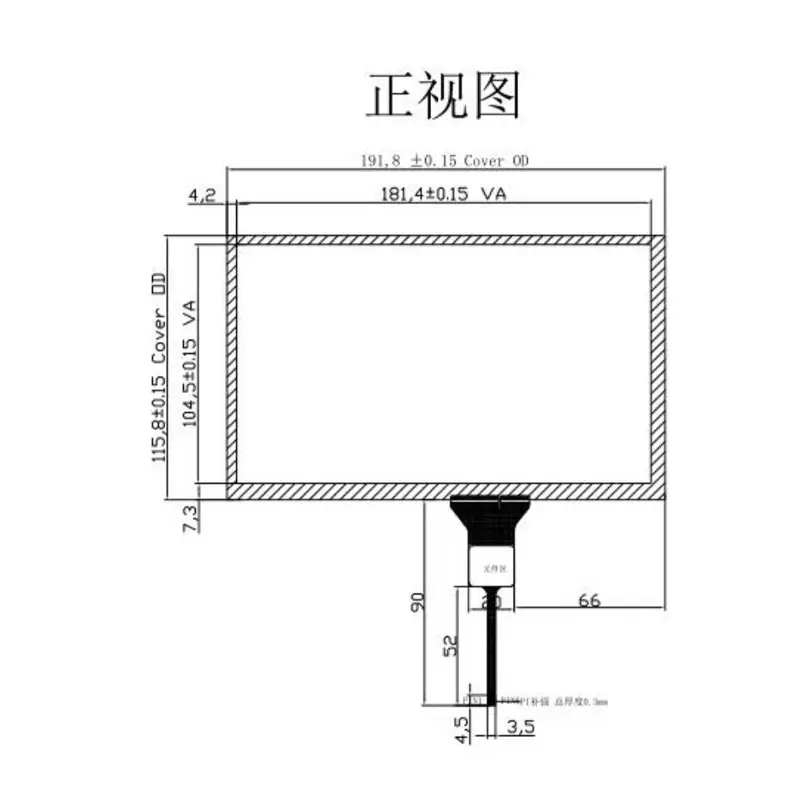
The standard LCD is non-touch. A separate projected-capacitive assembly using a GT911 controller can be evaluated, but it has its own outline, visible area, I²C signals and environmental limits.
The optional touch drawing shows a G+G stack and 1.55 ± 0.10 mm total thickness. Adding it changes front-stack thickness, bezel opening, FPC routing and controller requirements.
Environmental and Application Fit
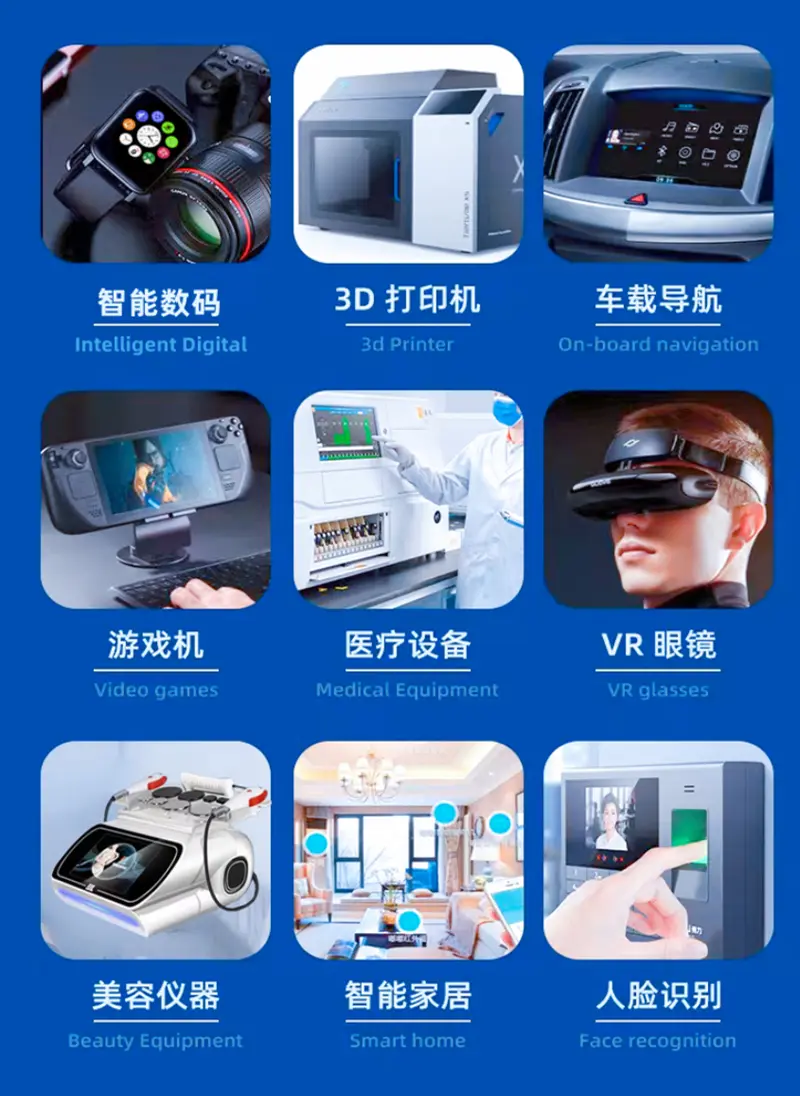
The Portable HMI LCD Module fits portable field-service terminals, handheld diagnostic equipment, compact industrial controls, digital photo frames, video doorphones and qualified embedded devices. Its −20°C to +70°C operating range supports wider-temperature equipment, but the complete product still requires enclosure, condensation, vibration, power and thermal validation.
It is not a finished monitor or weatherproof assembly. Host electronics, backlight drive, front protection, controls and compliance remain system-level responsibilities.
Configuration and Customization
Project review can cover FPC length and orientation, pin definition, backlight target, cover lens, separate capacitive touch, bonding, mechanical adaptation, controller-board matching, branding and packaging.
Custom configurations are generally reviewed from 500 pieces, subject to tooling, materials and the requested specification. Sample and standard-module quantities are confirmed separately.
Procurement Checklist
Confirm:
- Native 800 × 480 timing, pixel clock and RGB mapping
- Synchronization or data-enable mode
- Complete 50-pin assignment, pitch, contact side and orientation
- Panel and backlight voltage/current requirements
- Backlight enable, dimming and driver design
- Module, active-area and bezel-opening fit
- 6 o’clock viewing orientation
- 400 cd/m² suitability after the front stack
- Non-touch or separately qualified GT911 touch configuration
- FPC bending and strain relief
- Operating environment, sample criteria and annual demand
FAQ
About 8 Inch Portable HMI LCD Module Industrial Screen
What must be checked before connecting a 50-pin TTL/RGB host?
Can this module connect directly to a Raspberry Pi?
How should 800 × 480 graphics be prepared?
Is 400 cd/m² sufficient for direct-sun use?
Is touch included?
Freya Yang
+86 18318948097