Freya Yang
+86 18318948097
+852 62667476
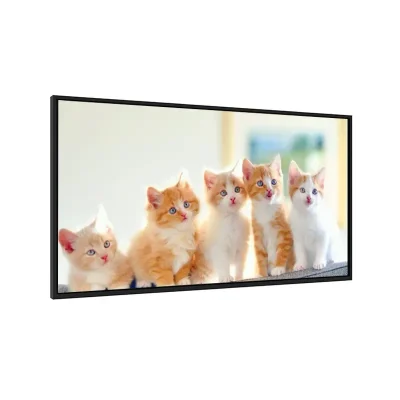
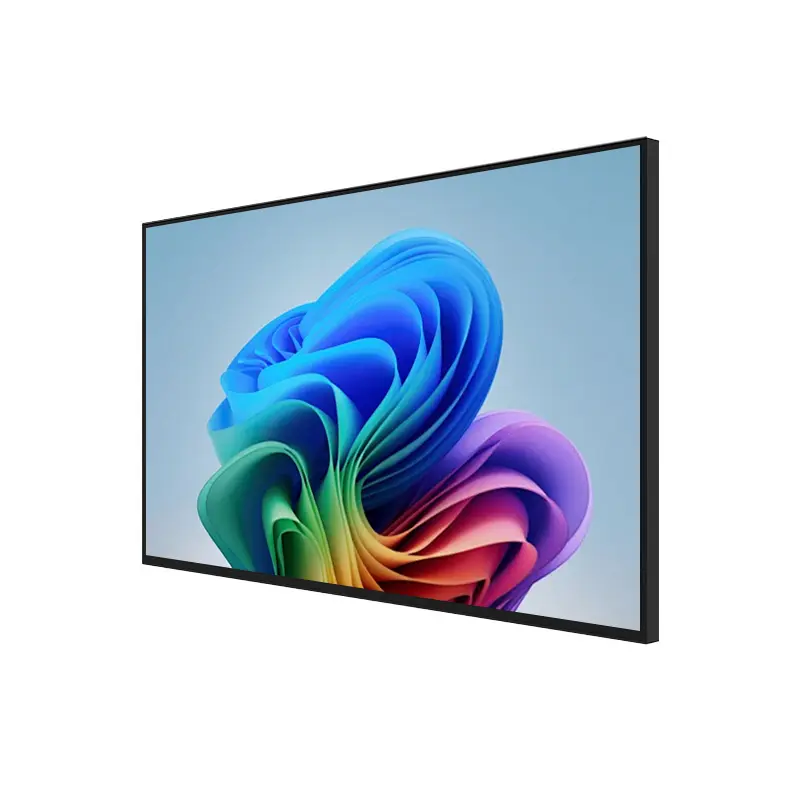
86 Inch Ultra Slim Storefront Digital Signage Display for Retail

Model P/N
Size
Resolution
Brightness
Viewing Angle
Connector Type
Operating Temp
Overall(mm)
huisoar
HS860MNX01D01-BK
Brand
Panel Size (inch)
Model P/N
Resolution
Brightness (nits)
Viewing Angle
Contrast Ratio
Response Time
Overall (mm)
Active Area (mm)
Refresh Rate
Display Colors
Panel Type
Connector Type
Operating Temp
Touchscreen Type
Storage Temp
Work Mode
Operating Environment
Designed For
86 Inch Ultra Slim Storefront Digital Signage Display for Retail
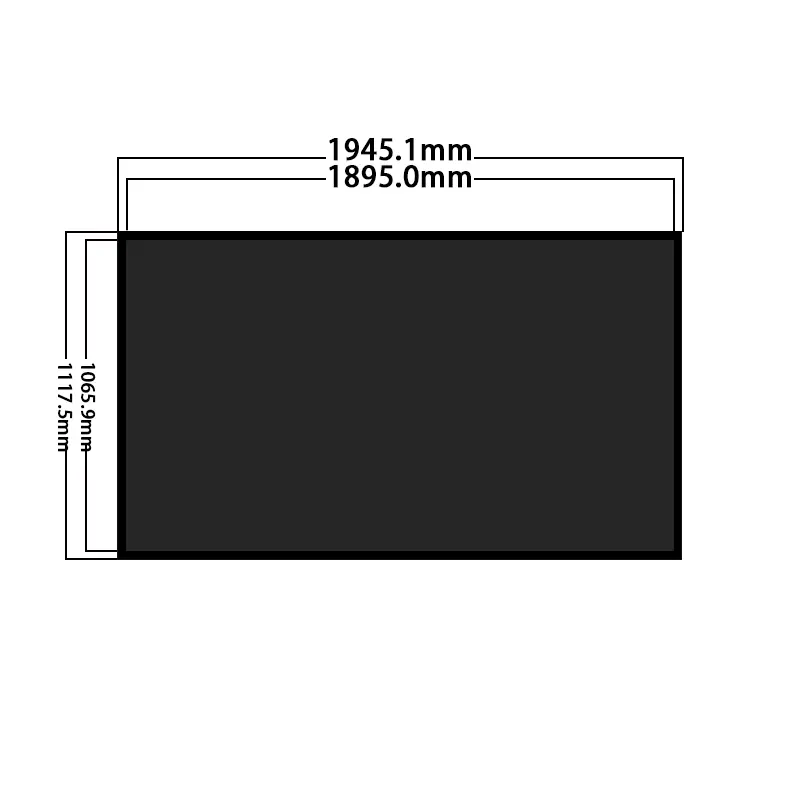
An Ultra Slim Storefront Digital Signage Display gives large retail windows a dedicated visual platform for content that must remain prominent through storefront glass. This 86-inch configuration combines 3840 × 2160 UHD resolution, 2000 cd/m² brightness, a 1895.04 × 1065.96 mm active area and dual HDMI inputs in a 1945.1 × 1117.5 × 85.5 mm enclosure. The large image area is suited to high-impact advertising and branded visual communication where an ordinary indoor screen can lose visibility against daylight and reflections.
Product Summary
The 86-inch format is designed for large one-way commercial messaging rather than interactive kiosk use. Its 4K UHD raster supports detailed campaign visuals, product photography, large typography and video content, while the 2000 cd/m² luminance provides a stronger optical base for glass-facing installations.
The standard configuration is non-touch and lists no embedded operating system. This gives integrators a straightforward external-player architecture in which content delivery, networking and software can be selected separately from the display hardware.
Key Specifications
| Parameter | Value |
|---|---|
| Screen size | 86 inches |
| Resolution | 3840 × 2160 UHD |
| Brightness | 2000 cd/m² |
| Active area | 1895.04 × 1065.96 mm |
| Overall dimensions | 1945.1 × 1117.5 × 85.5 mm |
| Aspect ratio | 16:9 |
| Contrast ratio | 1200:1 |
| Response time | 9 ms typical Tr/Td |
| Viewing angle | 89/89/89/89° minimum at CR ≥10 |
| Display colors | 16.7M |
| Inputs | HDMI ×2, USB ×1 |
| Mounting | 600 × 600 mm, 4 × M8 |
| Maximum screw depth | 10 mm |
| Touch | Non-touch |
| Embedded OS | None specified |
| Backlight reliability reference | BL MTBF 50,000 hours |
The core size, resolution, luminance, active area, contrast, response, I/O and mechanical values are also listed on the product page.
Visibility Through Storefront Glass
2000 cd/m² for High-Ambient Retail Windows
Window-facing installations need more luminance than ordinary indoor signage because the image is competing with ambient daylight and reflections from the glazing. Current industry guidance also treats storefront glass, orientation, screen setback and direct-sun exposure as separate variables rather than assuming a brightness number alone guarantees readability.
A 2000 cd/m² specification therefore provides the optical starting point, but the final installation should still be evaluated with the actual storefront glass. Glass transmission, external reflections, screen-to-glass distance and viewing direction can materially change perceived contrast.
A 2000 cd/m² window-facing display still requires glazing and site-light validation before storefront visibility is approved.
4K UHD for Large-Format Retail Content
At 3840 × 2160 pixels, the display provides the native resolution expected for detailed large-format commercial content. On an 86-inch screen, 4K gives designers more room for high-resolution product imagery, large promotional typography, campaign videos and multi-zone layouts.
The 1200:1 contrast ratio and 16.7M-color specification add useful image information for content planning without implying a color-critical production grade that has not been documented.
Integrating the Ultra Slim Storefront Digital Signage Display
Dual HDMI Inputs and USB Scope
Two HDMI inputs provide external video connection paths for signage players, PCs or other qualified 4K sources. The USB port is also listed, but its exact function should be confirmed before a deployment assumes media playback, firmware update or peripheral support.
No embedded operating system is specified. Integrators should therefore define the intended external media-player architecture, required resolution and refresh output, input switching method and any networking requirements separately.
HDMI ×2 provides external video inputs, while no embedded operating system or specific USB function is established.
600 × 600 mm Four-M8 Mounting
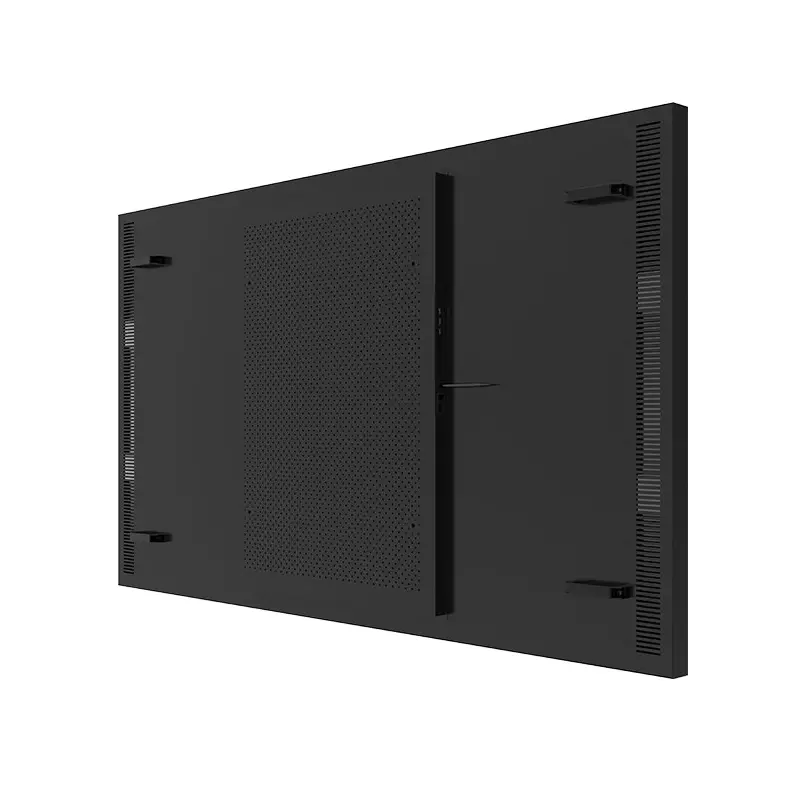
The 600 × 600 mm mounting pattern uses four M8 fixation points with a maximum screw depth of 10 mm. These dimensions provide an important starting point for bracket selection, but an 86-inch installation also requires structural review of the complete mounting assembly.
Final net weight remains TBD, so mounting hardware should not be released solely from the bolt pattern. The approved production drawing and final unit weight should control bracket load, wall structure, stand design and installation procedure.
Mechanical Planning for an 86-Inch Installation
Active Area Versus Complete Enclosure
The visible image area measures 1895.04 × 1065.96 mm, while the complete product measures 1945.1 × 1117.5 × 85.5 mm. These values serve different design purposes.
The active area controls the visual opening and content presentation. The full product dimensions control recess clearance, architectural framing, cable access, airflow, mounting clearances and serviceability.
85.5 mm Enclosure Depth
The 85.5 mm depth supports an ultra-slim commercial positioning relative to conventional bulky signage enclosures without requiring a comparative thickness claim against another specific product. Current window-facing display categories commonly emphasize slim profiles because depth and glass setback are important in retail-window integration.
The installer should still reserve adequate rear clearance for connectors, cable bend radius, ventilation and future service access.
Environmental and Operating Boundaries
Wide-Temperature Project Planning
The supplied configuration data identifies an operating range of −20°C to +70°C and a storage range of −30°C to +80°C. These values help system designers assess window-adjacent equipment that may experience stronger seasonal and solar heat loads than ordinary office displays.
Environmental release should still be tied to the approved production revision, including ventilation strategy, enclosure temperature and actual storefront solar exposure.
Window-Facing Does Not Mean Weatherproof
The product-specific IP field is not specified. A screen installed inside a storefront and facing outside is therefore different from a sealed display exposed directly to rain, water jets or outdoor contaminants.
A product-specific IP value is not specified, so window-facing use does not establish exposed-weather protection.
Projects requiring true outdoor exposure should separately define the enclosure, sealing, drainage, corrosion, thermal-management and environmental-test requirements.
Applications for Large Retail Windows
Storefront Promotions and Showrooms
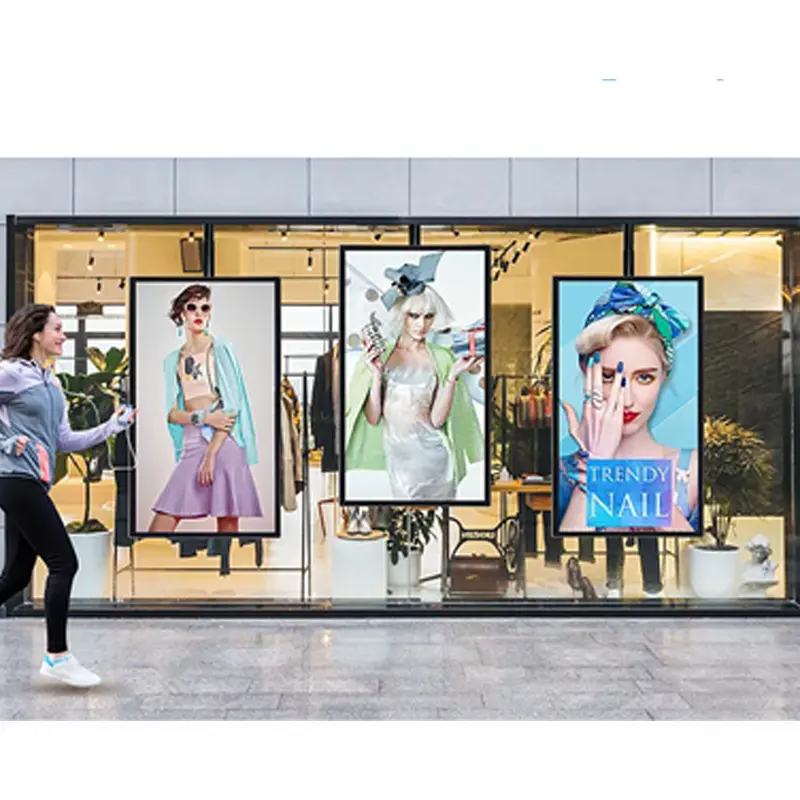
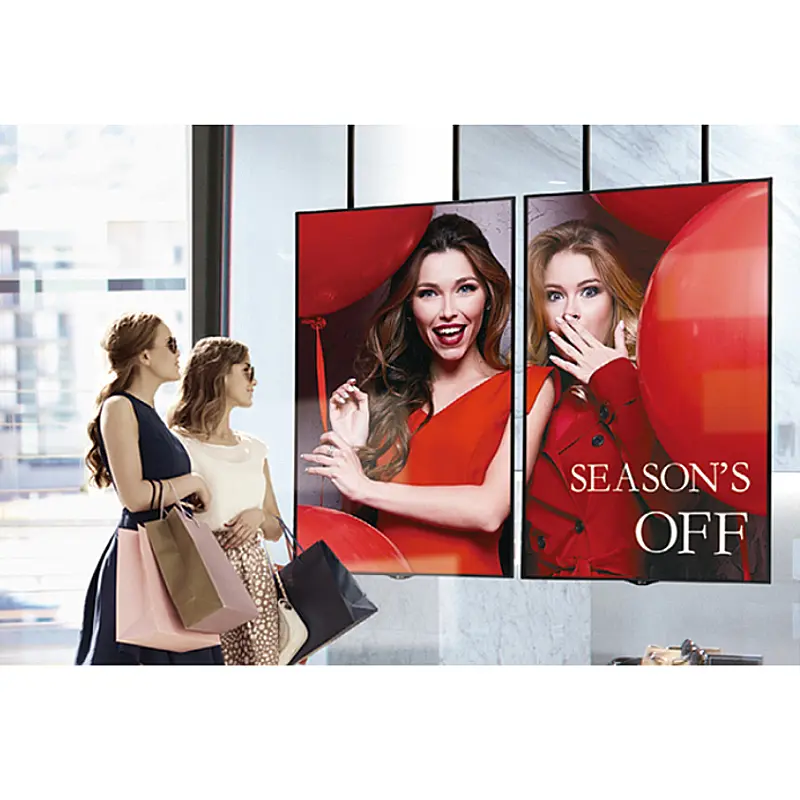
The large 86-inch format is a logical fit for flagship retail windows, automotive showrooms, electronics stores, fashion campaigns and other locations where promotional material must attract attention from outside the premises.
For an Ultra Slim Storefront Digital Signage Display, the combination of 4K detail, 2000 cd/m² luminance and a large visible area supports product launches, campaign videos, digital posters and branded storytelling across longer viewing distances.
Bright Indoor Commercial Spaces
The same hardware can also be evaluated for shopping-centre interiors, exhibition areas, hospitality spaces, reception zones and other bright public environments where a conventional office display may lack sufficient visual impact.
These applications remain one-way display scenarios unless a separate touch system is engineered and qualified.
Customization and Project Qualification
Project evaluation can cover front-glass design, reflection control, anti-glare or anti-reflective treatment, optical bonding, enclosure adaptation, cable routing, mounting changes, external controller architecture and environmental protection.
Generic IP-rated enclosures, Hi-Tni configurations, industrial connectors, wide-voltage DC systems, embedded operating systems and wireless communications should be treated as separate engineered options rather than assumed standard inclusions.
Custom configurations are generally reviewed from 500 pieces, subject to tooling requirements, material availability, and the requested specification. Sample and standard-display quantities are confirmed separately.
Procurement Checklist
Before sample or production release, confirm:
- assigned product revision and complete mechanical drawing;
- native 3840 × 2160 player output;
- fixed 2000 cd/m² target and acceptance tolerance;
- 1895.04 × 1065.96 mm active area;
- 1945.1 × 1117.5 × 85.5 mm complete dimensions;
- 1200:1 contrast and 9 ms Tr/Td grade;
- viewing-angle direction order if required by the application;
- HDMI ×2 input requirements;
- intended USB function;
- final AC input range before wiring release;
- final power-consumption value;
- final net weight;
- 600 × 600 mm mounting and four M8 fixation points;
- 10 mm maximum screw depth;
- storefront-glass transmission and reflection conditions;
- screen setback and direct-sun duration;
- standard non-touch configuration;
- environmental/IP enclosure requirement;
- approved operating and storage temperature revision;
- interpretation of BL MTBF 50,000 hours;
- sample quantity, annual demand and rollout schedule.
FAQ
About 86 Inch Ultra Slim Storefront Digital Signage Display
What must be checked before approving 2000 cd/m² behind storefront glass?
What mechanical information controls mounting release for the 86-inch display?
Do HDMI ×2 and USB ×1 mean a built-in signage operating system is included?
Is the standard unit suitable for exposed outdoor installation?
How should the BL MTBF 50,000-hour statement be interpreted?
Freya Yang
+86 18318948097