Freya Yang
+86 18318948097
+852 62667476
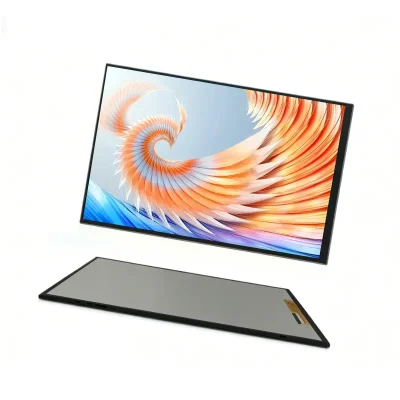
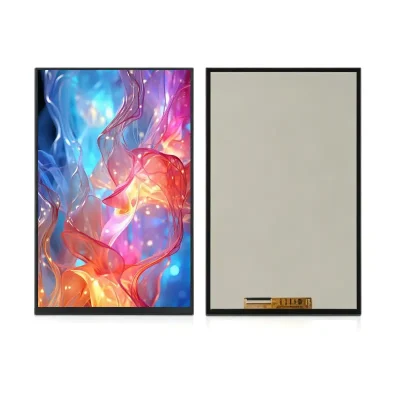
10.1 Inch 800 Nits Outdoor IPS LCD Module for Industrial HMI

Model P/N
Size
Resolution
Brightness
Viewing Angle
Connector Type
Operating Temp
Overall(mm)
huisoar
HS101WHB-NE08
Brand
Panel Size (inch)
Model P/N
Resolution
Brightness (nits)
Viewing Angle
Contrast Ratio
Response Time
Overall (mm)
Active Area (mm)
Refresh Rate
Display Colors
Panel Type
Connector Type
Operating Temp
Touchscreen Type
Storage Temp
Work Mode
Operating Environment
Designed For
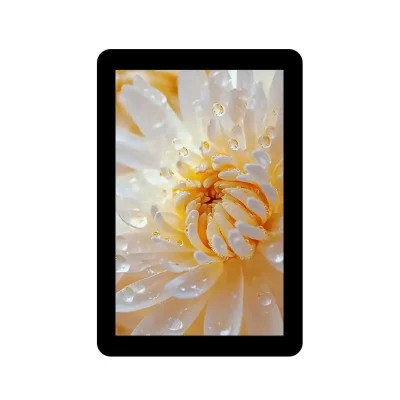
10.1 Inch 800 Nits Outdoor IPS LCD Module for Industrial HMI
This compact 10.1-inch 800 Nits Outdoor IPS LCD Module combines 1280 × 800 resolution with 40-pin LVDS for bright-ambient embedded equipment.
Product Summary
The 800 Nits Outdoor IPS LCD Module is a compact 10.1-inch TFT-LCD component for industrial interfaces and equipment installed in stronger ambient light than a conventional indoor display normally encounters. Its 1280 × 800 pixel matrix uses a practical 16:10 format, while the IPS hard-screen structure supports broad viewing from different operator positions.
The selected configuration provides 800 cd/m² typical luminance. That level creates useful optical headroom for bright indoor locations, sheltered terminals, covered outdoor installations, and equipment positioned near windows. Finished visibility still depends on the front window, reflections, viewing angle, and installation environment, so the LCD should be evaluated as part of the complete equipment optical stack.
Key Specifications
| Item | Confirmed value |
|---|---|
| Screen size | 10.1 inches |
| Resolution | 1280 × 800 pixels, 16:10 |
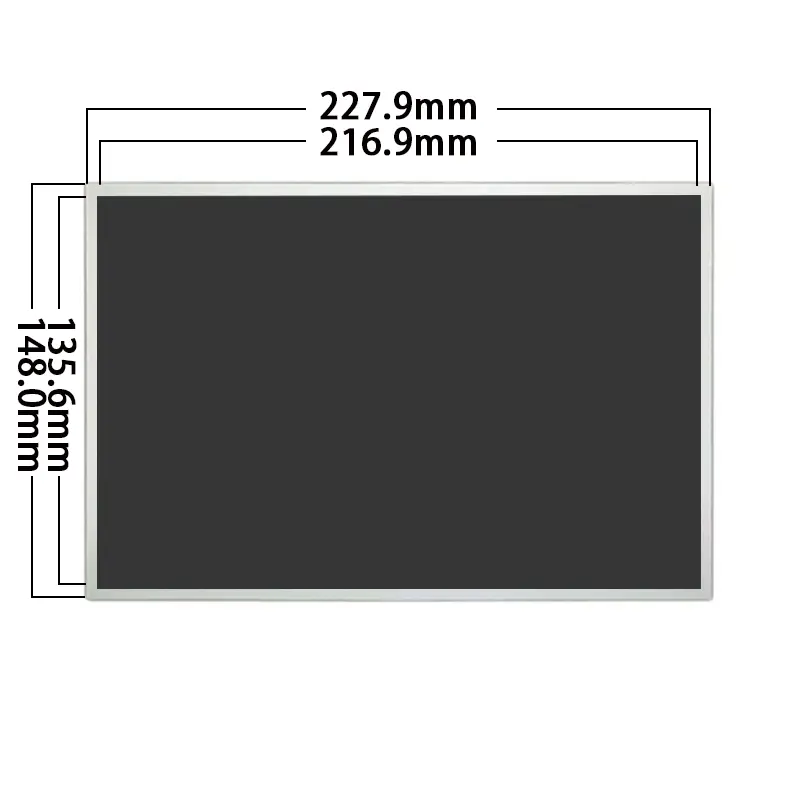
| Active area | 216.96 × 135.6 mm |
| Module outline | 227.91 × 148 mm |
| Maximum thickness | 8.4 mm |
| Brightness | 800 cd/m² typical |
| Panel structure | IPS hard-screen family, transmissive |
| Contrast ratio | 1300:1 typical |
| Viewing angle | 85°/85°/85°/85° L/R/U/D |
| Display colors | 262K / 16.7M listed |
| Backlight | WLED |
| Signal interface | LVDS, 40 pins |
| Touch | No touch |
| Operating temperature | 0°C to +50°C |
| Storage temperature | −20°C to +60°C |
Bright-Ambient Optical Performance
800 cd/m² for Covered Outdoor Equipment
The 800 cd/m² typical luminance is useful where a standard indoor LCD does not provide enough visual margin. Machine panels near factory doors, sheltered public terminals, window-adjacent equipment, and covered outdoor installations can all expose the display to significantly higher ambient illumination.
Luminance alone should not be treated as proof of direct-sun readability. A front lens with high reflectance, an air gap, or unfavorable mounting geometry can reduce effective contrast even when the bare module has higher backlight output. Representative sample testing should therefore use the intended front structure and lighting environment.
IPS Viewing and 1300:1 Contrast
The IPS hard-screen configuration provides a specified 85°/85°/85°/85° viewing angle in left, right, up, and down directions. Together with a 1300:1 typical contrast ratio, this gives designers more freedom when the operator is not positioned directly on the panel centerline.
The listed 262K / 16.7M color modes should be confirmed against the final signal configuration before production graphics are released. The display can support detailed color user interfaces without assuming an unverified bit-depth or LVDS mapping.
Integrating the 800 Nits Outdoor IPS LCD Module
40-Pin LVDS Requires Full Host Matching
The image path uses a 40-pin LVDS connection. A matching connector count does not establish controller compatibility by itself. The host design should confirm native 1280 × 800 timing, complete pin assignment, LVDS channel and bit mapping, connector pitch, contact side, cable orientation, panel voltage, and backlight requirements.
This becomes especially important in replacement programs. Two 10.1-inch modules may share the same resolution, LVDS label, and 40-pin connector while still having different electrical assignments or cable geometry.
Mechanical Fit for Compact Equipment
The active image area measures 216.96 × 135.6 mm. The complete module outline is 227.91 × 148 mm, and maximum thickness is 8.4 mm.
These dimensions perform different design functions. The active area controls the visible image opening, while the complete module geometry determines internal packaging and clearances. Final enclosure tooling should use an approved production drawing that also defines tolerances, mounting details, and cable exit position.
Non-Touch Architecture
Standard Configuration Has No Touchscreen
The standard module is non-touch. Equipment that requires operator interaction should therefore treat touch as a separate subsystem instead of assuming a sensor or controller is included with the LCD.
A separately engineered touch assembly can affect optical transmission, overall thickness, front-window design, grounding, controller routing, and mechanical tolerances. Those items need a combined LCD-and-touch drawing before an interactive front panel is released.
Environmental Boundaries
Operating and Storage Temperature Limits
The confirmed operating range is 0°C to +50°C, while storage is specified from −20°C to +60°C. These values are important when evaluating equipment placed near exterior walls, inside kiosks, or in cabinets affected by solar heating.
The temperature range does not establish waterproofing, UV resistance, condensation resistance, or an IP grade. The complete product enclosure remains responsible for sealing, thermal management, mechanical protection, and any environmental compliance required by the application.
Application Fit
The 800 Nits Outdoor IPS LCD Module is a practical candidate for industrial HMI panels, machinery interfaces, compact digital signage, sheltered outdoor-facing information terminals, and other bright-ambient embedded systems where 10.1-inch WXGA content and LVDS integration are suitable.
Vehicle-display and healthcare-equipment integration may also be evaluated when the finished system completes the necessary electrical, environmental, optical, mechanical, and regulatory qualification. The panel specification alone does not establish vehicle grade, medical certification, or application-specific compliance.
Customization and Qualification
Optical and Mechanical Options
Projects may evaluate cover glass, AR or AG treatment, optical bonding, enclosure adaptation, cable changes, and mechanical adjustments where supporting drawings and performance targets are available. Any change to the front optical stack should be checked against the required finished-system luminance and reflection performance.
Interface and Touch Development
LVDS cable and controller matching can be reviewed using the complete host timing and pin definition. A separate touch system may also be considered where interactive input is required, but touch is not a standard feature of this configuration.
Custom configurations are generally reviewed from 500 pieces, subject to tooling requirements, material availability, and the requested specification. Sample and standard-module quantities are confirmed separately.
Procurement Checklist
- Confirm the ordered 800 cd/m² grade and luminance tolerance.
- Provide native 1280 × 800 host timing.
- Confirm complete 40-pin LVDS pin assignment and channel/bit mapping.
- Confirm connector pitch, contact side, cable direction, and mating connector.
- Obtain panel input voltage and WLED voltage/current/control requirements.
- Approve the 216.96 × 135.6 mm active area.
- Approve the 227.91 × 148 mm outline and 8.4 mm maximum thickness.
- Confirm 1300:1 typical contrast and the required color mode.
- Keep the standard product identified as non-touch unless an approved touch assembly is added.
- Validate 0°C to +50°C operation against actual equipment temperature.
- Define front-glass transmission, reflection, sealing, humidity, vibration, and compliance targets.
- Specify sample acceptance criteria, quantity, annual demand, and schedule.

FAQ
About 10.1 Inch 800 Nits Outdoor IPS LCD Module
What must be checked before replacing another 40-pin LVDS panel?
Is 800 cd/m² sufficient for equipment installed in direct sunlight?
How should the front glass be evaluated with this LCD?
Is touch included with the standard module?
How does the 0°C to +50°C operating range affect outdoor equipment design?
Freya Yang
+86 18318948097