Freya Yang
+86 18318948097
+852 62667476
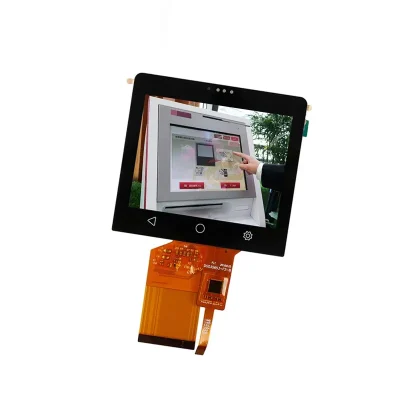
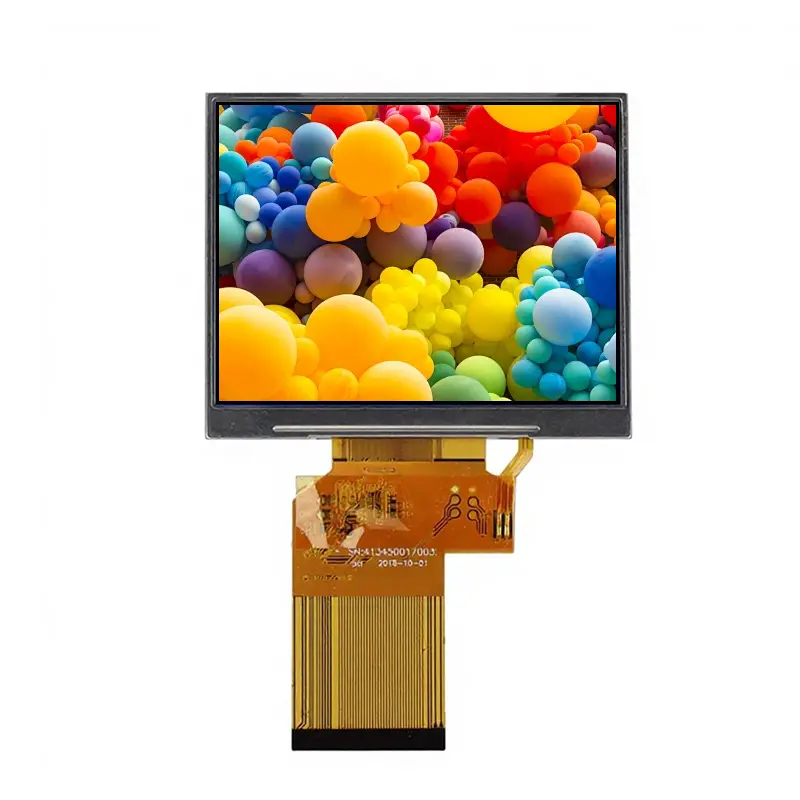
Brightness Tunable LCM 3.5 inch 320×240 RGB 54-pin TFT LCD module

Model P/N
Size
Resolution
Brightness
Viewing Angle
Connector Type
Operating Temp
Overall(mm)
huisoar
HS035R06C30
Brand
Panel Size (inch)
Model P/N
Resolution
Brightness (nits)
Viewing Angle
Contrast Ratio
Response Time
Overall (mm)
Active Area (mm)
Refresh Rate
Bezel Opening
Display Colors
Panel Type
Connector Type
Surface Treatment
Operating Temp
Touchscreen Type
Storage Temp
Work Mode
Pixel Format
Input Voltage (V)
Control Type
Weight (g)
Designed For
3.5-Inch 320×240 TN TFT LCD with 300 cd/m² Standard Brightness and Optional Touch
A Brightness Tunable LCM is a 3.5-inch 320×240 TN TFT LCD module for embedded controllers, handheld instruments, compact HMI products, smart home panels, and portable terminals that need simple RGB integration with flexible brightness planning. It combines RGB 24-bit 54-pin FPC, 300 cd/m² standard luminance, an up-to-800-nit option, HX8238-D driver support, optional RTP or CTP touch, and -20°C to +70°C operation.
At a Glance: 3.5-Inch RGB LCM Highlights
- 3.5-inch compact format fits handheld devices, instruments, small HMI panels, and embedded controllers.
- 320×240 resolution supports simple menus, status screens, icons, and measurement data.
- RGB 24-bit interface with FPC 54 pins supports direct embedded display integration.
- 300 cd/m² standard brightness provides a practical baseline for indoor equipment.
- Up to 800 nits or higher brightness option supports brighter operating environments.
- Optional RTP or CTP touch lets buyers choose cost-focused or modern touch interaction.
- TN normally white transmissive structure supports cost-sensitive LCM procurement.
Product Overview of the Brightness Tunable LCM
The Brightness Tunable LCM is built for product teams that need a small TFT display module but still want room to tune the optical specification. Instead of locking every project into one brightness level, this 3.5-inch platform starts from a 300 cd/m² standard configuration and supports higher-brightness options for applications with stronger ambient light.
The 320×240 format is suitable for compact embedded interfaces where the display shows settings, sensor values, error messages, battery state, operating modes, or simple graphical controls. It is not intended to replace larger HMI screens, but it gives enough visual space for small industrial and portable products.
The engineering value is strongest when the RGB interface, FPC path, brightness target, and optional touch structure are reviewed together. With RGB 24-bit signaling through a 54-pin FPC, the module is suitable for controller boards that already support parallel RGB output. For products that need interaction, the same platform can be evaluated with RTP or CTP according to cost, input method, and user-experience requirements.
Key Features of the Brightness Tunable LCM
| Feature | B2B Value |
|---|---|
| 3.5-inch display size | Supports compact device fronts without increasing enclosure size. |
| 320×240 resolution | Fits menus, operating values, alerts, icons, and simple control layouts. |
| RGB 24-bit interface | Gives engineers a common display-control path for embedded boards. |
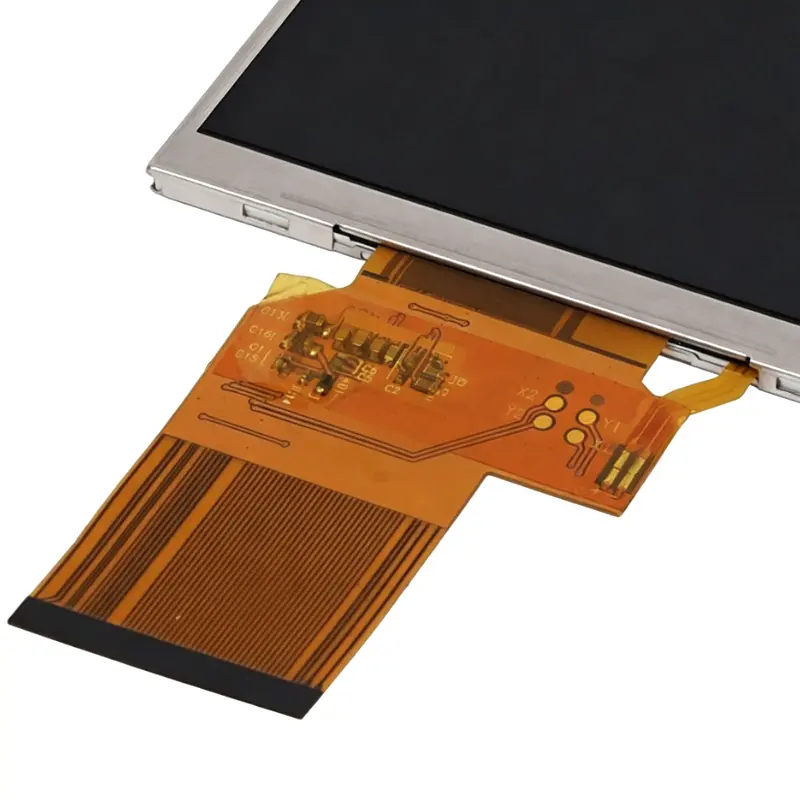
| 54-pin FPC | Provides a defined connector format for PCB and cable design. |
| 300 cd/m² standard brightness | Suitable for many indoor instruments and controller products. |
| Up to 800-nit option | Allows evaluation for brighter equipment locations. |
| Optional RTP or CTP | Supports either durable pressure input or capacitive-touch UI planning. |
| HX8238-D driver IC | Gives hardware teams a confirmed driver reference for bring-up. |
| 50,000-hour backlight | Supports long service planning in continuous-use equipment. |
| -20°C to +70°C operation | Fits many industrial, field, and portable-device environments. |
Technical Specifications of the 3.5-Inch RGB TFT LCM
| Specification | Confirmed Value |
|---|---|
| Display Size | 3.5 inch |
| Resolution | 320 × RGB × 240 |
| Display Mode | TN, normally white, transmissive TFT |
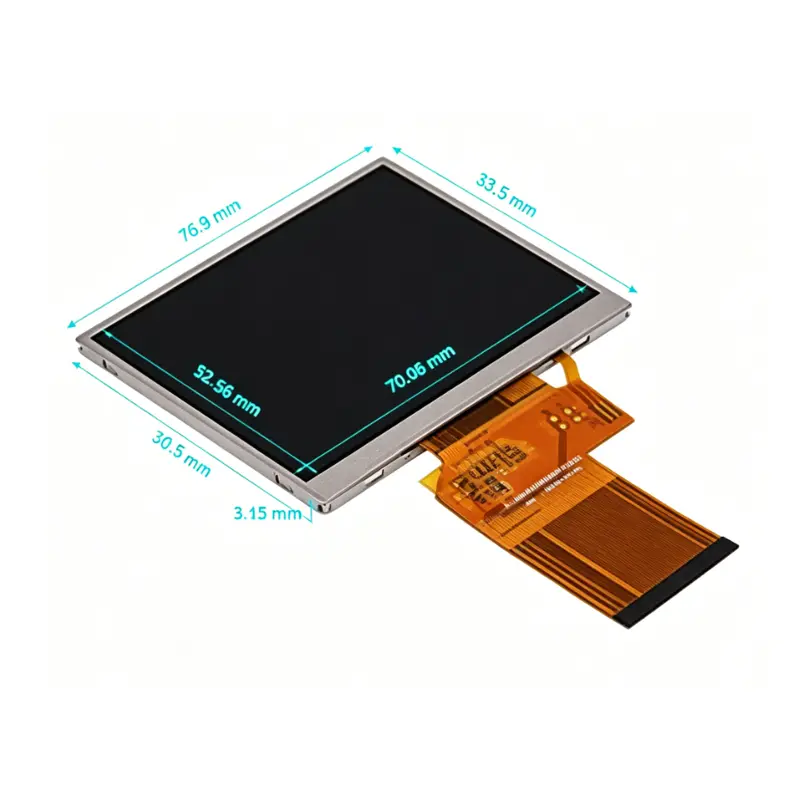
| Active Area | 70.08 × 52.56 mm |
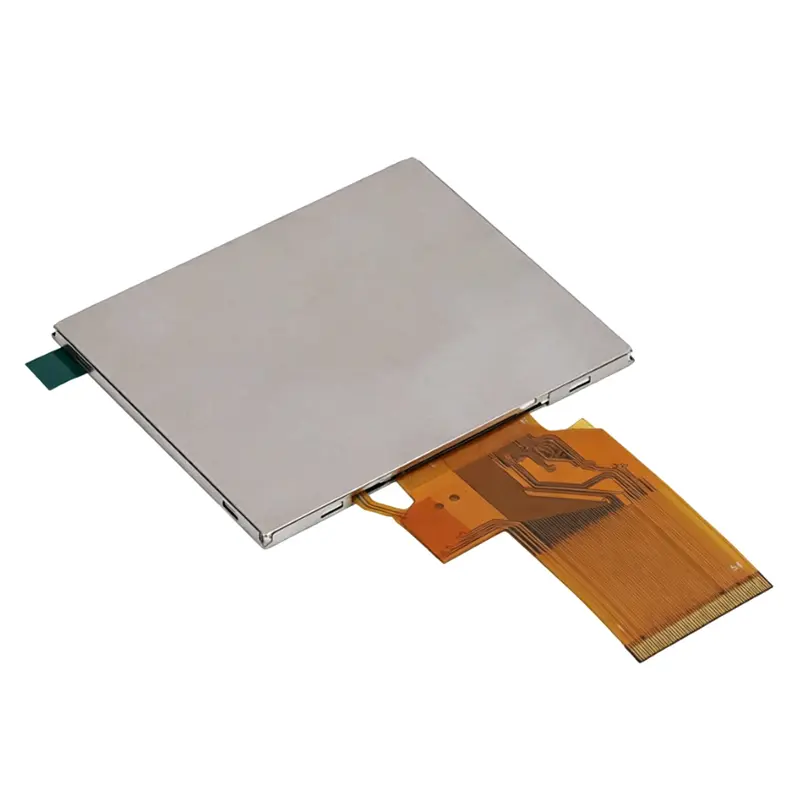
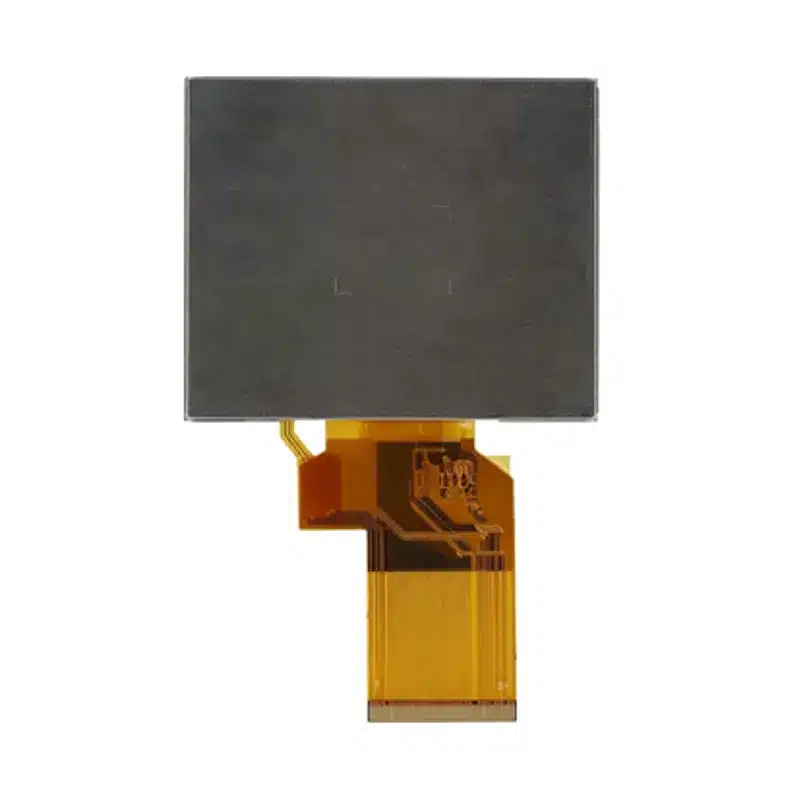
| Module Size | 76.9 × 63.9 × 3.15 mm |
| Brightness | 300 cd/m² standard; up to 800 nits or higher option |
| Contrast Ratio | 300:1 typical |
| Response Time | 10/15 ms typical |
| Viewing Angle | 50/70/70/70 typical |
| Viewing Direction | 6 o’clock |
| Interface | RGB 24-bit, FPC 54 pins |
| TFT Driver IC | HX8238-D |
| Backlight | 6-chip WLEDs, 19.8V/20mA |
| Lifetime | 50,000 hours typical |
| Touch Panel | Optional RTP or CTP |
| Operating Temperature | -20°C ~ +70°C |
| Storage Temperature | -30°C ~ +80°C |
The public specification table includes confirmed high-value parameters only. Before tooling, verify the FPC direction, 54-pin assignment, RGB timing, active-area alignment, cover window, touch overlay option, backlight current, and mechanical tolerance against the final drawing.
Why Choose This 3.5-Inch LCM for Compact Embedded Products?
320×240 UI Space for Small Control Panels
A 3.5-inch 320×240 display is useful when the device needs readable information but cannot accommodate a larger screen. Typical layouts include menu lists, measurement readouts, warning messages, device state, function icons, and simple button-style interfaces. This makes the module suitable for handheld tools, medical handhelds, smart home controls, and compact industrial controllers.
Brightness Planning from Indoor to High-Ambient Use
The standard 300 cd/m² setting is practical for indoor products and controlled environments. For brighter installations, the same product route supports an up-to-800-nit or higher configuration. That makes the Brightness Tunable LCM useful for OEM programs where different product versions may need different luminance levels while keeping the same basic display size and interface plan.
Optional Touch for Cost or Interaction Flexibility
Touch is optional, which gives buyers flexibility. RTP can be considered for stylus, glove, or pressure-input use cases, while CTP can be considered for smoother finger-touch interfaces. The final decision should be based on the input method, cover glass, enclosure design, touch-controller plan, and target cost.
RGB 54-Pin Integration and Backlight Validation
The late-middle integration priority is the RGB signal path. The module uses RGB 24-bit through a 54-pin FPC, so engineers should confirm pinout, signal voltage, clock timing, horizontal and vertical sync, data enable, FPC bend direction, connector orientation, and controller compatibility before PCB layout.
Backlight validation is also important. The source lists a 6-chip WLED backlight with 19.8V/20mA data and a 50,000-hour typical lifetime. If the project chooses a higher-brightness version, the backlight drive, heat path, enclosure ventilation, and optical performance should be rechecked with samples. A brightness upgrade should not be treated as a drop-in change without thermal and electrical validation.
Display Performance for 300-to-800-Nit Configurations
This module uses a TN normally white transmissive TFT structure. TN panels can be cost-effective and responsive, but viewing direction matters. The confirmed 6 o’clock viewing direction and 50/70/70/70 viewing-angle data should be matched to the way users will look at the final device.
For high-ambient environments, brightness alone is not the only factor. UI contrast, font size, cover glass reflection, front-window material, backlight drive, mounting angle, and operating temperature all affect readability. Buyers should test the selected brightness version in the real enclosure before mass production.
Recommended Applications for Embedded RGB Display Projects
Handheld Instruments and Field Devices
Portable test tools, meters, and handheld controllers can use this display for readings, mode selection, alarms, and battery information. The compact 3.5-inch size helps preserve grip comfort and enclosure space.
Industrial Control Panels
Small machine panels and control modules can use the display for operating menus, input prompts, process values, and status indicators. RGB integration should be checked with the selected controller board.
Smart Home and Appliance Interfaces
Smart home panels and appliance interfaces can use the module for settings, schedules, icons, and simple touch or non-touch UI pages. CTP or RTP can be selected according to the product interaction style.
Medical and Portable Equipment
Portable medical or diagnostic devices can use the module for readings and prompts. Final products should validate cleaning method, cover structure, touch behavior, power design, and regulatory requirements separately.
Customization Options for 3.5-Inch RGB LCM Projects
Project evaluation can include FPC customization, RGB timing review, 54-pin pinout and FPC direction, brightness and backlight tuning, RTP or CTP touch selection, cover glass review, mechanical drawing adaptation, packaging, sample validation, and controller-board support. Customization should be based on the final UI, brightness environment, enclosure design, power budget, touch method, quantity, and application conditions.
Procurement and Engineering Checklist
- Confirm the 320×240 UI layout with real fonts, icons, menus, and data fields.
- Verify RGB 24-bit host support, 54-pin FPC pinout, timing, and connector direction.
- Confirm the HX8238-D driver setup and initialization requirements.
- Decide whether the project needs standard 300 cd/m² or a higher-brightness version.
- Validate backlight drive data, especially 6-chip WLEDs and 19.8V/20mA.
- Choose no touch, RTP, or CTP based on input method and front-cover design.
- Check active area, outline size, cover window, FPC bend, and mechanical stack.
- Test samples under the real enclosure, temperature, brightness, and touch conditions.
FAQ
About Brightness Tunable LCM Integration
Is this Brightness Tunable LCM an IPS display?
What interface does the display use?
Is the touch panel included by default?
Can it be used in bright environments?
What does the 6 o’clock viewing direction mean for design?
What should be checked before mass production?
Freya Yang
+86 18318948097