
~
~
~
~
~
~
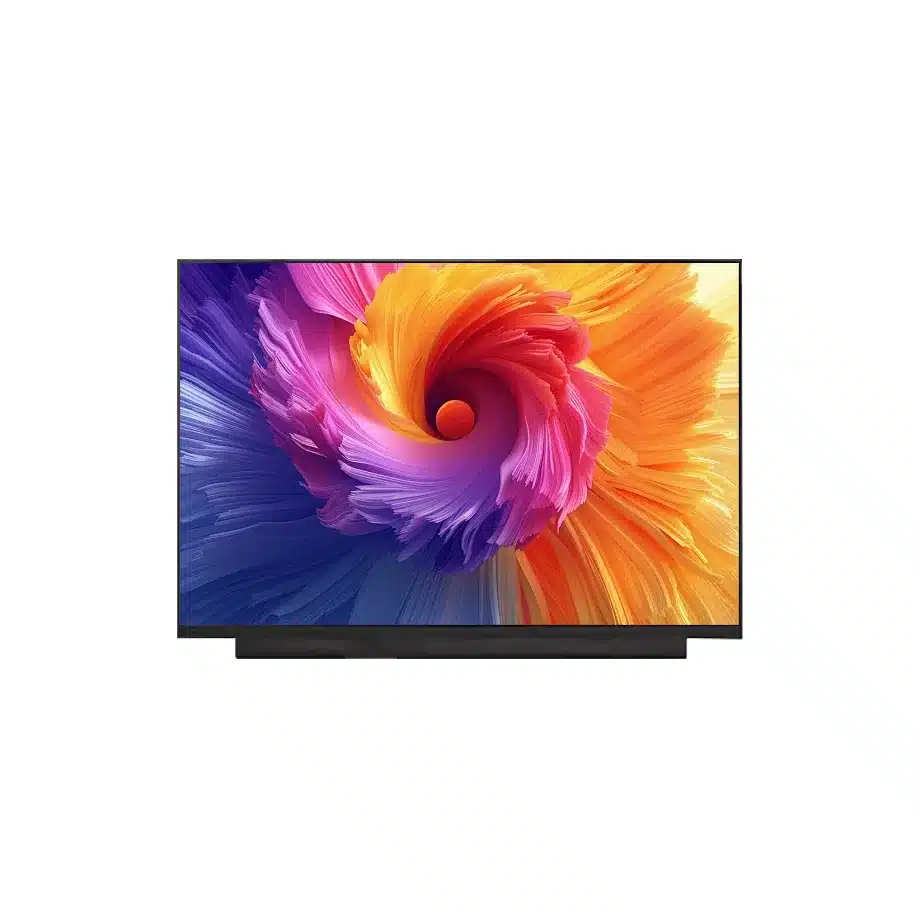
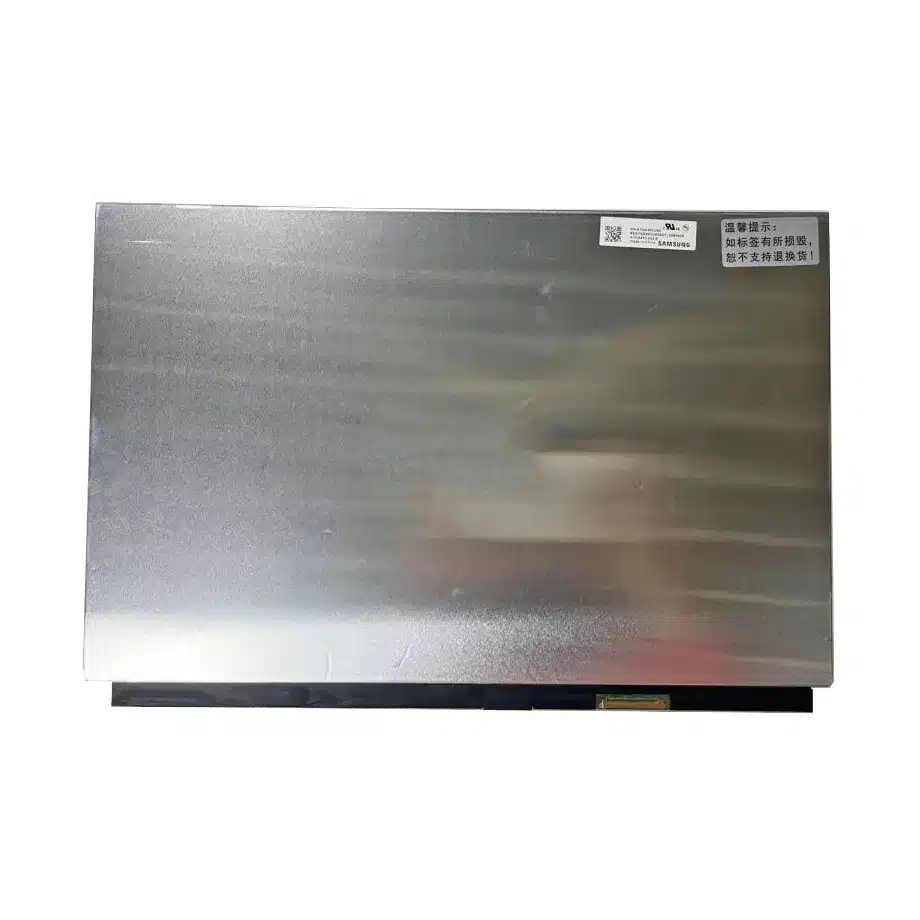
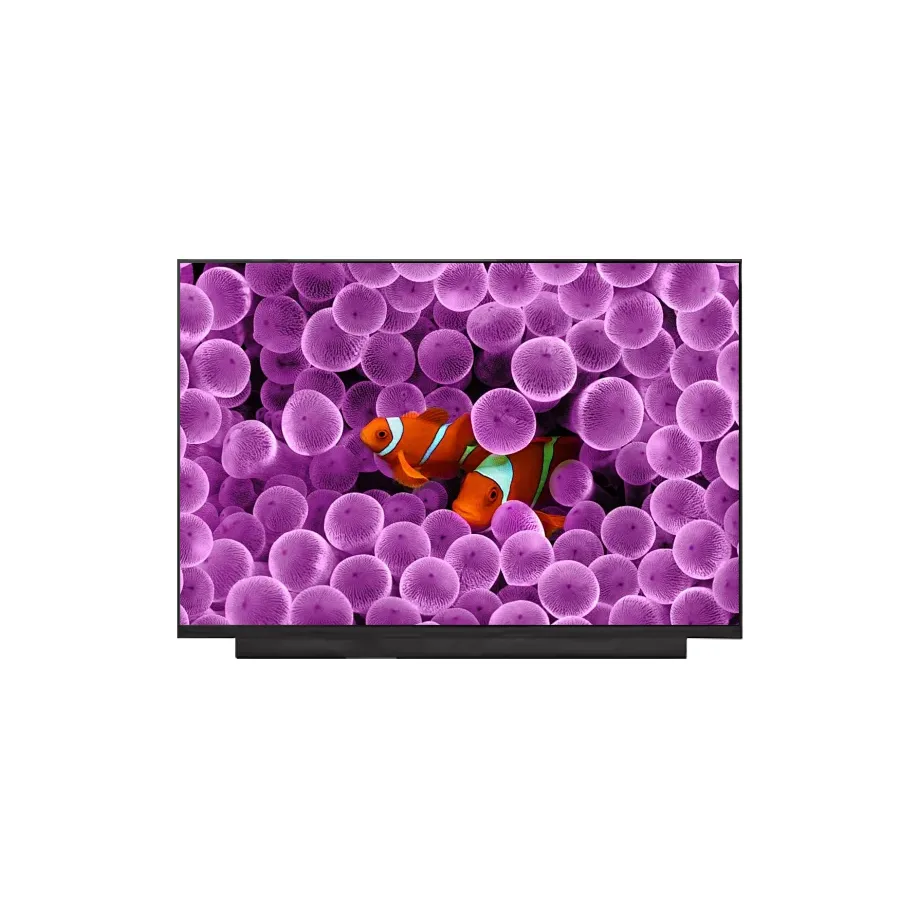
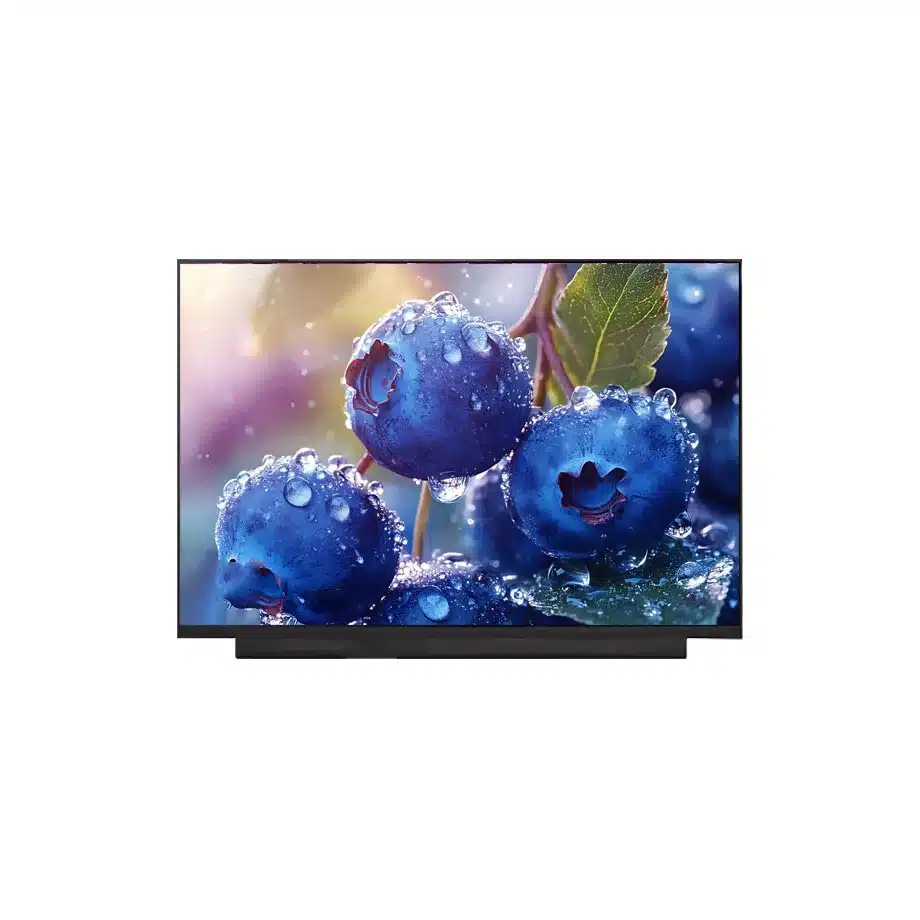
ATNA40CU09-0 HBR3 S-Stripe Gaming OLED 14in Samsung
Model P/N
Size
Resolution
Brightness
Viewing Angle
Connector Type
Operating Temp
Overall(mm)
samsung
ATNA40CU09-0
Brand
Panel Size (inch)
Model P/N
Resolution
Brightness (nits)
Viewing Angle
Contrast Ratio
Response Time
Overall (mm)
Active Area (mm)
Refresh Rate
Display Colors
Panel Type
Connector Type
Surface Treatment
Operating Temp
Touchscreen Type
Storage Temp
Work Mode
Pixel Format
Input Voltage (V)
Weight (g)
Designed For
Product Details
ATNA40CU09-0 HBR3 S-Stripe Gaming OLED is a 14.0-inch Samsung OLED full module with a 2880×1800 native format, 16:10 geometry, 120 Hz refresh, and a four-lane eDP 1.4b HBR3 interface. The same-model application evidence points to laptop and gaming use. For engineers, the combination is useful because resolution, refresh rate, signal link, mechanical envelope, and optical behavior are all explicit enough to build a structured qualification plan rather than relying on a broad “gaming OLED” label.
The panel is self-emissive, without touch, and specified at 400 cd/m² typical luminance with 100000:1 typical contrast wording. Its active area is 301.824 × 188.64 mm and the maximum outline is 305.32 × 195.99 × 3.15 mm. A 149 g maximum mass is also supplied. These are component-level facts; the final notebook's refresh behavior, HDR implementation, color accuracy, latency, battery runtime, and thermal performance depend on the rest of the system.
What makes this 120 Hz OLED technically distinctive?
The native 2880×1800 image and 16:10 format provide a dense workspace while preserving more vertical area than a 16:9 design. The 120 Hz panel rate can support smoother motion when the host GPU and timing path drive the panel correctly. That does not mean every application will run at 120 frames per second or that the finished computer meets a particular esports specification. Graphics workload, frame pacing, interface configuration, and software all remain outside the panel's own specification.
The S-Stripe RGB pixel format and 1.07B / 100% DCI-P3 color wording are also relevant to visual-content projects. They identify the panel's pixel/color class without establishing a calibration certificate. If color accuracy is important, define target white point, transfer function, gamut mode, measurement instrument, and acceptance tolerance, then test the integrated device. The same approach prevents a wide-gamut specification from being misrepresented as guaranteed creator-monitor accuracy.
Three buyer value propositions
Higher refresh with a documented high-rate link
A 120 Hz panel combined with HBR3 eDP gives the host-design team a clear performance target for interface qualification. The buyer benefit is a more specific signal-path requirement than a generic 60 Hz replacement. The boundary is that HBR3 capability still depends on the exact panel timing and host implementation; a connector labeled eDP is not sufficient evidence that a platform can drive this mode.
Compact 16:10 mechanics with known maximum mass
The 305.32 × 195.99 × 3.15 mm maximum outline and 149 g maximum weight give mechanical teams concrete values for lid packaging, cable routing, hinge load, and sample-fit planning. The dimensions help reduce early-stage ambiguity, but mounting details and connector location still require the actual drawing. A nominal 14-inch match is never enough for a drop-in decision.
OLED optics with an explicit no-touch boundary
The module is self-emissive and supplied with a glossy surface, while touch is explicitly absent. This lets procurement distinguish a bare display module from a touch-display assembly. If a project needs touch, the touch sensor, cover glass, controller, mechanical stack, and interface must be specified separately; those capabilities should not be borrowed from a finished laptop that happens to use a similar OLED panel.
Key Specifications at a Glance
| Specification | Approved value |
|---|---|
| Manufacturer / Model | Samsung ATNA40CU09-0 |
| Display type | AM-OLED, OLED (Full Module) |
| Diagonal size | 14.0 inch |
| Native resolution | 2880(RGB)×1800, 16:10, WQXGA+ |
| Active area | 301.824×188.64 mm (H×V) |
| Outline | 305.32×195.99×3.15 mm (W×H×D) |
| Brightness | 400 cd/m² (Typ.) |
| Contrast ratio | 100000:1 (Typ.) |
| Viewing angle | 85/85/85/85 (Typ.)(CR≥10) |
| Response time | 1 ms (Typ.)(Tr+Td) |
| Color | 1.07B, 100% DCI-P3 |
| Refresh rate | 120 Hz |
| Native interface | eDP (4 Lanes), eDP1.4b, HBR3 8.1 Gbit/s/lane, 40-pin 0.5 mm connector |
| Panel supply | 3.3/10 V (Typ.)(VDD/VBAT) |
| Operating temperature | -20 ~ 70 °C |
| Storage temperature | -40 ~ 85 °C |
| Touch | Without touch screen |
How do you validate HBR3 eDP for the ATNA40CU09-0 HBR3 S-Stripe Gaming OLED?
The interface description is eDP with four lanes, eDP 1.4b, HBR3 at 8.1 Gbit/s per lane, and a 40-pin 0.5 mm connector. Start qualification by matching the exact panel pinout and connector orientation. Then check native 2880×1800 timing at the intended refresh mode, AUX-channel behavior, link training, power sequence, and any panel-specific control requirements. Do not substitute a generic 40-pin cable simply because the pin count is equal.
VESA's VESA eDP interface context describes embedded DisplayPort as the internal link between system graphics hardware and embedded panels, and notes its role in high-resolution/high-refresh mobile displays. That background clarifies why link capability matters, but it does not define ATNA40CU09-0's exact electrical implementation. The model datasheet and validated sample remain decisive.
The input supply is listed as 3.3/10 V typical for VDD/VBAT. Treat those rails as separate engineering requirements until the exact electrical tables and sequence are confirmed. A board that can transmit HBR3 video is not automatically capable of providing the required OLED power rails. Signal qualification and power qualification should therefore be tracked as distinct tasks in the design review.
How should a gaming-notebook team read the optical data?
ATNA40CU09-0 HBR3 S-Stripe Gaming OLED has 400 cd/m² typical luminance, a 100000:1 typical contrast figure, and symmetric 85-degree viewing-angle values at CR≥10. These figures describe the module under its specified measurement conditions. A finished notebook can produce different perceived brightness and contrast because of cover layers, reflections, operating mode, power limits, calibration, and ambient light. No sunlight-readable grade or HDR certification is inferred here.
The 1 ms typical Tr+Td response wording is useful when comparing panel classes, but it should not be translated directly into total input latency. End-to-end latency includes scanout, GPU rendering, frame buffering, display processing, and software behavior. For a gaming platform, confirm the panel response measurement basis and test the complete system with the intended refresh mode rather than presenting the component value as a whole-device latency guarantee.
Samsung Display's Samsung Display IT OLED color validation discusses OLED panels for IT use and wide-gamut validation at the portfolio level. That source supports the broader OLED-notebook context. Any certification or color-performance claim on this page remains limited to facts established for the exact ATNA40CU09-0 evidence.
Where does ATNA40CU09-0 HBR3 S-Stripe Gaming OLED fit best?
The evidence supports laptop and gaming-notebook integration. That is a reasonable application because the panel's 14-inch 16:10 format, 120 Hz rate, compact outline, and eDP link align with mobile-PC architecture. It should not be reclassified as an automotive, medical, military, rugged, or industrial-grade panel without separate exact-model qualification evidence. Even the -20 to 70 °C operating-temperature range does not by itself establish a vertical certification.
For replacement use, prioritize exact model and revision identity. A different 14-inch 2880×1800 OLED may have another connector position, pin assignment, power sequence, outline, firmware expectation, or pixel arrangement. If an alternate is required, create an interchange matrix covering mechanics, eDP link, power, optical targets, refresh modes, touch state, temperature limits, and documentation before approving the substitution.
A sample-approval sequence for engineering and procurement
- Confirm Samsung ATNA40CU09-0 identity and obtain the correct drawing/electrical specification.
- Check the 305.32 × 195.99 × 3.15 mm maximum outline, active area, weight, connector position, and cable path.
- Verify 2880×1800 timing and the intended 120 Hz mode over four-lane HBR3 eDP 1.4b.
- Validate VDD/VBAT rails and power sequencing before repeated power cycling.
- Inspect brightness, reflection behavior, color mode, viewing angle, and motion response in the final optical assembly.
- Record no-touch status so purchasing does not substitute a touch assembly by assumption.
- Run environmental checks against the documented -20 to 70 °C operating and -40 to 85 °C storage limits.
Procurement Checklist
Send the host platform, original display model where applicable, graphics/timing capability, cable part number, connector photographs, mechanical envelope, target refresh modes, sample quantity, annual volume, and program timing. Request explicit confirmation for any item that is essential to interchangeability. Keep commercial questions such as current stock, MOQ, lead time, production continuity, PCN/EOL handling, and second-source policy separate from the technical data unless a supplier provides current evidence.
This separation matters because a panel can be technically suitable while the supply plan is unsuitable, or commercially available while electrically incompatible. A disciplined RFQ lets engineering and procurement close both categories of risk without turning a temporary stock listing into a lifecycle commitment.
Control the 120 Hz configuration as a released system requirement
For a high-refresh notebook program, document the approved timing mode together with the panel revision, graphics platform, cable, firmware build, and power configuration used during validation. That record prevents a later sourcing change from being judged only by diagonal and resolution. If an alternate OLED is proposed, repeat link training, refresh-mode, sleep/wake, power-cycle, optical, and mechanical checks under the same acceptance conditions. Keep the 120 Hz requirement distinct from application frame rate: the panel can be specified for 120 Hz while a workload renders at a lower or variable rate. Clear configuration control gives both engineering and procurement a reproducible basis for accepting production lots and investigating field differences.
Quick engineering answers
Samsung ATNA40CU09-0 is a 14.0-inch 2880×1800 self-emissive OLED module specified for 120 Hz operation and laptop/gaming applications.
The native interface is four-lane eDP 1.4b HBR3 through a 40-pin 0.5 mm connector, so host link capability and exact pin mapping require validation.
ATNA40CU09-0 HBR3 S-Stripe Gaming OLED is specified without touch, and a touch overlay or touch controller should be treated as a separate integration scope.
The panel's -20 to 70 °C operating range is a component limit, not evidence of automotive or other special qualification.
ATNA40CU09-0 HBR3 S-Stripe Gaming OLED should move to volume sourcing only after the exact module, host timing, power rails, mechanical stack, optical targets, and application environment have been verified together. That process preserves the real advantages of a high-refresh OLED panel without converting component specifications into unsupported finished-system promises.
Recommended: Same Size
(14")
Applications & Value of LCD Panel

- Fast sourcing with in-stock panels & cross-reference alternatives
- Stable supply chain with long-term availability
- Engineering-level support from panel to integration
- Custom solutions: cable, touch & optical bonding
- Strict quality control with IQC / OQC / aging test
- Full traceability system for quality assurance
- Complete technical documentation & drawings
- Compliance support: RoHS & certification files
