~
~
~
~
~
~
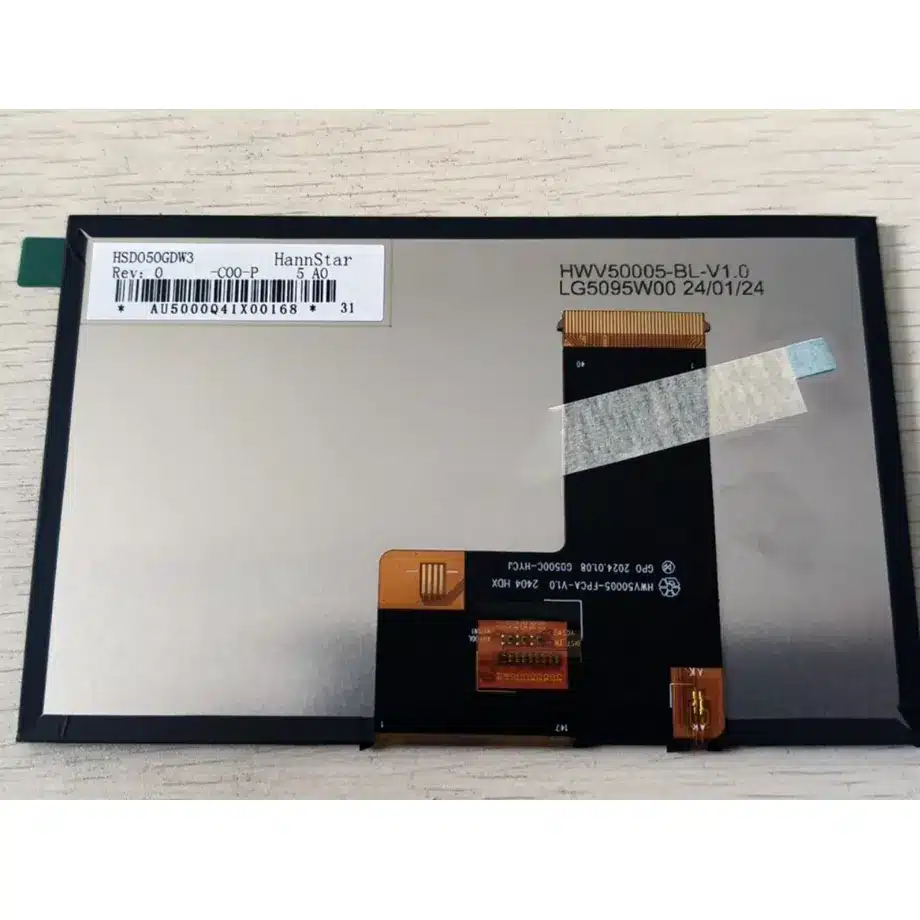
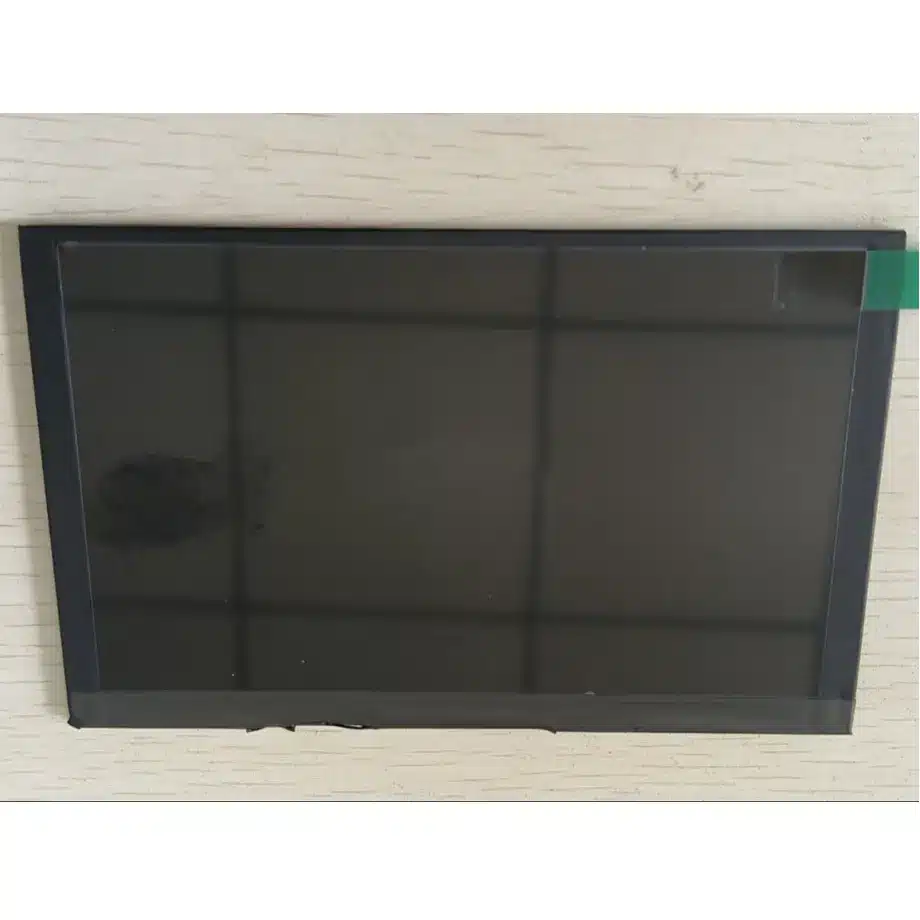
HSD050GDW3-C00-P Outdoor Wide-Temp RGB Module HannStar
Model P/N
Size
Resolution
Brightness
Viewing Angle
Connector Type
Operating Temp
Overall(mm)
hannstar
HSD050GDW3-C00-P
Brand
Panel Size (inch)
Model P/N
Resolution
Brightness (nits)
Viewing Angle
Contrast Ratio
Response Time
Overall (mm)
Active Area (mm)
Refresh Rate
Display Colors
Panel Type
Connector Type
Surface Treatment
Operating Temp
Touchscreen Type
Storage Temp
Work Mode
Pixel Format
Input Voltage (V)
Vibration Resistance
Designed For
Product Details
HSD050GDW3-C00-P Outdoor Wide-Temp RGB Module is a 5.0-inch HannStar a-Si TFT-LCD module documented for Outdoor High Brightness and Automotive Display applications. The exact-model parameters combine 800×480 WVGA resolution, 1000 cd/m² typical luminance, IPS Pro normally-black transmissive operation and a parallel RGB 8-bit interface through a 40-pin 0.5 mm FPC. The active area is 108 × 64.8 mm within a 120.7 × 75.8 × 3 mm outline. The module is specified for -30 to 85°C operation and storage, with 2.9G vibration resistance, while its 6S4P WLED backlight is supplied without a driver and carries a 30K-hour light-source reference.
Outdoor high-brightness and automotive application evidence
The current exact-model evidence explicitly identifies Outdoor High Brightness and Automotive Display use. That supports evaluation in vehicle displays and outdoor-facing embedded equipment where compact size, 1000-nit luminance and wide temperature are relevant. It does not by itself prove automotive certification, sunlight-readable compliance to a formal standard, OEM approval or functional-safety qualification. Those claims require separate program evidence.
The 5-inch format and parallel RGB interface also suit embedded architectures where the controller exposes direct pixel data rather than eDP or MIPI. Designers should verify timing, voltage, FPC mapping and backlight requirements against the exact HannStar specification before PCB release.
Three Core Buyer Value Propositions
1. 1000-nit luminance gives strong headroom for bright ambient environments
The panel is specified at 1000 cd/m² typical luminance, which is a meaningful high-brightness component value for a compact display. Combined with its documented Outdoor High Brightness application, this supports engineering evaluation for brighter ambient conditions. Final readability still depends on front-surface reflectance, cover materials, optical bonding or air gaps and display angle, so system-level outdoor visibility should be measured on the completed product.
2. -30 to 85°C operation supports harsh-temperature integration
The same -30 to 85°C range is specified for operation and storage, providing a broad component window for vehicle and outdoor embedded use. Local display temperature should still be measured under solar load, enclosure heating, cold soak and electronics self-heating. A wide component range does not automatically establish compliance with any particular automotive or industrial environmental standard.
3. 2.9G vibration data and compact RGB interface aid mobile embedded design
The source lists 2.9G (28.4 m/s²) vibration and a one-channel 8-bit parallel RGB interface through a 40-pin FPC. Those facts give mechanical and controller teams concrete integration references. The vibration figure is not a substitute for a named system-level test profile; mounting resonance, cable retention and enclosure design still need validation in the actual product.
Key Specifications at a Glance
| Specification | HSD050GDW3-C00-P value |
|---|---|
| Display size | 5.0 inch |
| Panel type | a-Si TFT-LCD, LCM |
| Resolution | 800×480 WVGA, 15:9 |
| Active area | 108 × 64.8 mm |
| Outline | 120.7 × 75.8 × 3 mm |
| Brightness | 1000 cd/m² typical |
| Contrast | 1000:1 typical |
| Viewing angle | 80/80/80/80 typical at CR≥10 |
| Response | 30 ms typical Tr+Td |
| Colors | 16.7M, 50% NTSC |
| Refresh rate | 60 Hz |
| Interface | Parallel RGB, 1 ch, 8-bit, 40-pin 0.5 mm FPC |
| Supply | 3.3 V typical |
| Backlight | 6S4P WLED, 30K hours, no driver |
| Operating / storage | -30 to 85°C / -30 to 85°C |
| Vibration | 2.9G (28.4 m/s²) |
High brightness is not the same as a finished sunlight-readable guarantee
The 1000-nit rating and Outdoor High Brightness application are strong evidence for a bright component, but readability in direct sun is a system characteristic. A reflective cover window, large air gap or poor viewing angle can reduce perceived contrast even when panel luminance is high. If outdoor readability is a hard product requirement, measure the completed optical stack at the specified ambient illumination and viewing geometry.
HSD050GDW3-C00-P Outdoor Wide-Temp RGB Module should therefore be described as a high-brightness automotive/outdoor module without inventing a certification or guaranteed ambient-contrast figure. Optical bonding, anti-reflection treatment and enclosure shading are separate engineering decisions that need their own evidence.
Parallel RGB controller integration
The native signal is one-channel 8-bit parallel RGB through a 40-pin 0.5 mm FPC. Controller selection should confirm pixel clock, horizontal/vertical timing, color mapping, sync polarity and the exact FPC pinout. “RGB” is not a universal pin-compatible interface; embedded controllers can expose different voltage levels and timing conventions.
Bring-up should include cold start, repeated power cycles, display enable/disable and sustained 60 Hz operation. Keep the approved timing configuration with the panel revision so later controller-firmware changes can be checked against a known baseline.
Backlight driver is a system responsibility
The 6S4P WLED backlight is supplied without a driver, so the host system must provide a compatible constant-current LED driver, dimming scheme and fault protection. The panel logic supply is 3.3 V typical, but the LED string requirements must be taken from the exact HannStar specification rather than inferred from the string notation alone.
The 30K-hour reference belongs to the light source and should not be expanded into a finished-display lifecycle guarantee. LED current, thermal conditions and brightness profile can influence long-term backlight behavior.
Wide-temperature qualification
A -30 to 85°C operating range is valuable for vehicle cabins and outdoor equipment, but real products can create local hot spots around processors, power electronics and sealed enclosures. Thermal validation should measure the display itself through cold soak, hot soak and expected operating loads. Check startup, response, image uniformity and backlight behavior at relevant temperature points.
Storage and operation share the same listed range in the user-supplied record. That fact should still be used as a component boundary rather than proof of a specific environmental standard.
Vibration, mounting and cable retention
The 2.9G component vibration value provides a useful mechanical screening reference. Final mounting can amplify stress through resonance, so brackets, bezel supports, FPC strain relief and connector retention should be tested under the actual application profile. The page does not claim compliance to an unspecified automotive vibration standard.
The module outline is 120.7 × 75.8 × 3 mm, while mass is listed as TBD and therefore remains blank in production data. That avoids converting an unresolved source value into a fabricated number. Mechanical calculations should use an approved sample or exact drawing if mass is needed.
Automotive application without unsupported certification claims
Automotive Display is a documented application and supports taxonomy and use-case discussion. It does not establish AEC qualification, ISO 26262 compliance, OEM approval, EMC certification or vehicle-specific change-control commitments. Those requirements belong to the finished system and sourcing program and need direct evidence.
Vehicle integration should additionally assess dimming range, night readability, power transients, EMC, temperature cycling and optical performance through any cover lens. The LCD module is one component within that broader system.
Outdoor embedded equipment use
Outdoor High Brightness is also documented for the exact model. This can include outdoor instrumentation, portable equipment or fixed embedded terminals when the parallel RGB interface and environmental limits fit the system. Because no specific industrial certification is supplied, public copy should describe application potential without claiming certified industrial grade.
The no-touch configuration means interactive systems require a separately engineered touch sensor. Adding touch changes front-surface reflections, thickness and optical transmission, so brightness and environmental performance should be rechecked after the touch stack is added.
Procurement and incoming-quality controls
Confirm HSD050GDW3-C00-P on the incoming label and compare the 40-pin FPC, rear construction and 120.7 × 75.8 mm outline to the approved sample. Record the panel revision, controller timing and backlight-driver design together. Similar HSD050GDW3 revisions should not inherit exact values without their own evidence.
HSD050GDW3-C00-P Outdoor Wide-Temp RGB Module should enter production only after high-brightness optics, RGB timing, backlight driving, wide-temperature behavior and mechanical vibration have been validated on the intended system. Commercial stock, price, MOQ and lifecycle should be confirmed separately at sourcing time.
Qualification sequence for outdoor and vehicle prototypes
Prototype validation should separate optical, electrical and environmental questions. Establish stable 800×480 RGB timing and backlight drive at room temperature first, then measure luminance and visibility through the final cover stack. After that, repeat startup and image checks at the temperature limits relevant to the product, followed by vibration testing on the assembled mounting structure. This order makes root-cause analysis easier if a fault appears under stress. Keep test photos, timing settings, LED-driver configuration and the panel revision together so later supplier lots can be compared against the same controlled reference.
Optical-stack changes require remeasurement
If the product adds cover glass, anti-reflection treatment, optical bonding or a touch sensor, repeat luminance and ambient-visibility testing after the final stack is assembled. Each added layer can change transmission, reflections and viewing behavior. The 1000-nit LCD specification remains the component baseline, but the user sees the complete system. This distinction is particularly important in vehicle and outdoor equipment where ambient illumination can vary dramatically across the operating day.
For field-facing products, repeat key optical checks after environmental testing because thermal or mechanical stress can alter the complete assembly even when the LCD itself remains electrically functional.
Engineering summary
HSD050GDW3-C00-P Outdoor Wide-Temp RGB Module combines a 5-inch 800×480 IPS Pro image, 1000-nit luminance, parallel RGB control, -30 to 85°C operation, 2.9G vibration and an external-backlight-driver requirement. Its exact-model evidence supports Outdoor High Brightness and Automotive Display integration while keeping certification and final sunlight-readability claims at the system level where they belong.
Recommended: Same Size
(5")
Applications & Value of LCD Panel

- Fast sourcing with in-stock panels & cross-reference alternatives
- Stable supply chain with long-term availability
- Engineering-level support from panel to integration
- Custom solutions: cable, touch & optical bonding
- Strict quality control with IQC / OQC / aging test
- Full traceability system for quality assurance
- Complete technical documentation & drawings
- Compliance support: RoHS & certification files