
~
~
~
~
~
~
M241HTN01.9 600Hz Eight-Lane HBR2 TN eSports Display AUO
Model P/N
Size
Resolution
Brightness
Viewing Angle
Connector Type
Operating Temp
Overall(mm)
auo
M241HTN01.9
Brand
Panel Size (inch)
Model P/N
Resolution
Brightness (nits)
Viewing Angle
Contrast Ratio
Response Time
Overall (mm)
Active Area (mm)
Refresh Rate
Display Colors
Panel Type
Connector Type
Surface Treatment
Operating Temp
Touchscreen Type
Storage Temp
Work Mode
Pixel Format
Input Voltage (V)
Vibration Resistance
Weight (g)
Designed For
Product Details
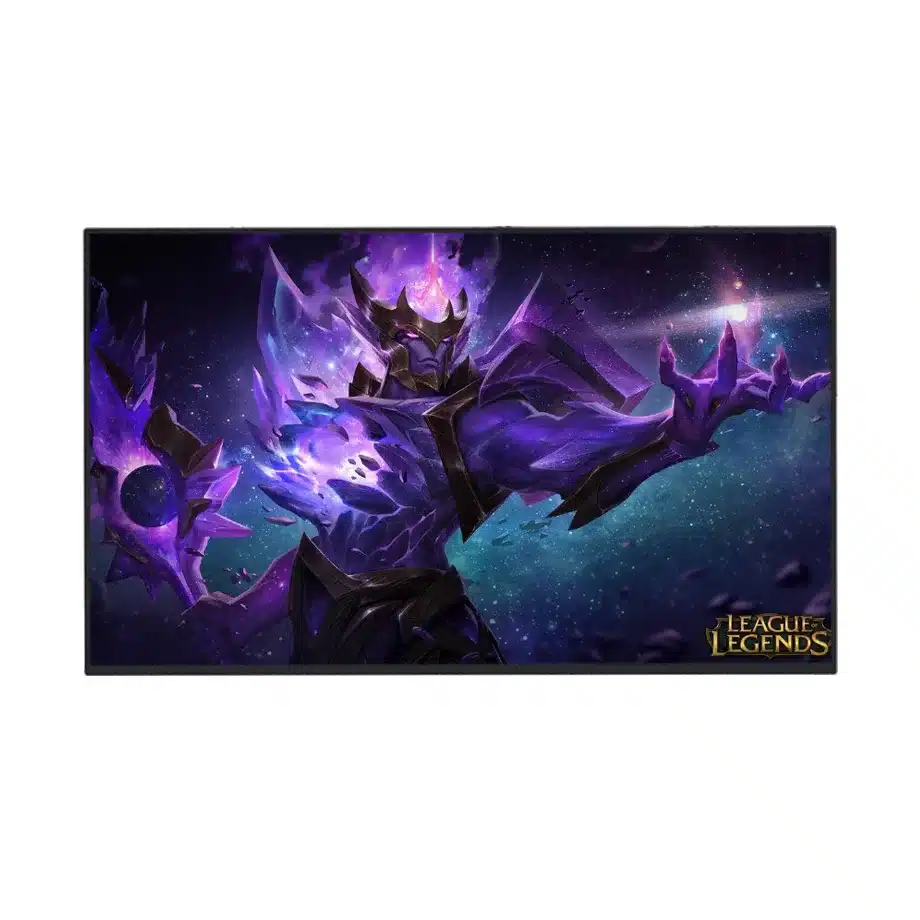
M241HTN01.9 600Hz Eight-Lane HBR2 TN eSports Display is a 24.1-inch AUO a-Si TFT-LCD module documented for desktop monitor and gaming use. Its FHD 1920×1080 image is paired with a 600 Hz refresh specification, an eight-lane eDP HBR2 interface, 350 cd/m² typical luminance and 90% DCI-P3 wording. The panel uses TN normally-white transmissive operation and a fast 1.7/0.8 ms Tr/Td response set, so high-refresh timing and viewing geometry need to be qualified together.
This module is electrically different from common four-lane monitor eDP designs. It uses an eight-lane HBR2 path through a 51-pin 0.5 mm connector and a 10.0 V panel supply, while the WLED backlight is supplied without its own driver. The product architecture therefore needs a scaler/interface path, a separate LED-power design and exact mechanical support for the 552.49×319.58×13.95 mm outline.
Three buyer value propositions
600 Hz refresh target for extreme-frame-rate gaming platforms
The documented 600 Hz specification gives monitor engineers a precise high-refresh target for competitive-gaming development. Buyer value comes from knowing that the panel, scaler path and cable must be treated as a dedicated high-bandwidth system rather than a conventional FHD monitor. The shipping product should validate the real timing set and source behavior on the production electronics.
Eight-lane HBR2 transport with a 51-pin connector
Eight HBR2 lanes at 5.4 Gbit/s per lane distinguish this module from many desktop eDP panels. That provides a clear routing and connector requirement for the scaler/interface board. It also raises signal-integrity expectations, making cable construction, pin mapping, grounding and connector retention central to first-article approval.
90% DCI-P3 wording with a fast TN response profile
The panel combines 90% DCI-P3 wording, 350 cd/m² typical luminance and a 1.7/0.8 ms Tr/Td response. These component facts can support a gaming-monitor optical and motion baseline, while the TN viewing-angle limits and final color calibration still need system-level acceptance testing.
Key Specifications at a Glance
M241HTN01.9 600Hz Eight-Lane HBR2 TN eSports Display should be qualified against the following exact-model baseline before production release.
| Brand | AUO |
|---|---|
| Model P/N | M241HTN01.9 |
| Size | 24.1 inch |
| Resolution | 1920(RGB)×1080, FHD, 16:9 |
| Active Area | 535.68×298.08 mm (H×V) |
| Overall | 552.49×319.58×13.95 mm |
| Brightness | 350 cd/m² (Typ.) |
| Viewing Angle | 85/85/80/80 (Typ.)(CR≥10) |
| Display Colors | 16.7M, 90% DCI-P3 |
| Weight | 1.77 kg (Typ.) |
| Refresh Rate | 600 Hz |
| Connector / Native Interface | eDP (8 Lanes), HBR2 (5.4G/lane), 51 pins 0.5 mm connector |
| Input Voltage | 10.0 V (Typ.) |
| Operating Temperature | 0 ~ 50 °C |
| Storage Temperature | -20 ~ 60 °C |
| Vibration | 1.5G (14.7 m/s²) |
| Panel Type | a-Si TFT-LCD, LCM |
| Pixel Format | RGB Vertical Stripe |
| Surface Treatment | Antiglare (Haze 25%), Hard coating (3H) |
| Contrast Ratio | 1000:1 (Typ.) |
| Response Time | 1.7/0.8 ms (Typ.)(Tr/Td) |
| Work Mode | TN, Normally White, Transmissive |
| Backlight / Emission | 30,000 hours (WLED, no integrated driver) |
| Total Power | 24.54 W (Typ.) |
| Designed For | Desktop monitor and gaming monitor integration; 600 Hz high-refresh TN platforms |
| Touchscreen Type | Without touch screen |
Building the eight-lane HBR2 link
Treat the panel-facing connection as a high-speed electrical design. Verify every lane, AUX/control requirement, the 51-pin connector assignment and the 10.0 V supply using the exact documentation. Route the production cable in its real chassis path and test repeated boot, source changes and long high-refresh workloads. A prototype cable on an open bench may not represent loss or crosstalk inside the finished monitor. Preserve the cable revision and scaler firmware with the approved configuration.
Verifying the 600 Hz timing without assuming source behavior
The panel refresh specification defines the component target, but the monitor’s external input, scaler and GPU path determine which end-to-end modes can actually be delivered. Build a timing matrix for the source interfaces the product will expose and confirm the panel-facing output at each supported mode. Test recovery after resolution changes, sleep and source loss. Do not turn a panel refresh number into a universal promise that every external source or cable format will sustain the same frame rate.
TN viewing geometry in a gaming chassis
The panel provides 85/85/80/80 typical viewing-angle data rather than fully symmetric 89-degree values. Evaluate the display at the player’s normal eye height, desk distance and vertical adjustment range. A gaming monitor stand can change the viewing relationship materially. Test dark scenes, grayscale and color shifts at realistic angles before the bezel and stand design are locked. Mechanical tilt capability can be part of the system solution, but it should not be used to rewrite the panel’s documented viewing behavior.
Motion acceptance using the documented Tr/Td response
The 1.7/0.8 ms Tr/Td figures are exact-model response data and should remain distinct from refresh rate. Use pursuit-camera or instrumented motion checks where available, plus representative game scenes, to look for transition artifacts, smearing and any scaler overdrive interaction. Do not invent a G2G or MPRT number that is not provided. The fastest visual result depends on the complete drive implementation, not just the two transition figures in the component record.
Backlight-driver ownership and brightness control
The WLED backlight carries a 30,000-hour component rating and is supplied without an integrated driver. Design the LED power stage from the exact backlight electrical requirements, then qualify the intended brightness curve, startup behavior and thermal load. The 10.0 V panel supply is not a substitute for the LED-drive specification. High-refresh operation can increase scaler and interface-board heat, so evaluate the display and backlight electronics together under a sustained gaming workload.
DCI-P3 coverage versus calibrated color
Use 90% DCI-P3 wording as a component gamut target. The finished monitor still needs its own white-point, gamma and color-error process if those attributes are marketed. Measure at the user-facing surface and at the brightness settings selected for the product. The 350 cd/m² typical luminance is a useful baseline for indoor gaming monitors, but it does not establish HDR certification or sunlight-readable performance. Keep color coverage, calibration and dynamic-range claims separated.
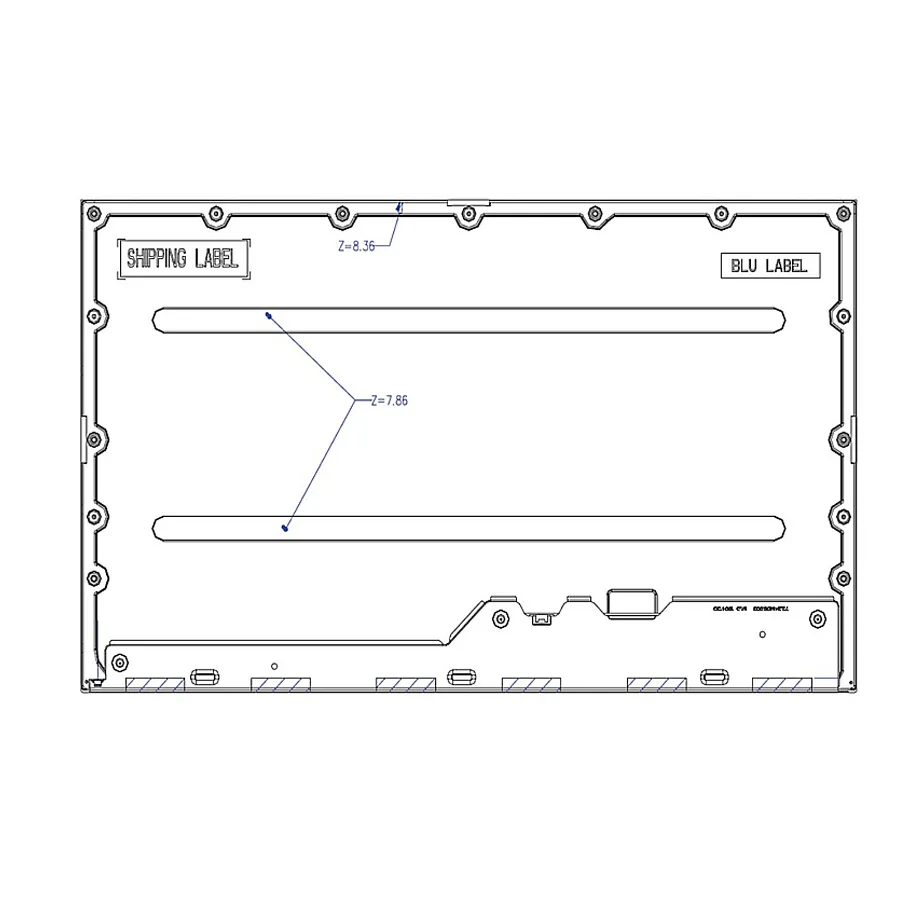
Mechanical fit for the 24.1-inch module
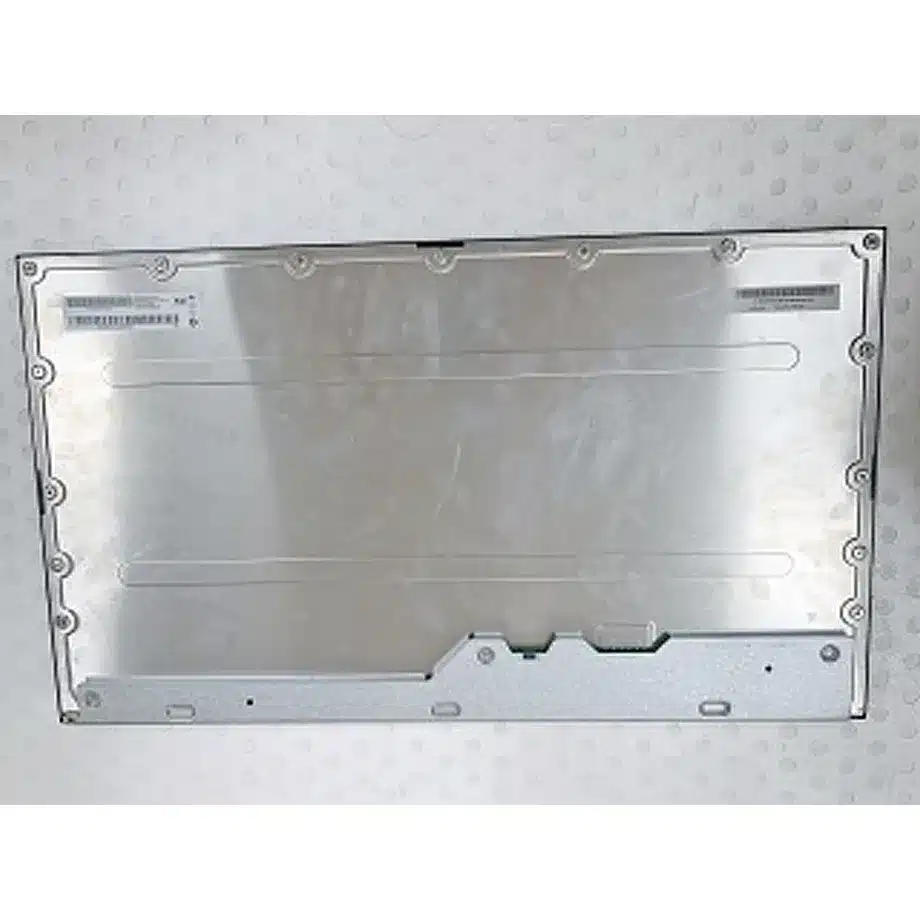
The 552.49×319.58×13.95 mm outline and 1.77 kg typical mass require deliberate support. Check rear housing stiffness, bezel contact, connector clearance and cable retention, especially because a high-speed multi-lane harness can be less tolerant of sharp bends or strain. Repeated stand adjustment and handling tests should not transfer force into the connector. Use the exact drawing for mounting datums rather than assuming a 24-inch gaming chassis is standardized.
Power and thermal budgeting
The supplied panel record lists 24.54 W typical total power. Use that value as a component input, then add scaler, interface, LED-driver and auxiliary electronics for the finished monitor budget. Measure panel-area and board temperatures at the intended maximum refresh and brightness. The operating range is 0 to 50 °C at the component, not an ambient-room guarantee. Thermal control should preserve image stability and cable margin through long gaming sessions.
Incoming inspection for an unusual high-refresh configuration
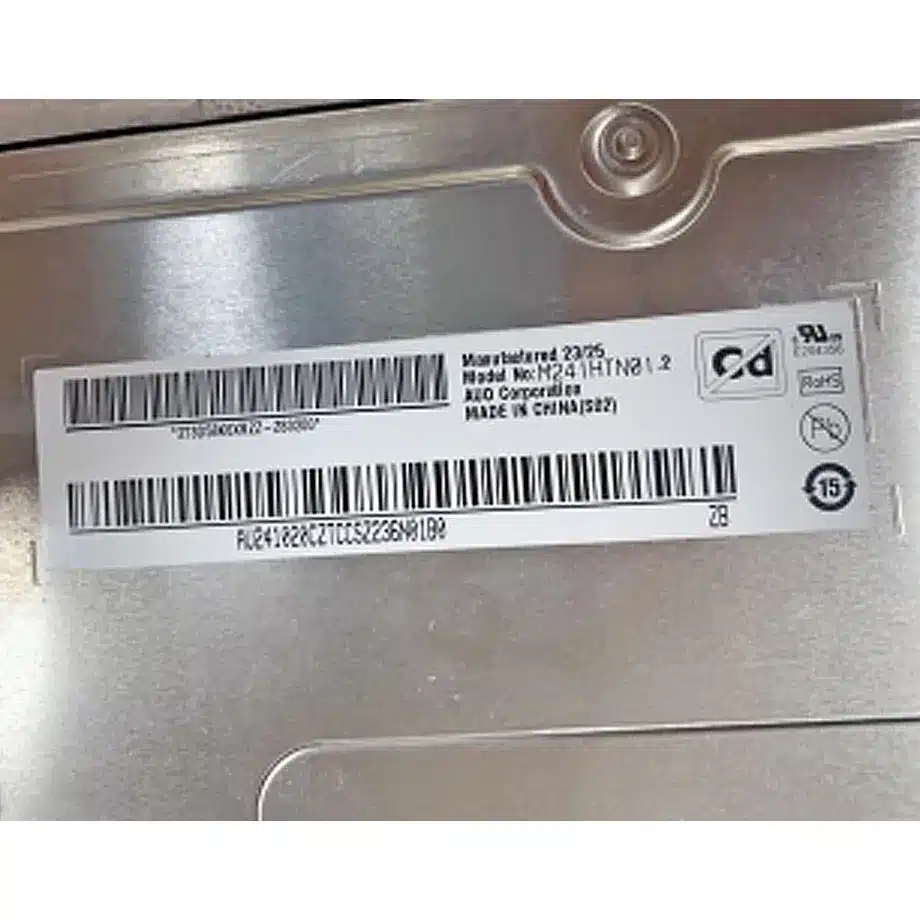
Because the eight-lane interface and 600 Hz timing are distinctive, incoming sample checks should verify the exact model identity before electrical testing. Confirm connector type, panel label, physical condition and agreed cosmetic limits. A quick functional check at the approved high-refresh mode can detect configuration drift. Do not use marketplace stock status as lifecycle evidence; separate sourcing availability from the technical question of whether the incoming part matches the released module.
Release and replacement evidence
For M241HTN01.9 600Hz Eight-Lane HBR2 TN eSports Display, retain the AUO drawing, 51-pin cable, eight-lane mapping, scaler firmware, approved timing set, LED-driver design, color/motion acceptance and thermal results. A future 24-inch FHD gaming panel must be compared against this record. Similar resolution or a high advertised refresh rate cannot establish interchangeability when lane count, supply voltage, connector geometry and mechanical package differ.
Lane-to-lane integrity and harness construction
An eight-lane HBR2 path increases the number of high-speed conductors that must remain correctly mapped and electrically balanced. Review differential-pair routing, return paths, connector insertion and harness construction as a single signal chain. During first article, test the shipping cable after it has been installed through the real enclosure rather than relying only on a development fixture. This is especially important when the monitor also contains high-current LED-driver or power-conversion circuits nearby.
High-refresh source switching and fallback behavior
Test how the finished monitor behaves when the host requests unsupported or lower-rate timings, when the source cable is reconnected, and when the system resumes from power save. The scaler should return to a documented supported mode without leaving the panel blank or unstable. These checks separate a robust product implementation from a panel-only demonstration and help support teams diagnose field reports without assuming that every failure is caused by the LCD itself.
Manufacturing screen for a 600 Hz platform
Production does not need to repeat full engineering qualification on every unit, but it should retain a practical high-refresh screen. Confirm exact panel identity, successful native timing, stable image output and basic brightness control on sampled units. If a lot shows a different connector, link-training behavior or motion artifact, stop automatic release and compare it with the golden sample before changing firmware or cable settings.
Engineering and sourcing review
M241HTN01.9 600Hz Eight-Lane HBR2 TN eSports Display should remain tied to the exact interface, mechanical evidence, optical acceptance and system configuration used during qualification. Preserve the approved cable, drawing, firmware or scaler baseline, and rerun the affected checks whenever those dependencies change. This approach supports controlled sourcing without implying universal compatibility, certification, guaranteed lifecycle, stock, MOQ or lead time.
Recommended: Same Size
(24.1")
Applications & Value of LCD Panel

- Fast sourcing with in-stock panels & cross-reference alternatives
- Stable supply chain with long-term availability
- Engineering-level support from panel to integration
- Custom solutions: cable, touch & optical bonding
- Strict quality control with IQC / OQC / aging test
- Full traceability system for quality assurance
- Complete technical documentation & drawings
- Compliance support: RoHS & certification files
