
~
~
~
~
~
~
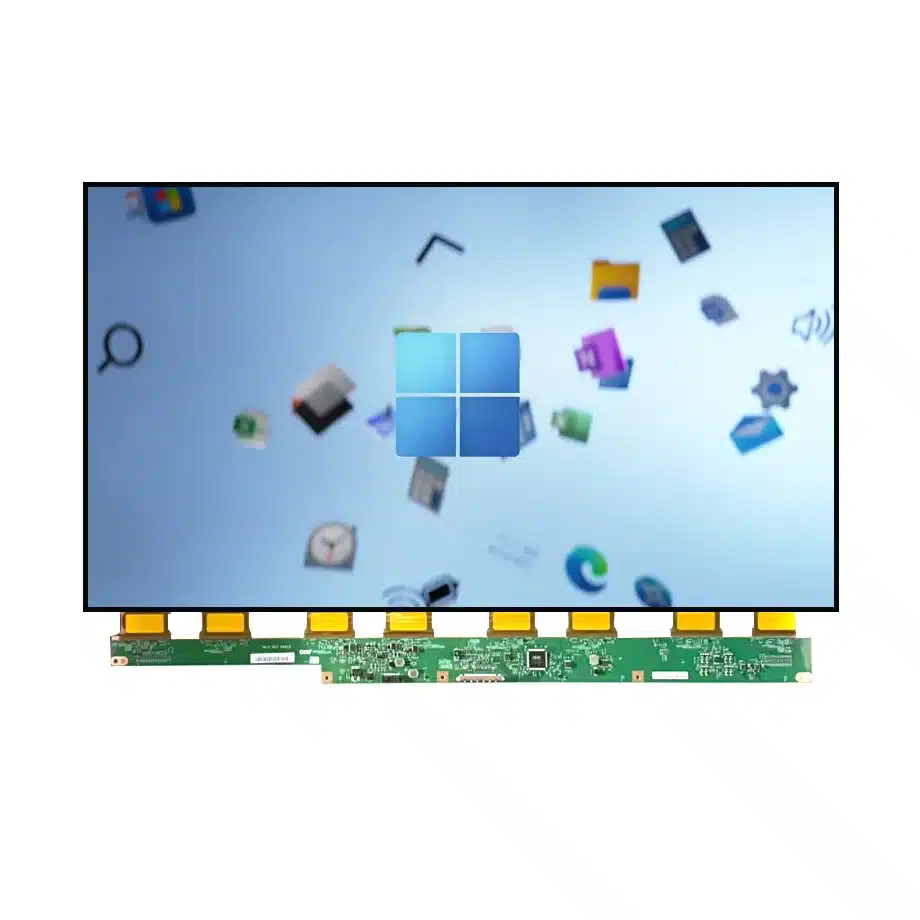
M270DAN12.0 CELL 100Hz Quad-LVDS FOB Open-Cell Glass AUO
Model P/N
Size
Resolution
Brightness
Viewing Angle
Connector Type
Operating Temp
Overall(mm)
auo
M270DAN12.0 CELL
Brand
Panel Size (inch)
Model P/N
Resolution
Viewing Angle
Contrast Ratio
Response Time
Overall (mm)
Active Area (mm)
Refresh Rate
Display Colors
Panel Type
Connector Type
Surface Treatment
Operating Temp
Touchscreen Type
Storage Temp
Work Mode
Pixel Format
Input Voltage (V)
Weight (g)
Designed For
Product Details
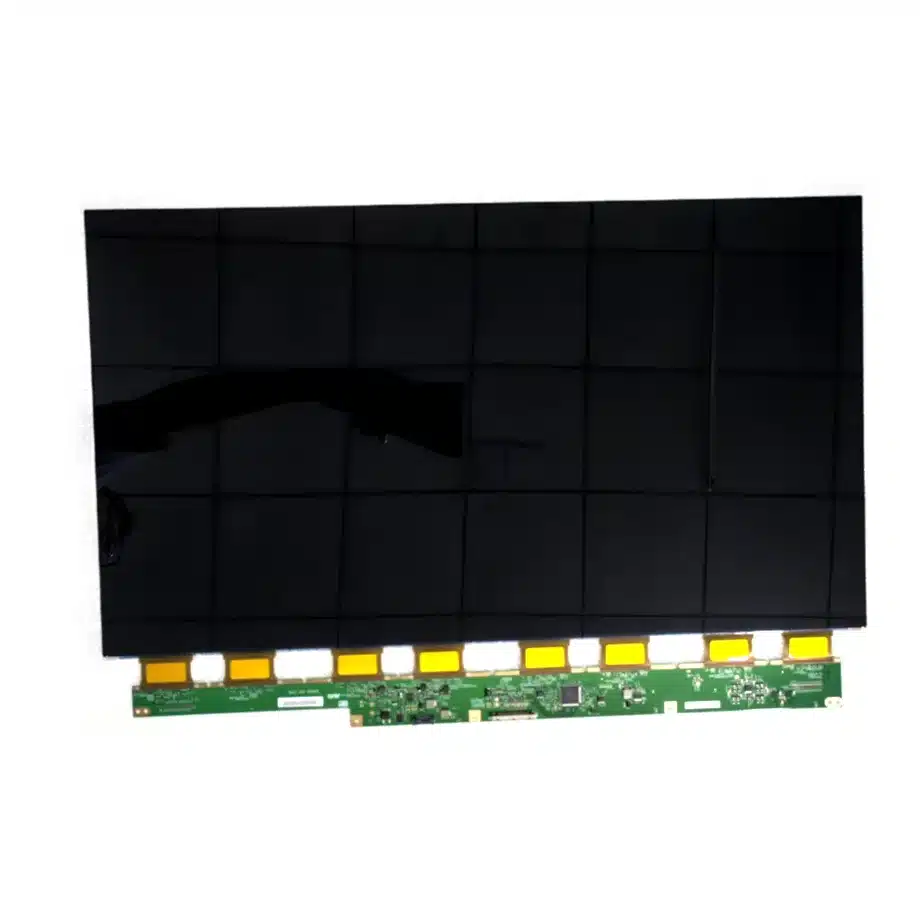
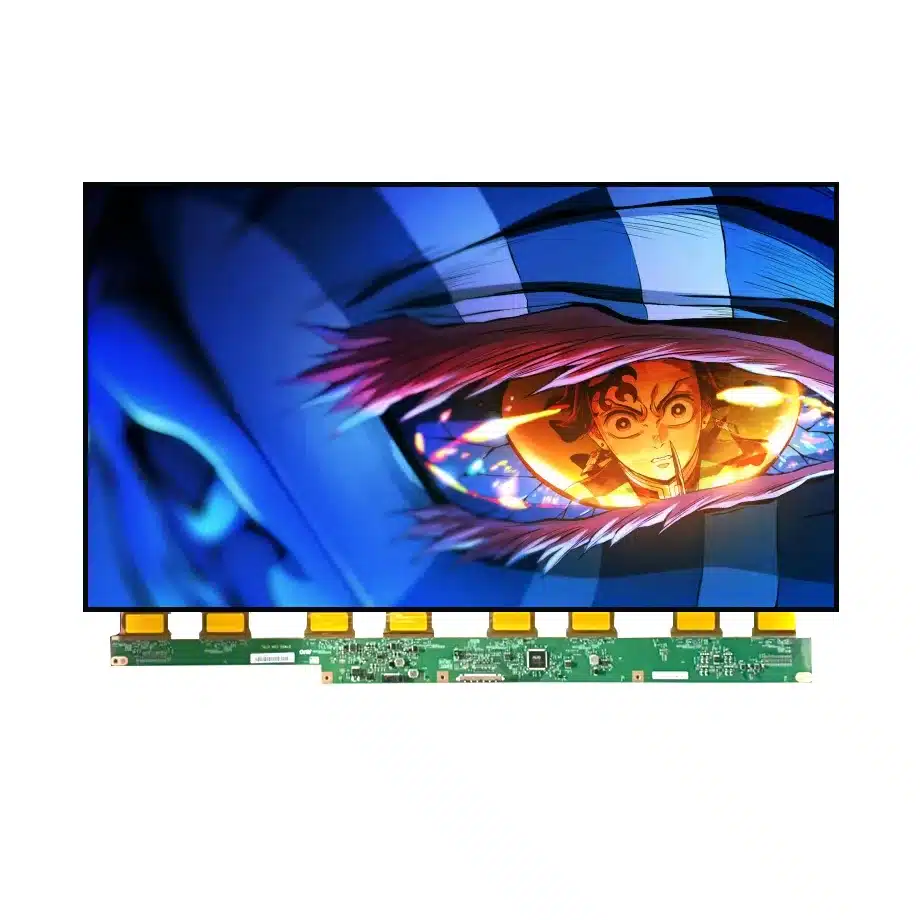
M270DAN12.0 CELL 100Hz Quad-LVDS FOB Open-Cell Glass is a 27-inch AUO a-Si TFT-LCD cell for desktop-monitor architectures that provide their own backlight and optical stack. The component delivers a 2560×1440 QHD image at 100 Hz over four-channel 8-bit LVDS, with AHVA normally-black transmissive operation and 1500:1 typical contrast. Its 0 cd/m² entry reflects the supplied bare-cell configuration: no backlight is included with the cell.
This product must be integrated differently from a finished LCM. The 608.576×349.084×1.34 mm glass/cell package needs mechanical support, while the system designer owns the light source, light guide, films, frame and brightness target. The cell uses a 92-pin 0.5 mm LVDS connector and 10 V typical supply. Built-in eight source chips are part of the exact configuration, but backlight performance cannot be inferred from the cell alone.
Three buyer value propositions
Bare-cell freedom for custom monitor optical stacks
Because no backlight is supplied, integrators can design a backlight, films and mechanical carrier around a specific monitor requirement. That flexibility is useful when the customer controls luminance, thermal architecture or industrial design. It also shifts responsibility for uniformity, brightness and support away from the panel vendor and into the finished display subsystem.
100 Hz QHD timing over four-channel LVDS
The cell combines 2560×1440 native pixels with a 100 Hz target and four-channel 8-bit LVDS. This gives scaler designers a concrete monitor-facing timing requirement without assuming eDP. The 92-pin connector, 10 V supply and production cable must be qualified together because QHD timing alone does not establish electrical compatibility.
1500:1 AHVA contrast with symmetric viewing
A 1500:1 typical contrast ratio and 89/89/89/89 viewing-angle data provide a useful bare-cell optical baseline. The final visible result still depends on the backlight spectrum, film stack, cell drive and front surface. Buyers can use the cell parameters as inputs while reserving finished brightness and uniformity claims for the completed monitor assembly.
Key Specifications at a Glance
M270DAN12.0 CELL 100Hz Quad-LVDS FOB Open-Cell Glass should be qualified against the following exact-model baseline before production release.
| Brand | AUO |
|---|---|
| Model P/N | M270DAN12.0 CELL |
| Size | 27.0 inch |
| Resolution | 2560(RGB)×1440, Quad-HD, 16:9 |
| Active Area | 596.736×335.664 mm (H×V) |
| Overall | 608.576×349.084×1.34 mm |
| Brightness | 0 cd/m² (CELL; no backlight) |
| Viewing Angle | 89/89/89/89 (Typ.)(CR≥10) |
| Display Colors | 16.7M |
| Weight | 650 g (Typ.) |
| Refresh Rate | 100 Hz |
| Connector / Native Interface | LVDS (4 ch, 8-bit), 92 pins 0.5 mm connector |
| Input Voltage | 10 V (Typ.) |
| Operating Temperature | 0 ~ 50 °C |
| Storage Temperature | -20 ~ 60 °C |
| Panel Type | a-Si TFT-LCD, CELL (FOB) |
| Pixel Format | RGB Vertical Stripe |
| Surface Treatment | Antiglare (Haze 25%), Hard coating (3H) |
| Contrast Ratio | 1500:1 (Typ.) |
| Response Time | 14 ms (Typ.)(G to G) |
| Work Mode | AHVA, Normally Black, Transmissive |
| Backlight / Emission | No backlight supplied with the CELL |
| Glass Thickness | 0.50+0.50 mm |
| Designed For | Desktop monitor bare-cell integration; QHD monitor designs requiring a separate qualified backlight and optical stack |
| Touchscreen Type | Without touch screen |
Why 0 cd/m² is correct for this configuration
The cell is not defective or dark-rated; it is shipped without a backlight. The stored brightness value of 0 cd/m² represents the supplied component state. Final monitor luminance must be created by the customer’s backlight and optical system. Keep this distinction explicit in sourcing documents so the cell is not compared directly with an LCM carrying a 300- or 400-nit rating. Any final brightness claim belongs to the qualified assembled display.
Designing the backlight and film stack
Start from the active area, glass package and optical requirements, then engineer the LED array, light guide or direct-light architecture, diffuser/prism films and reflective elements. Measure uniformity, hotspot behavior, viewing-angle interaction and thermal loading on a complete sample. Do not copy a backlight design from another 27-inch AUO cell without exact compatibility evidence. The cell provides the modulating layer; illumination efficiency and color behavior are properties of the chosen optical stack.
Four-channel LVDS at 100 Hz
The panel-facing interface is four-channel 8-bit LVDS through a 92-pin 0.5 mm connector. Verify the scaler’s QHD timing, bit mapping, cable pinout and 10 V panel supply. Run repeated power cycles, source-mode changes and long-duration 100 Hz patterns on the production harness. External HDMI or DisplayPort belongs upstream of the scaler. Preserve the panel-facing cable and timing as controlled BOM items because another QHD cell can use a different mapping or connector.
Mechanical support for a 1.34 mm cell
A 1.34 mm bare-cell depth is not the thickness of a complete monitor module. The receiving frame must protect the glass, driver regions and connector while preventing point loads. Use the exact 608.576×349.084 mm outline, active-area location and driver/FPC zones for support design. Adhesive, foam and clips should be placed only in approved areas. Inspect mura or pressure artifacts after full chassis assembly, because a cell can be electrically functional yet optically degraded by uneven mechanical support.
Glass thickness and handling controls
The supplied record lists a 0.50+0.50 mm glass construction. That information is useful for handling and mechanical risk assessment but does not replace the full drawing. Define edge-handling rules, protective packaging and assembly fixtures so operators do not flex or twist the cell. Incoming inspection should look for edge chips, surface contamination and connector damage. Service procedures should treat the bare cell as more mechanically exposed than a finished LCM with a metal frame and integrated backlight.
Optical acceptance after illumination is added
The cell carries 1500:1 typical contrast, 16.7M colors and an antiglare Haze 25% 3H surface. Once a backlight is added, measure white luminance, uniformity, color coordinates, black level and contrast in the finished optical system. The backlight spectrum can change perceived color even when the cell electronics are unchanged. If the monitor has a calibration target, perform it after the complete stack and scaler settings are established.
Built-in source chips and system boundaries
The exact record identifies eight built-in source chips. Preserve that fact for controller and service documentation, but do not assume it makes the cell self-contained. The monitor still needs proper LVDS timing, panel power and a complete illumination system. If a later cell revision changes driver architecture, revalidate timing and power sequencing rather than assuming that matching resolution and connector count preserve behavior.
Thermal validation without an integrated backlight
The cell operating range is 0 to 50 °C. A custom backlight can add significant heat near the glass, while scaler and power electronics add their own thermal load. Instrument the cell edge and driver regions under maximum planned brightness. The absence of an integrated backlight does not remove thermal risk; it transfers more of that risk to the system designer. Use the cell temperature boundary as a component constraint when designing airflow, heat spreading and brightness derating.
Sourcing discipline for a CELL product
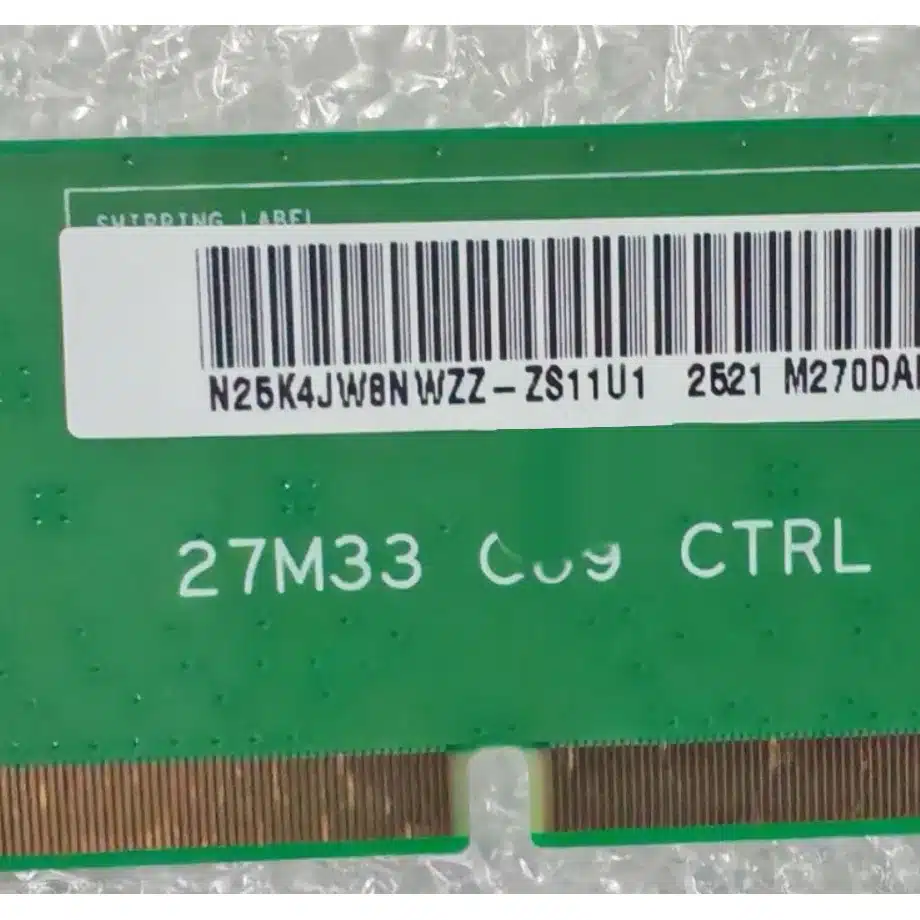
Keep the exact suffix and CELL identity visible in procurement documents. A finished M270-series LCM is not equivalent to M270DAN12.0 CELL, and a family member may use a different glass, driver map or connector. Compare candidates using the exact drawing, 92-pin LVDS definition, 10 V supply, 100 Hz timing and mechanical package. Never fill missing cell facts from a similar model merely because the naming convention looks related.
First-article and release package
For M270DAN12.0 CELL 100Hz Quad-LVDS FOB Open-Cell Glass, retain the cell drawing, handling requirements, 92-pin cable, scaler timing, power sequence, custom backlight design and finished optical measurements. Photograph the support and film stack before the bezel is closed. This evidence gives sourcing and service teams a reproducible baseline and prevents a later 27-inch QHD panel from being treated as a drop-in replacement without electrical, optical and mechanical comparison.
Optical-stack BOM control
Treat the light source, optical films, reflective layers, frame parts and cell as one controlled subsystem. A material change in diffuser or prism films can alter luminance, uniformity and viewing even when the cell is unchanged. Keep approved material revisions with the cell BOM and rerun optical checks after any substitution. This prevents sourcing improvements elsewhere in the stack from quietly invalidating the display performance established during first article.
Cell cleanliness and assembly environment
A bare cell is more exposed to particles and handling damage than a framed LCM. Define clean handling, protective films, glove requirements and inspection lighting for assembly. Contamination trapped inside a custom optical stack can become a permanent visible defect after the bezel is closed. Incoming and in-process inspection should therefore distinguish cell defects from particles introduced by the customer assembly process.
Service strategy for a custom-backlight design
Decide whether field service replaces only the cell or the entire customer-built display stack. Replacing only the cell demands repeatable alignment, pressure control and optical cleanliness; replacing a complete subassembly may be easier to validate. Document the approved service level so technicians do not substitute a generic 27-inch QHD LCM for a bare-cell architecture that requires different mechanics and illumination.
Engineering and sourcing review
M270DAN12.0 CELL 100Hz Quad-LVDS FOB Open-Cell Glass should remain tied to the exact interface, mechanical evidence, optical acceptance and system configuration used during qualification. Preserve the approved cable, drawing, firmware or scaler baseline, and rerun the affected checks whenever those dependencies change. This approach supports controlled sourcing without implying universal compatibility, certification, guaranteed lifecycle, stock, MOQ or lead time.
Recommended: Same Size
(27")
Applications & Value of LCD Panel

- Fast sourcing with in-stock panels & cross-reference alternatives
- Stable supply chain with long-term availability
- Engineering-level support from panel to integration
- Custom solutions: cable, touch & optical bonding
- Strict quality control with IQC / OQC / aging test
- Full traceability system for quality assurance
- Complete technical documentation & drawings
- Compliance support: RoHS & certification files
