
~
~
~
~
~
~
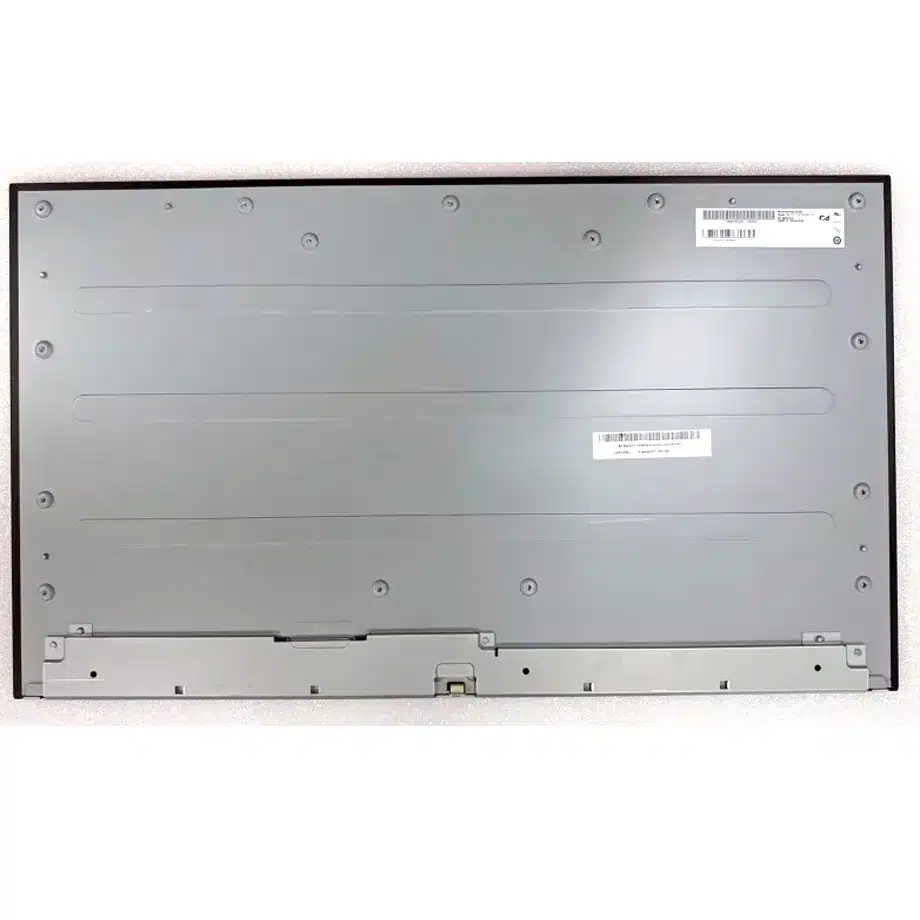
M238HAN03.6 100Hz Dual-LVDS sRGB Borderless AHVA Panel AUO
Model P/N
Size
Resolution
Brightness
Viewing Angle
Connector Type
Operating Temp
Overall(mm)
auo
M238HAN03.6
Brand
Panel Size (inch)
Model P/N
Resolution
Brightness (nits)
Viewing Angle
Contrast Ratio
Response Time
Overall (mm)
Active Area (mm)
Refresh Rate
Display Colors
Panel Type
Connector Type
Surface Treatment
Operating Temp
Touchscreen Type
Storage Temp
Work Mode
Pixel Format
Input Voltage (V)
Vibration Resistance
Weight (g)
Designed For
Product Details
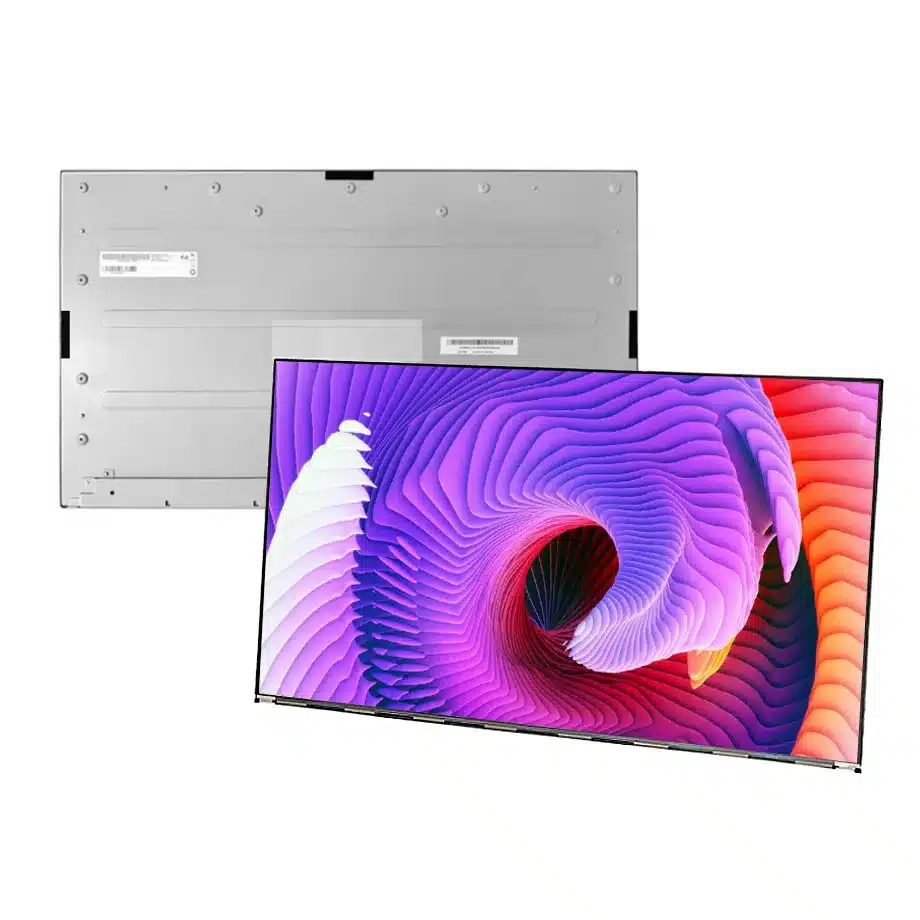
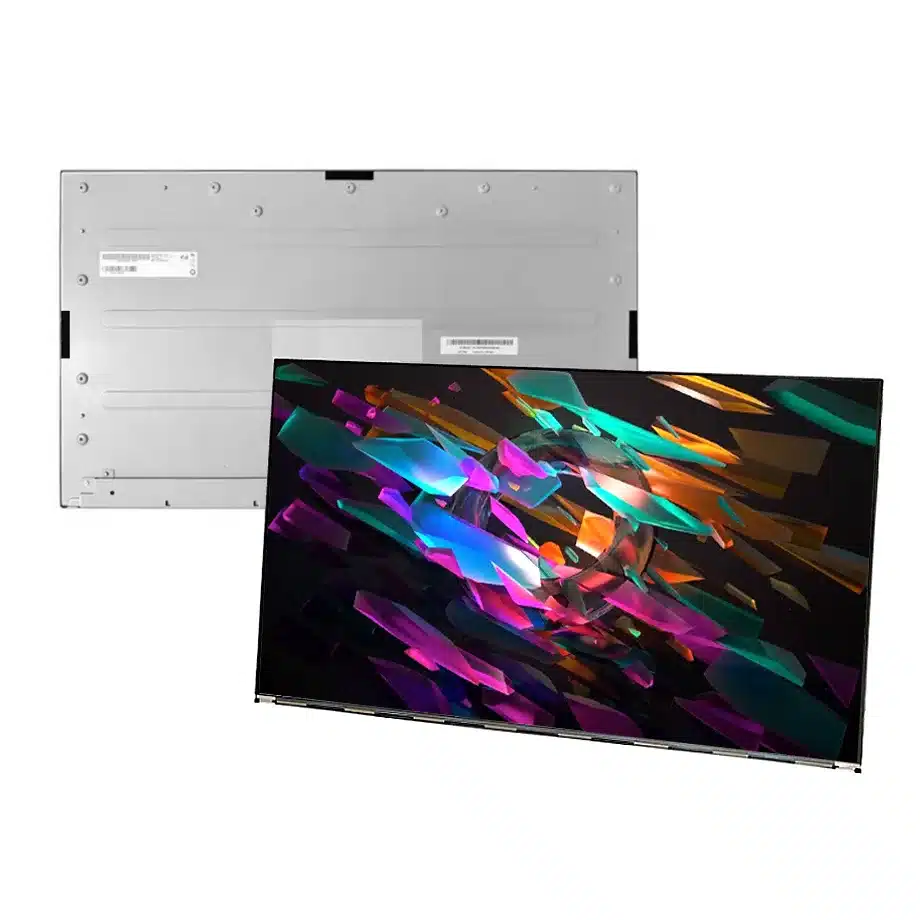
M238HAN03.6 100Hz Dual-LVDS sRGB Borderless AHVA Panel is a 23.8-inch AUO a-Si TFT-LCD module for desktop monitor platforms. The documented configuration combines FHD 1920×1080 resolution, 100 Hz refresh, 250 cd/m² typical luminance, 100% sRGB wording and dual-channel 8-bit LVDS. Its AHVA normally-black architecture and antiglare 3H surface give monitor integrators a clear optical baseline, while the 16S4P WLED backlight is supplied without an integrated driver.
The engineering work is split between scaler timing, the separate LED-driver design and the narrow-bezel mechanical package. A 30-pin LVDS connector does not prove compatibility with another 23.8-inch panel, and a three-side-borderless description does not replace the exact outline drawing. The production decision should preserve the AUO model, 5.0 V panel supply, 100 Hz timing and cable definition as one controlled set.
Three buyer value propositions
100 Hz FHD timing for responsive desktop monitors
The 1920×1080 image runs at a documented 100 Hz, giving monitor programs a higher frame cadence than conventional 60 Hz office panels without moving to QHD bandwidth. Buyers can design the scaler around a specific timing target and validate motion, source switching and power-save recovery on the real production board.
100% sRGB wording with symmetric AHVA viewing
The component record combines 100% sRGB wording, 1300:1 typical contrast and 89/89/89/89 viewing-angle data. That provides a practical color and viewing baseline for productivity or general multimedia monitors while remaining separate from finished-monitor factory calibration, white-point or Delta-E claims.
Separate WLED driver for controlled power architecture
The 16S4P WLED system is rated at 30,000 hours and is explicitly supplied without an integrated driver. This allows the monitor electronics to own dimming and LED power, but it also means the backlight electrical requirements, enable sequence and thermal behavior must be validated as part of the scaler/power-board design.
Key Specifications at a Glance
M238HAN03.6 100Hz Dual-LVDS sRGB Borderless AHVA Panel should be qualified against the following exact-model baseline before production release.
| Brand | AUO |
|---|---|
| Model P/N | M238HAN03.6 |
| Size | 23.8 inch |
| Resolution | 1920(RGB)×1080, FHD, 16:9 |
| Active Area | 527.04(H)×296.46(V) mm |
| Overall | 535.24×313.06×13.23 mm |
| Brightness | 250 cd/m² (Typ.) |
| Viewing Angle | 89/89/89/89 (Typ.)(CR≥10) |
| Display Colors | 16.7M, 100% sRGB, Low Blue Light |
| Weight | 2.16 kg (Typ.) |
| Refresh Rate | 100 Hz |
| Connector / Native Interface | LVDS (2 ch, 8-bit), 30 pins 1.0 mm connector |
| Input Voltage | 5.0 V (Typ.) |
| Operating Temperature | 0 ~ 50 °C |
| Storage Temperature | -20 ~ 60 °C |
| Vibration | 1.5G (14.7 m/s²) |
| Panel Type | a-Si TFT-LCD, LCM |
| Pixel Format | RGB Vertical Stripe |
| Surface Treatment | Antiglare, Hard coating (3H) |
| Contrast Ratio | 1300:1 (Typ.) |
| Response Time | 14 ms (Typ.)(G to G) |
| Work Mode | AHVA, Normally Black, Transmissive |
| Backlight / Emission | 30,000 hours (16S4P WLED, no integrated driver) |
| Designed For | Desktop monitor integration; 100 Hz sRGB monitor platforms; three-side-borderless designs |
| Touchscreen Type | Without touch screen |
LVDS scaler mapping at 100 Hz
Match the scaler to the exact dual-channel 8-bit LVDS definition, 30-pin 1.0 mm connector and 5.0 V panel supply. Validate the native FHD timing at 100 Hz using the production cable, then repeat source changes, power-save entry, wake and repeated cold starts. External HDMI or DisplayPort inputs belong to the monitor scaler; they do not change the panel-facing LVDS requirement. Record the approved mapping and timing table so a later board revision cannot silently change bit assignment or clock behavior.
Backlight-driver design without an integrated driver
Treat the panel logic and WLED power as separate design domains. Obtain the exact LED string voltage/current requirement for the 16S4P backlight, then qualify current regulation, PWM or analog dimming behavior as applicable, fault protection and startup sequencing. The 5.0 V panel input is not the backlight-drive voltage. Measure luminance and temperature at several brightness settings, because a replacement LED driver can change optical output even if the image interface remains stable.
sRGB optical acceptance in the finished monitor
Use 250 cd/m² typical luminance and 100% sRGB wording as component-level inputs. If the finished monitor promises a calibrated white point, gamma or color-error limit, measure those properties after the scaler, backlight curve and assembly process are applied. The antiglare 3H surface can also look different once the panel is installed behind a bezel or protective layer. Define acceptance at the finished-monitor surface rather than treating the bare panel as the final optical system.
Three-side-borderless chassis planning
The exact module outline is 535.24×313.06×13.23 mm around a 527.04×296.46 mm active area. Use those dimensions, connector position and rear clearances from the exact drawing when designing a narrow-bezel chassis. Borderless marketing language does not define mounting datums. Check bezel pressure, PCB clearance, cable bend and housing stiffness on a complete first article so cosmetic edge pressure or cable strain is discovered before tooling is frozen.
Motion behavior at 100 Hz and 14 ms G2G
Refresh rate and pixel response describe different parts of motion performance. The panel is specified at 100 Hz with a 14 ms typical G-to-G response, so assess scrolling text, video and representative desktop animation on the production scaler rather than inferring a gaming-class response. If the scaler offers overdrive, qualify its artifacts separately because no faster OD response figure is established here. Stable frame timing and low overshoot can matter more than one headline number.
Thermal checks for panel and LED electronics
The panel operating range is 0 to 50 °C, and the backlight driver sits elsewhere in the monitor architecture. Instrument the display cavity during sustained high brightness while the scaler and power supply are also warm. Rear-cover ventilation and LED-driver placement can raise local temperatures above room ambient. Use the 30,000-hour WLED figure only as a component rating; it is not a warranty or a finished-monitor lifetime promise.
Incoming-lot and service screening
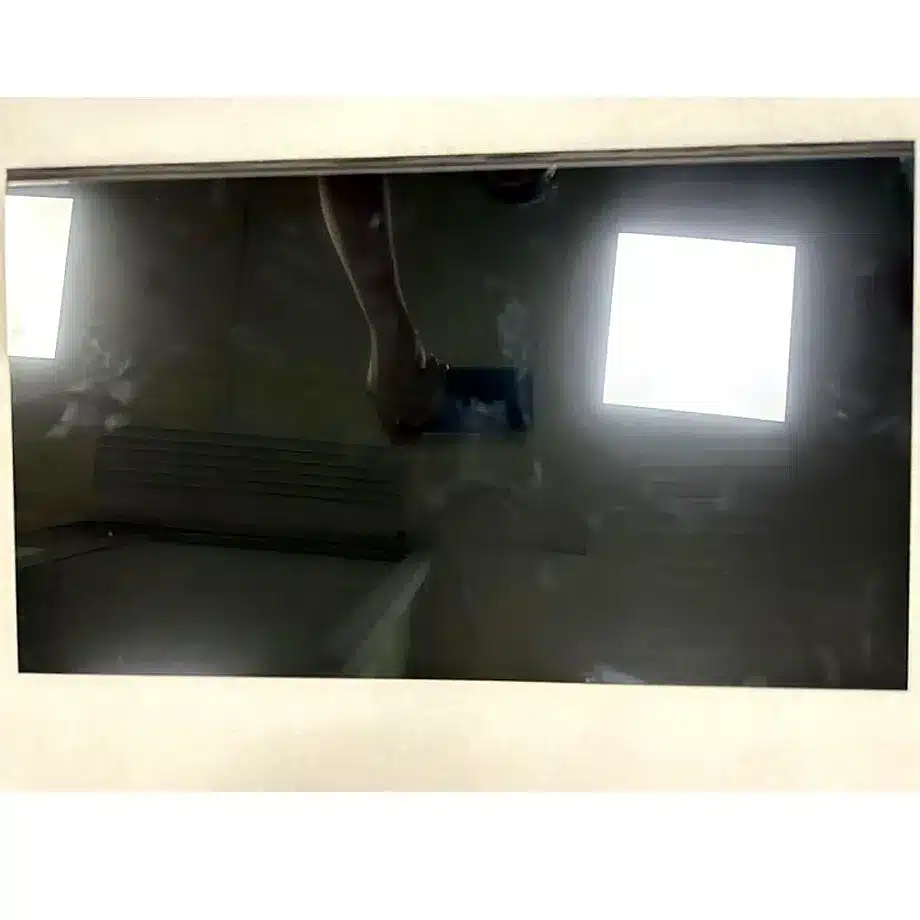
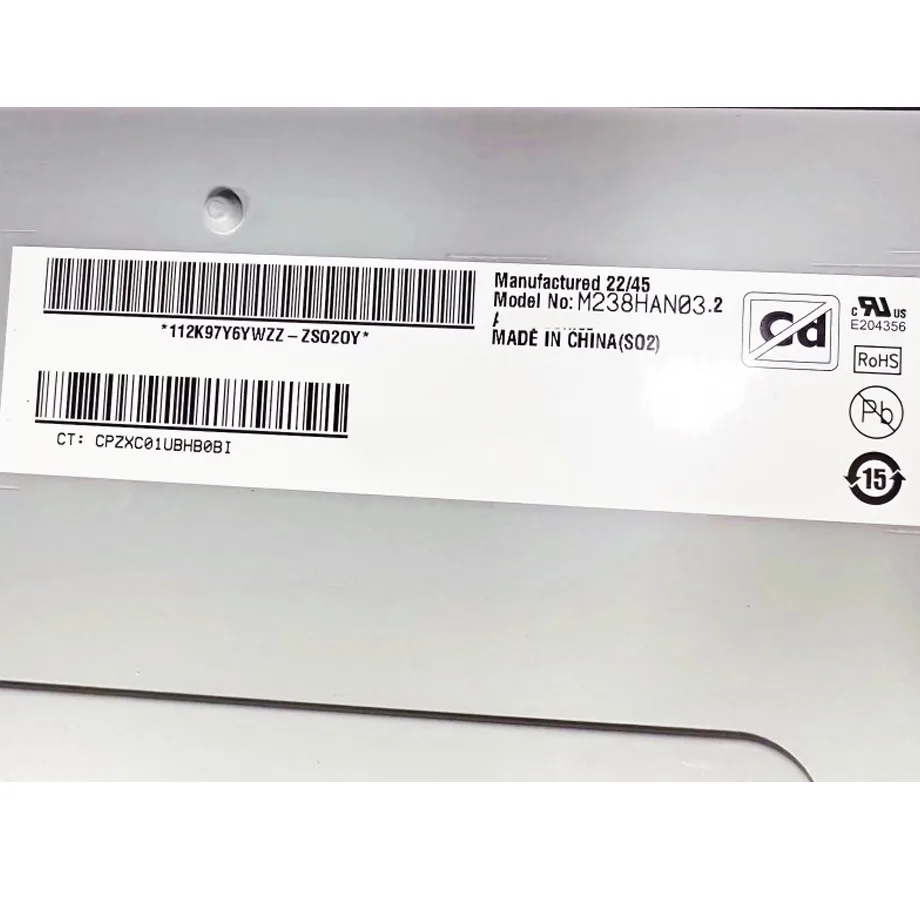
Incoming inspection should confirm the exact model marking, connector condition, surface quality and agreed cosmetic limits. A short functional sample at 100 Hz can reveal timing or backlight differences before a lot reaches assembly. For service replacements, compare LVDS mapping, 5.0 V supply, outline, connector location and backlight architecture. Another 23.8-inch FHD panel should not be accepted solely because it shares diagonal size and resolution.
Low-blue-light wording without unsupported certification
Low Blue Light appears in the documented color/features record and can inform system evaluation, but it should not be converted into a health, eye-safety or certification claim unless separate evidence exists. If the monitor implements a low-blue-light user mode through the scaler, measure the resulting color shift and luminance independently. Keep the panel feature wording separate from software modes so commercial copy remains traceable to what the component actually supports.
First-article evidence package
For M238HAN03.6 100Hz Dual-LVDS sRGB Borderless AHVA Panel, retain the panel label, mechanical drawing, 30-pin cable, scaler timing, 5.0 V sequence, LED-driver circuit and assembled optical checks. Add photographs of cable routing and border clearances. If a later firmware or power-board revision changes behavior, this package provides a known-good reference and helps engineering distinguish a panel issue from a scaler, backlight or enclosure change.
Production regression triggers
Define focused regression when a relevant subsystem changes. A new scaler firmware should rerun 100 Hz timing, source switching and sleep/wake; a new LED driver should rerun brightness, dimming and thermal checks; a chassis revision should rerun bezel pressure and cable clearance. This keeps qualification efficient without treating the display as an isolated commodity. M238HAN03.6 100Hz Dual-LVDS sRGB Borderless AHVA Panel remains the exact reference until a replacement has passed the same evidence-based comparison.
Cable retention and connector service access
The 30-pin 1.0 mm connection should remain serviceable without forcing a tight bend or transferring chassis stress into the panel connector. Review cable retention, shielding termination and access before the rear cover is frozen. During repeated assembly trials, inspect whether opening the housing changes the connector seating or bends the harness. A controlled cable route makes first-article results reproducible and reduces the chance that an electrical symptom is actually caused by mechanical strain.
Brightness-control repeatability across production units
Define several monitor brightness setpoints and compare representative production samples after warm-up. Because the LED driver is external to the panel, unit-to-unit variation can come from both the display and the customer-designed backlight electronics. Recording current, luminance and thermal behavior at low, mid and high settings gives manufacturing a practical acceptance baseline without inventing a tighter optical tolerance than the component evidence supports.
Monitor scaler regression after firmware changes
Whenever scaler firmware changes, rerun native timing, sleep/wake, source switching and brightness-control checks with the same panel and production cable. Firmware can change panel sequencing or timing even when the hardware BOM is unchanged. Keeping a compact regression set tied to the exact model is more reliable than assuming a previously qualified panel remains unaffected by software updates.
Engineering and sourcing review
M238HAN03.6 100Hz Dual-LVDS sRGB Borderless AHVA Panel should remain tied to the exact interface, mechanical evidence, optical acceptance and system configuration used during qualification. Preserve the approved cable, drawing, firmware or scaler baseline, and rerun the affected checks whenever those dependencies change. This approach supports controlled sourcing without implying universal compatibility, certification, guaranteed lifecycle, stock, MOQ or lead time.
Recommended: Same Size
(23.8")
Applications & Value of LCD Panel

- Fast sourcing with in-stock panels & cross-reference alternatives
- Stable supply chain with long-term availability
- Engineering-level support from panel to integration
- Custom solutions: cable, touch & optical bonding
- Strict quality control with IQC / OQC / aging test
- Full traceability system for quality assurance
- Complete technical documentation & drawings
- Compliance support: RoHS & certification files
