~
~
~
~
~
~
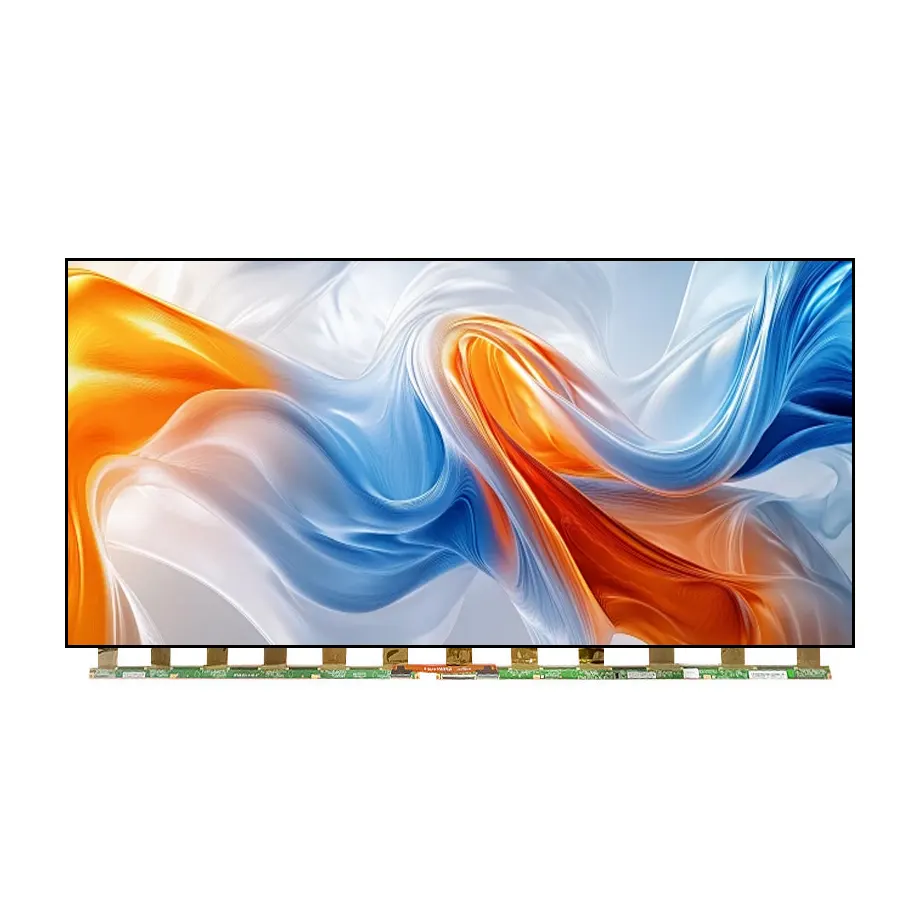
M340QVR02.1 CELL High Contrast Ultrawide Panel 34″ VA AUO
Model P/N
Size
Resolution
Brightness
Viewing Angle
Connector Type
Operating Temp
Overall(mm)
auo
M340QVR02.1 CELL
Brand
Panel Size (inch)
Model P/N
Resolution
Viewing Angle
Contrast Ratio
Response Time
Overall (mm)
Active Area (mm)
Refresh Rate
Display Colors
Panel Type
Connector Type
Surface Treatment
Operating Temp
Touchscreen Type
Storage Temp
Work Mode
Pixel Format
Input Voltage (V)
Weight (g)
Designed For
Product Details
Product Overview
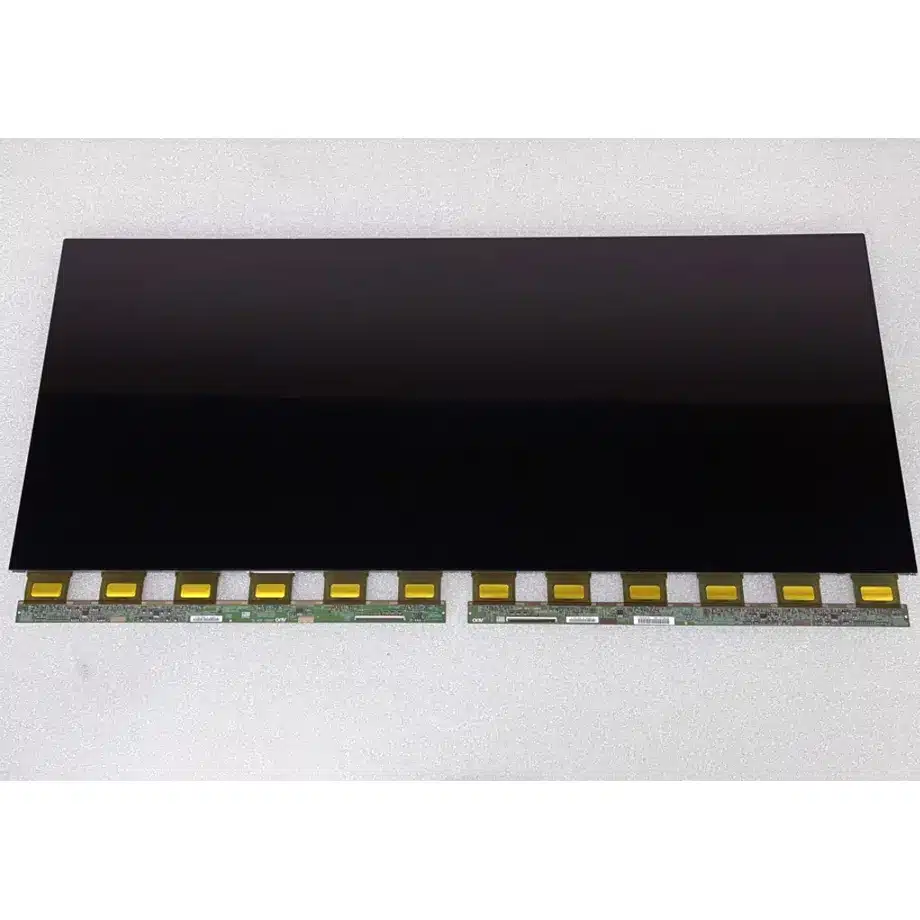
M340QVR02.1 CELL High Contrast Ultrawide Panel is a 34-inch AUO a-Si TFT-LCD cell for desktop-monitor integration. The native image format is 3440(RGB)×1440 at 21:9, giving a 797.22 × 333.72 mm active area across a wide landscape geometry. The cell uses VA, normally-black, transmissive operation with a 4000:1 typical contrast ratio, 89/89/89/89 typical viewing-angle values at CR≥10 and a 100 Hz refresh rate. Exact-model data also identifies a 1500R curved form with a three-side-borderless design direction.
The product is a CELL (FOB), not an illuminated LCM or finished monitor. Its locked luminance value is 0 cd/m² because no backlight is integrated. A complete display therefore needs a separate backlight and driver, optical films, mechanical frame and monitor electronics. The native signal interface is eight-lane eDP at HBR2 5.4 Gbit/s per lane through a 51-pin 0.5 mm connector, with 12 V typical panel input. These are integration anchors, not evidence that a generic monitor board is plug-compatible.
Three Core Buyer Value Propositions
1. 21:9 geometry gives a clearly defined ultrawide integration target
The 3440×1440 raster and 21:9 aspect ratio establish both image timing and visible geometry for an ultrawide desktop monitor. That allows enclosure, scaler and user-interface planning to start from the exact pixel canvas rather than a generic “34-inch” label. The boundary is system compatibility: the source device and controller must support the required native timing, and software workflow benefits should be validated for the intended product rather than promised by the panel alone.
2. VA contrast provides a strong panel-level black-state baseline
A 4000:1 typical contrast ratio combined with VA normally-black transmissive operation gives optical engineers a defined panel contrast target. This is useful when evaluating dark content, office interfaces and mixed desktop material. Final perceived contrast still depends on the separately designed backlight, ambient reflections, optical films, front cover and calibration, so the cell specification should not be converted into a guaranteed finished-monitor contrast result.
3. Curved bare-cell architecture lets the system own the illumination and chassis design
The exact-model 1500R curved form, 810.02 × 347.82 × 1.17 mm outline and 750 g typical cell weight provide concrete mechanical inputs for a purpose-built ultrawide monitor. The absence of an integrated backlight gives the system designer control over the illumination architecture, but it also creates work: backlight optical efficiency, thermal behavior, film retention and curvature support must be engineered and validated as part of the complete assembly.
Key Specifications at a Glance
| Parameter | Confirmed value |
|---|---|
| Manufacturer / model | AUO M340QVR02.1 CELL |
| Display size | 34 inch |
| Product form | a-Si TFT-LCD, CELL (FOB) |
| Native resolution | 3440(RGB)×1440, 21:9 |
| Pixel layout | RGB Vertical Stripe |
| Active area | 797.22 × 333.72 mm |
| Outline | 810.02 × 347.82 × 1.17 mm |
| Weight | 750 g typical |
| Display mode | VA, Normally Black, Transmissive |
| Contrast ratio | 4000:1 typical |
| Viewing-angle values | 89/89/89/89 typical at CR≥10 |
| Response time | 10 ms typical G-to-G |
| Display colors | 16.7M, 70% NTSC |
| Surface | Antiglare, Haze 25%; hard coating 3H |
| Transmissivity | 4.28% typical with polarizer |
| Refresh rate | 100 Hz |
| Curvature | 1500R exact-model feature |
| Native interface | eDP, 8 lanes, HBR2 5.4 Gbit/s per lane |
| Connector | 51 pins, 0.5 mm pitch |
| Panel input | 12 V typical |
| Backlight | Not integrated; external backlight and driver required |
| Touch | Without touch screen |
| Operating / storage temperature | 0 to 50 °C / -20 to 60 °C |
What Does the 21:9 3440×1440 Format Change for Integration?
M340QVR02.1 CELL High Contrast Ultrawide Panel has a much wider active image area than a conventional 16:9 monitor of similar height. Mechanical planning must account for the 797.22 mm active width and 810.02 mm overall width, while the controller must generate the exact 3440×1440 native timing. A device that only advertises “QHD” support should not be assumed to support this ultrawide raster without explicit timing confirmation.
The 21:9 format can support wide desktop layouts and side-by-side application windows, but those are workflow possibilities rather than panel certifications. Product teams should validate operating-system scaling, source compatibility, picture-by-picture functions and application behavior at the finished-monitor level. The panel itself defines the pixel canvas and electrical requirements; it does not define the user’s software environment or guarantee a particular productivity outcome.
How Should the 1500R Curvature Be Supported?
The exact-model specification identifies a curved display with R1500 geometry. The mechanical frame should support that existing curvature consistently across the long 810.02 mm width. Uneven clamping, torsion or local pressure can create glass stress or image non-uniformity, so the current drawing should be used for support zones, edge clearances, connector placement and assembly tolerances.
AUO’s monitor display overview describes curved and bezel-less monitor design as part of its monitor technology direction. That manufacturer context supports the general integration discussion but does not add an undocumented mechanical tolerance to this model. The supplied 0.40 + 0.40 mm glass-thickness information is useful engineering context and remains distinct from the complete 1.17 mm cell outline depth.
Why Is the Cell Brightness 0 cd/m²?
The locked 0 cd/m² value is consistent with the product form: this exact cell has no integrated backlight. Its 4.28% typical transmissivity with polarizer is the relevant optical characteristic for a display manufacturer designing the external illumination system. Finished luminance depends on LED output, optical-film efficiency, light-guide or direct-light architecture, thermal conditions and the drive strategy chosen for the monitor.
No backlight lifetime should be copied from another AUO model or inferred from the 100 Hz refresh rate. Instead, define a system-level luminance and uniformity target, then qualify the selected backlight at the expected temperature and duty cycle. The 4000:1 panel contrast ratio also should not be used to calculate final room-light contrast without measuring reflections and the completed front optical stack.
What Must an Eight-Lane HBR2 Controller Match?
The cell uses eight-lane eDP with HBR2 at 5.4 Gbit/s per lane and a 51-pin 0.5 mm connector. VESA’s eDP overview identifies HBR2 as the 5.4 Gbit/s DisplayPort main-link rate in the embedded-display standard family. The standard explains the link-rate context; it does not define this AUO cell’s exact eight-lane pinout, connector mapping or timing.
Controller qualification therefore needs the current exact-model interface table and timing data. Check lane organization, AUX/control functions, power sequence, cable construction and the 12 V typical panel input. HDMI, DisplayPort and USB-C connectors on the outside of a finished monitor are separate controller-board interfaces. They are not native M340QVR02.1 CELL inputs merely because the board ultimately drives an eDP panel.
100 Hz Refresh and 10 ms Response: How Should They Be Interpreted?
The 100 Hz frame rate is the documented panel refresh target. It can provide a different motion cadence from a conventional 60 Hz desktop display, but the finished system must deliver stable 3440×1440 timing at that rate. Scaler capabilities, source modes, firmware and link configuration should be checked together rather than assuming that any ultrawide controller supports the exact 100 Hz mode.
The 10 ms typical G-to-G response time describes a panel pixel-transition measurement. It is not a measurement of end-to-end monitor latency and should not be marketed as one. Image processing, buffering, synchronization and source behavior may add delay independently. For desktop-monitor qualification, assess motion performance in the intended modes and keep panel transition data separate from system input-lag measurements.
Surface, Gamut and Viewing Characteristics
The cell is specified with an antiglare surface, 25% haze and 3H hard coating. Display colors are listed as 16.7M with 70% NTSC. These facts should be preserved as documented rather than upgraded to a wider gamut based on another AUO 34-inch panel. The 89/89/89/89 typical viewing-angle values at CR≥10 provide a broad panel-level viewing reference, while the 4000:1 typical VA contrast is a separate optical characteristic.
The finished monitor’s color accuracy depends on the external backlight spectrum, controller output, calibration and production tolerances. Similarly, glare behavior can change if a cover layer or additional front surface is added. Engineering validation should therefore combine the bare-cell parameters with the actual backlight and mechanical stack instead of treating the cell values as a complete display specification.
Designed For: 34-Inch Curved Ultrawide Desktop Monitors
M340QVR02.1 CELL High Contrast Ultrawide Panel is documented for desktop-monitor use. Exact-model research supports the curved, three-side-borderless form and confirms the 34-inch 21:9 geometry. This makes a purpose-built curved ultrawide desktop monitor the strongest application statement. Broader AUO material has discussed ultrawide curved professional monitor applications, but those portfolio examples are context only and are not used to add unverified use cases or certifications to this exact model.
No touch function is documented. No gaming, medical, industrial or automotive qualification is inferred merely from the form factor, contrast ratio or operating temperature. A buyer with a specialized vertical requirement should qualify the panel and complete monitor against that project’s own environmental, safety and regulatory requirements rather than relying on generic category language.
Procurement and Qualification Checklist
- Confirm the exact identity AUO M340QVR02.1 CELL.
- Match the native 3440×1440 raster, 21:9 aspect ratio and 100 Hz timing.
- Verify the 1500R curvature, 810.02 × 347.82 × 1.17 mm outline and support geometry from the current drawing.
- Confirm eight-lane HBR2 eDP, the 51-pin 0.5 mm connector and exact pin assignment.
- Design the external backlight and driver around the 4.28% typical transmissivity and required finished luminance.
- Include the 750 g cell mass separately from backlight, electronics, enclosure and stand components.
- Validate the 4000:1 typical contrast, 70% NTSC wording, haze and viewing behavior in the final optical stack.
- Confirm that a non-touch cell meets the product architecture.
- Request current revision, availability and change-status information at procurement time; current online status is not a long-term supply commitment.
When evaluating M340QVR02.1 CELL High Contrast Ultrawide Panel, provide the intended controller, 3440×1440/100 Hz timing plan, eDP cable architecture, 1500R mechanical design, external-backlight target, quantity and optical acceptance criteria. These inputs allow the qualification process to focus on the exact ultrawide cell rather than on superficial size similarity. Other exact models can be screened through the HS-LCD panel inventory before sample validation.
Recommended: Same Size
(34")

Applications & Value of LCD Panel

- Fast sourcing with in-stock panels & cross-reference alternatives
- Stable supply chain with long-term availability
- Engineering-level support from panel to integration
- Custom solutions: cable, touch & optical bonding
- Strict quality control with IQC / OQC / aging test
- Full traceability system for quality assurance
- Complete technical documentation & drawings
- Compliance support: RoHS & certification files