~
~
~
~
~
~
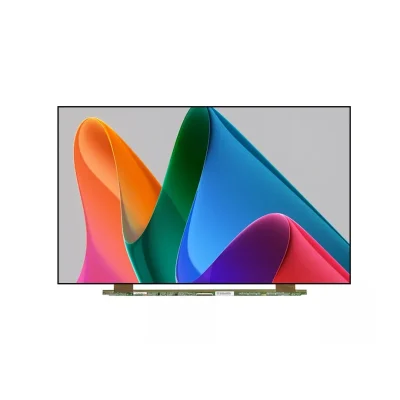
QMC490EA01-D01 DQHD Native-Bar OLED Panel Samsung

Model P/N
Size
Resolution
Brightness
Viewing Angle
Connector Type
Operating Temp
Overall(mm)
samsung
QMC490EA01-D01
Brand
Panel Size (inch)
Model P/N
Resolution
Brightness (nits)
Viewing Angle
Contrast Ratio
Response Time
Overall (mm)
Active Area (mm)
Refresh Rate
Display Colors
Panel Type
Connector Type
Surface Treatment
Operating Temp
Touchscreen Type
Storage Temp
Work Mode
Pixel Format
Input Voltage (V)
Weight (g)
Designed For
Product Details
Product Overview
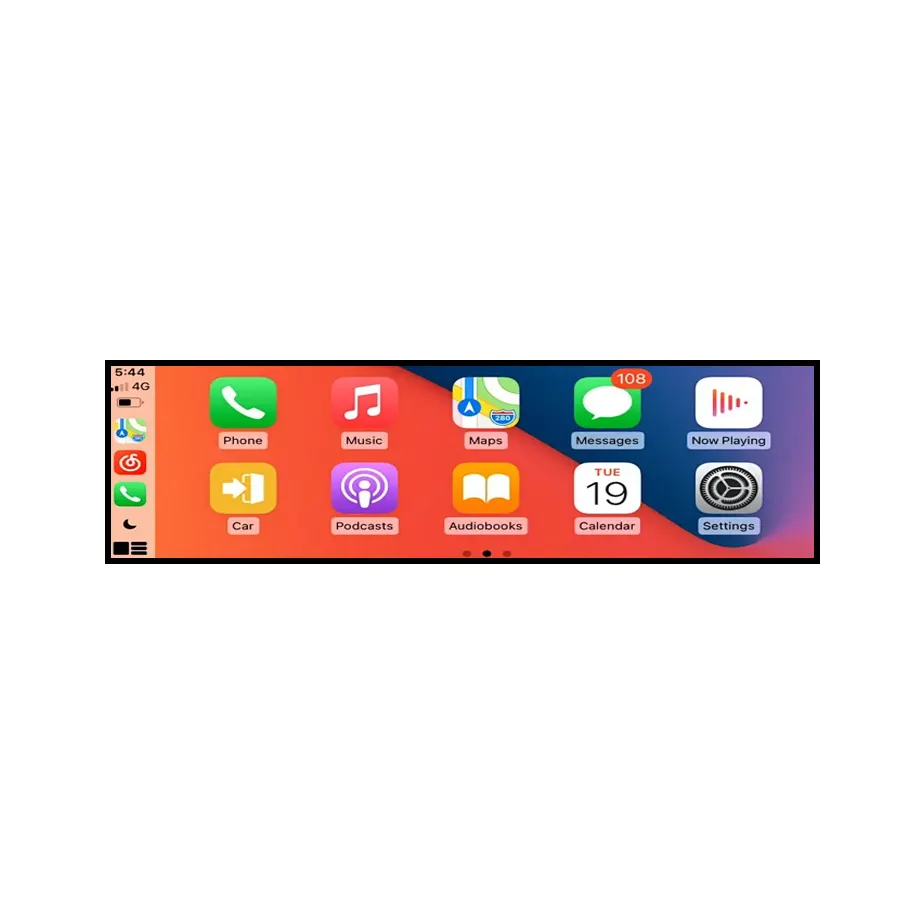
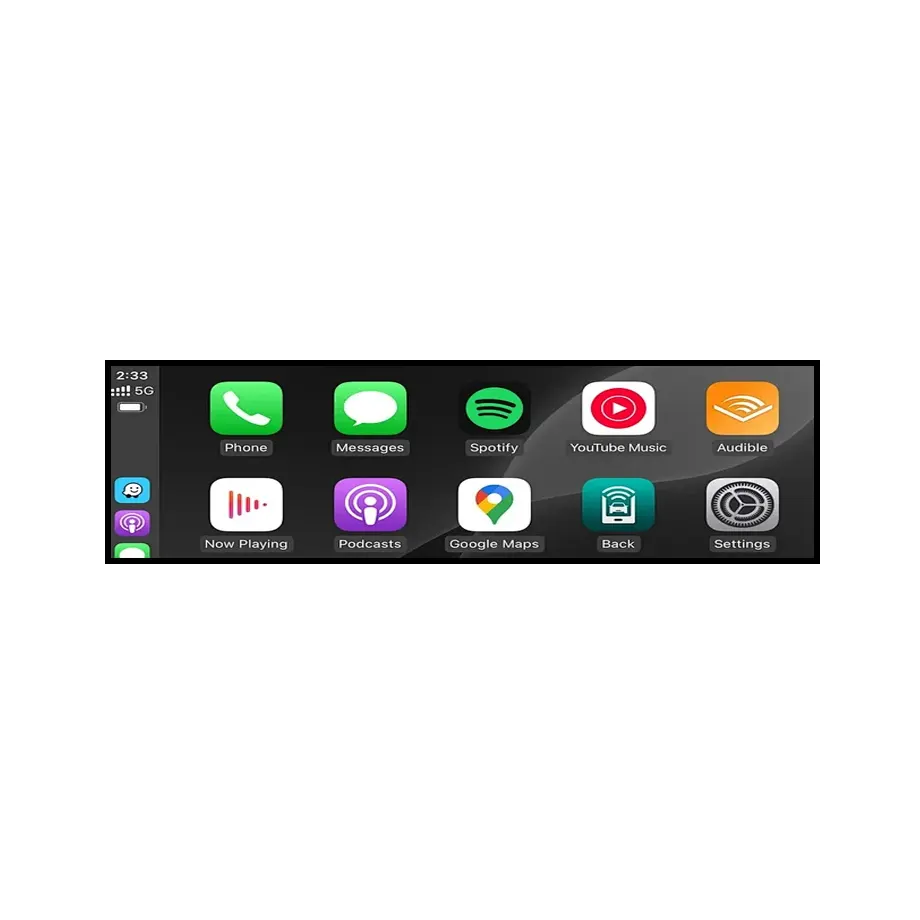
QMC490EA01-D01 DQHD Native-Bar OLED Panel is a 49-inch Samsung AM-OLED full module built around a native 5120(RGB)×1440 DQHD raster with a greater-than-3:1 native-bar format. The panel uses a Q-Square pixel layout and provides a 1196.88 × 339.248 mm display area inside a 1211.49 × 353.648 mm outline. Maximum panel mass is 1.75 kg. The module operates at 240 Hz, is specified at 250 cd/m² typical luminance with HDR400 feature wording, and carries a 1,000,000:1 typical contrast ratio, 0.1 ms typical G2G response and 1.07B colors with 99% DCI-P3 and Low Blue Light wording.
The native panel interface is V-by-One with 32 lanes through a 167-pin 0.5 mm connector, using a 32 V typical input. The exact-model record also lists 141.4/158 W typical/maximum power and “QLED, 30K hrs” in the light-source field. Because the same record identifies the product as AM-OLED/OLED and Samsung Display describes QD-OLED as self-emissive, the QLED life wording is retained as documented but is not reinterpreted here as a conventional LCD backlight. Exact-model depth is not confirmed, so thickness remains unresolved rather than borrowed from another 49-inch OLED module.
Three Core Buyer Value Propositions
1. A 49-inch 5120×1440 native-bar format creates a purpose-built ultrawide monitor architecture
The 1196.88 mm active width and 5120×1440 raster define a 32:9-class desktop canvas rather than a conventional 16:9 display. This gives enclosure, controller and firmware teams a clear geometry for bezel opening, source scaling and multi-window layout. The unusual width also changes mechanical support and shipping risk. A system designed for a 34-inch ultrawide or a 49-inch LCD cell should not be assumed to accept this module without a dedicated mechanical, thermal and interface review.
2. Thirty-two V-by-One lanes and a 167-pin connector make controller compatibility highly specific
The module-native path is a 32-lane V-by-One connection, not eDP or LVDS. That lane count, combined with a 167-pin 0.5 mm connector, requires a controller and cable designed for the exact Samsung timing and mapping. External DisplayPort, HDMI or USB-C can be offered by the finished monitor, but those signals must be processed and converted by the system controller before reaching the native panel interface. A generic DQHD controller board does not prove direct electrical compatibility.
3. 240 Hz QD-OLED-class performance is paired with a substantial power and thermal budget
The component record combines 240 Hz operation, 0.1 ms typical G2G response, 99% DCI-P3 wording and a maximum power figure of 158 W. That makes thermal architecture and sustained-load validation central to the finished monitor design. The panel-level numbers should not be collapsed into an end-product latency or efficiency promise. System power conversion, controller electronics, brightness mode, image content and enclosure airflow all affect the final product.
Key Specifications at a Glance
| Parameter | Confirmed value |
|---|---|
| Manufacturer / model | Samsung QMC490EA01-D01 |
| Display size | 49 inch native-bar / ultrawide format |
| Panel type | AM-OLED, OLED full module |
| Native resolution | 5120(RGB)×1440 DQHD, >3:1 |
| Pixel layout | Q-Square |
| Active area | 1196.88 × 339.248 mm |
| Outline | 1211.49 × 353.648 mm; depth not confirmed |
| Weight | 1.75 kg maximum |
| Brightness | 250 cd/m² typical; HDR400 feature wording |
| Contrast ratio | 1,000,000:1 typical |
| Viewing-angle values | 89/89/89/89 minimum at CR≥10000 |
| Response time | 0.1 ms typical G2G |
| Colors | 1.07B, 99% DCI-P3, Low Blue Light |
| Surface | Hard coating 2H, antireflection |
| Refresh rate | 240 Hz |
| Native interface | V-by-One, 32 lanes |
| Connector | 167 pins, 0.5 mm pitch |
| Panel input | 32 V typical |
| Power | 141.4 / 158 W typical / maximum |
| Light-source field | QLED, 30K hrs — recorded wording |
| Touch | Without touch screen |
| Operating / storage | 0 to 45 °C / -20 to 60 °C |
Why the native-bar geometry matters for controller and enclosure design
QMC490EA01-D01 DQHD Native-Bar OLED Panel places 5120×1440 pixels across nearly 1.2 meters of active width. That geometry influences the entire system: source scaling, frame-buffer bandwidth, OSD layout, cable routing, mechanical stiffness and desktop ergonomics. A monitor controller should be qualified at the exact 5120×1440/240 Hz timing rather than at a generic “5K” or “ultrawide” label. Firmware should also be tested with lower-resolution sources and common aspect-ratio modes so that scaling and black-bar behavior remain predictable.
The 1211.49 mm panel width creates a structural challenge even before the enclosure, controller board and stand are added. Support points must avoid local pressure on the display while controlling flex during assembly and transport. The panel mass is 1.75 kg maximum, but complete monitor mass will be substantially higher. Because exact module depth is unresolved, chassis release should wait for the current drawing or a controlled sample rather than copying a thickness from another Samsung 49-inch panel.
How should a 32-lane V-by-One path be qualified?
The 32-lane native interface is one of the strongest exact-model differentiators. It implies a high-density connection between the monitor controller and panel, with 167 contacts and a 0.5 mm pitch. Controller qualification should verify lane mapping, timing, cable construction, connector orientation, grounding, power sequencing and signal integrity at the intended 240 Hz mode. The cable and PCB routing should be reviewed as a system because a long ultrawide chassis can create routing and EMI constraints that do not exist in smaller panels.
External ports are separate from this panel-native path. A finished monitor may accept DisplayPort, HDMI or USB-C, but the controller must process those formats and deliver the exact V-by-One stream expected by QMC490EA01-D01. Do not describe the OLED module itself as having native HDMI or DisplayPort. If a proposed controller is marketed for 5120×1440 output, request proof that it supports the exact 32-lane panel connection and required firmware timing.
QD-OLED context and the QLED life-field wording
Samsung Display describes QD-OLED as a self-emissive technology that combines OLED light generation with quantum-dot color conversion. Its QD-OLED technology explanation is consistent with the QD-OLED positioning seen in Samsung monitor panels. The current product record, however, contains both AM-OLED/OLED identity and a “QLED, 30K hrs” light-source field. Both facts should be preserved without inventing a physical equivalence that the exact-model documentation does not explicitly establish.
For engineering purposes, the safest treatment is to keep “QLED, 30K hrs” as recorded wording in the life/source field while avoiding statements that this OLED full module uses a conventional LCD-style QLED backlight. The 30K-hour value should also remain a component reference, not a monitor warranty or guaranteed service life. If lifecycle or emission-structure detail is important to the program, request the current Samsung panel specification rather than resolving the terminology from a related QD-OLED generation.
Power and thermal planning at 141.4/158 W
The exact-model record lists 141.4 W typical and 158 W maximum power for the module. Those values materially affect monitor power-supply sizing, DC conversion, cable gauge, thermal spreading and enclosure airflow. A 32 V typical input is the panel/module rail, not the finished monitor’s AC mains rating. The controller and power system must provide the specified rail within the exact sequencing and transient requirements of the panel.
Thermal validation should combine high-refresh operation with demanding image content and realistic ambient temperature. The component operates from 0 to 45 °C and stores from -20 to 60 °C; those limits do not establish industrial-wide-temperature or rugged qualification. Observe panel temperature, controller components and power-conversion hot spots at sustained load. Any enclosure venting or fan strategy should be validated for acoustics and dust conditions expected in the finished product.
Application fit: ultrawide desktop, gaming and native-bar display platforms
QMC490EA01-D01 DQHD Native-Bar OLED Panel is documented for Desktop Monitor, Stretched Bar LCD and Gaming applications. In taxonomy terms, the technology supports OLED & AMOLED Displays while the native-bar form factor also supports Stretched Bar LCD Displays as an inventory classification; that taxonomy label describes the bar-format product class and does not convert the OLED technology into an LCD. The strongest practical fit is a 49-inch ultrawide monitor platform purpose-built around the exact DQHD timing, V-by-One interface and power architecture.
No touch function is integrated. Interactive products would require a separately qualified sensor, controller and cover stack, adding optical and mechanical complexity across a very wide surface. No industrial, medical or automotive qualification is implied by the size, refresh rate or application wording. Projects outside desktop/gaming use need their own environmental, regulatory and mechanical evidence before the module is approved.
Procurement and validation checklist
- Lock the exact Samsung QMC490EA01-D01 identity in the BOM and incoming inspection record.
- Validate native 5120×1440 timing at 240 Hz on the production monitor controller.
- Confirm the 32-lane V-by-One implementation, 167-pin 0.5 mm connector and exact cable mapping.
- Design the 32 V rail and power system around the documented 141.4/158 W typical/maximum values.
- Check the 1211.49 × 353.648 mm outline and 1.75 kg maximum panel mass; obtain exact depth before mechanical release.
- Validate 250 cd/m² typical luminance, antireflection behavior, 99% DCI-P3 wording and black-level performance in the finished monitor.
- Treat HDR400 and Low Blue Light as feature wording unless model-specific certification evidence is supplied.
- Preserve “QLED, 30K hrs” as recorded wording without converting it into an unsupported LCD-backlight claim.
- Request current revision and change-status information before volume procurement; present availability is not a supply-duration guarantee.
For qualification of QMC490EA01-D01 DQHD Native-Bar OLED Panel, provide the controller architecture, 32-lane V-by-One cable plan, 32 V power design, mechanical drawing, DQHD/240 Hz timing requirements, color and HDR acceptance criteria, thermal limits and required quantity. The extreme width and high-power interface make exact-model system validation essential before production release.
Recommended: Same Size
(49")
Applications & Value of LCD Panel

- Fast sourcing with in-stock panels & cross-reference alternatives
- Stable supply chain with long-term availability
- Engineering-level support from panel to integration
- Custom solutions: cable, touch & optical bonding
- Strict quality control with IQC / OQC / aging test
- Full traceability system for quality assurance
- Complete technical documentation & drawings
- Compliance support: RoHS & certification files