Freya Yang
+86 18318948097
+852 62667476
7 Inch RGB Touch LCD Display 800×480 500 Nits for Embedded HMI


Model P/N
Size
Resolution
Brightness
Viewing Angle
Connector Type
Operating Temp
Overall(mm)
huisoar
HS070R27QE50-T074
Brand
Panel Size (inch)
Model P/N
Resolution
Brightness (nits)
Viewing Angle
Contrast Ratio
Response Time
Overall (mm)
Active Area (mm)
Refresh Rate
Display Colors
Panel Type
Connector Type
Surface Treatment
Operating Temp
Touchscreen Type
Storage Temp
Work Mode
Input Voltage (V)
Touch Interface
Control Type
Weight (g)
Designed For
Cost-Efficient 800×480 TN TFT Module with RGB 50-Pin Interface and PCAP Touch
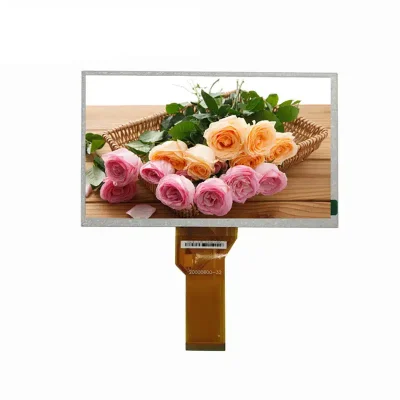
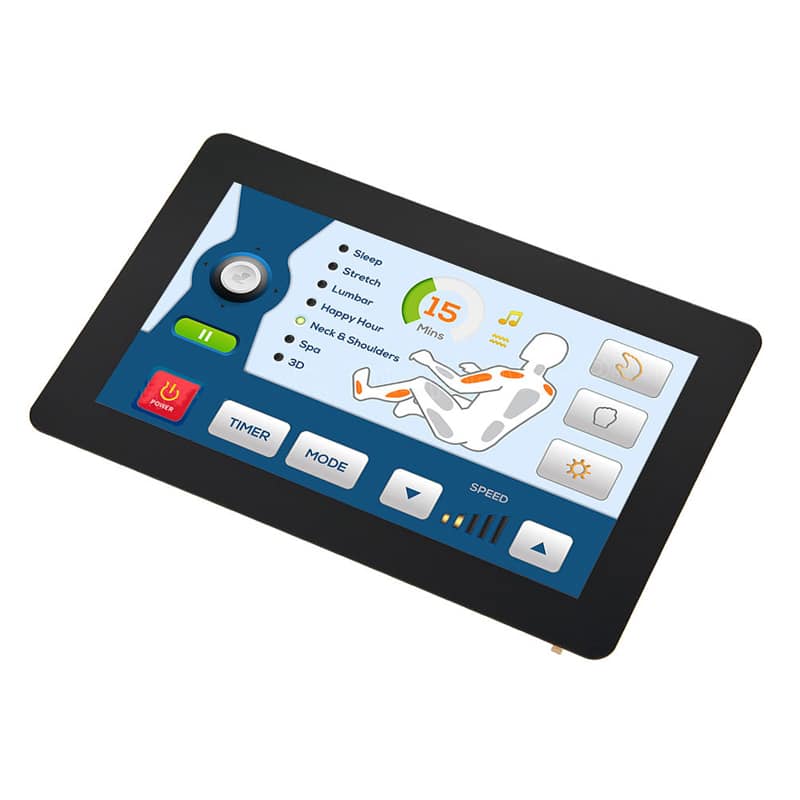
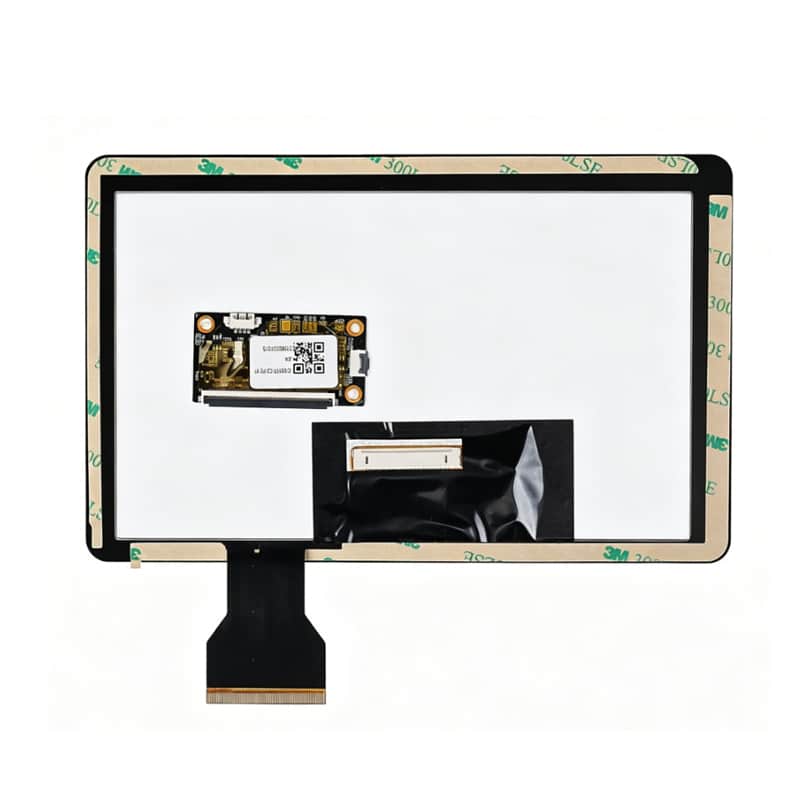
The 7 Inch RGB Touch LCD Display is a cost-efficient 800×480 TN TFT module for embedded HMI, automotive control panels, industrial equipment interfaces, smart home terminals, and OEM control devices. It combines a 7.0 inch transmissive TFT panel, RGB 50-pin FPC interface, 500 cd/m² typical brightness, projected capacitive touch, GT911 touch controller, and compact 165.0 × 100.0 × 7.6 mm module structure. It is designed for projects that need practical display performance, standard RGB integration, and configurable touch capability.
At a Glance: 7 Inch TN RGB TFT Touch Display Highlights
- 7.0 inch TN TFT LCD module with 800 × 480 resolution for standard embedded HMI layouts.
- RGB 50-pin FPC interface supports direct integration with compatible embedded boards and control systems.
- 500 cd/m² typical brightness supports indoor, equipment-panel, and semi-bright interface environments.
- Projected capacitive touch panel uses GT911 touch IC for interactive control applications.
- Touch panel supports 5 points by default, with custom 10-point touch available for project evaluation.
- G+G touch structure, ≥86% transparency, and ≥6H hardness support durable front-panel operation.
- -20°C to +70°C operating temperature range supports many automotive, industrial, and embedded applications.
Product Overview of the 7 Inch RGB Touch LCD Display
The 7 Inch RGB Touch LCD Display gives OEM engineers a practical interactive display module when a project needs standard resolution, RGB interface compatibility, capacitive touch, and controlled cost. Its 800×480 pixel format is widely used in embedded interfaces, making it suitable for dashboards, control menus, operation panels, icons, status information, and equipment prompts.
This product is positioned differently from higher-cost IPS or high-brightness outdoor modules. Its TN normally white transmissive TFT structure provides a straightforward display solution for control panels and instrumentation where the viewing direction, mechanical placement, and operating environment can be defined during system design. The 6 o’clock viewing direction should be reviewed carefully against the final product orientation.
For procurement teams, the module’s value comes from a combination of 500 cd/m² luminance, RGB 50-pin interface, projected capacitive touch, compact mechanical structure, and customization options such as FPC design, backlight type and brightness, touchscreen, and cover glass. Engineers should confirm the drawing, RGB pin definition, touch route, display timing, cover design, and sample test results before batch production.
Key Features of the 7 Inch RGB Touch LCD Display
| Key Feature | B2B Value |
|---|---|
| 7.0 inch TN TFT display | Provides a cost-efficient screen size for embedded HMI, automotive controls, and equipment interfaces. |
| 800 × 480 resolution | Supports standard GUI pages, icons, parameter displays, menus, and control prompts. |
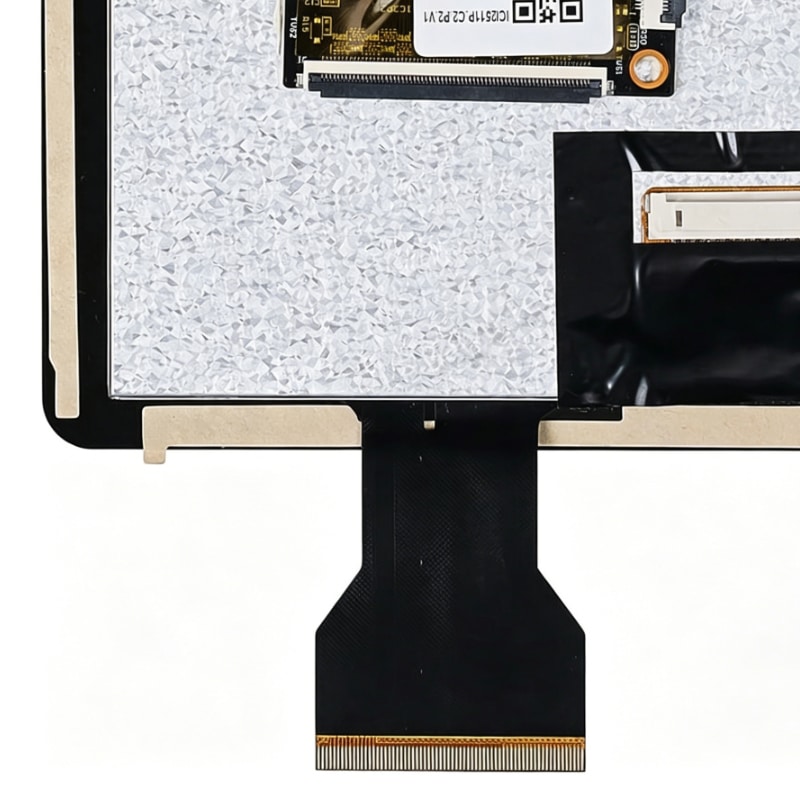
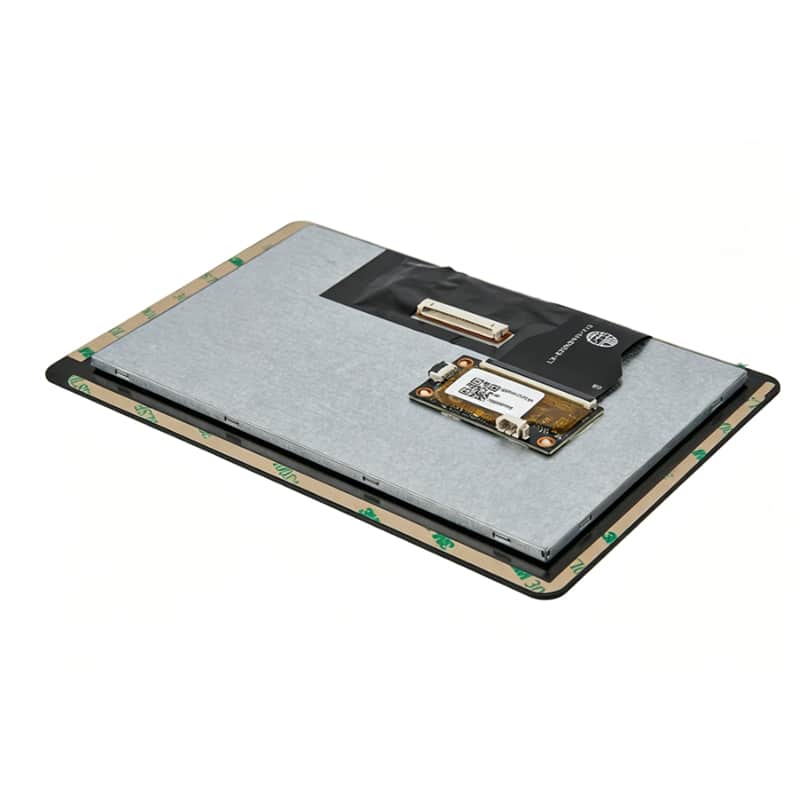
| RGB 50-pin FPC interface | Helps engineers connect the module to compatible embedded boards and controller systems. |
| 500 cd/m² typical brightness | Improves readability for indoor and semi-bright equipment-panel environments. |
| Projected capacitive touch | Supports interactive control without relying on separate button-heavy front panels. |
| GT911 touch controller | Provides a defined touch-controller path for embedded touch integration review. |
| 5-point touch with 10-point option | Supports standard multi-touch input and allows project-level 10-point customization evaluation. |
| G+G touch structure and ≥6H hardness | Supports durable touch operation for industrial, commercial, and automotive-style interface panels. |
Technical Specifications of the 7 Inch RGB 50-Pin TFT Touch Module
| Specification | Value |
|---|---|
| Product Type | 7 Inch RGB TFT LCD Touch Display |
| Display Size | 7.0 inch |
| Resolution | 800 × 480 |
| Display Mode | TN, Normally White, Transmissive TFT |
| Brightness | 500 cd/m² (Typ.) |
| Display Interface | RGB, FPC 50 pins |
| Touch Type | Projected Capacitive Touch Screen |
| Touch Interface | I2C |
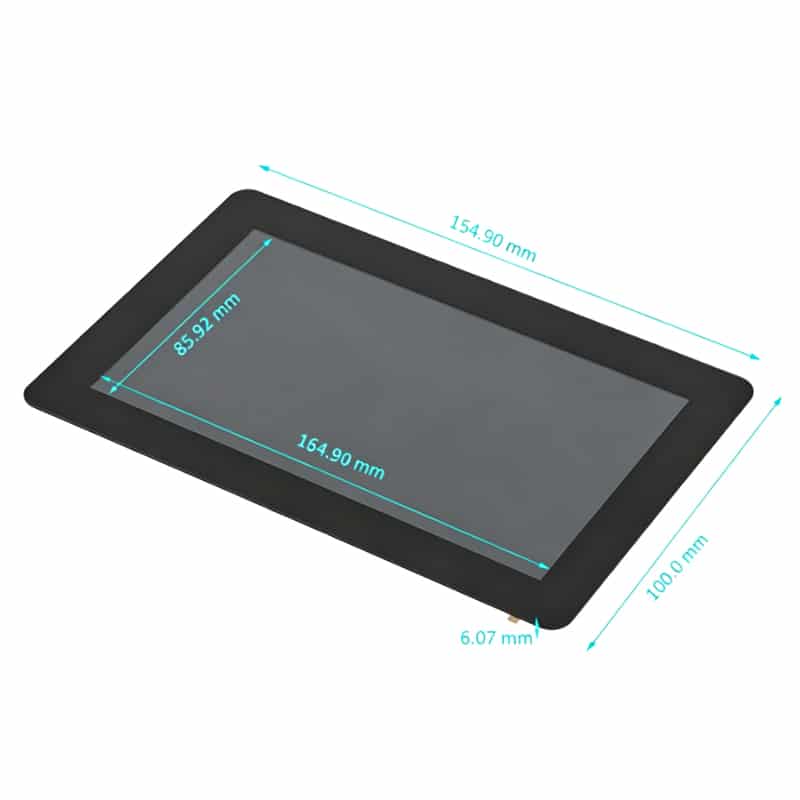
| Module Size | 165.0(W) × 100.0(H) × 7.6(T) mm |
| Operating Temperature | -20°C to +70°C |
These specifications should be checked against the host board, mechanical housing, front cover, cable route, and expected display environment. The RGB 50-pin interface affects electrical integration, the TN viewing direction affects installation orientation, and the projected capacitive touch stack affects cover design and touch validation.
Why Choose This 7 Inch TN TFT Touch Display?
This 7 inch TN TFT touch display is suitable when the project needs a practical, cost-conscious display module rather than a premium IPS or outdoor sunlight-readable panel. Its 800×480 resolution, 500 cd/m² brightness, RGB 50-pin interface, and integrated PCAP touch provide a balanced platform for control-oriented embedded devices.
800×480 Resolution for Standard HMI and Instrumentation Screens
The 800×480 resolution remains a common choice for 7 inch embedded displays because it supports familiar GUI proportions, readable icons, and straightforward interface design. For automotive controls, industrial panels, and embedded devices, this resolution can show status information, configuration menus, warning prompts, and touch buttons without forcing a larger housing.
The product is especially useful when the application does not need a very high pixel density or sunlight-readable brightness. Engineers can allocate system resources efficiently while keeping the user interface clear enough for common control tasks. Font size, contrast, UI color palette, and button spacing should still be tested on a real sample.
TN Normally White Display with Defined Viewing Direction
The TN normally white transmissive TFT structure gives the module a practical display foundation for defined viewing-angle installations. Unlike IPS displays, TN panels have a more directional viewing profile, so the 6 o’clock viewing direction and 50/70/70/70 typical viewing angle should be reviewed in the final mounting orientation.
This makes the module well suited to equipment where the user position is predictable, such as a dashboard, control box, embedded front panel, or fixed operator station. If the final device must be readable from wide off-axis positions, the mechanical angle and user posture should be validated during sample testing.
Display Performance of the 7 Inch RGB TFT Module for Control Panels
The 7 inch RGB TFT module supports clear control-panel interaction through 500 cd/m² brightness, 16.7M color capability, 500:1 typical contrast, and a capacitive touch layer. Its performance profile is best matched to indoor or controlled-light equipment environments.
500 cd/m² Brightness for Indoor and Semi-Bright Equipment Use
The 500 cd/m² typical brightness gives the display stronger visibility than many low-brightness embedded modules while remaining appropriate for indoor control panels, smart terminals, automotive-style interfaces, and semi-bright environments. Brightness suitability depends on final cover glass, UI contrast, viewing distance, installation angle, and ambient light.
For direct sunlight or window-facing installations, brightness alone is not enough. Anti-glare coating, optical bonding, cover glass reflection, enclosure shading, thermal management, and system-level testing should be evaluated before using the module in high ambient-light conditions.
16.7M Color and 500:1 Contrast for Practical UI Rendering
The 16.7M color support and 500:1 typical contrast help the module render icons, warning colors, interface backgrounds, and status screens. In embedded HMI design, color can help separate function groups, highlight warnings, and guide operator interaction.
Because the panel is TN, UI designers should avoid relying on subtle color differences at extreme viewing angles. High-contrast icons, clear button labels, and readable font sizes are recommended for real equipment operation.
PCAP Touch Surface for Interactive Embedded Devices
The projected capacitive touch panel enables touch operation for menus, controls, and interface navigation. The module supports 5 touch points, with custom 10-point touch available, so the touch requirement should be selected based on the application. Many equipment interfaces only need single-touch or basic multi-touch, while more advanced products may require gesture interaction.
The touch panel’s ≥86% transparency supports display clarity through the touch layer, while ≥6H hardness helps protect the front surface against regular use. If gloves, moisture, thick cover glass, or special coatings are required, sample validation is necessary.
Integration and Mounting Options for RGB 50-Pin Embedded LCD Projects
RGB 50-pin embedded LCD projects should begin with electrical compatibility, then move into mechanical stack, touch routing, firmware, and sample validation. This module can be efficient to integrate when the host platform already supports RGB TFT output.
RGB 50-Pin FPC Interface and Controller Board Matching
The RGB 50-pin FPC interface should be matched with the host board’s display output, timing parameters, voltage levels, and connector definition. Engineers should confirm the RGB mapping, pixel clock, sync signals, FPC pitch, cable route, and EMI environment before finalizing the PCB.
If the system uses HDMI, USB-C, MIPI, or another host signal, a compatible control board may be needed. Controller-board matching should be evaluated at the project level and not assumed from the module alone.
I2C Touch Controller and GT911 Integration
The projected capacitive touch panel uses GT911 and I2C touch interface data from the provided specification. This means the host controller or touch-driver firmware should support the selected touch controller path. Touch validation should include coordinate accuracy, multi-touch response, wake behavior, firmware recognition, and operation with the final cover glass.
If the buyer needs custom 10-point touch, the requirement should be confirmed early so the touch firmware, controller configuration, and sample test plan can be aligned.
Mechanical Fit, FPC Design, and Front Cover Planning
The module size of 165.0(W) × 100.0(H) × 7.6(T) mm gives mechanical engineers a clear baseline for enclosure design. The active area, front opening, bezel, FPC bend radius, connector location, screw or adhesive region, and cover-glass stack should be reviewed before tooling.
FPC design is listed as a customization option, which is important for compact devices. A small change in connector direction, FPC length, or cable exit position can simplify assembly and reduce enclosure conflicts.
Recommended Applications for Automotive and Embedded HMI Displays
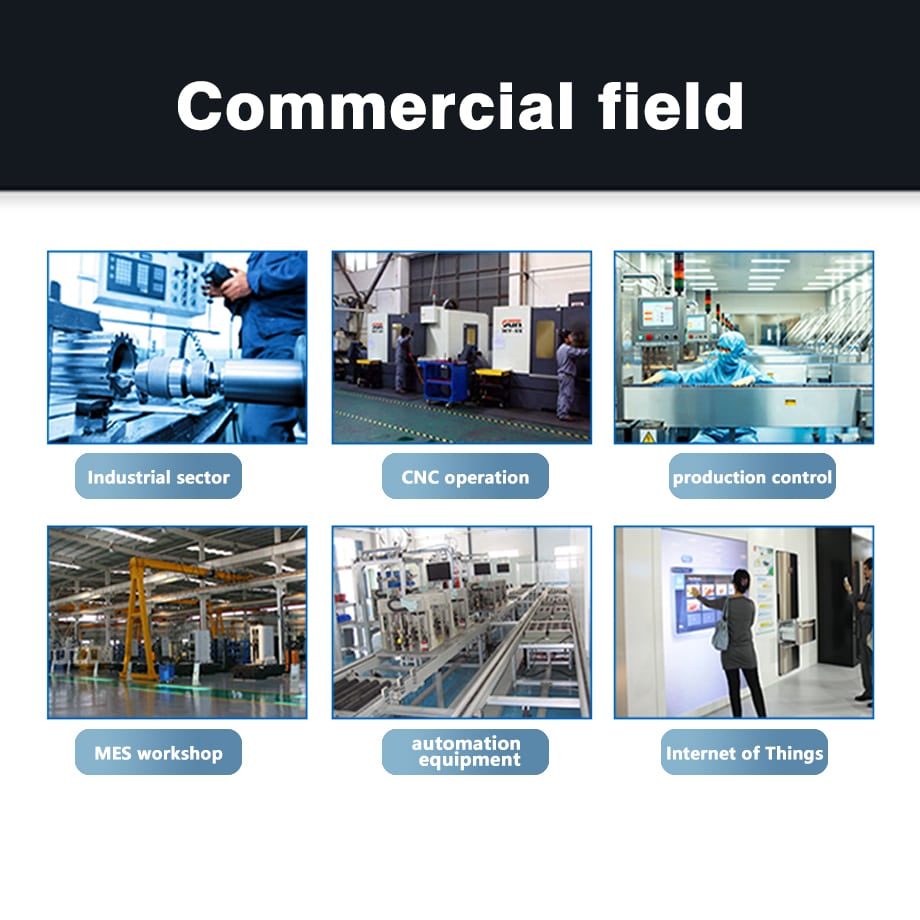
This display is best suited for embedded systems where the user position is defined, touch interaction is needed, and RGB interface compatibility is preferred. It is a practical choice for equipment designers who need balanced performance without unnecessary high-end display specifications.
Automotive Dashboards and Control Panels with Defined Viewing Positions
Automotive-style dashboards and control panels often have a predictable viewing direction and fixed installation angle. The 7 inch TN display can be evaluated for climate control, seat control, small function panels, auxiliary interfaces, and control screens where 800×480 resolution is sufficient.
Industrial HMI Systems Requiring Cost-Efficient Touch Control
Industrial HMI equipment often needs durable touch control, readable UI pages, and stable embedded integration. This module’s RGB interface, 500 cd/m² brightness, capacitive touch, and -20°C to +70°C operation make it suitable for control boxes, production equipment, testing devices, and parameter-setting panels.
Smart Home and Building Control Terminals
Smart home terminals and building control panels can use the display for lighting, HVAC, access control, room control, and system settings. The 7 inch size gives enough interface area for touch buttons and icons while keeping the device compact for wall-mounted or embedded control products.
Medical Equipment Interfaces and Embedded Control Devices
Medical equipment interfaces and embedded control devices require clear menu navigation, durable front surfaces, and predictable integration. This module may be evaluated for non-diagnostic user interfaces, device controls, and equipment status panels. Any medical compliance or certification requirement must be confirmed separately through project documentation and testing.
Customization Options for 7 Inch TFT Touch Display Projects
Customization for 7 inch TFT touch display projects can be evaluated across the FPC, backlight, touchscreen, cover glass, mechanical design, and controller-board integration. Confirmed customization options include FPC design, backlight type and brightness, touchscreen, and cover glass.
Project-level options may include brightness adjustment, interface adaptation, cover glass size and shape, glass thickness, silk-screen printing, anti-glare coating, anti-reflection coating, anti-fingerprint coating, optical bonding, custom FPC routing, cable planning, and housing review. These should be treated as engineering evaluation items unless they are confirmed in the quotation and drawing.
For OEM programs, early review should include the target application, required brightness, touch behavior, operating temperature, control board, enclosure drawing, front-cover stack, and estimated quantity. This helps reduce risk before sample build and mass production.
Procurement and Engineering Checklist for 7 Inch RGB TFT Display Selection
A 7 inch RGB TFT display selection should verify the interface, viewing direction, touch route, mechanical fit, and operating environment before production. The following checklist supports practical procurement and engineering decisions.
- Confirm RGB 50-pin compatibility: review timing, pinout, voltage levels, FPC pitch, and host-board support.
- Validate the 800×480 UI layout: check font size, button spacing, icon clarity, and menu structure on real content.
- Review TN viewing direction: confirm the 6 o’clock viewing direction matches the product’s installation angle and user position.
- Test brightness in the target environment: evaluate 500 cd/m² with the final cover glass, UI colors, and ambient light.
- Confirm touch requirements: decide whether 5-point touch is sufficient or whether custom 10-point touch is needed.
- Review mechanical drawing: verify module size, active area, touch outline, FPC route, connector position, and enclosure clearance.
- Evaluate cover glass and bonding: confirm hardness, transparency, coating, thickness, and touch behavior after front-stack changes.
- Run sample validation: test display startup, touch accuracy, temperature behavior, cable routing, EMI environment, and long-duration use.
RGB Interface / Touch / Mounting Selection Guide for 7 Inch TFT LCD Projects
For 7 inch TFT LCD projects, interface, touch, and mounting should be reviewed as one system. The RGB 50-pin interface affects the controller board, the I2C touch route affects firmware and connector planning, and the TN viewing direction affects enclosure angle. Sample testing is recommended before tooling, especially when cover glass, FPC design, or custom 10-point touch is required.
FAQ
About 7 Inch RGB Touch LCD Display
What is a 7 Inch RGB Touch LCD Display used for?
Does this module use an RGB 50-pin interface?
Is the display IPS or TN?
What brightness does this 7 inch TFT display provide?
How many touch points does the PCAP touch panel support?
What touch controller does the module use?
Is this module suitable for automotive control panels?
Can the backlight or brightness be customized?
What mechanical dimensions should engineers review?
What should buyers provide for a quotation?
Freya Yang
+86 18318948097