Freya Yang
+86 18318948097
+852 62667476
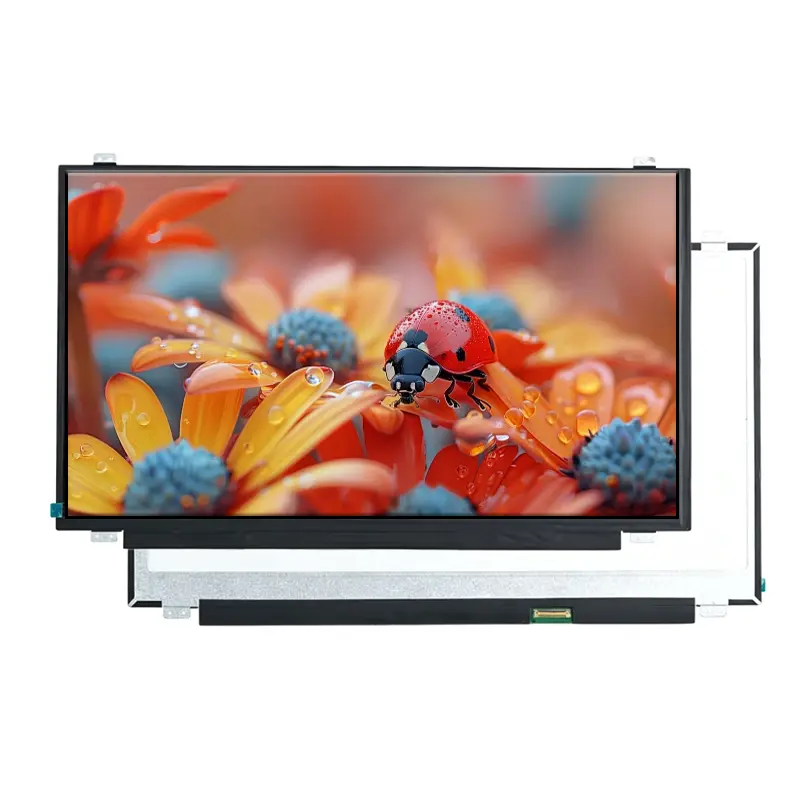
15.6 Inch FHD eDP LCD Panel 1920×1080 IPS for Laptops Display Module
Model P/N
Size
Resolution
Brightness
Viewing Angle
Connector Type
Operating Temp
Overall(mm)
huisoar
HS156R40BM22
Brand
Panel Size (inch)
Model P/N
Resolution
Brightness (nits)
Viewing Angle
Contrast Ratio
Response Time
Overall (mm)
Active Area (mm)
Refresh Rate
Bezel Opening
Display Colors
Panel Type
Connector Type
Surface Treatment
Operating Temp
Touchscreen Type
Storage Temp
Work Mode
Pixel Format
Input Voltage (V)
Weight (g)
Designed For
1920×1080 IPS Non-Touch Display Module with 30-Pin eDP Interface
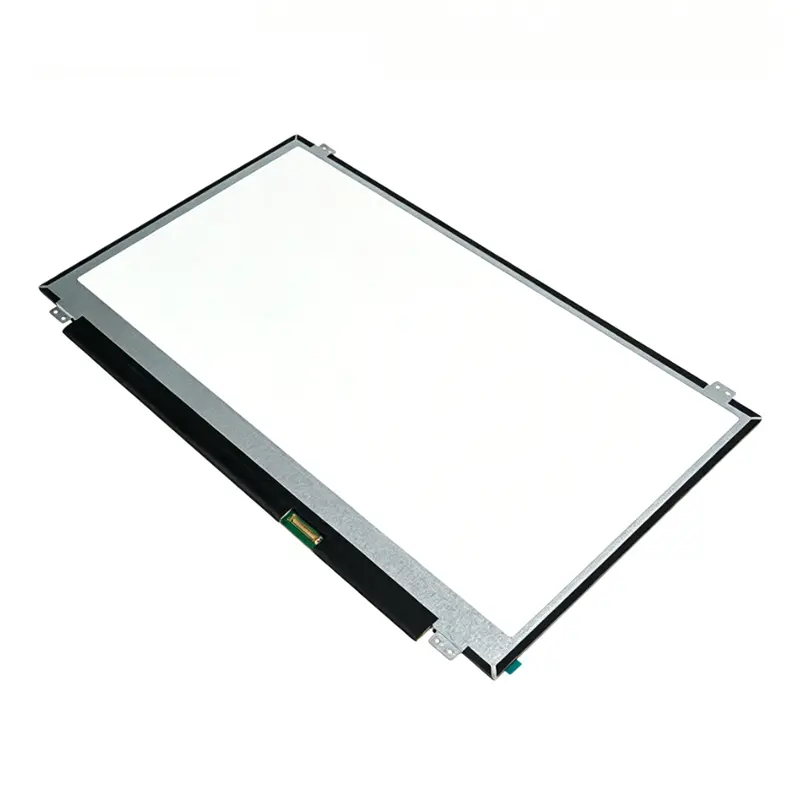
The 15.6 Inch FHD eDP LCD Panel is a 1920×1080 IPS / ADS non-touch display module for laptop replacement, notebook upgrades, portable terminals, education devices, office equipment, and embedded computing systems. It uses a 30-pin eDP interface, supports eDP 1.2 with HBR1 transmission, and provides 220 cd/m² minimum brightness for indoor viewing environments. With a slim 359.5 × 223.75 × 3.3 mm structure, it is suitable for OEM buyers and engineers who need a standard FHD notebook-format display.
At a Glance: 15.6 Inch FHD Laptop LCD Panel Highlights
- 15.6 inch FHD LCD panel designed for laptop replacement, notebook display repair, and embedded computing.
- 1920 × 1080 resolution supports Full HD visual output for office, education, portable terminal, and industrial visualization use.
- eDP 30-pin connector supports modern laptop motherboard and embedded controller integration.
- IPS / ADS normally black transmissive display structure provides wide 85/85/85/85 viewing angles.
- 220 cd/m² minimum brightness is suitable for indoor notebook, office, classroom, and controlled-light environments.
- Non-touch configuration supports projects that require a simple display-only replacement panel.
- Slim 3.3 mm module thickness helps fit space-constrained laptop lids and compact embedded device housings.
Product Overview of the 15.6 Inch FHD eDP LCD Panel
The 15.6 Inch FHD eDP LCD Panel is a display-only module built for buyers who need a standard notebook-size screen with Full HD resolution and eDP compatibility. It solves a common sourcing requirement for laptop refurbishment, notebook repair, embedded computing, portable terminals, and OEM display integration: a thin 15.6 inch panel with a modern eDP 30-pin interface and reliable indoor visual performance.
Its 1920×1080 resolution makes it suitable for office work, education systems, multimedia display, data dashboards, and embedded HMI visualization where Full HD detail is required. The IPS / ADS normally black transmissive structure supports stable wide-angle viewing, which is important for notebook users, collaborative workstations, and embedded systems that may be viewed from different positions.
For procurement and engineering teams, the most important selection points are eDP interface compatibility, mechanical size, connector location, non-touch requirement, brightness level, operating temperature, and backlight design. The panel should be confirmed against the target laptop motherboard, embedded controller, cable, mounting points, cover structure, and sample validation plan before bulk purchase.
Key Features of the 15.6 Inch FHD eDP LCD Panel
| Key Feature | B2B Value |
|---|---|
| 15.6 inch notebook panel format | Fits common laptop replacement, notebook upgrade, and portable computing applications. |
| 1920×1080 Full HD resolution | Supports sharp image output for documents, UI content, education devices, and embedded visualization. |
| eDP 30-pin connector | Helps match modern laptop motherboards and embedded display controller boards. |
| eDP 1.2, HBR1, 2 lanes | Provides a defined high-speed signal path for Full HD display integration. |
| IPS / ADS normally black display | Supports wide viewing and stable image quality for multi-angle use. |
| 220 cd/m² minimum brightness | Suitable for indoor laptop, office, classroom, and controlled-light equipment use. |
| Non-touch structure | Reduces integration complexity for display-only laptop replacement and embedded systems. |
| 3.3 mm slim module thickness | Supports compact notebook lids, slim enclosures, and portable terminal design. |
Technical Specifications of the 15.6 Inch FHD IPS Laptop LCD Panel
| Specification | Value |
|---|---|
| Product Type | 15.6 Inch FHD eDP IPS LCD Panel |
| Display Size | 15.6 inch |
| Resolution | 1920 × 1080 |
| Display Mode | IPS / ADS, Normally Black, Transmissive |
| Brightness | 220 cd/m² (Min.) |
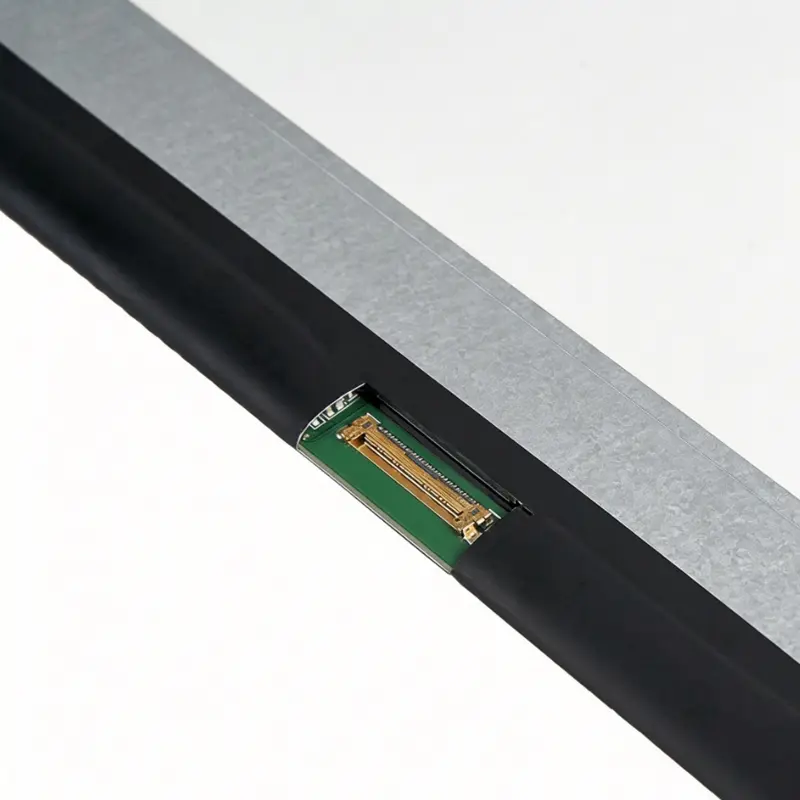
| Interface | eDP, 30 pins connector |
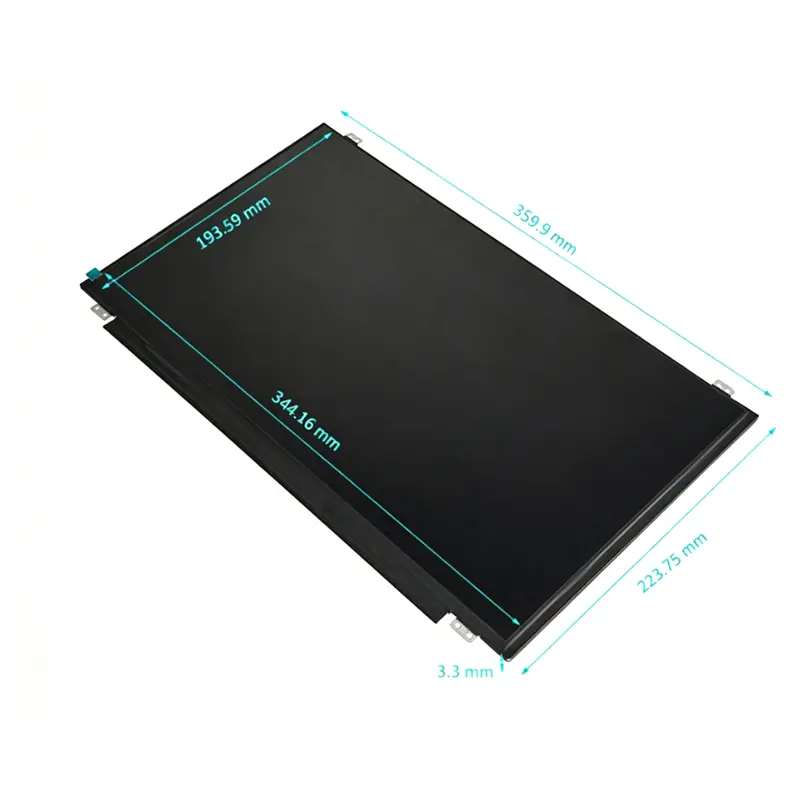
| Active Area | 344.16 × 193.59 mm |
| Module Size | 359.5 × 223.75 × 3.3 mm |
| Viewing Angle | 85/85/85/85 (Typ.) |
| Touch Type | Non-touch |
These specifications should be reviewed as a complete system fit. A correct eDP connector is not enough by itself; engineers also need to confirm panel timing, cable routing, mechanical fit, backlight power, mounting points, thickness, cover compatibility, and whether the target device requires touch or non-touch display behavior.
Why Choose This 15.6 Inch IPS Laptop LCD Panel?
This 15.6 inch IPS laptop LCD panel is a practical selection when the project needs a standard FHD notebook-format display with eDP integration and indoor visual performance. It is especially suitable for buyers who need a non-touch replacement panel or a thin display module for compact embedded computing systems.
1920×1080 Full HD Resolution for Notebook Replacement and Embedded Visualization
The 1920×1080 resolution is a widely used standard for 15.6 inch laptop displays because it balances sharp image quality with compatibility across many notebook and embedded platforms. It supports office documents, education content, industrial dashboards, graphical user interfaces, and multimedia display without requiring a higher-bandwidth 4K system.
For laptop replacement, the resolution must match the original system’s motherboard, cable, BIOS or display firmware expectations, and mechanical structure. For embedded computing, engineers should confirm that the selected controller board supports the required eDP timing and Full HD output format.
Slim Non-Touch Panel Structure for Compact Device Integration
The 3.3 mm panel thickness supports slim notebook lids and compact embedded housings where depth is limited. A non-touch configuration can be beneficial when the target product only needs a display output and does not require touch sensing, cover-glass stack integration, or touch controller firmware.
Non-touch design can also simplify replacement and procurement decisions, but buyers should verify that the target device does not require a touch digitizer, cover lens, or bonded front assembly. If touch is needed, it should be treated as a separate project-evaluation item rather than a default configuration.
Display Performance of the FHD IPS eDP Panel for Indoor Laptop Use
The FHD IPS eDP panel is optimized for indoor visual clarity rather than outdoor sunlight-readable operation. Its 220 cd/m² minimum brightness, wide viewing angle, Full HD resolution, and 1200:1 typical contrast support daily-use laptop and embedded display tasks in controlled environments.
220 cd/m² Brightness for Office, Classroom, and Notebook Environments
The 220 cd/m² minimum brightness is suitable for typical indoor environments such as offices, classrooms, home workspaces, service terminals, and embedded control devices used away from strong sunlight. Buyers should evaluate brightness with the final cover, bezel design, viewing distance, and target user environment.
For outdoor, window-facing, or high ambient-light devices, the brightness level may not be sufficient. In those cases, buyers should evaluate higher-brightness alternatives, anti-glare cover lens options, optical bonding, enclosure shading, and thermal planning instead of assuming this panel will operate as a sunlight-readable display.
Wide Viewing Angle and Normally Black IPS / ADS Display Behavior
The 85/85/85/85 typical viewing angle supports consistent viewing from multiple directions. This is valuable for notebook users who adjust the screen angle, education devices used by students and instructors, and embedded terminals viewed by more than one person.
The normally black IPS / ADS transmissive mode helps maintain stable display appearance in typical indoor use. It also supports clear Full HD content presentation for text, charts, GUI elements, and images when the system is configured with suitable graphics output and display timing.
Color, Contrast, and Backlight Performance for Daily Operation
The panel supports 262K / 16.7M display color data and 72% NTSC according to the supplied specification, giving it practical color coverage for notebook, office, and embedded visualization tasks. The 1200:1 typical contrast ratio helps separate dark and light content in graphical interfaces and video display.
The 40-chip WLED backlight system has a typical lifetime of 20,000 hours. Final operating life depends on system brightness settings, thermal conditions, duty cycle, and application environment, so sample testing and system-level validation remain important for OEM projects.
Integration and Mounting Options for eDP 30-Pin Laptop LCD Panels
eDP 30-pin laptop LCD panels should be selected through interface matching, mechanical drawing review, cable planning, and sample validation. This panel is suitable when the host device supports the correct eDP connector, protocol, lane configuration, and physical module dimensions.
eDP 1.2, HBR1, 2-Lane Interface and Motherboard Matching
The panel uses eDP 1.2, HBR1, 2 lanes, and a 30-pin connector. These details matter because laptop panels are not interchangeable based on size alone. The motherboard, graphics output, cable, connector pinout, and backlight power must match the panel requirements.
For embedded systems, engineers should verify controller-board output, eDP lane configuration, signal integrity, connector orientation, and cable length. Incorrect matching may cause no display, unstable image output, brightness control problems, or backlight failure.
Mechanical Mounting, Thin Housing, and Cable Planning
The module size of 359.5(H) × 223.75(V) × 3.3(D) mm should be checked against the target laptop lid, enclosure, bezel, and mounting structure. The active area of 344.16 × 193.59 mm should align with the visible window and front frame.
Cable routing is also important. The 30-pin connector position, cable length, folding path, strain relief, and hinge clearance should be reviewed before sample approval. For embedded systems, bracket design, panel protection, and airflow around the backlight should also be evaluated.
Backlight Power and System-Level Review
The backlight specification is 15 V / 160 mA with 40-chip WLEDs. Engineers should confirm that the target device can provide the correct backlight power and brightness control method. The drawing notes also reference backlight luminance and luminance uniformity, which should be validated in the final system.
Power and thermal planning are especially important when the panel is installed in slim housings or embedded devices with limited airflow. The panel’s operating temperature is 0°C to +50°C, so it is best suited for typical indoor electronics rather than wide-temperature outdoor systems.
Recommended Applications for Laptop Replacement and Embedded Computing
This display panel is best suited for projects that need a 15.6 inch Full HD non-touch screen with eDP interface compatibility. It is not positioned as an outdoor display, industrial high-brightness signage panel, or touch-screen assembly.
Laptop Screen Replacement and Notebook Upgrade Projects
Laptop repair and refurbishment projects often require a display panel that matches size, resolution, connector type, thickness, and non-touch configuration. This panel can be evaluated for 15.6 inch notebook screen replacement where the original system uses compatible FHD eDP 30-pin architecture.
Industrial Embedded Computers with Indoor Display Requirements
Industrial embedded computers and compact terminals may require a 15.6 inch display for visualization, monitoring, diagnostics, or operator interfaces. This panel is suitable for controlled indoor environments where Full HD content, eDP integration, and slim mechanical design matter more than rugged outdoor brightness.
Education and Office Devices Requiring FHD Visual Clarity
Education notebooks, office devices, training terminals, and shared workstations can use a 15.6 inch FHD display to present documents, web content, learning materials, and productivity interfaces. The wide viewing angle supports collaborative use, while the non-touch format keeps the display stack simpler.
Portable Terminals and OEM Computing Systems
Portable computing systems and OEM devices may need a thin 15.6 inch panel that can fit into a custom enclosure. The eDP interface and 3.3 mm module thickness make this panel a useful candidate for system integrators who can validate controller compatibility and mechanical fit.
Customization Options for 15.6 Inch eDP Display Panel Projects
Customization for 15.6 inch eDP display panel projects can be evaluated for backlight type and brightness, touch panel integration, cover lens requirements, cable planning, controller-board matching, and mechanical adaptation. These options should be treated as project-evaluation items unless confirmed in the drawing and quotation.
For laptop replacement buyers, compatibility is usually more important than customization. For OEM and embedded projects, however, a display supplier may review cover lens needs, touch upgrade feasibility, mechanical brackets, cable route, control-board matching, or enclosure fit.
If the project requires touch input, it should be confirmed separately because this baseline panel is non-touch. If the project requires outdoor readability, high brightness, anti-glare treatment, or optical bonding, those requirements should be reviewed before selecting the final display configuration.
Procurement and Engineering Checklist for 15.6 Inch eDP LCD Panel Selection
A 15.6 inch eDP LCD panel selection should confirm interface, dimensions, brightness, non-touch configuration, and sample compatibility before ordering. The following checklist helps prevent mismatches in laptop repair and OEM integration.
- Confirm display size and resolution: verify that the project requires a 15.6 inch 1920×1080 FHD display.
- Check eDP connector compatibility: confirm 30-pin connector, pinout, connector position, cable type, and motherboard support.
- Review eDP protocol and lanes: validate eDP 1.2, HBR1, 2 lanes, and controller-board timing support.
- Verify mechanical fit: compare 359.5 × 223.75 × 3.3 mm module size with the target laptop lid or enclosure.
- Confirm non-touch requirement: ensure the device does not require a touch digitizer, cover lens assembly, or bonded touch stack.
- Evaluate brightness environment: test 220 cd/m² minimum brightness under the target indoor lighting condition.
- Check backlight power: confirm the system supports the required backlight power and brightness control method.
- Run sample validation: test boot recognition, image stability, brightness control, cable fit, mounting, thermal behavior, and long-duration operation.
eDP Interface / Brightness / Mounting Selection Guide for 15.6 Inch Panels
For 15.6 inch panels, the key selection sequence is interface first, then mechanical fit, then optical performance. A panel with the correct size and resolution may still fail if the eDP pinout, cable, backlight power, or mounting points differ. Sample testing is strongly recommended before bulk procurement or installation into a custom enclosure.
FAQ
About 15.6 Inch FHD eDP LCD Panel
What is a 15.6 Inch FHD eDP LCD Panel used for?
Does this panel use a 30-pin eDP connector?
Is this panel touch or non-touch?
What brightness does this laptop LCD panel provide?
What resolution does the display support?
What is the module thickness?
Is the panel suitable for embedded industrial computers?
What viewing angle does the panel offer?
Can the backlight or cover lens be customized?
What should buyers provide before requesting a quotation?
Freya Yang
+86 18318948097