Freya Yang
+86 18318948097
+852 62667476
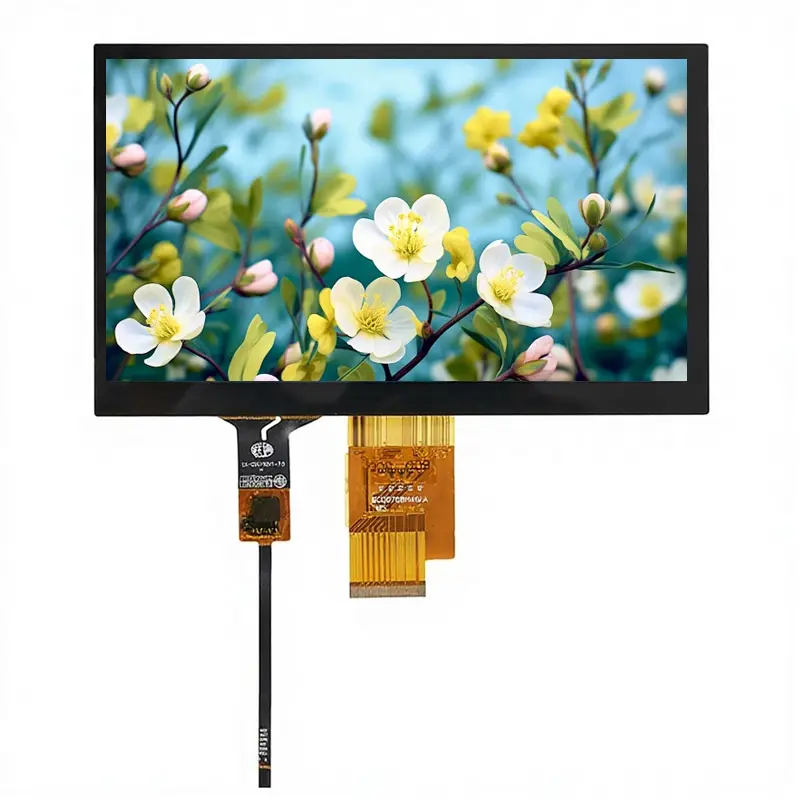
Low Reflectance TFT Touchscreen 7 inch 1024×600 LVDS PCAP Display Module
Model P/N
Size
Resolution
Brightness
Viewing Angle
Connector Type
Operating Temp
Overall(mm)
huisoar
HS070R2718-A25T
Brand
Panel Size (inch)
Model P/N
Resolution
Brightness (nits)
Viewing Angle
Contrast Ratio
Response Time
Overall (mm)
Active Area (mm)
Refresh Rate
Display Colors
Panel Type
Connector Type
Surface Treatment
Operating Temp
Touchscreen Type
Storage Temp
Work Mode
Pixel Format
Input Voltage (V)
Touch Interface
Control Type
Touch Structure
Weight (g)
Designed For
7-Inch 1024×600 TN TFT LCD with PCAP Touch, GT911 I2C, and 40-Pin LVDS
A Low Reflectance TFT Touchscreen is a 7-inch 1024×600 TN TFT LCD touch module for industrial HMIs, login terminals, smart equipment, and embedded control panels that need LVDS signal input, capacitive touch, and glass customization. It combines 500 cd/m² luminance, LVDS 6/8-bit 40-pin FPC, GT911 I2C 5-point PCAP, G+G structure, ≥85% transparency, and -20°C to +70°C operation.
At a Glance: 7-Inch LVDS PCAP Display Highlights
- 7.0-inch landscape display format for HMI, login, equipment-control, and POS interfaces.
- 1024×600 resolution supports clear menus, input screens, status pages, and control dashboards.
- LVDS 6/8-bit FPC 40-pin interface supports embedded display-controller integration.
- 500 cd/m² typical luminance fits indoor and moderately bright equipment environments.
- GT911 touch IC with I2C communication supports responsive projected capacitive touch.
- G+G PCAP structure provides ≥85% transparency and ≥6H surface hardness.
- Tempered glass and low-reflectance project options support customized front-panel design.
Product Overview of the Low Reflectance TFT Touchscreen
The Low Reflectance TFT Touchscreen is designed for OEM projects that need a compact 7-inch display with touch interaction and LVDS signal input. Its 1024×600 resolution gives enough horizontal space for login pages, equipment menus, parameter settings, alarms, and control buttons without moving to a larger display class.
This module is not positioned as a generic 7-inch LCD. It is better suited to projects where the front surface, touch stack, and embedded display interface must be reviewed together. The source product title highlights custom size tempered glass and low reflectance, while the confirmed specification table shows PCAP touch, GT911 control, LVDS input, and 500 cd/m² luminance.
For engineers, the most important selection point is compatibility. The display side uses LVDS 6/8-bit through a 40-pin FPC, while the touch side uses GT911 over I2C. Both must be checked with the host board, firmware, mechanical drawing, and front cover design before sample approval.
Key Features of the Low Reflectance TFT Touchscreen
| Feature | B2B Value |
|---|---|
| 7.0-inch 1024×600 format | Fits compact HMI, access terminal, POS, and smart-device layouts. |
| TN normally white TFT | Provides a cost-efficient display structure for embedded interfaces. |
| 500 cd/m² typical brightness | Supports many indoor and semi-bright equipment environments. |
| LVDS 6/8-bit interface | Helps transmit display data for embedded boards using LVDS output. |
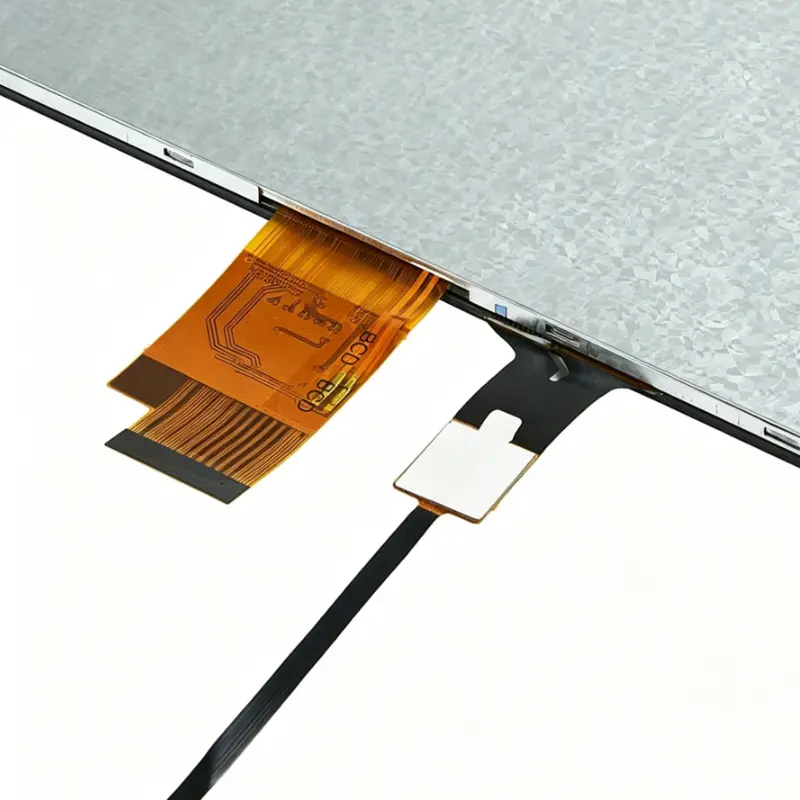
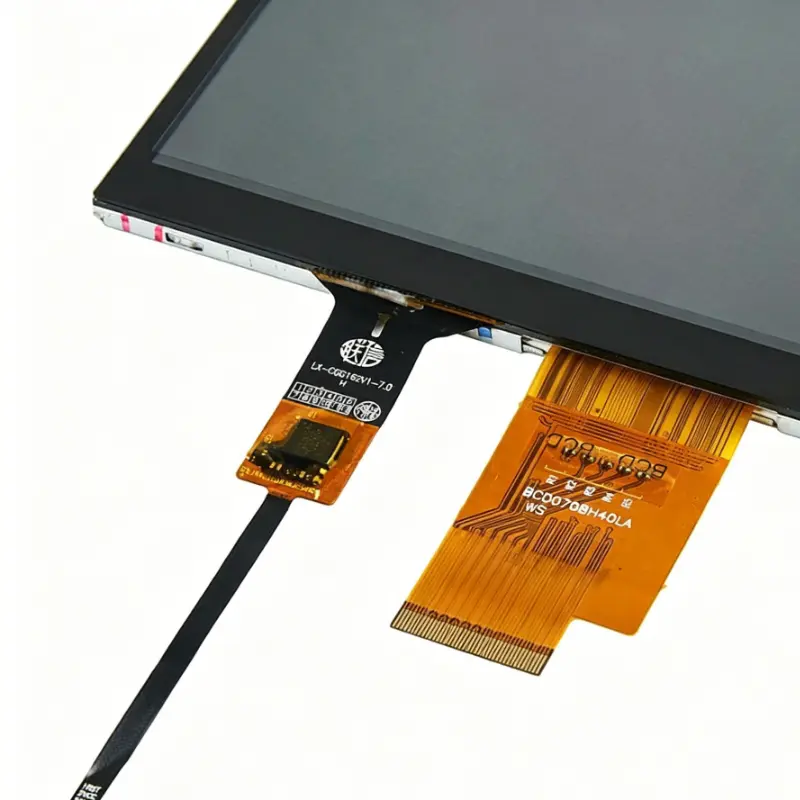
| FPC 40-pin connection | Gives engineers a defined connector route for board matching. |
| GT911 touch controller | Provides a common I2C PCAP touch-control path. |
| 5-point capacitive touch | Supports modern tap, swipe, and multi-point interaction. |
| G+G touch structure | Supports durable front-touch integration. |
| ≥85% touch transparency | Helps preserve display visibility through the touch stack. |
| ≥6H surface hardness | Improves resistance against frequent operation and surface wear. |
Technical Specifications of the 7-Inch LVDS PCAP Display
| Specification | Confirmed Value |
|---|---|
| Display Size | 7.0 inch |
| Resolution | 1024 × RGB × 600 |
| Display Mode | TN, normally white, transmissive TFT |
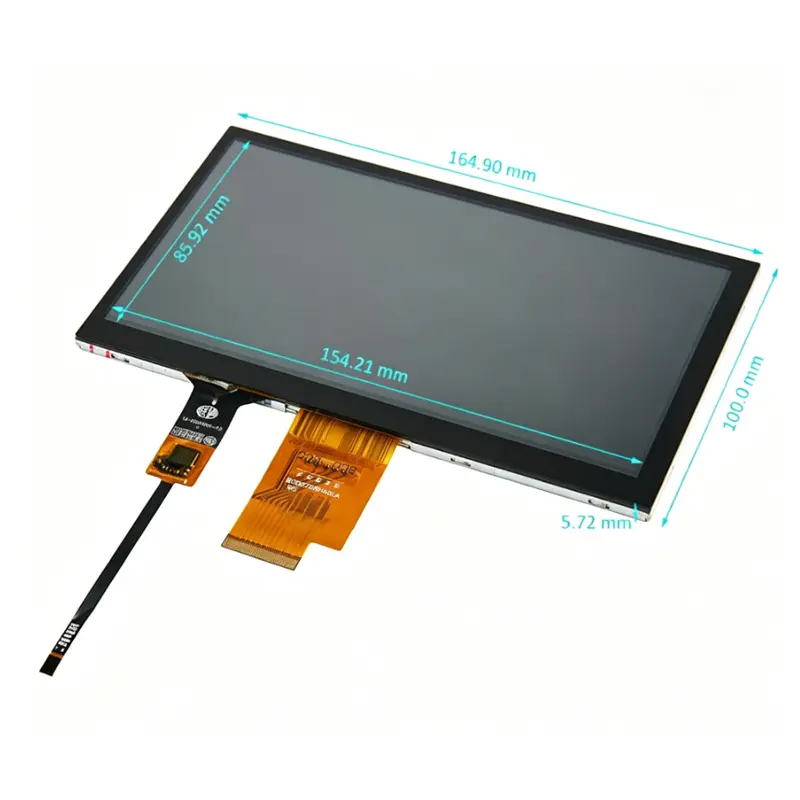
| Active Area | 154.21 × 85.92 mm |
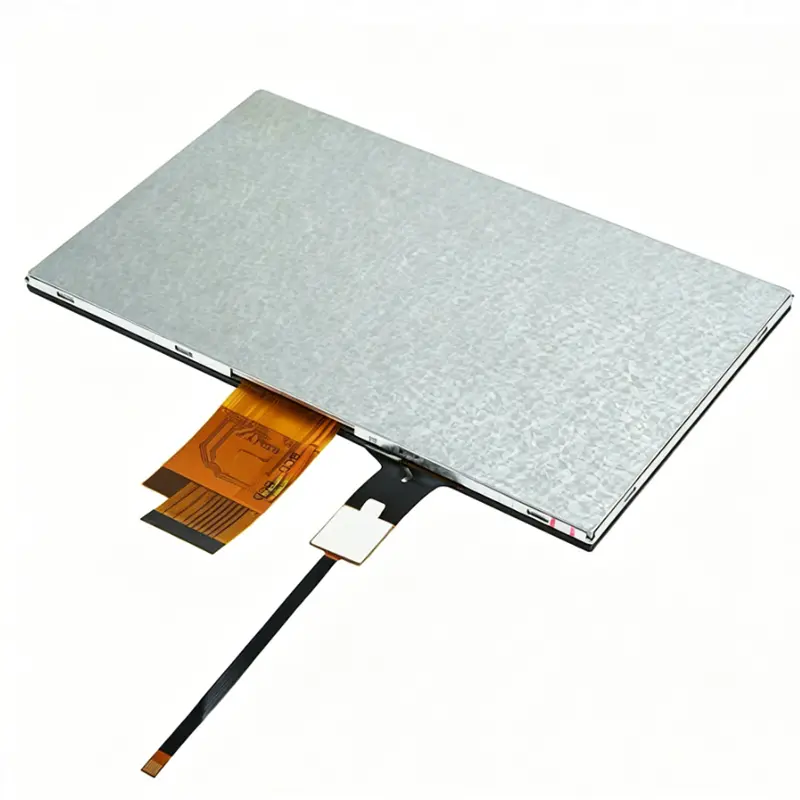
| LCM+Touch Module Size | 164.9 × 100.0 × 5.72 mm |
| Brightness | 500 cd/m² typical |
| Contrast Ratio | 300:1 typical |
| Response Time | 25 ms typical |
| Dot Pitch | 0.1506 × 0.1432 mm |
| Interface | LVDS 6/8-bit, FPC 40 pins |
| Touch Type | Projected capacitive touch screen |
| Touch IC | GT911 |
| Touch Interface | I2C |
| Touch Points | 5 points |
| Backlight | 27 white LEDs, 9.6V/180mA |
| Lifetime | 30,000 hours typical |
| Operating Temperature | -20°C ~ +70°C |
| Storage Temperature | -30°C ~ +80°C |
The specification set is suitable for embedded display evaluation, but final integration should confirm the FPC pinout, LVDS timing, touch coordinate mapping, glass border, cover thickness, active area alignment, and mechanical tolerance.
Why Choose This 7-Inch Touch Display for Login and Control HMIs?
1024×600 UI Space for Equipment Interfaces
A 7-inch 1024×600 screen is practical for login pages, device dashboards, system status pages, alarms, button grids, and configuration menus. It gives more horizontal workspace than smaller 4.3-inch and 5-inch screens while remaining compact enough for terminals, access devices, and embedded panels.
Tempered Glass and Low-Reflectance Project Fit
Many HMI products require a front surface that can handle frequent user interaction. The low-reflectance and tempered glass route is useful when the display must be placed behind a customized front cover or integrated into a finished product panel. The exact glass stack, reflectance target, cover thickness, and bonding method should be confirmed by project drawing.
Capacitive Touch for Modern User Interaction
The PCAP touch panel supports 5 touch points and uses a GT911 controller with I2C communication. This makes the module suitable for modern embedded interfaces where users expect smoother touch response than resistive touch panels. For gloves, water droplets, thick cover glass, or harsh environments, touch tuning should be validated by sample.
LVDS 40-Pin Integration and GT911 I2C Touch Routing
The late-middle engineering value of this Low Reflectance TFT Touchscreen is the split between display signal and touch control. The LCD uses LVDS 6/8-bit through a 40-pin FPC, so the host board must be checked for LVDS output format, pin assignment, clock polarity, cable length, power sequencing, and backlight drive.
The touch system should be reviewed separately. GT911 communicates through I2C, and firmware engineers should confirm the I2C address, reset pin, interrupt pin, touch orientation, coordinate mapping, and 5-point reporting. A stable project requires both the LVDS display and PCAP touch path to pass bring-up tests.
Display Performance for 500 cd/m² Equipment Panels
The 500 cd/m² typical brightness supports clear visibility in many indoor control panels, service terminals, medical devices, smart equipment, and POS interfaces. It should not be described as full outdoor sunlight readable without additional optical testing. If the target environment has strong ambient light, buyers should review cover glass, reflectance, bonding, UI color contrast, and backlight drive.
The TN normally white display structure supports cost-effective HMI design, but the viewing direction should be checked against the final mounting orientation. If operators view the display from above, below, or side angles, sample testing is recommended.
Recommended Applications for Embedded Touch Projects
Industrial HMI Panels
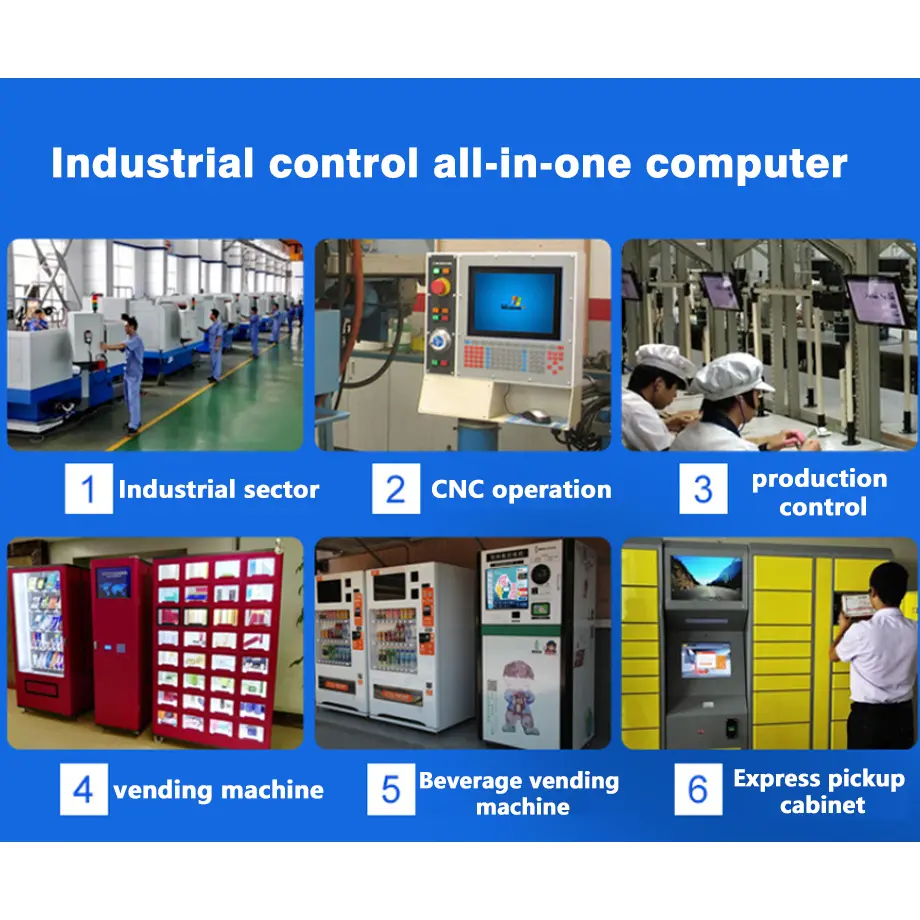
The module can be used in industrial control panels where operators need parameter input, system status, and alert pages. LVDS integration and PCAP touch make it suitable for embedded controller products.
Access-Control and Login Terminals
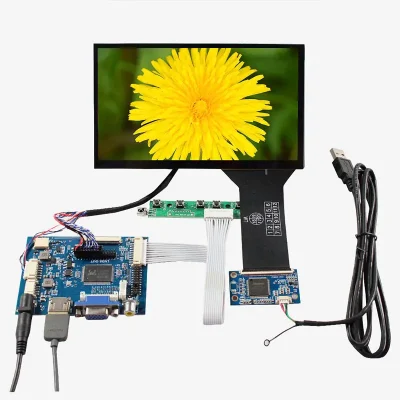
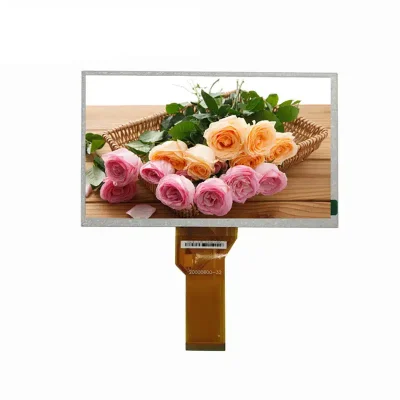
The product image and 7-inch layout fit login screens, authentication panels, entry terminals, and smart building interfaces. Buyers should confirm glass reflectance, front-panel durability, and touch response in the installed enclosure.
Smart Equipment and POS Systems
Smart equipment, payment terminals, service kiosks, and POS devices can use the module for menus, transaction prompts, and operator feedback. The 1024×600 layout gives adequate space for button-based UI design.
Medical and Diagnostic Devices
Medical instruments can use the display for readings, settings, and touch interaction. Final device-level validation should include cleaning method, cover glass, electrical safety, touch behavior, and regulatory requirements.
Customization Options for Low-Reflectance Touch Display Projects
Project evaluation can include FPC and interface design, LVDS timing review, 40-pin pinout and FPC direction, GT911 I2C touch tuning, backlight type and brightness adjustment, PCAP stack design, tempered glass panel, low-reflectance cover review, bonding method, mechanical drawing adaptation, packaging, sample validation, and controller-board support.
Procurement and Engineering Checklist
- Confirm the 1024×600 landscape UI layout using real fonts, icons, button sizes, and login-page spacing.
- Verify LVDS 6/8-bit host support, 40-pin FPC pinout, display timing, and power sequence.
- Confirm GT911 I2C touch route, reset/interrupt pins, touch orientation, and 5-point reporting.
- Check active area, LCM+touch module size, touch view area, glass border, and enclosure opening.
- Validate brightness and readability with the intended cover glass and ambient light.
- Review tempered glass thickness, low-reflectance target, bonding method, and front-panel durability.
- Confirm backlight drive: 27 white LEDs, 9.6V/180mA.
- Approve samples under real operating temperature, enclosure, touch, and EMI conditions.
FAQ
About Low Reflectance TFT Touchscreen Integration
Is this Low Reflectance TFT Touchscreen an IPS module?
What interface does the display use?
What touch controller is used?
Is the tempered glass included by default?
Can it be used for outdoor equipment?
What should be checked before production?
Freya Yang
+86 18318948097