
~
~
~
~
~
~
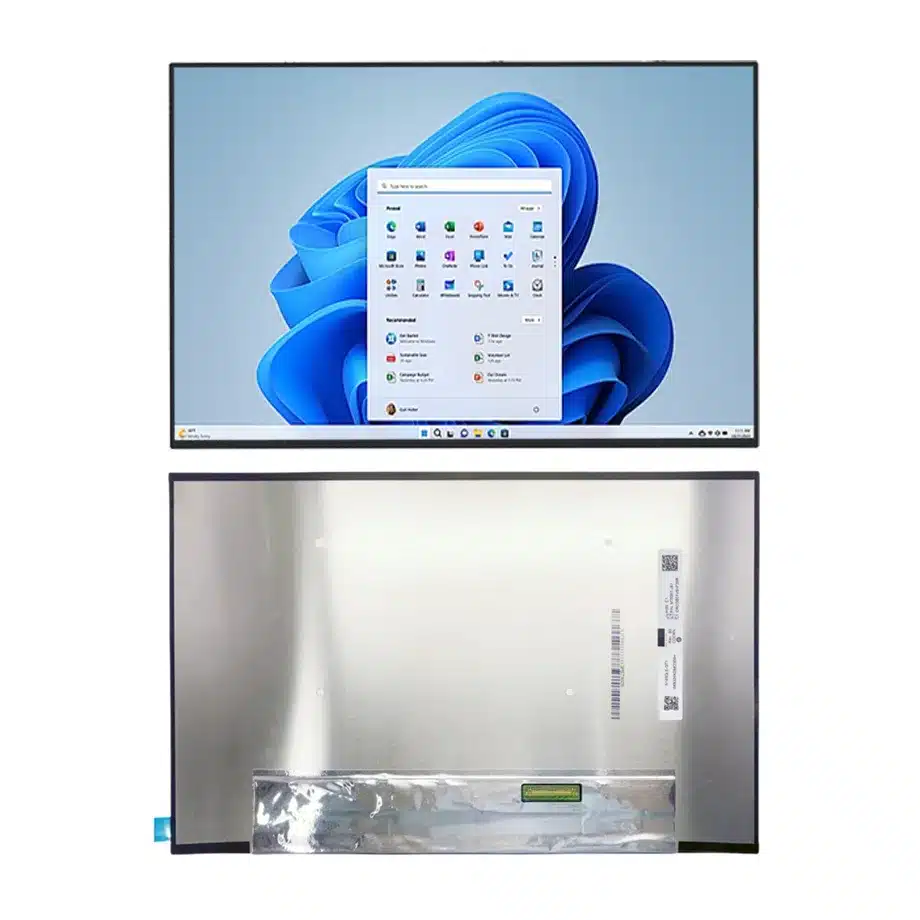
N140JLG-GT2 30-60VRR sRGB Laptop LCM Bent eDP1.5 Innolux
Model P/N
Size
Resolution
Brightness
Viewing Angle
Connector Type
Operating Temp
Overall(mm)
innolux
N140JLG-GT2
Brand
Panel Size (inch)
Model P/N
Resolution
Brightness (nits)
Viewing Angle
Contrast Ratio
Response Time
Overall (mm)
Active Area (mm)
Refresh Rate
Display Colors
Panel Type
Connector Type
Surface Treatment
Operating Temp
Touchscreen Type
Storage Temp
Work Mode
Pixel Format
Input Voltage (V)
Vibration Resistance
Designed For
Product Details
Product Overview
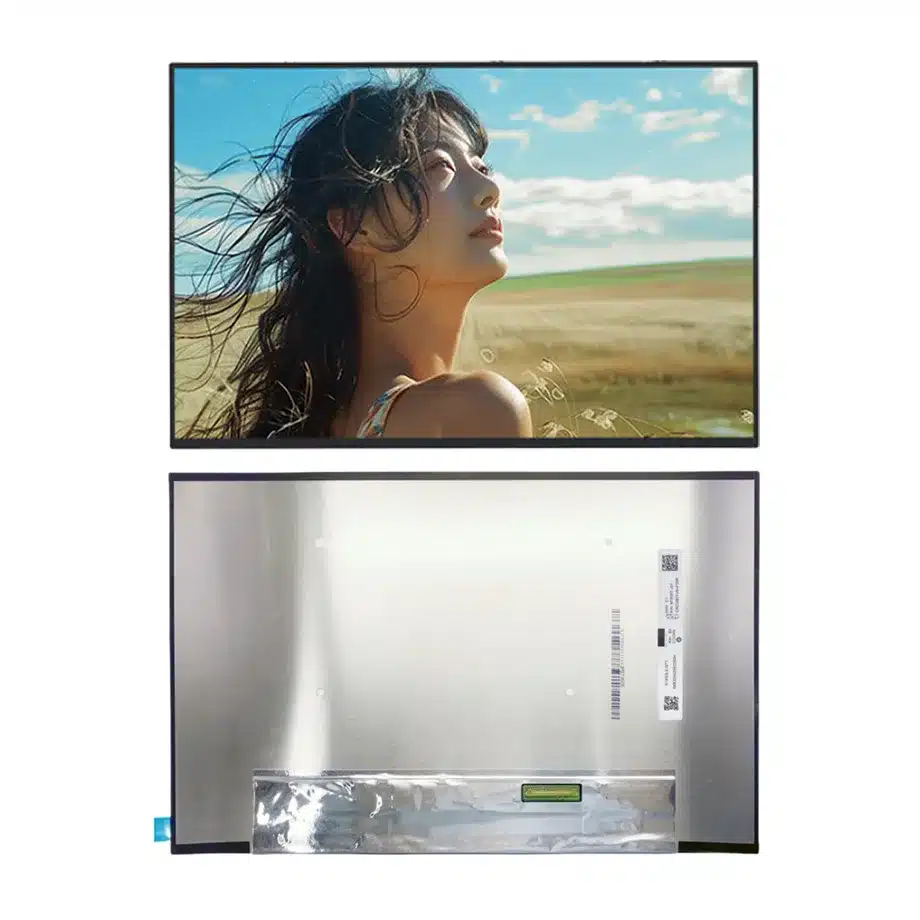
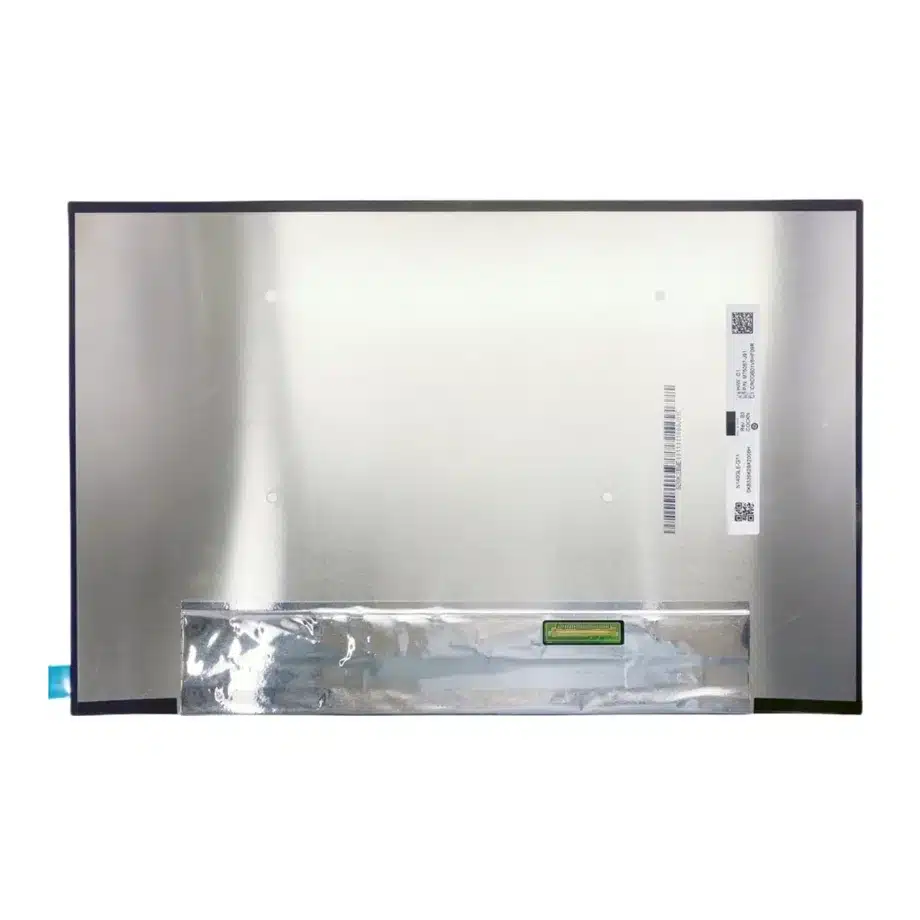
N140JLG-GT2 30-60VRR sRGB Laptop LCM is a 14.0-inch Innolux a-Si TFT-LCD module for WUXGA notebook integration. It uses 1920(RGB)×1200 resolution in a 16:10 format with a 301.594 × 188.496 mm active area. The supplied product row specifies 400 cd/m² typical brightness, 1200:1 typical contrast, 89/89/89/89 typical viewing at CR≥10, 16.7M colors and an antiglare surface with 3H hard coating.
The module is a complete LCM with WLED backlight and integrated LED driver, rated at 15,000 hours in the supplied source. The panel-side interface is two-lane eDP 1.5 with a 3.3 V typical supply. The exact public source adds same-model context for 30–60 Hz variable refresh and 100% sRGB, but the user-supplied objective row does not provide full outline width/height or weight, so those fields remain blank rather than being inferred.
The exact-model technical page confirms 400 cd/m², 100% sRGB, eDP 1.5 and 30–60 VRR context for notebook use. VESA's eDP 1.5 material provides interface-level context. The production design must still use the exact Innolux pin assignment and electrical release.
Three Core Buyer Value Propositions
1. 30–60 Hz VRR can support power-aware notebook operation
The same-model feature data identifies a variable-refresh window from 30 to 60 Hz. In a mobile computer, reducing refresh during static or low-motion workloads can reduce some display-link and panel activity while allowing the panel to return to 60 Hz for normal interaction. Actual battery savings depend on the graphics stack, firmware and backlight level, so the feature should be measured in the target system rather than converted into a fixed runtime promise.
2. 400 cd/m² and 100% sRGB create a premium productivity baseline
The supplied brightness is 400 cd/m², and same-model public evidence identifies 100% sRGB. Together, those characteristics suit business, productivity and mainstream creator notebooks that need stronger brightness and standard-gamut coverage than entry-level panels. Full sRGB is not the same as factory calibration; white point, gamma and uniformity remain system-level quality targets.
3. eDP 1.5 creates a current embedded-interface path for notebook platforms
The exact model is identified with a two-lane eDP 1.5 connection. That provides a defined modern panel-side link for WUXGA operation and VRR-related behavior. The connector pin count is not explicitly established in the supplied row, so it should not be guessed. Mainboard, cable and panel pinout must be matched from the exact Innolux documentation before production.
Key Specifications at a Glance
| Parameter | Confirmed value |
|---|---|
| Manufacturer / model | Innolux N140JLG-GT2 |
| Display size | 14.0 inch |
| Panel type | a-Si TFT-LCD, LCM |
| Resolution | 1920(RGB)×1200, WUXGA, 16:10 |
| Active area | 301.594 × 188.496 mm |
| Brightness | 400 cd/m² typical |
| Contrast | 1200:1 typical |
| Viewing | 89/89/89/89 typical at CR≥10 |
| Response | 16/14 ms typical Tr/Td |
| Colors | 16.7M; 100% sRGB listed in same-model source |
| Refresh | 60 Hz; 30–60 VRR listed in same-model source |
| Interface | eDP, 2 lanes, eDP 1.5 |
| Supply | 3.3 V typical |
| Backlight | WLED, 15K hours, with LED driver |
| Surface | Antiglare, 3H hard coating |
| Touch | Without touch screen |
| Operating / storage | 0 to 50 °C / -20 to 60 °C |
| Unresolved | Full outline width/height and panel weight |
How Should 30–60 VRR Be Qualified?
VRR is a system feature, not a panel-only battery-life guarantee. A platform should verify that the graphics driver and firmware select the expected refresh behavior during static desktops, video, scrolling and interactive workloads. The transition between lower and higher refresh should not create flicker, blanking or stale image regions.
N140JLG-GT2 30-60VRR sRGB Laptop LCM should be tested through cold boot, lid close/open and suspend/resume with the actual production BIOS and graphics driver. Measure system power at controlled luminance to determine whether the intended VRR policy produces a meaningful benefit. Backlight power can dominate at 400 cd/m², so a lower refresh rate does not automatically mean a large total battery saving.
Keep 60 Hz as the confirmed base storage value
The canonical refresh field stores the supplied 60 Hz objective value. VRR is an additional same-model feature and belongs in explanatory content rather than replacing the base refresh with an invented range in the numeric storage field. This preserves the distinction between source value normalization and feature enrichment.
What Must Be Matched on the eDP 1.5 Path?
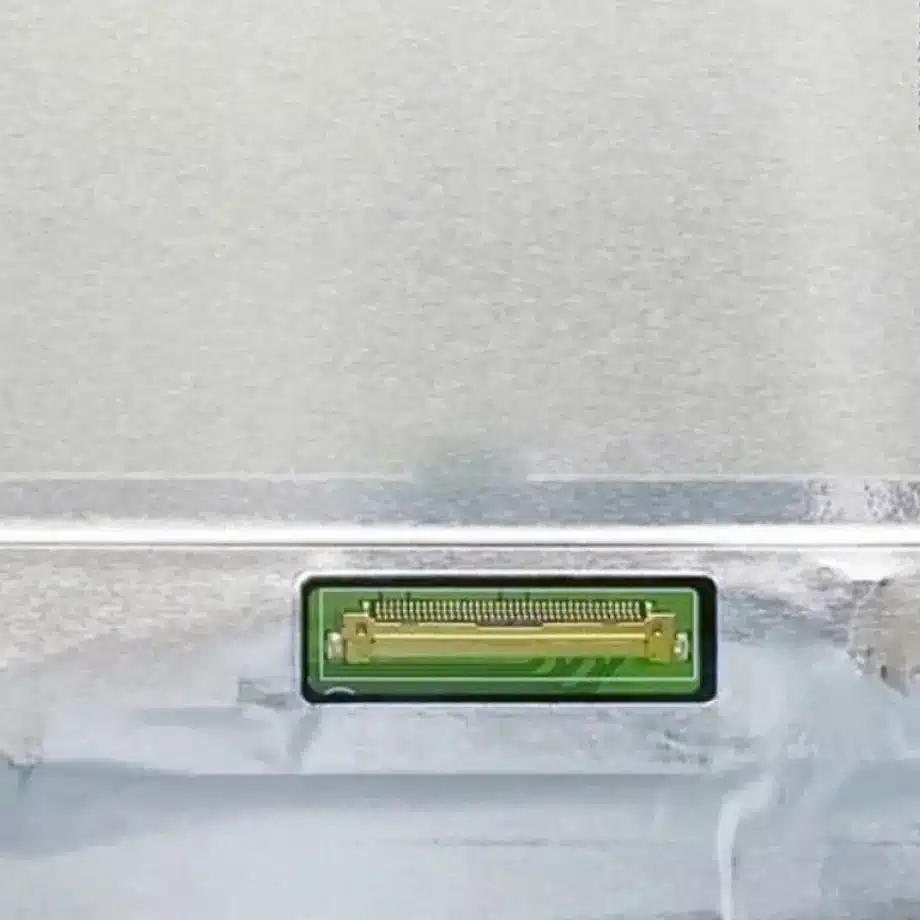
The panel-side interface is two-lane eDP 1.5. Confirm the exact connector, pinout, AUX behavior, lane assignment and power sequence from the current Innolux document. The public page does not establish a reliable connector pin count for storage, so compatibility should not be inferred from a generic 30-pin or 40-pin notebook cable.
WUXGA timing, backlight-enable behavior and 3.3 V supply should be tested together. If the panel is used as a replacement, compare the original cable orientation and PCBA location before power-up. A physically similar 14-inch 1920×1200 module can still differ electrically.
Why Should Missing Outline Dimensions Stay Blank?
The user-supplied row lists no full outline size and no panel weight. Same-model public data provides thickness-related references such as 1.8/3.95 mm typical/maximum and a bent-PCBA shape note, but it does not establish the full width and height needed for a complete outline record. These partial values should not be promoted into a fabricated 3D envelope.
Mechanical design should obtain the Innolux drawing before tooling or replacement qualification. The confirmed active area of 301.594 × 188.496 mm is useful for the visible opening, but it is not the same as the module's outer dimensions. Cable keep-out, rear electronics and mounting geometry remain open until the drawing is available.
How Should the 400-Nit Optical Target Be Evaluated?
Four hundred cd/m² provides useful notebook brightness for offices, travel and bright indoor environments. It does not establish sunlight readability. The antiglare 3H surface reduces distinct reflections, while the 1200:1 typical contrast gives a strong mainstream notebook black/white target. Measure the final lid after warm-up because bezel pressure and backlight temperature can influence uniformity.
The same-model source identifies 100% sRGB. Use that as an application and quality-control input, but do not silently overwrite any user-supplied color field with a new semantic value if the stored source packet only says 16.7M colors. In public copy, the same-model enrichment can be stated with provenance, while the core supplied facts remain traceable.
Where Does N140JLG-GT2 Fit?
The user-supplied application is Laptop and same-model data reinforces notebook use. N140JLG-GT2 30-60VRR sRGB Laptop LCM fits 14-inch WUXGA business notebooks, mobile productivity systems and mainstream creator laptops that benefit from 400-nit brightness, antiglare treatment and a power-aware refresh strategy. It is non-touch, so touch-enabled systems need a different exact panel or separately engineered touch stack.
The operating range of 0 to 50 °C and storage from -20 to 60 °C keep the module in normal notebook environmental territory. A same-model public page also lists 1.5G vibration, but that remains a component-level limit rather than a rugged-laptop certification.
How Should Procurement Control the Exact Model?
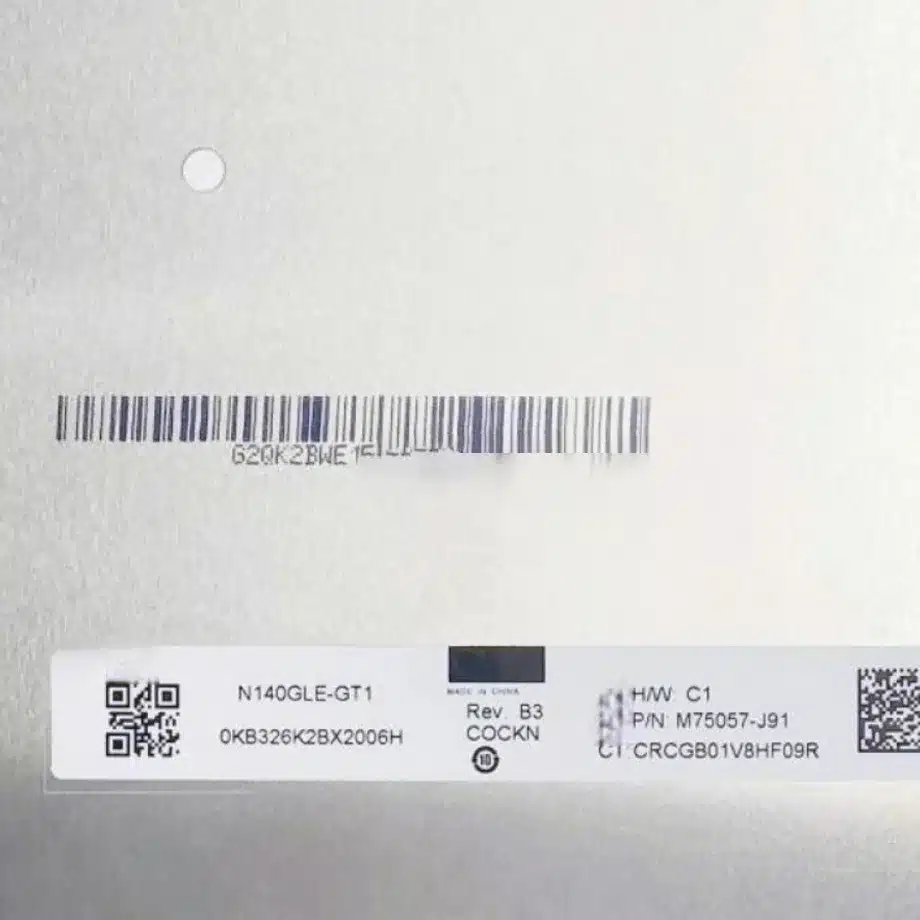
Record `N140JLG-GT2` as the exact identity and request the current mechanical/electrical release before committing tooling. Do not accept another N140JLG family suffix based only on WUXGA resolution and 14-inch size. Brightness, color, interface revision and physical layout can differ across notebook panels.
Current production and stock listings are time-sensitive. They can support sample planning but should not be converted into a guaranteed lifecycle, MOQ, lead time or second-source statement. For a multi-year notebook platform, revision-control and change-notification expectations should be agreed separately.
How Should a First Article Be Approved With Incomplete Mechanical Data?
Start by freezing the exact N140JLG-GT2 label, production eDP cable, motherboard and BIOS. Bring the panel up at native 1920×1200 and verify stable 60 Hz operation, brightness control and sleep/wake before enabling any 30–60 Hz variable-refresh policy. Record the actual connector and pin map from the production documentation rather than relying on a generic notebook-cable assumption.
For mechanical approval, use the physical sample and current Innolux drawing because the full outline width, height and weight are unresolved in the available source packet. Confirm active-area alignment, PCBA keep-out, cable bend and bezel pressure in the production lid. After assembly, measure 400 cd/m² behavior, uniformity and color at controlled settings. If the same-model 100% sRGB enrichment is a product requirement, verify it on representative units and keep the measurement method with the incoming-quality specification. This approach allows production to proceed without inventing missing dimensions.
Incoming inspection should verify the full model label and antiglare surface before the module enters final assembly. Any supplier-proposed substitute should be held until engineering confirms its eDP revision, optical class and mechanical fit.
Procurement Checklist
- Confirm exact N140JLG-GT2 identity and latest Innolux documents.
- Validate 1920×1200 timing through two-lane eDP 1.5.
- Verify the actual connector and pin map instead of guessing from notebook conventions.
- Use 400 cd/m², 1200:1 contrast and antiglare 3H as optical acceptance points.
- Validate 30–60 VRR behavior with the target graphics driver and firmware.
- Request the full mechanical drawing because width, height and weight are unresolved.
- Keep the 60 Hz base refresh distinct from VRR feature enrichment.
- Confirm current lifecycle and revision information before volume sourcing.
N140JLG-GT2 30-60VRR sRGB Laptop LCM is a bright WUXGA notebook module with eDP 1.5 and same-model VRR / sRGB context. Its strongest production value comes from combining exact optical facts with a modern notebook interface while refusing to guess the unresolved mechanical envelope.
Recommended: Same Size
(14")
Applications & Value of LCD Panel

- Fast sourcing with in-stock panels & cross-reference alternatives
- Stable supply chain with long-term availability
- Engineering-level support from panel to integration
- Custom solutions: cable, touch & optical bonding
- Strict quality control with IQC / OQC / aging test
- Full traceability system for quality assurance
- Complete technical documentation & drawings
- Compliance support: RoHS & certification files
