
~
~
~
~
~
~
P1210WXF2MA00 50K WLED 1500nit Industrial LCM Tianma

Model P/N
Size
Resolution
Brightness
Viewing Angle
Connector Type
Operating Temp
Overall(mm)
tianma
P1210WXF2MA00
Brand
Panel Size (inch)
Model P/N
Resolution
Brightness (nits)
Viewing Angle
Contrast Ratio
Response Time
Overall (mm)
Active Area (mm)
Refresh Rate
Display Colors
Panel Type
Connector Type
Surface Treatment
Operating Temp
Touchscreen Type
Storage Temp
Work Mode
Pixel Format
Input Voltage (V)
Vibration Resistance
Designed For
Product Details
Product Overview
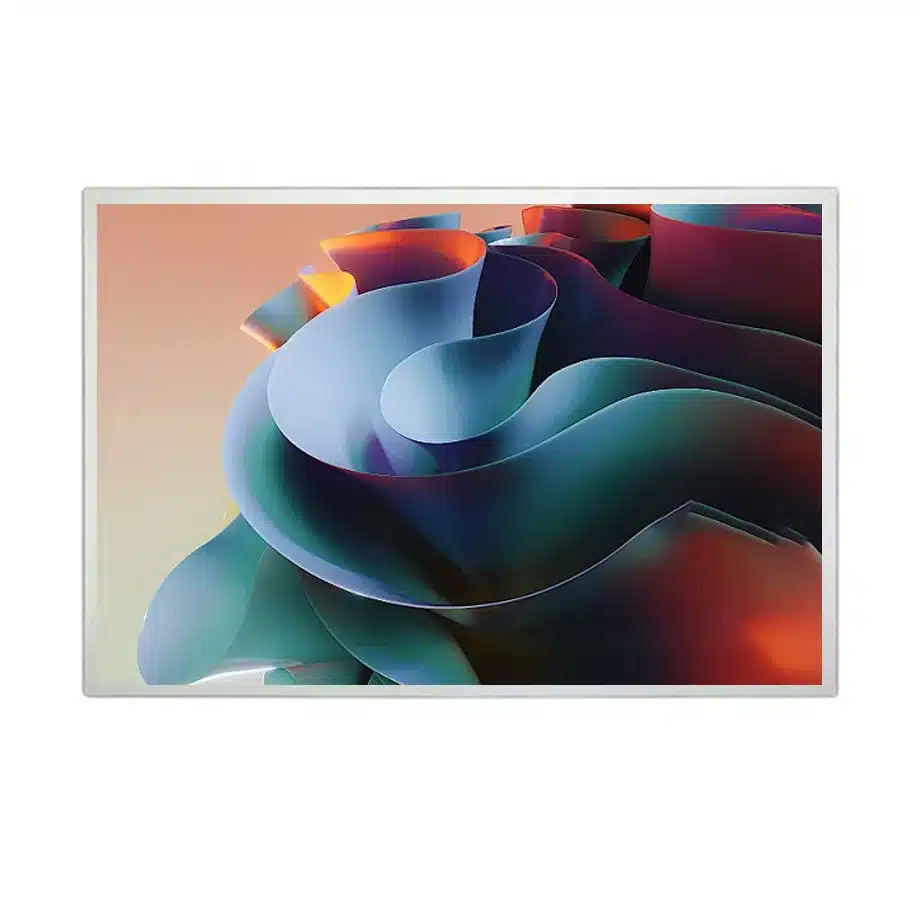
P1210WXF2MA00 50K WLED 1500nit Industrial LCM is a 12.1-inch Tianma a-Si TFT-LCD module for industrial and outdoor-high-brightness equipment. The exact user-supplied row specifies 1280(RGB)×800 WXGA resolution in a 16:10 aspect ratio, a 261.12 × 163.2 mm active area and a 281.78 × 183.17 × 9.76 mm outline. Panel weight remains TBD in the supplied specification and is intentionally left unresolved rather than estimated.
The module is rated at 1500 cd/m² typical luminance, 1000:1 typical contrast and 88/88/88/88 typical viewing at CR≥10. It uses SFT normally-black transmissive operation with 262K/16.2M colors and 69% NTSC. The response time is 20 ms typical Tr+Td. A hard-coated surface is confirmed; no unsupported haze value is added.
The display runs at 60 Hz and is supplied without touch. A 11S5P WLED backlight is integrated with a 50,000-hour light-source figure, but the exact row explicitly states No Driver. Panel video uses single-channel 6/8-bit LVDS through a 20-pin connector at a 3.3 V typical supply. The exact module is rated for -30 to 85 °C operation and storage and 2.0G vibration. The same-model technical page supports industrial and outdoor-high-brightness use, while Tianma America independently lists the exact model for industrial and medical target markets.
Three Core Buyer Value Propositions
1. 1500 cd/m² provides a strong high-ambient-light design baseline
The panel-level brightness target is substantially above ordinary office displays and supports outdoor-facing or brightly lit industrial equipment. It gives optical designers headroom to absorb losses from a protective window or added touch stack. Finished-system sunlight readability still depends on reflection, cover materials, bonding and ambient conditions, so the correct claim is high-brightness capability rather than an automatic sunlight-readability guarantee.
2. -30 to 85 °C operation supports demanding industrial environments
The exact user row provides the same -30 to 85 °C range for operation and storage plus a 2.0G vibration figure. These are concrete component-level inputs for machines that see hot enclosures, cold starts or transport vibration. They do not create a complete equipment certification. Controllers, power supplies, touch layers, adhesives and enclosures must meet the target system's environmental requirements as well.
3. 50K-hour WLED with no integrated driver gives system designers control over the backlight drive
The module includes the WLED light source but explicitly does not include the backlight driver. That architectural boundary matters because the system designer must select and qualify the LED-drive electronics. The 50K-hour figure can support maintenance planning, but it remains tied to Tianma's lifetime test conditions and should not be converted into a guaranteed equipment service life without the applicable definition.
Key Specifications at a Glance
| Parameter | Confirmed value |
|---|---|
| Manufacturer / model | Tianma P1210WXF2MA00 |
| Display size | 12.1 inch |
| Panel type | a-Si TFT-LCD, LCM |
| Resolution | 1280(RGB)×800, WXGA, 16:10 |
| Active area | 261.12 × 163.2 mm |
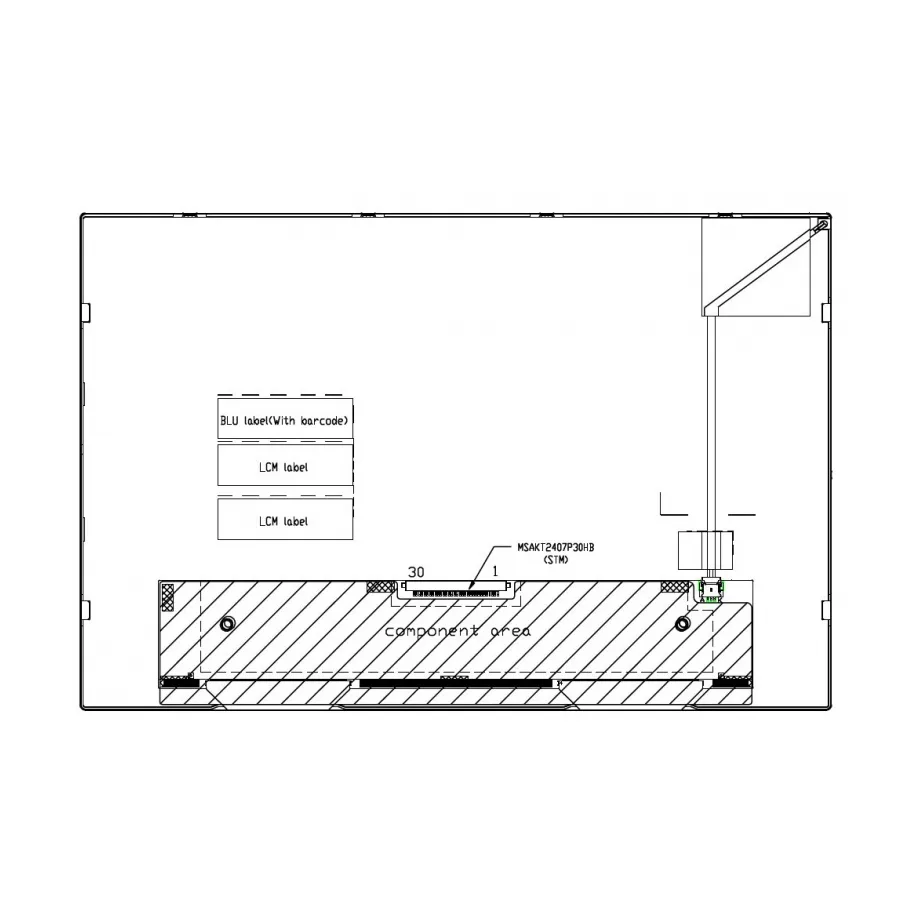
| Outline | 281.78 × 183.17 × 9.76 mm |
| Weight | Unresolved / TBD |
| Brightness | 1500 cd/m² typical |
| Contrast | 1000:1 typical |
| Viewing | 88/88/88/88 typical at CR≥10 |
| Response | 20 ms typical Tr+Td |
| Color | 262K/16.2M, 69% NTSC |
| Display mode | SFT, Normally Black, Transmissive |
| Refresh | 60 Hz |
| Interface | LVDS, 1 channel, 6/8-bit, 20-pin connector |
| Panel supply | 3.3 V typical |
| Backlight | 11S5P WLED, 50K hours, no driver |
| Touch | Without touch screen |
| Operating / storage | -30 to 85 °C / -30 to 85 °C |
What Does 1500 cd/m² Mean for Outdoor Use?
High luminance helps preserve image contrast when ambient light is strong, but emitted light is only one side of the visibility equation. Reflections from cover glass, air gaps, touch layers and protective coatings can reduce apparent contrast. P1210WXF2MA00 50K WLED 1500nit Industrial LCM should therefore be tested as a complete optical stack under the intended outdoor or high-ambient condition rather than only as an uncovered panel on a bench.
If a front touch sensor is added, remeasure luminance and reflection because the base module is non-touch. An anti-reflective cover, optical bonding or enclosure sunshade can materially change the result. The exact user evidence supports a high-brightness and outdoor-evaluation positioning, while the finished-system sunlight-readable claim should be tied to a defined ambient-contrast test.
Thermal behavior at maximum brightness
Driving a 1500-nit backlight creates thermal load. The chosen external LED driver, current setting and enclosure airflow should be tested at the hottest required ambient condition. Verify that brightness, color and uniformity remain stable after thermal soak and that the system does not exceed panel or driver limits.
How Should the 20-Pin LVDS Interface Be Qualified?
The exact module uses one LVDS channel with 6/8-bit operation through a 20-pin connector. LVDS describes the signaling family, not a universal pinout. Obtain Tianma's exact pin table and timing specification before designing the controller cable. Verify differential pair order, clock, grounds, panel enable and the 3.3 V rail.
A host controller may accept HDMI, DisplayPort or another external source, but it must convert that input to the panel's native 1280×800 LVDS timing. Test cold boot, repeated power cycling, no-signal recovery and long-duration operation. Record the approved controller firmware and cable so production lots are validated against the same electrical baseline.
Why Does “No Driver” Matter for the Backlight?
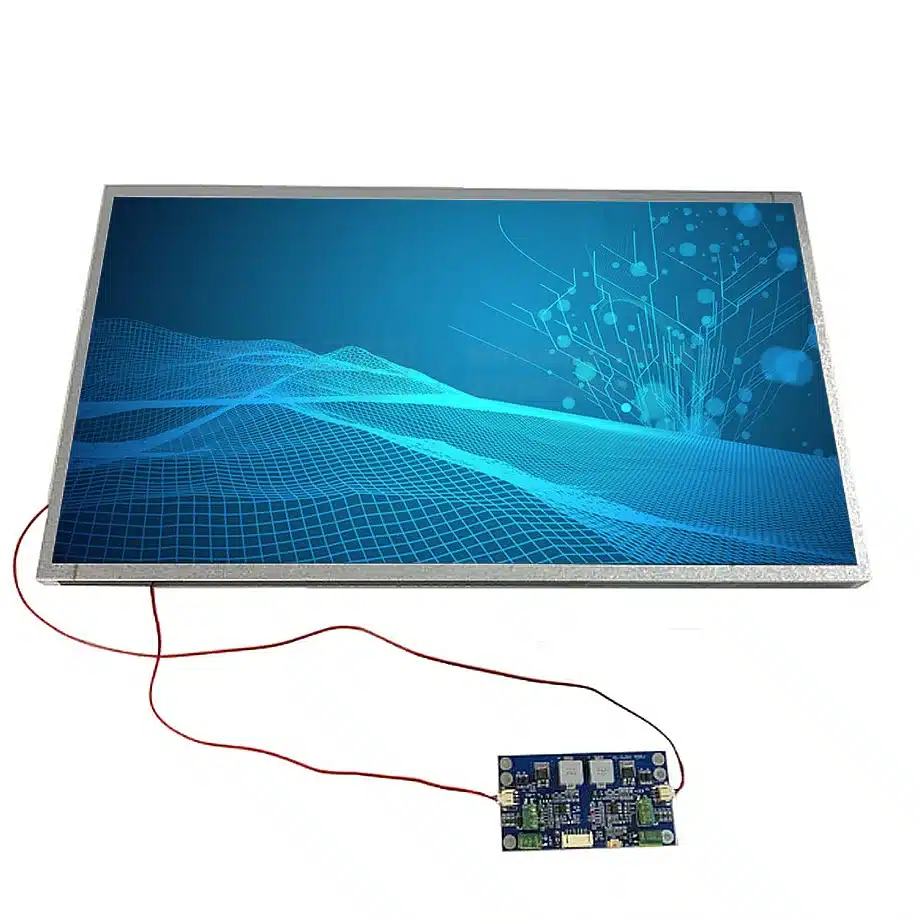
The LCD module contains the 11S5P WLED light source, but the user row explicitly says No Driver. That means the system must provide the appropriate constant-current backlight electronics and dimming/control path. An LCM with an integrated LED driver is a different integration object even if its diagonal and resolution are identical.
Backlight lifetime is affected by LED current and temperature. Request the manufacturer's lifetime test basis before using the 50K-hour figure for service planning. During first article testing, measure panel and driver temperature at full brightness and at representative dimmed states. The external driver should be qualified over the same system environmental range required by the application.
How Should Wide-Temperature and Vibration Limits Be Used?
The user-supplied -30 to 85 °C operating range, -30 to 85 °C storage range and 2.0G vibration level provide useful component screening limits. At low temperature, check startup and liquid-crystal response. At high temperature, verify luminance, image stability and controller operation after thermal equilibrium. These tests should use the final enclosure and backlight driver wherever practical.
The complete equipment can be limited by another component. Touch sensors, adhesives, power supplies or controller boards may have narrower temperature or vibration ratings. The panel data therefore supports industrial qualification planning without proving the finished system automatically meets a particular industrial, transport or medical standard.
What Does Tianma’s Industrial / Medical Target Market Add?
Tianma America's exact-model product page lists Industrial and Medical as target markets, while the supplied row lists Industrial and Outdoor High Brightness. Those sources support a broader set of evidence-compatible scenarios such as industrial HMIs, diagnostic equipment and medical equipment displays where the required certifications are handled at system level. The product copy should not imply that the panel itself is medically certified.
The 12.1-inch WXGA format is also suitable for embedded operator interfaces where 16:10 layout and wide viewing are useful. The exact final application should still be checked for connector, backlight-driver, optical and environmental requirements.
Where Does P1210WXF2MA00 Fit Best?
P1210WXF2MA00 50K WLED 1500nit Industrial LCM fits industrial HMIs, high-ambient-light operator terminals, outdoor-facing equipment and compatible medical equipment display designs that need a compact WXGA panel with strong brightness and wide temperature capability. These are same-model-supported use scenarios, not guaranteed fit statements for a named device.
The module is non-touch, so interactive systems require a separately qualified touch layer. That layer can affect brightness, reflection, temperature and mechanics. Inventory taxonomy should therefore remain focused on Industrial & Wide Temp and Sunlight Readable High Brightness rather than automatically classifying the base module as a touch display.
How Should First-Article Approval Be Structured?
Record the exact P1210WXF2MA00 identity, controller board, 20-pin LVDS cable and external LED-driver configuration. Verify 3.3 V panel power and native 1280×800 operation at 60 Hz. Then raise the backlight to the intended maximum luminance and allow the enclosure to reach thermal steady state before optical sign-off.
Mechanical approval should use the 281.78 × 183.17 × 9.76 mm envelope. Check connector access, mounting support and front-stack clearance. Environmental approval should include representative hot and cold points and any vibration requirement from the system specification. Keep the first article and controller settings as the incoming-lot reference.
How Should Incoming Lots Be Controlled?
Incoming inspection should verify the exact Tianma label, 20-pin connector, hard-coated surface and module outline. Sample units should be checked for native WXGA image output and high-brightness operation with the approved controller and LED driver. A similar 12.1-inch Tianma panel should not be substituted without comparing its LVDS map, brightness, environment, backlight architecture and mechanics.
Public production and stock information is time-sensitive. Long-life equipment programs should request current production status, revision control and change-notification expectations from Tianma or an authorized distributor. Keep unresolved weight blank until exact-model documentation establishes it.
Procurement Checklist
- Confirm exact Tianma P1210WXF2MA00 identity and current production documentation.
- Match the 281.78 × 183.17 × 9.76 mm module outline; keep weight unresolved.
- Verify single-channel 6/8-bit LVDS and the exact 20-pin mapping.
- Use 1500 cd/m² and 1000:1 contrast as the approved optical baseline.
- Design and qualify an external backlight driver for the 11S5P WLED source.
- Validate -30 to 85 °C operation and the 2.0G component vibration limit at system level.
- Keep touch as a separate integration object if required.
- Confirm lifecycle and change-notification information before volume sourcing.
P1210WXF2MA00 50K WLED 1500nit Industrial LCM is a high-brightness, wide-temperature Tianma module with a conventional 20-pin LVDS path and a separately driven long-life WLED source. Its strongest value is the combination of optical output, environmental range and industrial-market evidence, provided the controller, backlight driver and final front stack are qualified as one system.
Recommended: Same Size
(12.1")
Applications & Value of LCD Panel

- Fast sourcing with in-stock panels & cross-reference alternatives
- Stable supply chain with long-term availability
- Engineering-level support from panel to integration
- Custom solutions: cable, touch & optical bonding
- Strict quality control with IQC / OQC / aging test
- Full traceability system for quality assurance
- Complete technical documentation & drawings
- Compliance support: RoHS & certification files
