
~
~
~
~
~
~
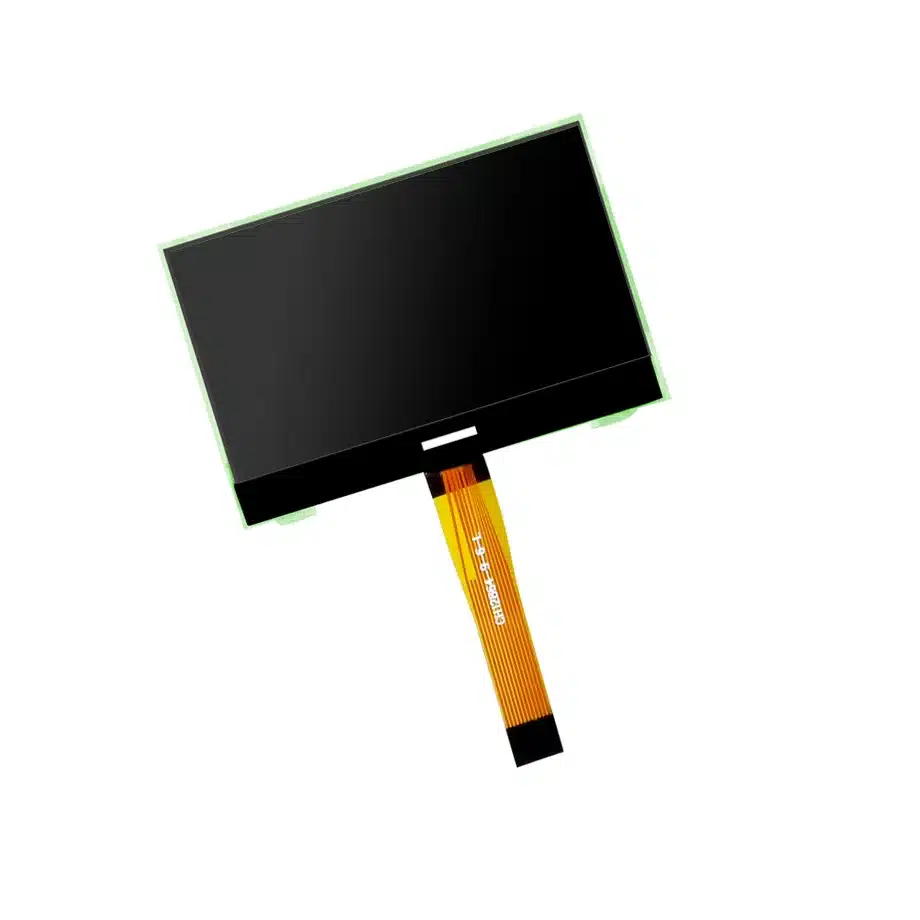
E639FDC74.A PCAP AMOLED Touch Module MIPI Display
Model P/N
Size
Resolution
Brightness
Viewing Angle
Connector Type
Operating Temp
Overall(mm)
edo
E639FDC74.A
Brand
Panel Size (inch)
Model P/N
Resolution
Brightness (nits)
Viewing Angle
Contrast Ratio
Response Time
Overall (mm)
Active Area (mm)
Refresh Rate
Display Colors
Panel Type
Connector Type
Operating Temp
Touchscreen Type
Storage Temp
Work Mode
Pixel Format
Input Voltage (V)
Touch Interface
Designed For
Product Details
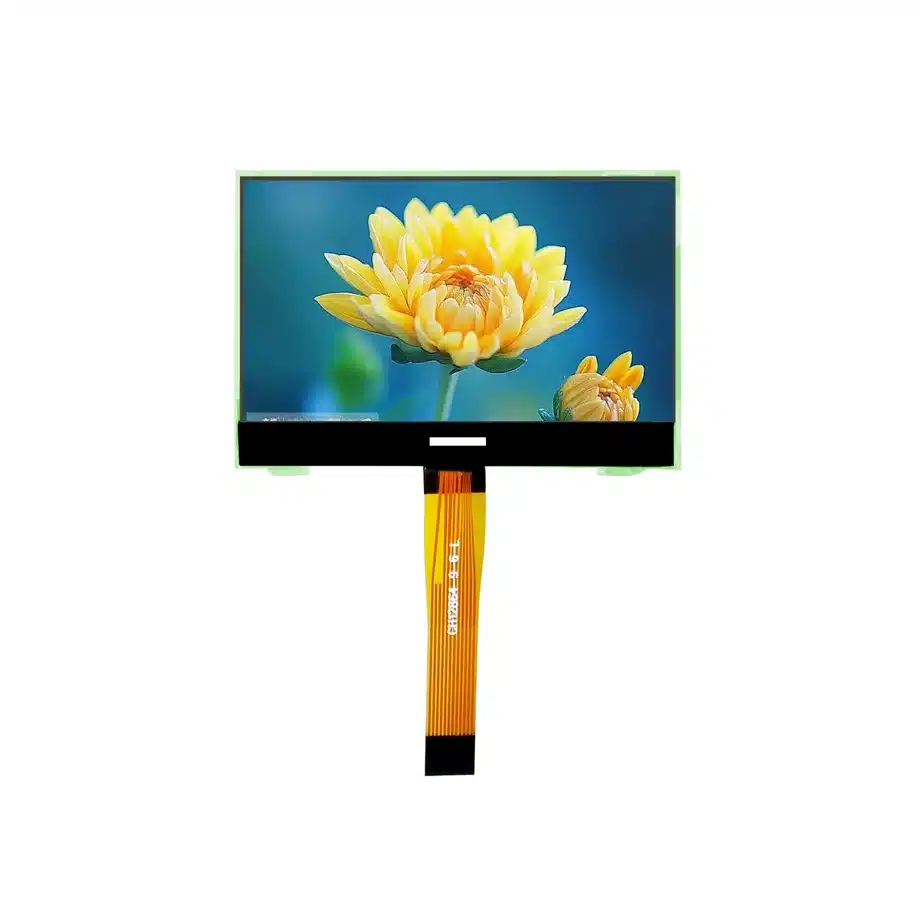
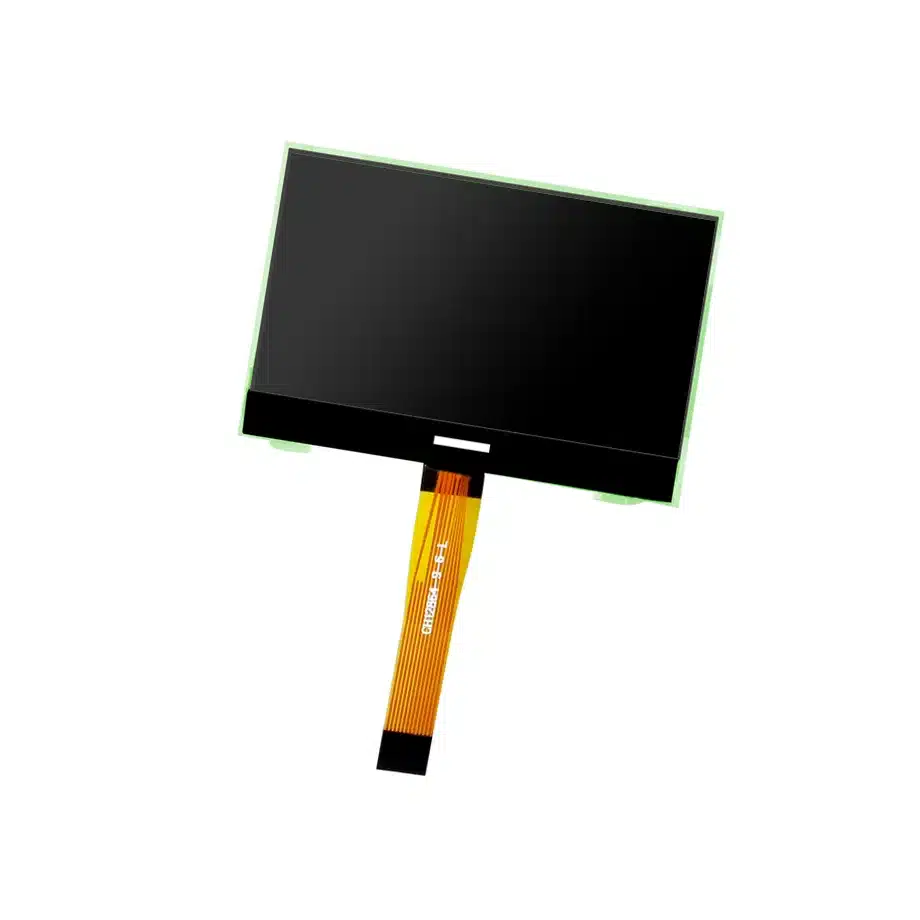
E639FDC74.A PCAP AMOLED Touch Module combines a 6.4-inch EDO AMOLED display with integrated PCAP touch in a compact portrait module. The exact-model facts identify a 1080×2340, 9:20 image format, 430 cd/m² typical luminance, four-lane MIPI display signaling, I²C touch communication and a built-in RM692C9 driver IC. That combination makes display timing, touch firmware and OLED power sequencing equally important to a successful design.
Unlike a conventional small TFT-LCD, the module is self-emissive and uses several supply rails, including positive and negative OLED bias voltages. A correct connector fit therefore does not prove electrical compatibility. The production PMIC, boot sequence and shutdown sequence need to match the exact panel requirements.
Three buyer value propositions
Display and PCAP touch are defined in the same exact-model record
The supplied evidence confirms PCAP touch and an I²C touch interface for this configuration. That reduces ambiguity during BOM planning because touch is not being inferred from a finished handset or a related panel. System engineers can keep the four-lane MIPI image path and the I²C touch path as separate interfaces while qualifying one physical module.
Portrait 1080×2340 AMOLED canvas
The 68.04×147.42 mm active area supports a tall 9:20 layout suited to mobile interfaces. The 16.7M-color and 111% NTSC wording provides a wide-gamut component reference without inventing factory calibration, HDR certification or a guaranteed Delta-E target.
Self-emissive architecture with fast response
The module is specified as self-emissive AMOLED with a 2 ms maximum Tr+Td response figure. That removes the conventional WLED backlight subsystem, but it does not justify broad power-consumption or lifetime claims because OLED current depends strongly on image content, luminance setting and drive conditions.
Key Specifications at a Glance
| Brand | EDO |
|---|---|
| Model P/N | E639FDC74.A |
| Size | 6.4 inch |
| Resolution | 1080(RGB)×2340, 9:20 |
| Active Area | 68.04×147.42 mm (W×H) |
| Overall | 69.84×150.42 mm |
| Brightness | 430 cd/m² (Typ.) |
| Viewing Angle | 80/80/80/80 (Typ.)(CR≥10) |
| Display Colors | 16.7M, 111% NTSC |
| Refresh Rate | 60 Hz |
| Connector / Native Interface | MIPI (4 data lanes), 50 pins 0.4 mm connector |
| Input Voltage | 1.8/3.3/6.4/4.6/-2.5 V (Typ.)(VDDI/VCI/VSP/ELVDD/ELVSS) |
| Operating Temperature | -20 ~ 70 °C |
| Storage Temperature | -30 ~ 80 °C |
| Panel Type | AM-OLED, OLED |
| Pixel Format | RGB Vertical Stripe |
| Contrast Ratio | 100000:1 (Min.) |
| Response Time | 2 ms (Max.)(Tr+Td) |
| Backlight / Emission | Self-emissive OLED |
| Designed For | Mobile-phone display and integrated PCAP touch applications |
| Touchscreen Type | PCAP |
| Touch Interface | I²C |
Five rails matter more than the connector count
E639FDC74.A PCAP AMOLED Touch Module lists 1.8/3.3/6.4/4.6/-2.5 V typical rails for VDDI, VCI, VSP, ELVDD and ELVSS. Those rails must be generated with the correct tolerance, order and timing. A host processor can have a compatible MIPI block and still be unsuitable if its power-management architecture cannot provide the required OLED biasing.
First-article power validation should include repeated cold starts, sleep/resume and controlled shutdowns. Observe each rail at the panel connector rather than only at the regulator output, because cable and FPC resistance can alter the delivered waveform.
Separating MIPI display transport from I²C touch control
The display image uses four MIPI data lanes while the touch function uses I²C. That distinction should be preserved in schematics, firmware requirements and fault diagnosis. Confirm D-PHY timing, lane order and display initialization for the image path; separately confirm touch-controller address, interrupt/reset pins, coordinate orientation and firmware compatibility.
E639FDC74.A PCAP AMOLED Touch Module should not be substituted by another 6.4-inch AMOLED based solely on resolution. Two modules can share 1080×2340 pixels while differing in MIPI command set, power rails, touch controller or FPC pinout.
Optical stack and touch-cover implications
The panel's 430 cd/m² typical luminance and 100000:1 minimum contrast figure describe the module, not the completed handheld. Cover glass, adhesive, touch stack, polarizer construction and ambient light alter the final visual result. If the product requires a particular outdoor-visibility or color-accuracy target, measure the completed optical stack with the intended brightness and color-management settings.
The operating range is -20 to 70 °C and storage is -30 to 80 °C. Those limits can support mobile-device qualification work, but they do not imply automotive, medical or rugged certification.
Mechanical controls for a compact integrated module
The outline is 69.84×150.42 mm around a 68.04×147.42 mm active area. Preserve the exact FPC exit, bend region and touch/display connector geometry from the model drawing. Small differences in corner shape or flex location can prevent assembly even when the visible area appears equivalent.
During sample build, inspect touch alignment, edge response and display uniformity after the module is bonded or clamped into the final housing. Mechanical pressure that is harmless to the enclosure can still affect an OLED/touch stack.
Procurement documentation that prevents a false cross-reference
Record the complete EDO model, display and touch firmware assumptions, MIPI configuration, I²C touch interface, multi-rail power plan and approved mechanical drawing. Preserve a known-good sample and production FPC definition. If a supplier proposes a related AMOLED module, require a line-by-line comparison instead of accepting a family-level substitution.
Quick engineering answers
EDO E639FDC74.A is a 6.4-inch 1080×2340 AMOLED module with integrated PCAP touch.
The image interface is four-lane MIPI and the touch interface is I²C.
E639FDC74.A PCAP AMOLED Touch Module uses multiple OLED supply rails, so single-rail LCD controller assumptions do not apply.
The module is documented for mobile-phone application, not as a general-purpose certified industrial or automotive display.
Engineering and sourcing review
Provide the processor/bridge IC, power-management design, MIPI lane plan, touch-controller expectations, mechanical stack, sample quantity and annual demand. Those inputs allow E639FDC74.A PCAP AMOLED Touch Module to be evaluated as a complete display-touch component instead of a generic portrait OLED.
Recommended: Same Size
(6.4")
Applications & Value of LCD Panel

- Fast sourcing with in-stock panels & cross-reference alternatives
- Stable supply chain with long-term availability
- Engineering-level support from panel to integration
- Custom solutions: cable, touch & optical bonding
- Strict quality control with IQC / OQC / aging test
- Full traceability system for quality assurance
- Complete technical documentation & drawings
- Compliance support: RoHS & certification files
