
~
~
~
~
~
~
P1210WXF2MA01 2.0G No-Driver WXGA Outdoor SFT LCM

Model P/N
Size
Resolution
Brightness
Viewing Angle
Connector Type
Operating Temp
Overall(mm)
tianma
P1210WXF2MA01
Brand
Panel Size (inch)
Model P/N
Resolution
Brightness (nits)
Viewing Angle
Contrast Ratio
Response Time
Overall (mm)
Active Area (mm)
Refresh Rate
Display Colors
Panel Type
Connector Type
Surface Treatment
Operating Temp
Touchscreen Type
Storage Temp
Work Mode
Pixel Format
Input Voltage (V)
Vibration Resistance
Weight (g)
Designed For
Product Details
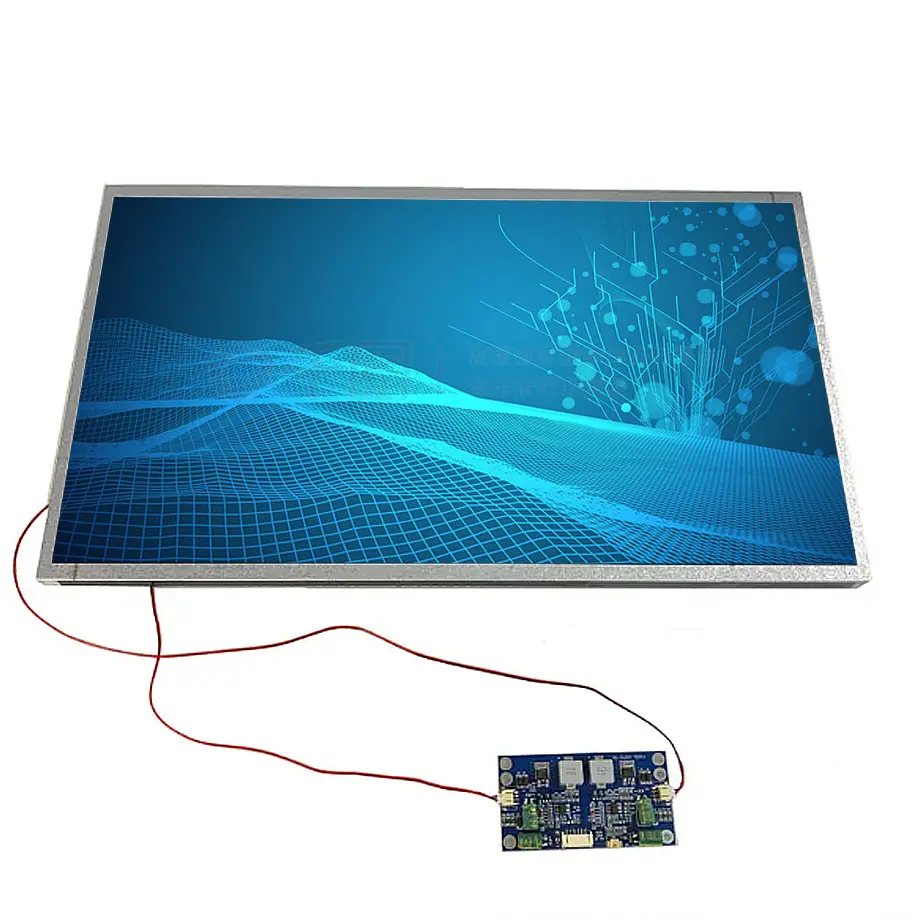
P1210WXF2MA01 2.0G No-Driver WXGA Outdoor SFT LCM is a 12.1-inch Tianma a-Si TFT-LCD module with a 1280×800 WXGA image, 1100 cd/m² typical luminance and explicit industrial/outdoor-high-brightness positioning. Its -30 to 80 °C operating range and 2.0G vibration reference make environmental validation central to the buying decision. The module uses single-channel 8-bit LVDS and a WLED backlight without an integrated LED driver.
This combination is particularly relevant when an embedded controller needs a conventional LVDS image path but the equipment designer wants to own the LED-driver architecture. It also means display qualification crosses the boundary between the panel and the customer's power electronics. Backlight current, dimming behavior and thermal limits must be treated as controlled design inputs.
Three buyer value propositions
Wide -30 to 80 °C operating envelope for industrial equipment
The exact model is explicitly positioned for industrial use and provides a documented -30 to 80 °C operating range. That gives HMI and embedded-equipment teams a concrete component boundary for cold-start and hot-cabinet validation. It does not by itself certify the finished system for a particular industrial standard, so enclosure temperature and application-specific reliability testing remain necessary.
1100-nit module baseline for bright outdoor applications
The 1100 cd/m² typical luminance is paired with explicit outdoor-high-brightness application wording. This supports evaluation in high-ambient installations without inferring sunlight readability from brightness alone. Cover glass, optical gaps, reflection, solar heating and dimming strategy still determine real field visibility and thermal margin in the completed product.
Simple single-channel LVDS architecture with no integrated backlight driver
The display uses single-channel 8-bit LVDS through a 20-pin 1.25 mm connector and a 3.3 V panel supply. The WLED backlight is specified without an integrated driver, so the system designer retains control of the LED-drive architecture. That flexibility requires exact current, dimming, enable and sequencing validation from the model documentation.
Key Specifications at a Glance
The approved component baseline for P1210WXF2MA01 2.0G No-Driver WXGA Outdoor SFT LCM is shown below.
| Brand | Tianma |
|---|---|
| Model P/N | P1210WXF2MA01 |
| Size | 12.1 inch |
| Resolution | 1280(RGB)×800, WXGA, 16:10 |
| Active Area | 261.12(H)×163.2(V) mm |
| Overall | 277.7×180.6×9.2 mm |
| Brightness | 1100 cd/m² (Typ.) |
| Viewing Angle | 89/89/89/89 (Typ.)(CR≥10) |
| Display Colors | 16.7M, 42% NTSC |
| Weight | 470 g (Typ.) |
| Refresh Rate | 60 Hz |
| Connector / Native Interface | LVDS (1 ch, 8-bit), 20 pins 1.25 mm connector |
| Input Voltage | 3.3 V (Typ.) |
| Operating Temperature | -30 ~ 80 °C |
| Storage Temperature | -30 ~ 80 °C |
| Vibration | 2.0G (19.6 m/s²) |
| Panel Type | a-Si TFT-LCD, LCM |
| Pixel Format | RGB Vertical Stripe |
| Surface Treatment | Antiglare |
| Contrast Ratio | 1000:1 (Typ.) |
| Response Time | 25 ms (Typ.)(Tr+Td) |
| Work Mode | SFT, Normally Black, Transmissive |
| Backlight / Emission | 50,000 hours (10S4P WLED, no integrated driver) |
| Designed For | Industrial display equipment and outdoor high-brightness installations subject to full-system environmental qualification |
| Touchscreen Type | Without touch screen |
Cold-start plan: test the display as the operator will see it
At the -30 °C end of the operating range, do more than confirm that the image appears. Record startup timing, pixel-response behavior, backlight ramp, controller synchronization and the time required to reach an acceptable viewing state. If the equipment boots outdoors or in an unheated vehicle bay, the power source and LED driver may also be cold, so the entire display power chain belongs in the chamber test.
Repeat the test after temperature soaking and through several power cycles. The goal is to establish a reproducible startup envelope for the assembled HMI or terminal, not to infer finished-system performance from the panel temperature rating alone.
Hot-cabinet plan: 1100 nits adds optical value and thermal load
P1210WXF2MA01 2.0G No-Driver WXGA Outdoor SFT LCM is specified at 1100 cd/m² typical luminance and is directly positioned for outdoor high-brightness use. At the 80 °C upper operating boundary, the crucial engineering question is the temperature actually reached at the module and driver under the intended brightness duty cycle. Solar heating, a sealed enclosure and nearby processors can elevate internal temperature well above outside ambient.
Instrument the display cavity, driver components and air path. If the product uses ambient-light dimming, validate both full-output and reduced-output conditions. The panel application wording supports outdoor-high-brightness evaluation, but it does not establish ingress protection, UV resistance or a weatherproof-system rating.
Designing the missing LED-driver function
The 10S4P WLED backlight is rated at 50,000 hours and is explicitly supplied without an integrated driver. Obtain the exact backlight electrical requirements for production design, including LED voltage/current, current balance, dimming interface, enable logic and sequencing. The 3.3 V value belongs to the panel logic supply and should not be reused as a backlight-drive assumption.
The driver location also affects thermal design and serviceability. Decide whether it lives on the main controller, a dedicated board or another power assembly, then preserve that implementation in the BOM. If the driver changes later, rerun brightness, dimming and temperature checks rather than assuming any electrically similar circuit will reproduce the approved behavior.
LVDS compatibility for legacy and new HMI controllers
The image interface is single-channel 8-bit LVDS through a 20-pin 1.25 mm connector. For a retrofit, capture the old panel's pin mapping, native timing, 3.3 V sequence, connector position and cable orientation before calling the new module compatible. WXGA resolution alone is not sufficient. For a new design, validate the controller's exact 1280×800 output and confirm clock/data mapping on the final harness.
Using the 2.0G vibration reference responsibly
The supplied exact-model data lists 2.0G (19.6 m/s²) vibration. That is meaningful component evidence for an industrial design review, but the assembled equipment sees vibration through its own chassis, fasteners and cable restraints. Test the finished structure against the application's required spectrum and duration. Pay particular attention to cable strain relief and connector retention because a display can remain mechanically intact while an inadequately restrained harness causes intermittent operation.
Mechanical fit and operator-viewing geometry
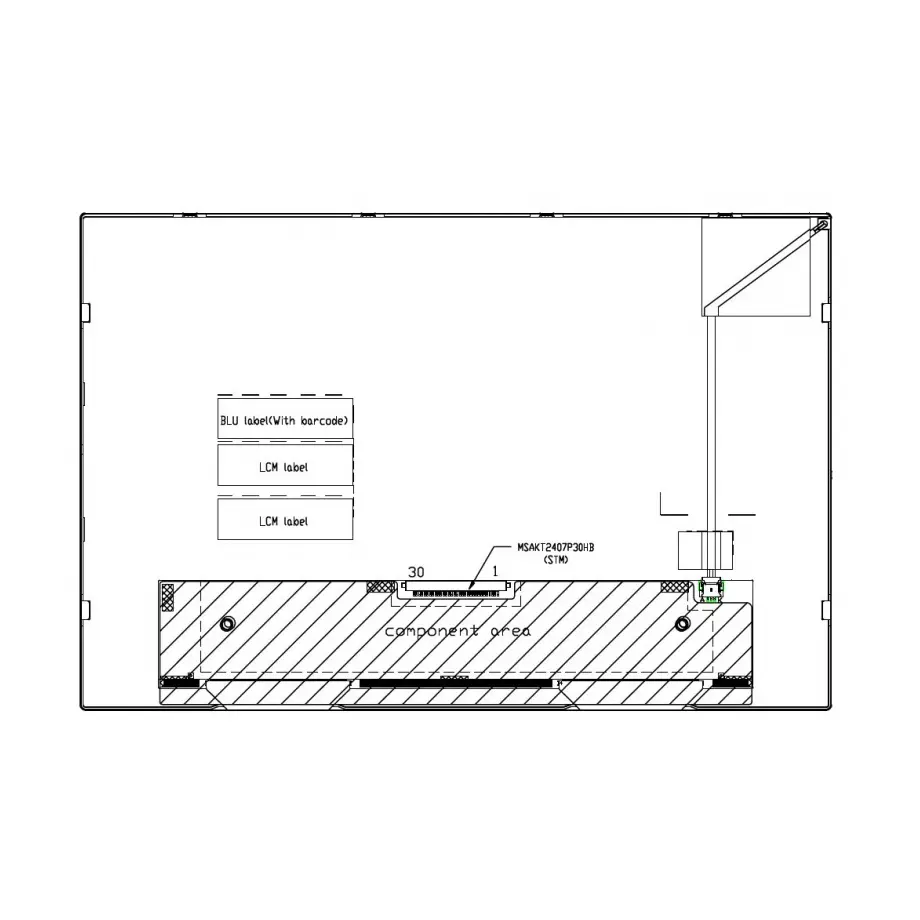
The 277.7×180.6×9.2 mm module surrounds a 261.12×163.2 mm active area and weighs 470 g typical. Check bezel opening, mounting datum, connector exit, rear clearance and the location of the separate LED-driver wiring. The SFT normally-black transmissive mode and symmetric viewing specification support broad viewing-angle evaluation, but final readability should be assessed through the actual protective window at the operator's working distance.
Industrial sourcing baseline
Release P1210WXF2MA01 2.0G No-Driver WXGA Outdoor SFT LCM with the exact Tianma drawing, LVDS cable definition, validated LED-driver circuit, brightness/dimming settings, temperature test record and mounting method. Keeping these artifacts with the equipment BOM makes future replacement screening auditable and prevents a generic 12.1-inch WXGA panel from being treated as equivalent without environmental, electrical and optical comparison.
Recommended: Same Size
(12.1")
Applications & Value of LCD Panel

- Fast sourcing with in-stock panels & cross-reference alternatives
- Stable supply chain with long-term availability
- Engineering-level support from panel to integration
- Custom solutions: cable, touch & optical bonding
- Strict quality control with IQC / OQC / aging test
- Full traceability system for quality assurance
- Complete technical documentation & drawings
- Compliance support: RoHS & certification files
