~
~
~
~
~
~
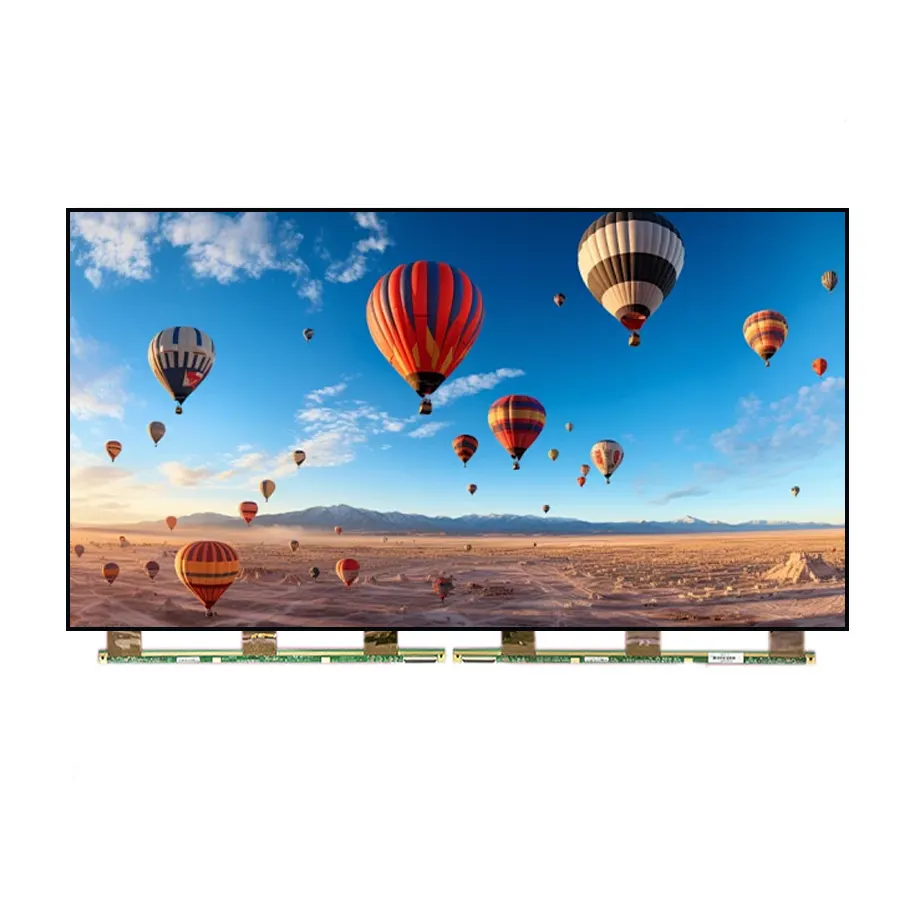
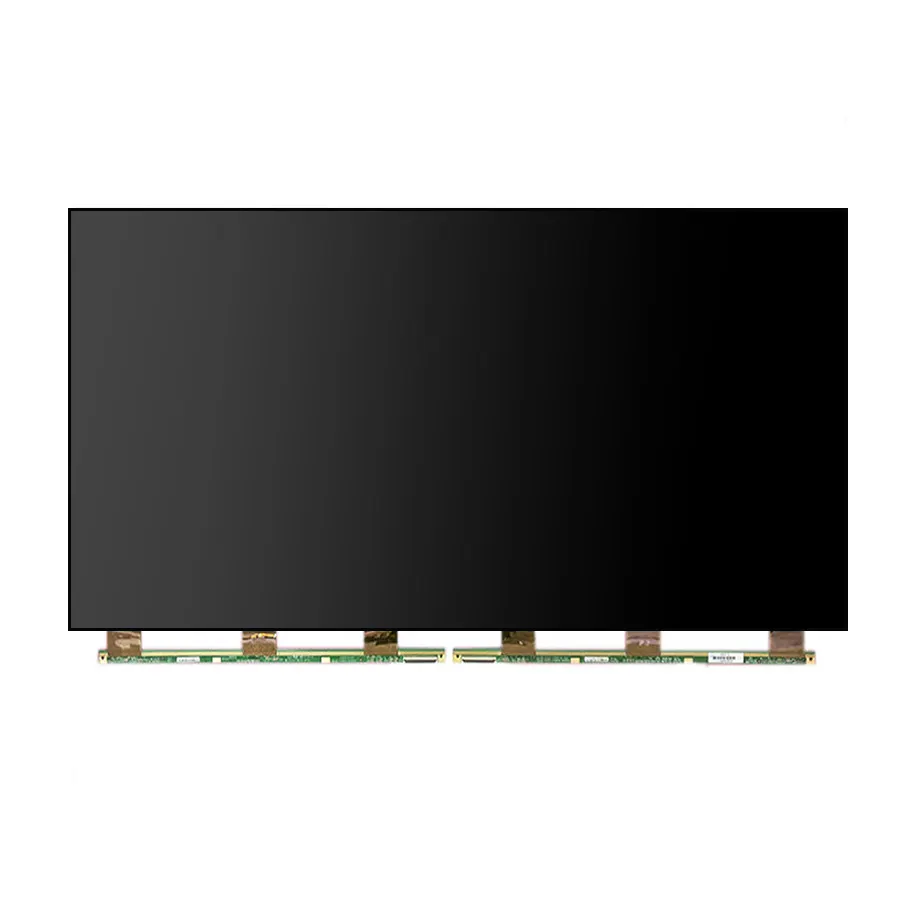
M315QVR05.0 CELL UHD Gaming LCD Panel 32″ Curved Monitor AUO
Model P/N
Size
Resolution
Brightness
Viewing Angle
Connector Type
Operating Temp
Overall(mm)
auo
M315QVR05.0 CELL
Brand
Panel Size (inch)
Model P/N
Resolution
Viewing Angle
Contrast Ratio
Response Time
Overall (mm)
Active Area (mm)
Refresh Rate
Display Colors
Panel Type
Connector Type
Surface Treatment
Operating Temp
Touchscreen Type
Storage Temp
Work Mode
Pixel Format
Input Voltage (V)
Weight (g)
Designed For
Product Details
Product Overview
M315QVR05.0 CELL UHD Gaming LCD Panel is a 32.0-inch AUO a-Si TFT-LCD cell for curved desktop-monitor and gaming-display designs. The cell carries a native 3840(RGB)×2160 UHD raster at 16:9, a VA normally-black transmissive mode, 165 Hz refresh and a 3000:1 typical contrast ratio. Its confirmed active area is 697.306 × 392.234 mm inside a 708.944 × 405.73 × 1.22 mm outline, and exact-model information identifies a 1500R curved form with a three-side borderless design direction.
This is a CELL (FOB), not a finished LCD module. Its locked brightness value is 0 cd/m² because no backlight is integrated. The separate monitor design must provide the backlight, backlight driver, optical films, frame and thermal solution. The native panel signal is eight-lane eDP using HBR3 at 8.1 Gbit/s per lane through a 51-pin 0.5 mm connector, with 12 V typical panel input. Those facts define important interfaces but do not make a generic monitor controller automatically compatible.
Three Core Buyer Value Propositions
1. UHD and 165 Hz in a 1500R curved cell format
The combination of 3840×2160 native resolution, 165 Hz refresh and 1500R curvature gives monitor developers a specific platform for high-resolution curved gaming designs. It reduces ambiguity at concept selection because resolution, refresh and curvature are established for the exact cell. The finished monitor still needs electronics capable of the required UHD timing and a mechanical structure that preserves the intended curvature without imposing unsafe stress on the glass.
2. VA optical behavior with a documented high-contrast baseline
The cell uses VA, normally-black, transmissive operation with a 3000:1 typical contrast ratio and 89/89/89/89 typical viewing-angle values at CR≥10. These data support dark-scene and off-axis evaluation for gaming and general monitor use. They are panel-level values, not a promise of finished-screen black level, uniformity or ambient-light contrast after a backlight, cover structure and enclosure are added.
3. HBR3 interface and compact cell mechanics provide concrete integration anchors
The eight-lane HBR3 eDP definition, 51-pin connector, 12 V typical input and 708.944 × 405.73 × 1.22 mm cell outline give electrical and mechanical teams a precise starting point. The 742 g typical cell weight also helps with frame calculations. Qualification boundaries remain important: pin assignment, timing, power sequence, cable topology, connector orientation and backlight design must be verified against the current exact-model specification.
Key Specifications at a Glance
| Parameter | Confirmed value |
|---|---|
| Manufacturer / model | AUO M315QVR05.0 CELL |
| Display size | 32.0 inch |
| Product form | a-Si TFT-LCD, CELL (FOB) |
| Native resolution | 3840(RGB)×2160, UHD, 16:9 |
| Pixel layout | RGB Vertical Stripe |
| Active area | 697.306 × 392.234 mm |
| Outline | 708.944 × 405.73 × 1.22 mm |
| Weight | 742 g typical |
| Display mode | VA, Normally Black, Transmissive |
| Contrast ratio | 3000:1 typical |
| Viewing-angle values | 89/89/89/89 typical at CR≥10 |
| Response time | 5 ms typical G-to-G |
| Display colors | 16.7M, 86% sRGB |
| Surface | Antiglare, Haze 25%; hard coating 3H |
| Transmissivity | 3.3% typical with polarizer |
| Refresh rate | 165 Hz |
| Curvature | 1500R exact-model feature |
| Native interface | eDP, 8 lanes, HBR3 8.1 Gbit/s per lane |
| Connector | 51 pins, 0.5 mm pitch |
| Panel input | 12 V typical |
| Backlight | Not integrated; external backlight and driver required |
| Touch | Without touch screen |
| Operating / storage temperature | 0 to 50 °C / -20 to 60 °C |
How Should a 1500R Bare Cell Be Mechanically Integrated?
M315QVR05.0 CELL UHD Gaming LCD Panel is supplied as a curved cell, so the mechanical design must support its existing geometry rather than attempting to force a flat glass assembly into a curved monitor housing. The 708.944 × 405.73 mm outline, 1.22 mm depth and documented 0.40 + 0.40 mm glass construction should be used with the current drawing to define support zones, edge clearances and allowable clamping methods.
Curved-cell integration also affects the backlight and optical stack. Light-source spacing, film retention and frame tolerances need to follow the curvature consistently so that pressure and optical non-uniformity are controlled. AUO’s monitor display overview describes curved and bezel-less monitor technology as part of its monitor portfolio, but portfolio-level statements do not replace exact-model mechanical limits.
Why Is the Brightness 0 cd/m² on a 32-Inch Gaming Cell?
The 0 cd/m² value belongs to the bare CELL configuration and is not a finished-screen brightness target. The product has no integrated backlight. Its 3.3% typical transmissivity with polarizer is the relevant optical input for a system designer who must create the separate illumination architecture. Backlight optical output, film efficiency, LED spectrum, thermal management and dimming strategy will determine the finished monitor’s luminance and uniformity.
Because no backlight is part of the cell, no backlight lifetime should be invented or copied from another M315 series product. A procurement specification should instead define the required finished luminance, uniformity, power budget and thermal conditions for the complete monitor. Backlight performance must then be validated in the actual assembly rather than inferred from the cell’s contrast ratio or transmissivity alone.
What Does Eight-Lane HBR3 eDP Mean for Controller Selection?
The native interface is specified as eight-lane eDP with HBR3 at 8.1 Gbit/s per lane. VESA’s eDP 1.4a overview identifies HBR3 as an 8.1 Gbit/s per-lane DisplayPort link rate. That is useful standards context for the data rate, but the panel’s eight-lane implementation and 51-pin connector remain exact-product details that must be matched using the AUO timing and pinout documentation.
For controller qualification, check link architecture, lane mapping, timing, AUX/control requirements, connector pin assignment and power sequencing. The 12 V typical panel input is not the same as a finished monitor’s AC or DC adapter specification. Likewise, external HDMI or DisplayPort inputs belong to the monitor controller board; they cannot be described as the panel-native interface unless the controller performs the required conversion.
UHD at 165 Hz: What Should Be Validated at System Level?
A 3840×2160 raster at 165 Hz places a different requirement on the electronics chain than a lower-refresh UHD design. The panel rate confirms what the cell is intended to display, but the source GPU, scaler, eDP transmitter, firmware and cable must sustain the exact timing. Qualification should include representative graphics modes, synchronization behavior and thermal loading rather than relying on a controller’s generic “4K” label.
The 5 ms typical G-to-G response-time figure is also a panel transition metric, not total gaming latency. Display processing, frame buffering, synchronization and source behavior remain separate. For procurement, the useful question is whether the complete monitor architecture can drive this exact cell at its intended operating modes while maintaining stable image quality, rather than whether one headline number appears fast.
VA Contrast, Surface and Color Considerations
The 3000:1 typical contrast ratio is one of the stronger distinguishing characteristics of the supplied VA cell data. The 89/89/89/89 typical viewing-angle values and antiglare surface with 25% haze provide additional inputs for monitor evaluation. The supplied color wording is 16.7M with 86% sRGB. Those values should be kept intact rather than upgraded to a wider color-gamut claim from a similar model or marketing family.
Finished optical performance depends on the external backlight spectrum and film stack. The cell’s 3.3% transmissivity affects how much backlight output reaches the viewer, while haze and any added front cover affect reflections and apparent detail. Calibration, white point, gamma, uniformity and color error must be measured on the completed monitor; none are guaranteed by the cell model name alone.
Application Fit for Curved Desktop and Gaming Monitors
M315QVR05.0 CELL UHD Gaming LCD Panel is supported for desktop-monitor and gaming use, and exact-model research also identifies a 1500R curved, three-side-borderless feature set. That makes the strongest application a deliberately engineered 32-inch curved gaming or performance monitor using the specified UHD timing and external-backlight architecture. The panel should not be positioned as a complete monitor or an illuminated LCM.
AUO publicly describes high-refresh, high-resolution, curved and bezel-less monitor products as part of its gaming-display direction. This supports the application language but does not prove a specific certification, HDR grade, adaptive-sync implementation or final luminance for this exact cell. No touch function is documented, and no industrial, medical or automotive qualification should be inferred from the temperature range or AUO’s broader portfolio.
Procurement and Qualification Checklist
- Confirm the exact identity AUO M315QVR05.0 CELL on the label and controlled documentation.
- Match the native 3840×2160 UHD timing, 16:9 format and 165 Hz refresh requirement.
- Verify the 1500R curvature, full outline, glass support, connector position and mounting approach from the current drawing.
- Confirm eight-lane HBR3 eDP, the 51-pin 0.5 mm connector and the exact pinout/timing implementation.
- Design a separate backlight, driver and optical stack around the 3.3% typical transmissivity and project luminance target.
- Account for the 742 g cell weight separately from backlight, electronics, frame and stand structures.
- Validate contrast, haze, viewing behavior and the documented 86% sRGB color wording in the complete optical stack.
- Confirm that a non-touch bare cell is appropriate for the product architecture.
- Request current revision, quantity and change-status information rather than converting an online production-status statement into a supply guarantee.
For M315QVR05.0 CELL UHD Gaming LCD Panel qualification, provide the target controller, UHD/165 Hz timing plan, HBR3 cable architecture, 1500R mechanical concept, external-backlight target, expected quantity and optical acceptance limits. These inputs allow an engineering comparison against the exact cell instead of treating all 32-inch UHD gaming panels as interchangeable. Additional exact-model options can be screened through the HS-LCD panel inventory.
Recommended: Same Size
(32")
Applications & Value of LCD Panel

- Fast sourcing with in-stock panels & cross-reference alternatives
- Stable supply chain with long-term availability
- Engineering-level support from panel to integration
- Custom solutions: cable, touch & optical bonding
- Strict quality control with IQC / OQC / aging test
- Full traceability system for quality assurance
- Complete technical documentation & drawings
- Compliance support: RoHS & certification files