~
~
~
~
~
~
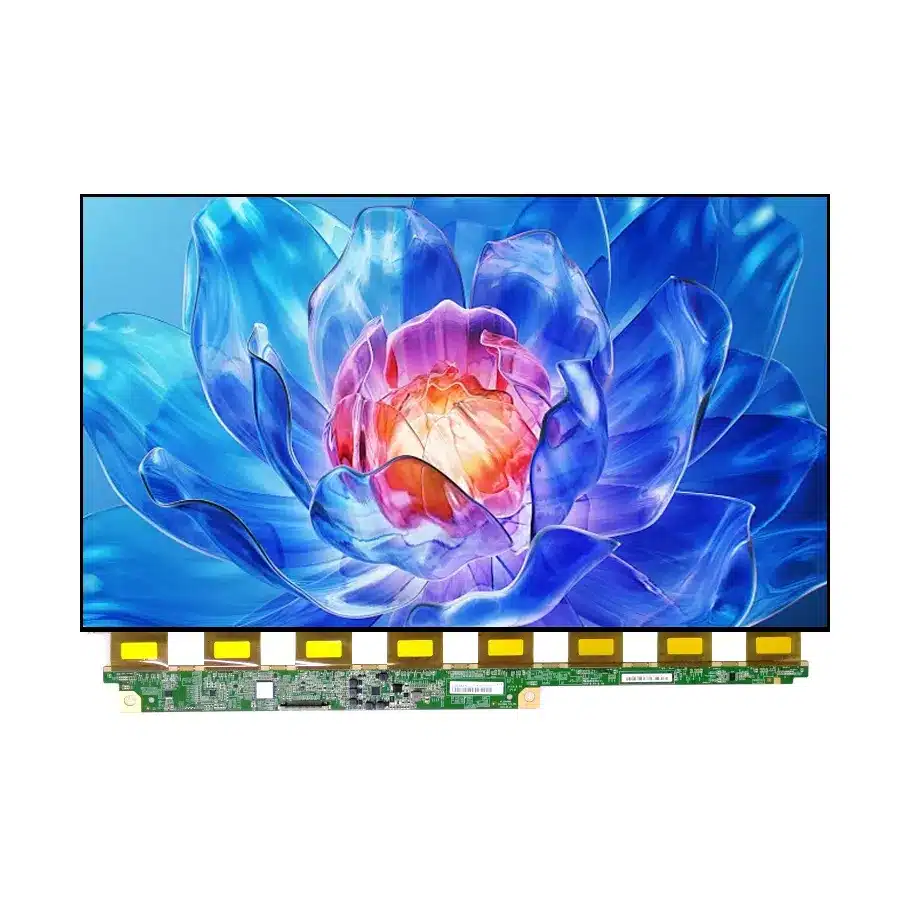
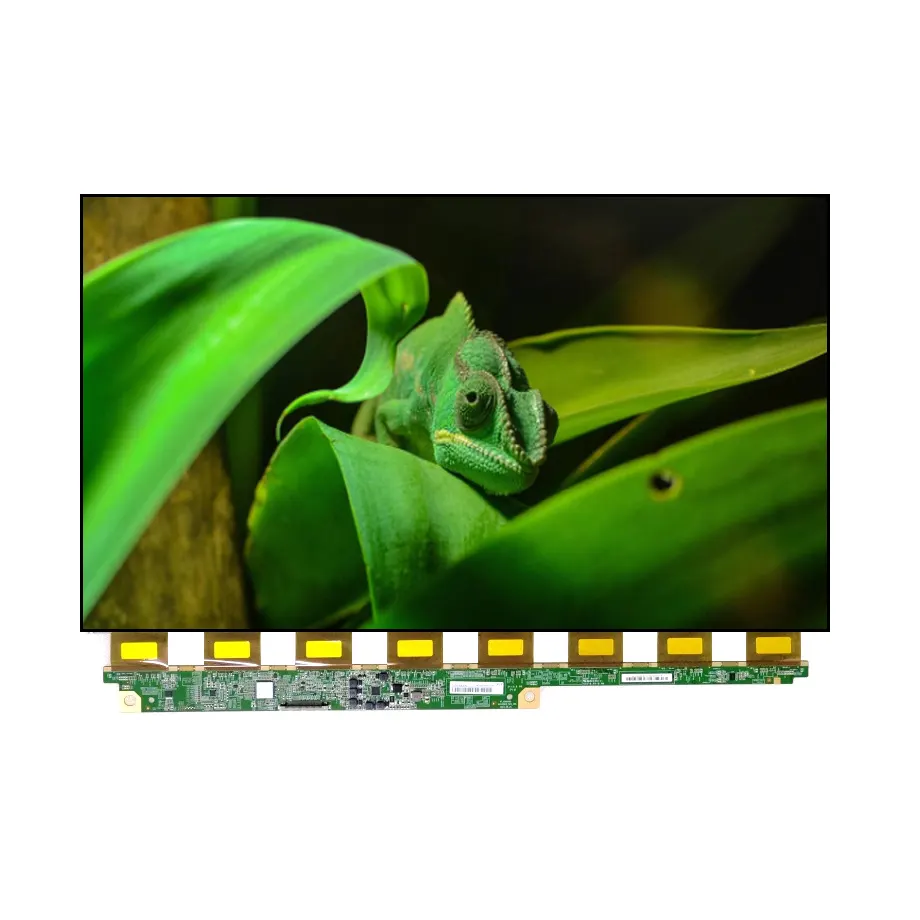
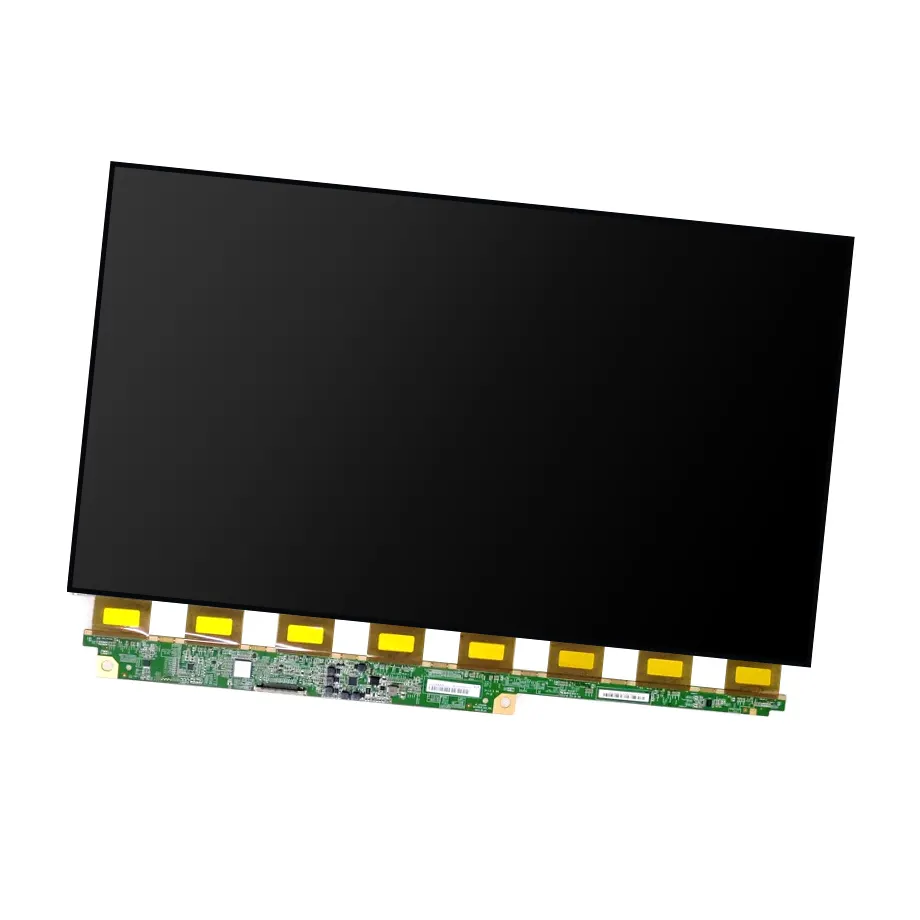
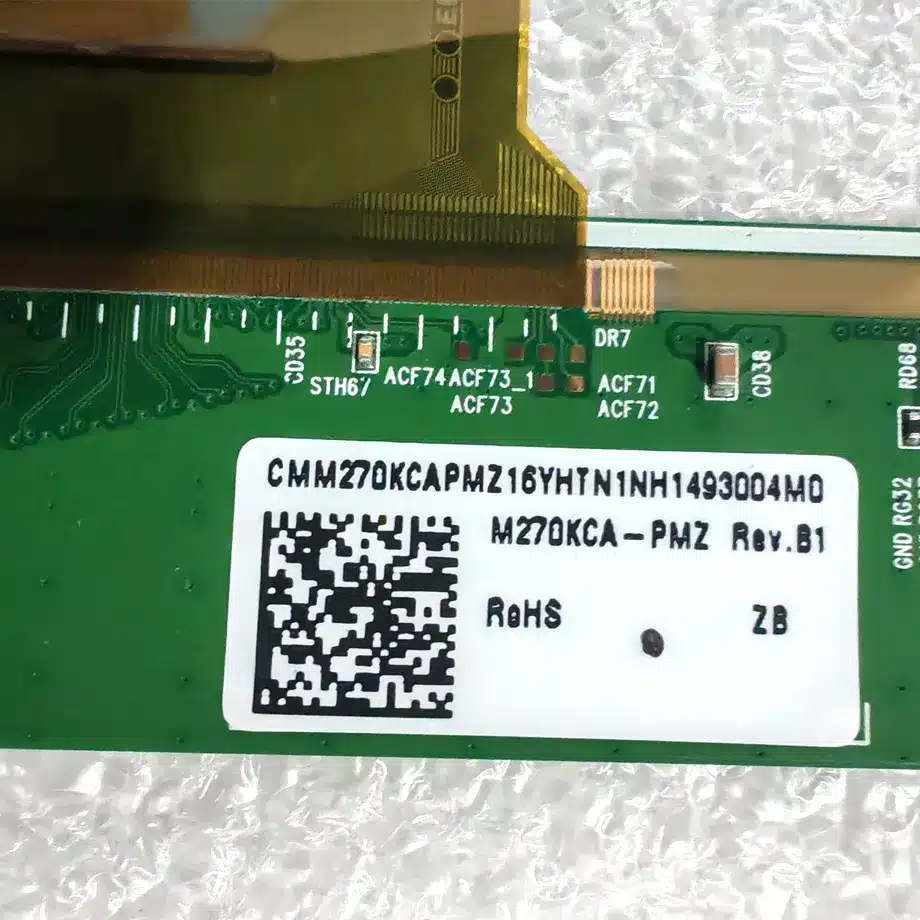
M270KCA-D8B High Refresh QHD LCD Cell 27″ Borderless Innolux
Model P/N
Size
Resolution
Brightness
Viewing Angle
Connector Type
Operating Temp
Overall(mm)
innolux
M270KCA-D8B
Brand
Panel Size (inch)
Model P/N
Resolution
Viewing Angle
Contrast Ratio
Response Time
Overall (mm)
Active Area (mm)
Refresh Rate
Display Colors
Panel Type
Connector Type
Surface Treatment
Operating Temp
Touchscreen Type
Storage Temp
Work Mode
Pixel Format
Input Voltage (V)
Designed For
Product Details
Product Overview
M270KCA-D8B High Refresh QHD LCD Cell is a 27.0-inch Innolux a-Si TFT-LCD CELL (FOB) for desktop-monitor and gaming-display integration. It uses a native 2560(RGB)×1440 Quad-HD raster in a 16:9 format, an AAS normally-black transmissive mode and a 180 Hz refresh rate. The confirmed active area is 596.736 × 335.664 mm, with a 608.58 × 349.08 × 1.34 mm cell outline. The panel also carries 92% DCI-P3 color-gamut wording, 16.7M colors and a 1000:1 typical contrast ratio.
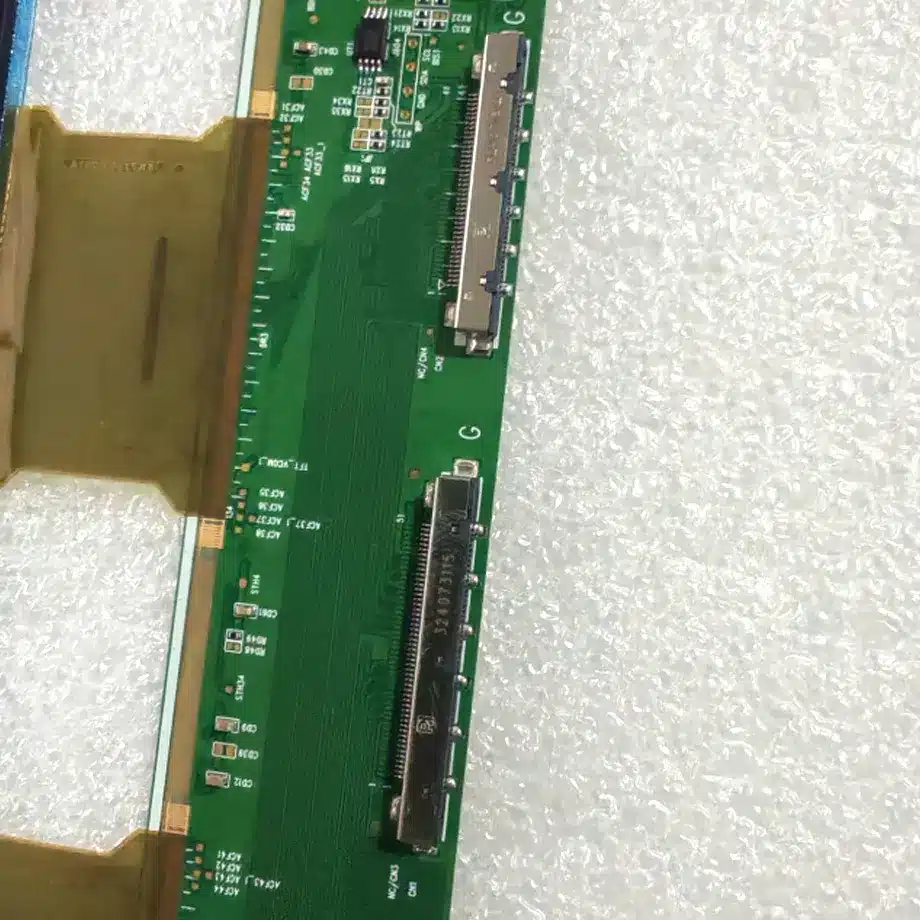
This exact part is a bare LCD cell rather than a finished LCM or monitor. The documented brightness value is 0 cd/m² because the cell has no integrated backlight; an external backlight and its driver must be engineered separately. The native signal path is four-lane eDP at HBR2 5.4 Gbit/s per lane through a 51-pin, 0.5 mm connector. Mechanical support, backlight optics, power conversion, controller electronics, thermal behavior and finished-monitor I/O therefore remain system-level design responsibilities.
Three Core Buyer Value Propositions
1. 180 Hz QHD cell architecture for gaming monitor projects
The 2560×1440 native raster and 180 Hz refresh rate provide a clear high-refresh QHD target for desktop and gaming-monitor design. The 7 ms typical G-to-G response-time reference gives another panel-level motion parameter for qualification. Those facts do not prove total monitor latency or a particular overdrive mode; scaler behavior, frame buffering, source timing and firmware must be measured in the complete display system.
2. Bare-cell format gives optical-stack control but adds integration work
The CELL (FOB) construction is useful when a display manufacturer intends to define the backlight, optical films, frame and thermal path around the LCD cell. The 3.2% typical transmissivity with polarizer and 0 cd/m² panel brightness make the boundary explicit: finished luminance depends on the external illumination system. Backlight efficiency, LED spectrum, film stack, thermal loading and optical uniformity must be designed rather than inferred from the cell alone.
3. Confirmed mechanical and interface anchors reduce early qualification ambiguity
The 608.58 × 349.08 × 1.34 mm outline, 660/693 g typical/maximum mass, four-lane HBR2 eDP path, 51-pin connector and 12.0 V typical input give engineers concrete starting points for enclosure, cable and electronics reviews. They do not establish drop-in compatibility with another 27-inch cell. Mounting, connector position, pin assignment, power sequencing and the exact timing specification still need drawing- and sample-level validation.
Key Specifications at a Glance
| Parameter | Confirmed value |
|---|---|
| Manufacturer / model | Innolux M270KCA-D8B |
| Display size | 27.0 inch |
| Product form | a-Si TFT-LCD, CELL (FOB) |
| Native resolution | 2560(RGB)×1440, Quad-HD, 16:9 |
| Pixel layout | RGB Vertical Stripe |
| Active area | 596.736 × 335.664 mm |
| Outline | 608.58 × 349.08 × 1.34 mm |
| Weight | 660 / 693 g typical / maximum |
| Display mode | AAS, Normally Black, Transmissive |
| Contrast ratio | 1000:1 typical |
| Viewing-angle values | 89/89/89/89 typical at CR≥10 |
| Response time | 7 ms typical G-to-G |
| Display colors | 16.7M, 92% DCI-P3 |
| Surface | Antiglare, Haze 25%; hard coating 3H |
| Transmissivity | 3.2% typical with polarizer |
| Refresh rate | 180 Hz |
| Native interface | eDP, 4 lanes, HBR2 5.4 Gbit/s per lane |
| Connector | 51 pins, 0.5 mm pitch |
| Panel input | 12.0 V typical |
| Backlight | Not integrated; external backlight and driver required |
| Touch | Without touch screen |
| Operating / storage temperature | 0 to 50 °C / -20 to 60 °C |
Why Does a 0 cd/m² Brightness Value Matter for This Cell?
The 0 cd/m² value should not be read as a defective or unusable display. M270KCA-D8B High Refresh QHD LCD Cell is supplied as a cell without an integrated backlight, so the component by itself does not generate the white luminance expected from a finished LCD monitor. The confirmed 3.2% transmissivity value describes how much light passes through the LCD and polarizer stack under the defined measurement condition.
For product development, specify the target finished-screen luminance separately. The LED backlight, light guide or direct-light architecture, diffuser and prism films, reflector, drive current, thermal path and dimming strategy all influence luminance and uniformity. A higher backlight optical output can increase finished brightness, but it may also increase heat and power. The cell data alone does not establish a safe maximum backlight flux or a guaranteed final luminance.
How Should the Four-Lane HBR2 eDP Interface Be Qualified?
The native interface is documented as four-lane eDP at HBR2, 5.4 Gbit/s per lane, on a 51-pin 0.5 mm connector. VESA describes eDP as the embedded electrical interface that transports video from system graphics hardware to an internal display panel, and its published eDP material identifies HBR2 as a 5.4 Gbit/s link rate. See VESA’s eDP overview for standards context.
That standards context does not make arbitrary eDP controller boards interchangeable. Verify the exact M270KCA-D8B pin assignment, link configuration, auxiliary-channel behavior, timing, power sequencing and connector orientation. The 12.0 V typical value is the panel/cell input specified for this part; external DisplayPort, HDMI or USB-C ports on a finished monitor belong to the controller architecture and are not the cell’s native interface.
What Does 180 Hz Require From the Rest of the Monitor?
A 180 Hz cell needs an electronics path that can deliver the intended QHD timing reliably. The source, scaler or timing controller architecture, eDP transmitter, cable and power design must all be qualified at the required refresh rate. A controller advertised for 2560×1440 output is not automatically suitable for 180 Hz, and matching HBR2 terminology alone does not prove the correct panel timing or firmware support.
The panel-level 7 ms G-to-G value should also be kept separate from complete gaming-display latency. Pixel response, frame transport, image processing, synchronization, overdrive implementation and input buffering contribute different parts of the motion experience. Qualification should therefore include the exact controller and intended operating modes rather than extrapolating finished-monitor behavior from one panel parameter.
Optical Stack, Color Gamut and Surface Considerations
The cell is specified with 16.7M colors and 92% DCI-P3, plus an antiglare surface with 25% haze and 3H hard coating. Those values support a wide-gamut monitor design direction, but final color accuracy still depends on backlight spectrum, optical films, controller output, calibration, white-point targets and production tolerances. The cell data does not establish a finished-monitor color-error specification or factory calibration level.
Antiglare haze affects how ambient reflections and fine image detail are perceived. Because this is a bare cell, any added cover, bezel, air gap or optical layer can alter reflection and contrast. Validate the complete front optical stack under the intended desktop lighting. The 89/89/89/89 typical viewing-angle values at CR≥10 describe the panel measurement basis; they do not by themselves define a finished monitor’s perceived image quality in every ambient condition.
Mechanical and Glass Integration
The confirmed overall size is 608.58 × 349.08 × 1.34 mm, while the active image area is 596.736 × 335.664 mm. The source also documents a 0.50 + 0.50 mm glass-depth construction. That glass information is an extended engineering fact and should not be confused with the complete 1.34 mm cell thickness. Use the current drawing to establish edge clearances, support locations, connector position and permissible clamping zones.
Cell products generally require more careful handling than framed LCMs because the buyer’s mechanical structure must protect the glass and integrate the illumination system. The listed 660/693 g typical/maximum weight belongs to the cell and should be included in chassis calculations, but it does not include a separate backlight unit, controller board, cover or full monitor frame. Prototype testing should address torsion, pressure points and assembly tolerances without inventing a vibration qualification that has not been documented.
Application Fit for Desktop and Gaming Monitors
M270KCA-D8B High Refresh QHD LCD Cell is supported for desktop-monitor and gaming applications. Innolux’s own monitor-application information identifies monitor panels as a major product area, and the company has publicly discussed large-size QHD/UHD and high-refresh gaming monitor development. See Innolux’s monitor application overview for manufacturer-level context. That portfolio context does not add unlisted certifications or performance values to this exact model.
The strongest exact-model fit is a monitor platform that is intentionally designed around a 27-inch QHD bare cell, external backlight architecture, 180 Hz timing and the documented eDP interface. This product is not a touch module, finished monitor, industrial HMI or automotive-qualified display based on the supplied evidence. Projects in those categories would require separate evidence and system qualification rather than a taxonomy or keyword assumption.
Procurement and Qualification Checklist
- Confirm the exact label: Innolux M270KCA-D8B.
- Match the native 2560×1440 raster, 16:9 geometry and 180 Hz timing requirement.
- Verify four-lane eDP HBR2, the 51-pin 0.5 mm connector, exact pin assignment and controller firmware.
- Design the external backlight and driver around the 3.2% typical transmissivity and the project’s finished-luminance target.
- Confirm the 608.58 × 349.08 × 1.34 mm outline, connector position, glass support and mounting clearances from the current drawing.
- Account for the 660/693 g cell mass separately from backlight, electronics and enclosure weight.
- Validate color, uniformity, antiglare behavior and 92% DCI-P3 wording in the complete optical stack.
- Confirm that no touch function is required and that the 0 to 50 °C operating range fits the finished system.
- Request current revision, quantity and change-status information at procurement time rather than inferring long-term supply from an online listing.
When a project needs M270KCA-D8B High Refresh QHD LCD Cell, provide the target controller architecture, 180 Hz timing requirement, backlight concept, eDP cable or connector details, mechanical drawing, target luminance, quantity and optical acceptance criteria. These inputs make it possible to qualify the cell as part of a complete monitor architecture instead of treating it like a plug-in finished module. For broader model comparison, use the HS-LCD panel inventory and then validate the selected part at exact-model level.
Recommended: Same Size
(27")
Applications & Value of LCD Panel

- Fast sourcing with in-stock panels & cross-reference alternatives
- Stable supply chain with long-term availability
- Engineering-level support from panel to integration
- Custom solutions: cable, touch & optical bonding
- Strict quality control with IQC / OQC / aging test
- Full traceability system for quality assurance
- Complete technical documentation & drawings
- Compliance support: RoHS & certification files