~
~
~
~
~
~
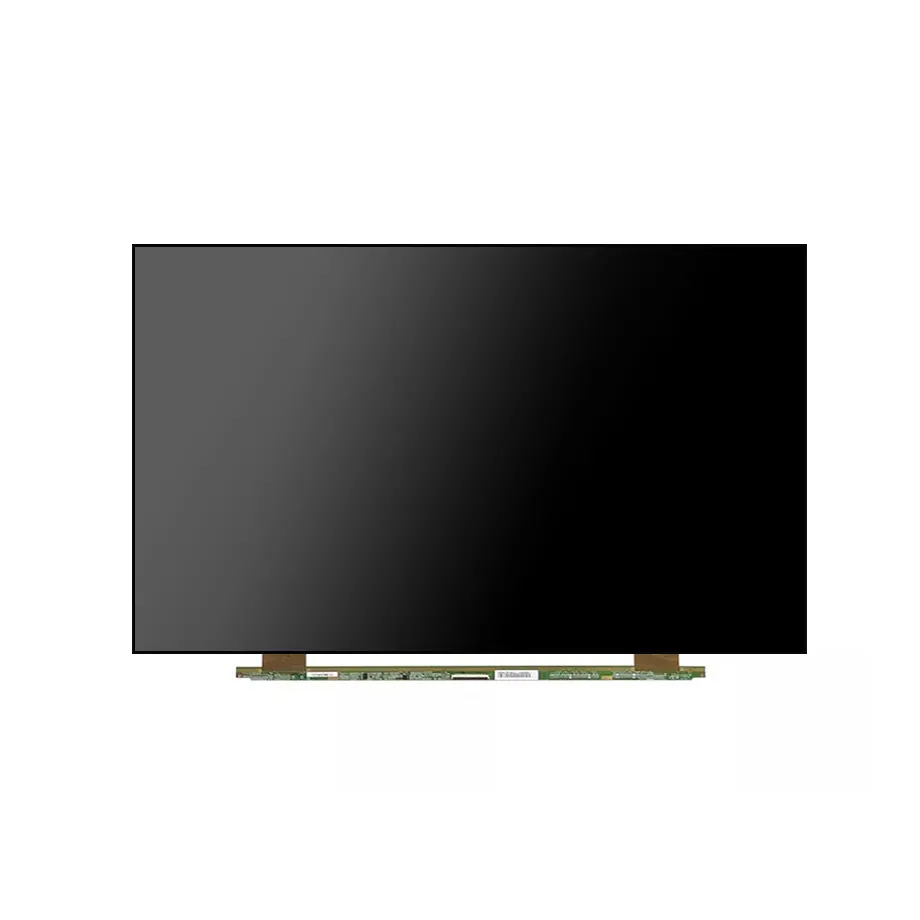
M490AVR01.5 CELL DQHD FOG Ultrawide Panel 49″ Monitor AUO
Model P/N
Size
Resolution
Brightness
Viewing Angle
Connector Type
Operating Temp
Overall(mm)
auo
M490AVR01.5 CELL
Brand
Panel Size (inch)
Model P/N
Resolution
Viewing Angle
Contrast Ratio
Response Time
Overall (mm)
Active Area (mm)
Refresh Rate
Display Colors
Panel Type
Connector Type
Surface Treatment
Operating Temp
Touchscreen Type
Storage Temp
Work Mode
Pixel Format
Input Voltage (V)
Weight (g)
Designed For
Product Details
Product Overview
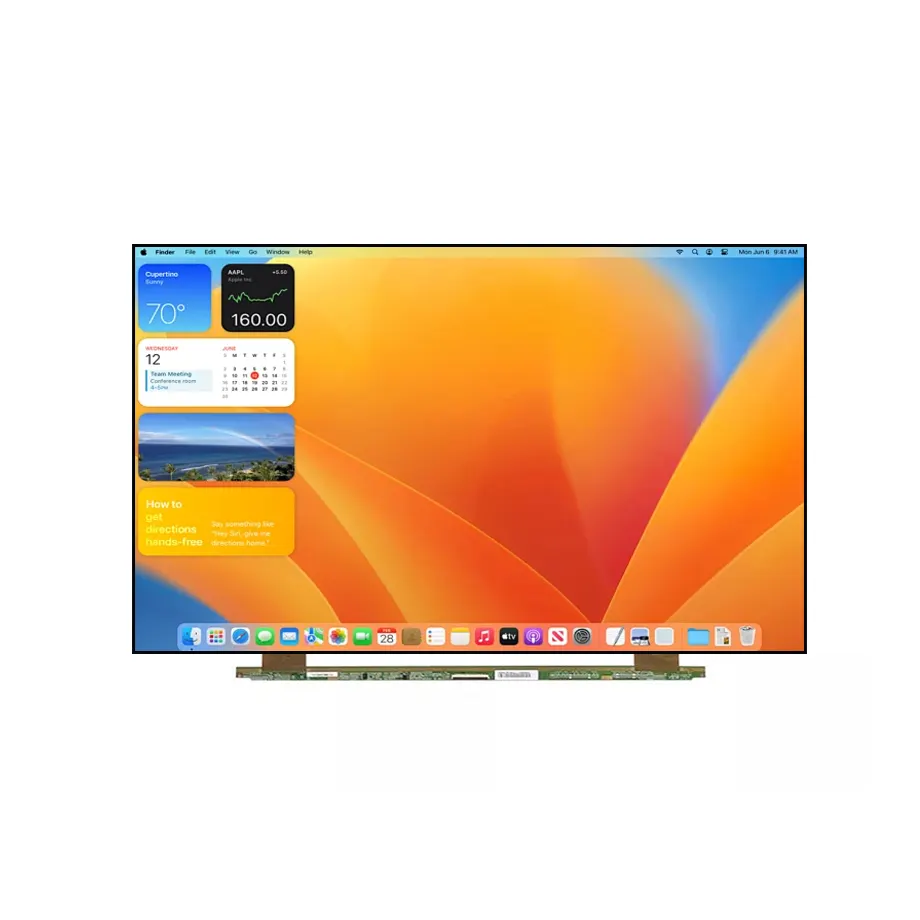
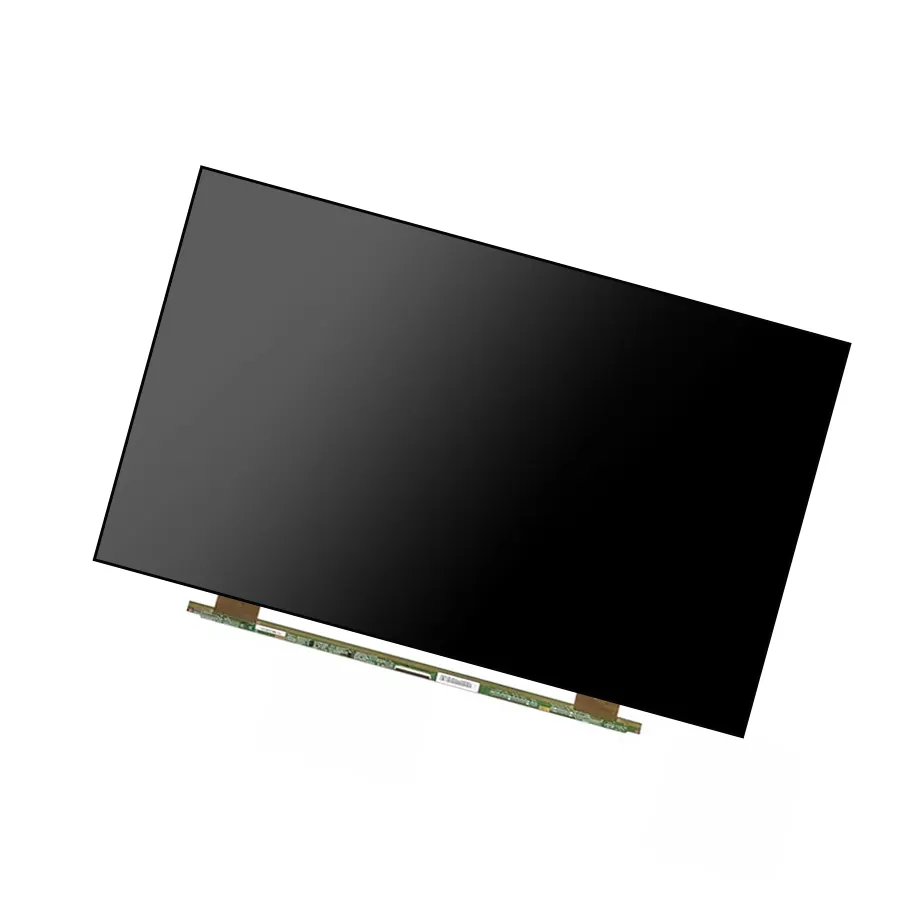
M490AVR01.5 CELL DQHD FOG Ultrawide Panel is a 49-inch AUO a-Si TFT-LCD CELL (FOG) built around a native 5120(RGB)×1440 DQHD raster with a greater-than-3:1 native-bar aspect. The cell uses VA, normally-black, transmissive operation, a 120 Hz frame rate, 3000:1 typical contrast and 16.7M colors with 71% NTSC wording. Its image-producing area measures 1191.94 × 335.232 mm, while the confirmed cell outline is 1208.08 × 349.962 × 1.17 mm. This is a bare cell: the 0 cd/m² luminance value and absence of an integrated backlight mean that finished monitor brightness must come from a separately engineered illumination system.
The electrical path is equally specific. The cell uses eight-lane eDP at HBR2, 5.4 Gbit/s per lane, on a 51-pin 0.5 mm connector and a 12.0 V typical panel input. These facts make the product relevant to 49-inch DQHD desktop-monitor and gaming projects, but they do not establish compatibility with an arbitrary scaler board, cable, backlight or chassis. Qualification has to cover the exact timing, lane organization, pin assignment, power sequence, mechanical support and optical stack.
Three Core Buyer Value Propositions
1. Native-bar DQHD geometry supports purpose-built ultrawide monitor architecture
The 5120×1440 raster and 1191.94 mm active width define a very wide desktop canvas rather than a conventional 16:9 monitor. That gives mechanical and electronics teams a concrete basis for controller bandwidth, bezel opening, backlight segmentation and enclosure planning. The engineering boundary is important: DQHD resolution alone does not prove that a source, scaler or operating mode can drive this exact cell at 120 Hz, so the complete signal chain must be qualified.
2. Bare-cell construction gives control over luminance but transfers optical responsibility to the system
The CELL (FOG) format has no integrated backlight and lists 3.5% typical transmissivity with polarizer. A monitor manufacturer can therefore design the LED array, light guide or direct-light architecture, optical films and dimming strategy around the target product. The same freedom creates risk: finished luminance, uniformity, color behavior, power and thermal loading are system results, not values that can be inferred from the cell’s 3000:1 contrast ratio.
3. Eight-lane HBR2 and confirmed mechanics reduce early interface ambiguity
An eight-lane HBR2 eDP path, 51-pin connector, 12.0 V typical input, 1.17 mm cell depth and 1103 g typical panel weight provide concrete inputs for controller, cable and frame design. They shorten the initial screening stage because major electrical and mechanical classes are known. Final approval still requires the exact AUO specification and sample verification for pin mapping, connector orientation, timing, glass support, bend limits and production tolerances.
Key Specifications at a Glance
| Parameter | Confirmed value |
|---|---|
| Manufacturer / model | AUO M490AVR01.5 CELL |
| Product form | a-Si TFT-LCD, CELL (FOG) |
| Display size | 49 inch native-bar format |
| Native resolution | 5120(RGB)×1440 DQHD, >3:1 |
| Active area | 1191.94 × 335.232 mm |
| Outline | 1208.08 × 349.962 × 1.17 mm |
| Weight | 1103 g typical |
| Brightness | 0 cd/m² — no integrated backlight |
| Contrast ratio | 3000:1 typical |
| Viewing-angle values | 89/89/89/89 typical at CR≥10 |
| Response time | 12 ms typical G-to-G |
| Colors | 16.7M, 71% NTSC |
| Surface | Antiglare, 25% haze; hard coating 3H |
| Transmissivity | 3.5% typical with polarizer |
| Refresh rate | 120 Hz |
| Native interface | eDP, 8 lanes, HBR2 5.4 Gbit/s per lane |
| Connector | 51 pins, 0.5 mm pitch |
| Panel input | 12.0 V typical |
| Touch | Without touch screen |
| Operating / storage | 0 to 50 °C / -20 to 60 °C |
Why does a 49-inch DQHD CELL show 0 cd/m²?
The 0 cd/m² entry is consistent with the physical product form. A CELL (FOG) contains the LCD cell and attached driver-related structure but no finished backlight unit, so it does not have the white-screen luminance of an assembled LCM. The 3.5% typical transmissivity with polarizer is the more useful optical input for illumination design. It describes the cell’s light-transmission behavior under the defined measurement basis, not the light output of a completed monitor.
For M490AVR01.5 CELL DQHD FOG Ultrawide Panel, the backlight specification should start from the target finished-screen luminance, uniformity, thermal limit, power budget and dimming requirement. LED spectrum and optical-film selection will also influence color performance. The system designer should verify the illumination stack on production-intent hardware rather than using a brightness number from a related AUO module or another 49-inch DQHD product.
How should an eight-lane HBR2 eDP path be qualified?
VESA describes Embedded DisplayPort as an embedded display interface and identifies HBR2 as a 5.4 Gbit/s main-link data rate. Its eDP standards overview provides useful context for the link class. The standard does not define this cell’s exact eight-lane connector mapping, cable construction or timing table, so those details remain product-specific.
Controller qualification should verify all eight lanes, AUX/control behavior, link training, the 51-pin 0.5 mm connector, cable impedance, connector orientation and the required panel power sequence. The 12.0 V typical value is the cell input, not a finished monitor adapter rating. HDMI, external DisplayPort and USB-C belong to the monitor controller side; any conversion to the native eDP path must be engineered and tested separately.
What does 120 Hz mean for a 5120×1440 source pipeline?
A 120 Hz cell can only operate as intended when the source, scaler or timing-controller architecture delivers the correct 5120×1440 timing at the required frame rate. The wide raster increases the importance of controller bandwidth, memory architecture, firmware and cable integrity. A board marketed as “5K,” “DQHD” or “120 Hz” should not be accepted without confirming the exact combined mode and the panel-side electrical implementation.
The documented 12 ms typical G-to-G response value is a pixel-transition reference, not a finished-monitor latency figure. Input processing, scaling, frame buffering, synchronization and any image enhancement can add separate delay. Gaming qualification should therefore measure the complete monitor in the intended operating modes and keep panel response, refresh rate and end-to-end latency as distinct engineering metrics.
Mechanical support for a 1.2-meter-wide bare cell
The 1208.08 mm overall width changes the mechanical problem compared with a conventional 27- or 32-inch monitor. Frame stiffness, glass support, assembly flatness and transport handling need to prevent concentrated stress over a long span. The documented 0.40 + 0.40 mm glass-depth information is an extended cell-construction fact and must not be confused with the full 1.17 mm outline depth. The current AUO drawing should control support zones and connector clearances.
At 1103 g typical, the bare cell mass is only one part of the final structure. A production monitor adds backlight hardware, optical films, controller boards, enclosure parts and stand or mounting structures. Incoming inspection should check edge damage, surface defects, connector condition and pressure marks before assembly. Prototype builds should verify that frame retention does not disturb uniformity across the unusually wide active area.
Optical behavior and the role of VA contrast
The VA, normally-black, transmissive mode is specified with a 3000:1 typical contrast ratio and 89/89/89/89 typical viewing-angle values at CR≥10. Those panel-level numbers are useful for evaluating dark-state behavior and off-axis image retention. Finished contrast under room light will also depend on the antiglare surface, external backlight, internal reflections and any added cover layer, so system measurements remain necessary.
The surface treatment is antiglare with 25% haze and 3H hard coating, while color support is listed as 16.7M and 71% NTSC. Do not upgrade the gamut or claim a color-calibration target based on another AUO monitor product. AUO’s monitor display portfolio provides manufacturer context for high-resolution, high-refresh and curved monitor technologies, but portfolio-level capabilities are not extra specifications for this exact cell.
Application fit: DQHD desktop and gaming monitor platforms
M490AVR01.5 CELL DQHD FOG Ultrawide Panel is supported for desktop-monitor and gaming use. The strongest application is a purpose-built ultra-wide monitor architecture that can accommodate a 49-inch native-bar cell, 5120×1440 timing, an external backlight system and the exact eight-lane eDP connection. The very wide geometry can serve multi-window desktop layouts or gaming displays, but those user experiences are system-level outcomes rather than guarantees attached to the cell itself.
No touch function is documented, so an interactive version would require a separately qualified touch sensor, controller, cover stack and mechanical design. The 0 to 50 °C operating range is also not evidence of industrial-wide-temperature, automotive or rugged qualification. Projects in regulated or harsh-environment verticals need their own evidence and should not be inferred from the panel’s size, refresh rate or monitor application label.
Procurement and qualification checklist
- Confirm the exact identity AUO M490AVR01.5 CELL and preserve the suffix in purchasing documents.
- Verify native 5120×1440 timing at 120 Hz, not merely a generic DQHD mode.
- Match the eight-lane HBR2 eDP architecture, 51-pin 0.5 mm connector, exact pinout and cable orientation.
- Design the separate backlight and optical films around the 3.5% typical transmissivity and the finished-product luminance target.
- Use the current drawing to confirm the 1208.08 × 349.962 × 1.17 mm outline, connector location, support zones and glass clearances.
- Include the 1103 g cell mass separately from the backlight, electronics, enclosure and stand.
- Validate the 3000:1 contrast, antiglare behavior and 71% NTSC wording on the complete optical stack.
- Confirm the 12.0 V panel rail and power sequence under the intended thermal load.
- Request current revision, quantity and change-status information at procurement time; an online production listing is not a guaranteed supply duration.
When a project requires M490AVR01.5 CELL DQHD FOG Ultrawide Panel, submit the target controller architecture, 5120×1440/120 Hz timing plan, eDP cable details, backlight concept, mechanical drawing, target luminance, optical acceptance limits and required quantity. Those inputs allow the exact bare cell to be qualified as part of a complete display subsystem instead of treating all 49-inch DQHD panels as interchangeable.
Recommended: Same Size
(49")
Applications & Value of LCD Panel

- Fast sourcing with in-stock panels & cross-reference alternatives
- Stable supply chain with long-term availability
- Engineering-level support from panel to integration
- Custom solutions: cable, touch & optical bonding
- Strict quality control with IQC / OQC / aging test
- Full traceability system for quality assurance
- Complete technical documentation & drawings
- Compliance support: RoHS & certification files