~
~
~
~
~
~
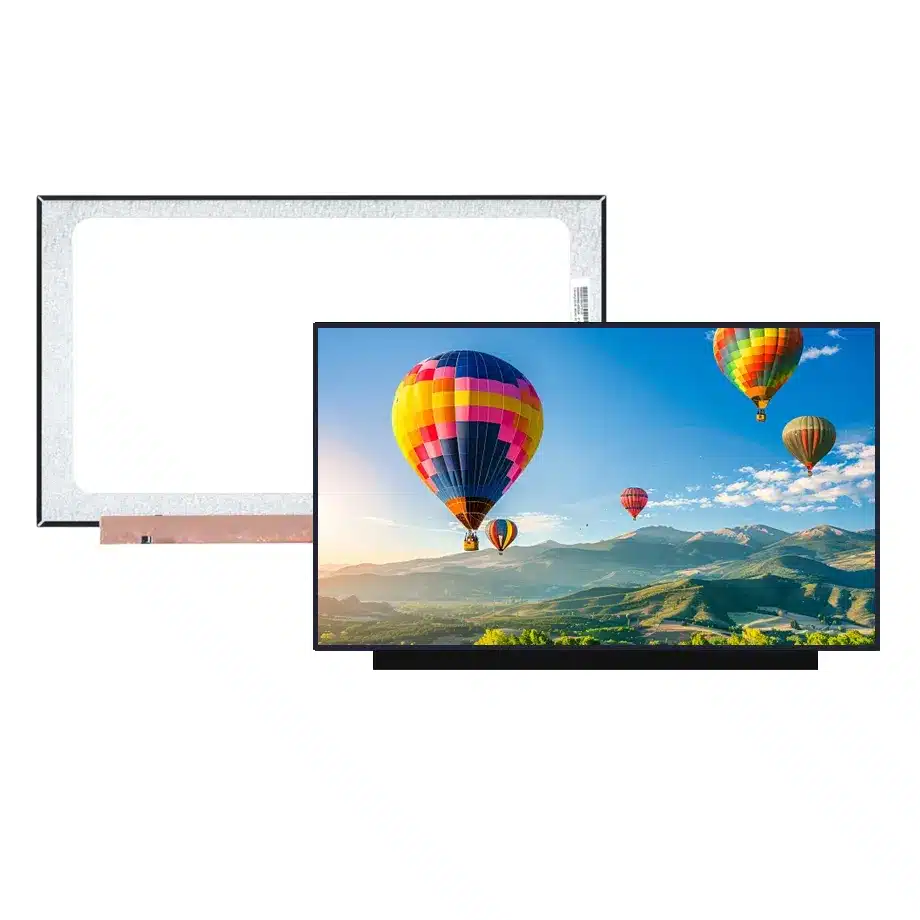
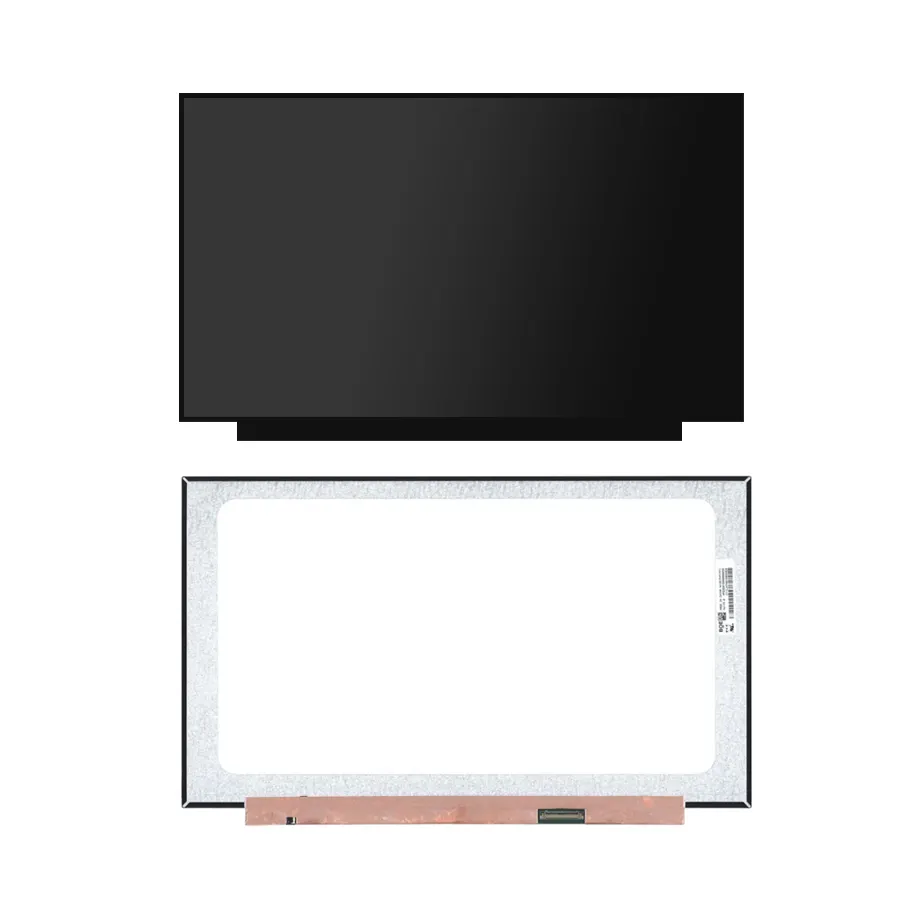
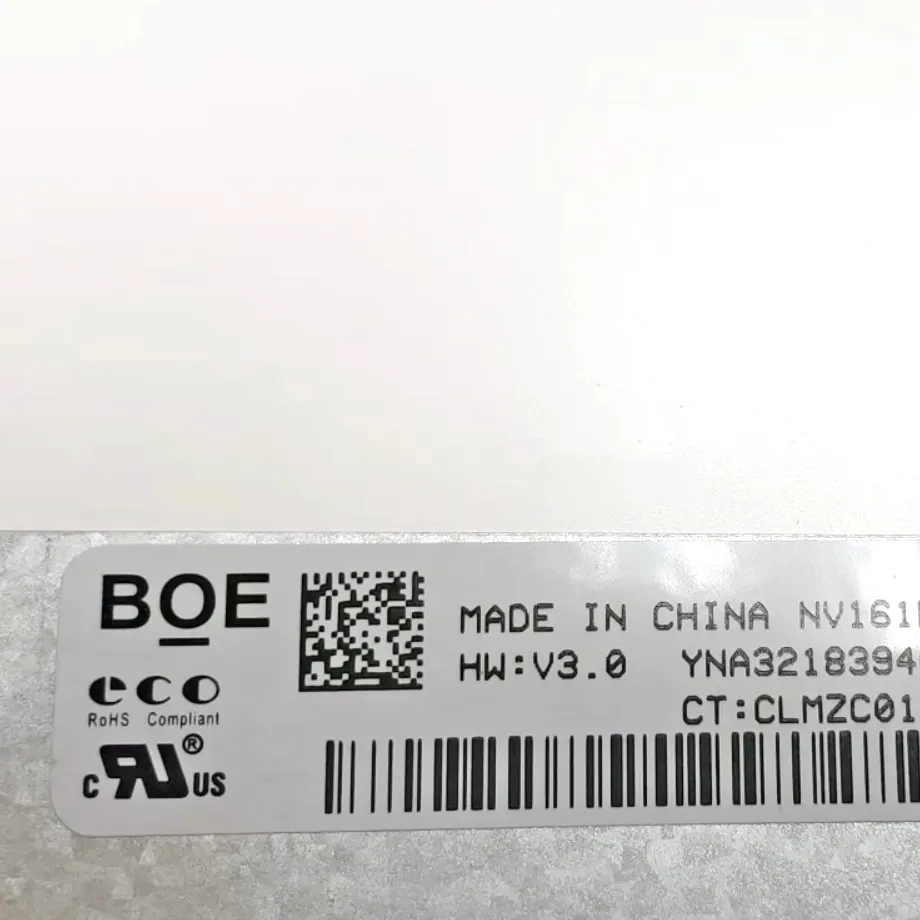
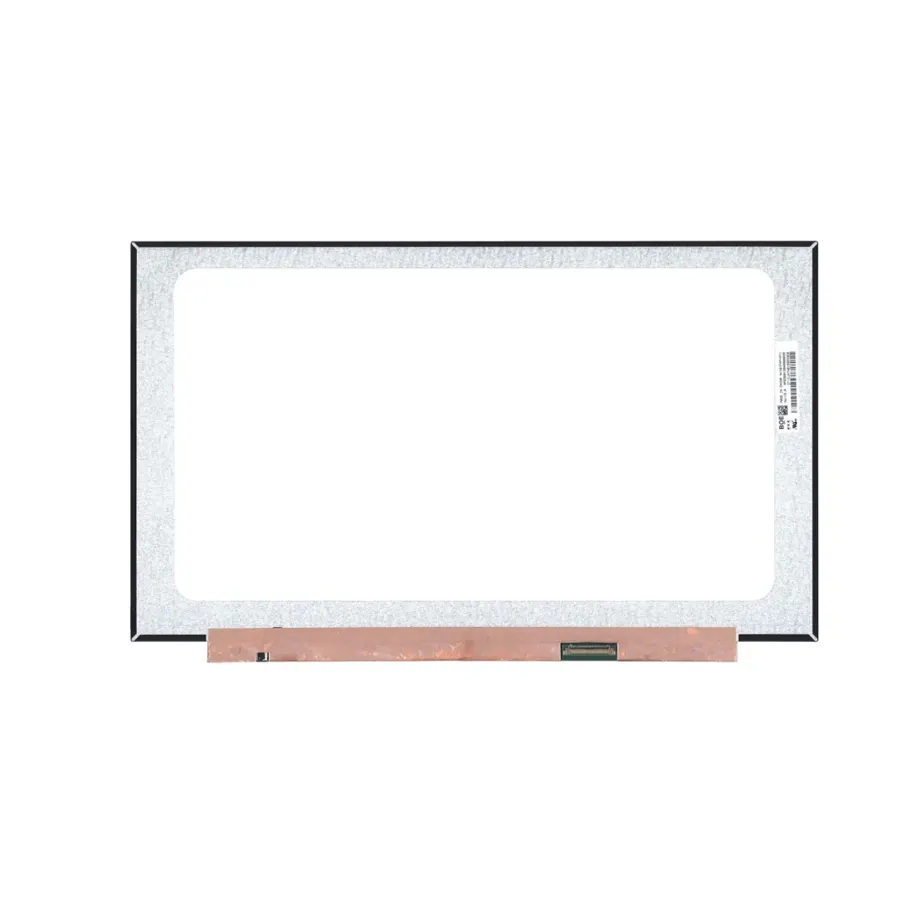
NV161FHM-NY4 144Hz Reverse eDP Laptop Screen Matte Gaming BOE

Model P/N
Size
Resolution
Brightness
Viewing Angle
Connector Type
Operating Temp
Overall(mm)
boe
NV161FHM-NY4
Brand
Panel Size (inch)
Model P/N
Resolution
Brightness (nits)
Viewing Angle
Contrast Ratio
Response Time
Overall (mm)
Active Area (mm)
Refresh Rate
Display Colors
Panel Type
Connector Type
Surface Treatment
Operating Temp
Touchscreen Type
Storage Temp
Work Mode
Pixel Format
Input Voltage (V)
Designed For
Product Details
Product Overview
NV161FHM-NY4 144Hz Reverse eDP Laptop Screen is a 16.1-inch BOE a-Si TFT-LCD LCM for laptop and gaming applications. The exact-model specification confirms a native 1920(RGB)×1080 FHD raster, ADS normally-black transmissive operation, 1200:1 typical contrast, 85/85/85/85 typical viewing-angle values at CR≥10, 16.7M colors, a 355.392 × 199.908 mm active area and a 361.9 × 222.16 × 3.2 mm module outline. It also confirms a 40-pin 0.5 mm eDP connector, 3.3 V typical panel input, WLED backlight with LED driver, no touch and a hard-coating 3H surface.
The available exact-model specification does not state luminance or refresh rate, so those values were not inferred from a related NV161FHM model. Independent exact-model references consistently identify 300 cd/m² typical luminance and 144 Hz operation, and one exact-model source specifies four-lane eDP 1.4 at HBR2. Those corroborated exact-model values are used while keeping panel mass unresolved. The response-time line is documented as 13 typical Tr+Td with an incompatible “mm” unit; because the quantity is explicitly response time, the value is represented as 13 ms without changing the number.
Three Core Buyer Value Propositions
1. Exact-model evidence creates a usable qualification baseline
NV161FHM-NY4 is a useful example of why missing values should be researched by exact suffix instead of borrowed from a family member. The exact-model specification gives resolution, mechanics, display mode, connector and optical contrast but omits brightness and refresh rate. Multiple exact-model replacement sources support 300 nits and 144 Hz, making those values suitable for qualification while leaving unsupported mass data blank. This approach gives procurement a more complete record while keeping unsupported fields such as mass unresolved.
2. 144 Hz and four-lane HBR2 define a practical gaming-laptop link requirement
The confirmed FHD raster combined with same-model 144 Hz evidence sets a clear host timing target. Exact-model research also identifies eDP 1.4, four HBR2 lanes and the 40-pin connector, which is substantially more informative than a generic “eDP 40 pin” label. The notebook GPU, firmware, cable and panel power sequence still need to be validated together. A host that drives another 16.1-inch FHD panel is not automatically compatible, even if both panels use a 40-pin connector.
3. Reverse-interface orientation and known module dimensions reduce replacement risk
The exact-model feature wording identifies reverse interface, while the module outline is 361.9 × 222.16 × 3.2 mm. These facts help service teams screen lid fit and cable direction before purchasing samples. Connector location, pin mapping and retention method remain critical drawing-level details. The reverse-interface feature is particularly important because a cable that exits on the wrong side can be electrically correct yet mechanically unusable, or can create unacceptable bend stress inside a thin gaming-laptop lid.
Key Specifications at a Glance
| Parameter | Confirmed value |
|---|---|
| Manufacturer / model | BOE NV161FHM-NY4 |
| Display size | 16.1 inch |
| Panel type | a-Si TFT-LCD, LCM |
| Native resolution | 1920(RGB)×1080 FHD, 16:9 |
| Active area | 355.392 × 199.908 mm |
| Outline | 361.9 × 222.16 × 3.2 mm |
| Weight | Not confirmed |
| Brightness | 300 cd/m² typical |
| Contrast ratio | 1200:1 typical |
| Viewing-angle values | 85/85/85/85 typical at CR≥10 |
| Response time | 13 ms typical Tr+Td |
| Colors | 16.7M |
| Surface | Hard coating 3H; exact-model replacement listings also describe a matte screen |
| Refresh rate | 144 Hz |
| Native interface | eDP 1.4, 4 lanes, HBR2 5.4 Gbit/s per lane |
| Connector | 40 pins, 0.5 mm pitch |
| Panel input | 3.3 V typical |
| Backlight | WLED, 15K hrs, with LED driver |
| Touch | Without touch screen |
| Operating / storage | 0 to 50 °C / -20 to 60 °C |
Why is 144 Hz the qualification target?
NV161FHM-NY4 144Hz Reverse eDP Laptop Screen appears in multiple exact-part replacement sources as a 144 Hz FHD panel. An exact-model technical reference also identifies 300-nit luminance and a four-lane eDP 1.4 HBR2 path. These exact-model references support the listed values without relying on a neighboring suffix. By contrast, a source for NV161FHM-NY3, NV161FHM-NY2 or another suffix would not be eligible to fill these values even if the screen size and connector were similar.
Revision-specific listings require additional caution. A page labeled NV161FHM-NY4-V3.0 may describe a refresh rate that differs from the unqualified model listing, so that revision data should not silently replace the current exact-model fact set. Procurement should record any revision printed on the actual panel and treat a revision change as a trigger for verification. This is particularly important for high-refresh laptop screens because drive tuning, timing or connector details can change without a large visual difference.
What should be tested on the four-lane HBR2 eDP path?
VESA’s Embedded DisplayPort overview provides standards context for eDP, but panel compatibility remains exact-model specific. The exact-model evidence identifies four HBR2 lanes and eDP 1.4, while the product specification supplies the 40-pin 0.5 mm connector and 3.3 V panel input. Together, those facts form a practical electrical baseline for the production motherboard and cable.
Bring-up should cover native 1920×1080 at 144 Hz, link training, AUX communication, brightness control, cold boot, repeated power cycling and sleep/resume. The cable should be checked for connector side, contact pitch, pin assignment and bend path. Reverse-interface wording makes orientation especially important. Do not describe an external HDMI or USB-C connector as the native panel interface; any external port is translated by the notebook graphics subsystem before the embedded eDP link reaches the screen.
Why the 300-nit value should remain separate from family assumptions
The 300 cd/m² figure is supported by an exact-model source, not by a nearby BOE 16.1-inch family part. That provenance matters because brightness varies across otherwise similar laptop panels. A service program that accepts a substitute based only on diagonal size and resolution can unintentionally change the user-visible brightness. Incoming qualification should therefore measure representative samples if luminance is a controlled requirement, especially when different screen suppliers are used over the life of a notebook platform.
Three hundred nits is a panel luminance specification and does not establish sunlight readability, high-brightness classification or outdoor grade. Practical visibility depends on the matte or coated surface, lid construction, ambient lighting and brightness-control range. If the notebook adds a protective layer, test the complete optical stack because reflections can change perceived contrast even when measured white luminance remains close to the panel target.
Mechanical fit: active area, outline and the unresolved mass
The active image area is 355.392 × 199.908 mm and the outer module size is 361.9 × 222.16 × 3.2 mm. These values should be checked separately against the bezel opening and lid cavity. A module can match the visible aperture yet interfere with internal ribs, adhesive strips or cable routing. The exact connector position and mounting details should come from the current drawing or an approved original screen, not from another NV161FHM suffix.
Panel mass remains unresolved for this exact part and should stay blank rather than being copied from a related BOE panel. If hinge torque or system weight requires the value, weigh a controlled sample or obtain exact-model documentation. This boundary is preferable to publishing a plausible but unsupported number. Exact-model replacement programs should also record thickness and connector position during incoming inspection so that a supplier substitution cannot pass solely because the carton label says 16.1-inch FHD.
ADS optical behavior, hard coating and matte-surface evidence
The product specification identifies ADS normally-black transmissive operation with a 1200:1 typical contrast ratio, symmetric 85/85/85/85 viewing-angle values and Hard coating (3H). Same-exact-model replacement listings also describe the screen as matte or anti-glare. That market wording is compatible with the supplied hard-coating fact, but the dedicated surface record should preserve the documented hard-coating wording rather than inventing a haze percentage that is not documented.
Finished optical evaluation should include off-axis contrast, reflections, black level and uniformity in the actual lid. The 16.7M color specification does not establish a wide-gamut target. No sRGB percentage is confirmed for this exact model in the current evidence set, so it should not be imported from a neighboring NV161FHM panel. A color-critical notebook needs separate exact-model gamut and calibration evidence before any broader color-performance claim is made.
Response time and the 13 ms unit correction
The response-time line reports 13 typical Tr+Td but attaches “mm,” a unit of length. Because the field is explicitly Response Time and the qualifier Tr+Td describes rise-plus-decay timing, the only value-preserving interpretation is 13 ms typical. The numeric value is unchanged. This type of semantic unit correction is different from changing a specification; it resolves an incompatible unit while preserving the source quantity.
The 13 ms figure is a panel transition measurement, not end-to-end gaming latency. At 144 Hz, the nominal frame interval is separate from the pixel transition time, and the complete notebook adds GPU rendering, buffering, synchronization and scanout. Engineering should evaluate representative motion content and the intended graphics modes rather than marketing the response-time number as a complete responsiveness metric.
Backlight, temperature and service boundaries
The WLED backlight has an integrated LED driver and a 15K-hour life reference. This is a component backlight specification, not a guaranteed notebook lifetime or warranty. Brightness setting, duty cycle and lid temperature can affect practical aging. The panel operates from 0 to 50 °C and stores from -20 to 60 °C, which should be checked against the actual thermal environment created by the CPU, GPU and cooling system in a gaming notebook.
No industrial-wide-temperature, automotive or rugged qualification is established by those limits. The model’s exact-use evidence supports Laptop and Gaming applications, so those are the defensible application directions. Current online stock should also remain separate from lifecycle expectations; a marketplace listing can confirm that a part is offered now but cannot prove a guaranteed future supply horizon or an OEM change-notification policy.
Application fit: exact replacement and FHD gaming-laptop integration
NV161FHM-NY4 144Hz Reverse eDP Laptop Screen is strongest for a notebook designed around a 16.1-inch FHD ADS module, same-model 144 Hz operation, four-lane HBR2 eDP and the reverse-interface cable orientation. It is also appropriate for exact-model service replacement where the original label is NV161FHM-NY4 and the lid, cable and connector geometry are verified. Exact-model references support Gaming as well as Laptop application wording, but no claim is made that the screen fits every gaming notebook listed by a reseller.
The module is supplied without touch. A notebook with touch requires a separately qualified sensor, controller, cover and cable stack, and those added layers can change reflections and mechanical depth. If an alternate panel is proposed, compare the exact suffix, connector pitch, link details, brightness, refresh rate and physical outline. A generic “compatible 16.1-inch FHD 40-pin” label is not sufficient engineering evidence.
Procurement and validation checklist
- Lock the exact BOE NV161FHM-NY4 identity and record any revision printed on the received panel.
- Verify 1920×1080 native timing at the same-model 144 Hz target on the production motherboard.
- Confirm the exact eDP 1.4 HBR2 lane mapping, 40-pin 0.5 mm connector and reverse-interface orientation.
- Check the 361.9 × 222.16 × 3.2 mm module outline and connector location against the lid drawing.
- Validate the same-model 300 cd/m² luminance on representative incoming samples when brightness is controlled.
- Preserve the 13 ms Tr+Td response value as a unit-corrected time quantity.
- Keep panel mass blank until exact-model evidence or a controlled-sample measurement is available.
- Confirm the non-touch architecture and qualify any external touch stack separately.
- Request revision and change-status information for repeat procurement rather than treating current stock as a long-term commitment.
For qualification of NV161FHM-NY4 144Hz Reverse eDP Laptop Screen, provide the original panel label and revision, notebook platform, production eDP cable, lid drawing, 144 Hz timing requirement, brightness acceptance limit and required quantity. Maintaining exact-suffix and revision traceability is the most reliable way to keep the screen, cable, firmware and mechanical fit aligned across service and production purchases.
Recommended: Same Size
(16.1")
Applications & Value of LCD Panel

- Fast sourcing with in-stock panels & cross-reference alternatives
- Stable supply chain with long-term availability
- Engineering-level support from panel to integration
- Custom solutions: cable, touch & optical bonding
- Strict quality control with IQC / OQC / aging test
- Full traceability system for quality assurance
- Complete technical documentation & drawings
- Compliance support: RoHS & certification files