~
~
~
~
~
~
ATNA45DC01-0 S-Stripe Glossy Notebook OLED Panel Samsung

Model P/N
Size
Resolution
Brightness
Viewing Angle
Connector Type
Operating Temp
Overall(mm)
samsung
ATNA45DC01-0
Brand
Panel Size (inch)
Model P/N
Resolution
Brightness (nits)
Viewing Angle
Contrast Ratio
Response Time
Overall (mm)
Active Area (mm)
Refresh Rate
Display Colors
Panel Type
Connector Type
Surface Treatment
Operating Temp
Touchscreen Type
Storage Temp
Work Mode
Pixel Format
Input Voltage (V)
Weight (g)
Designed For
Product Details
Product Overview
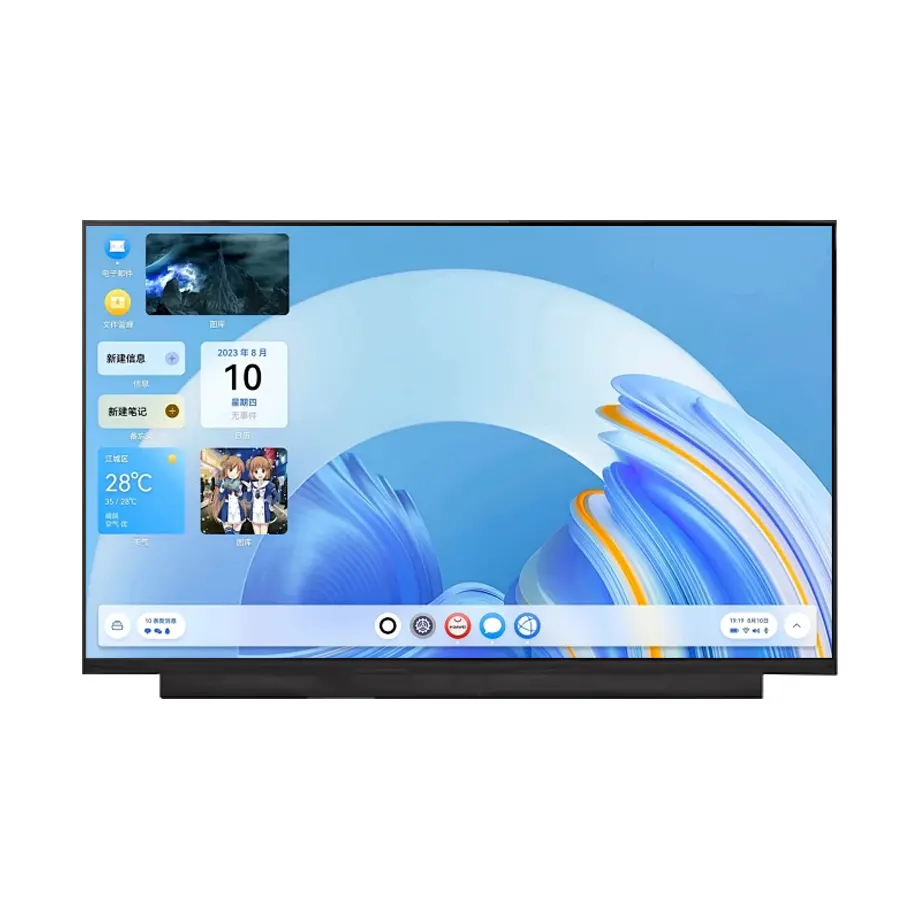
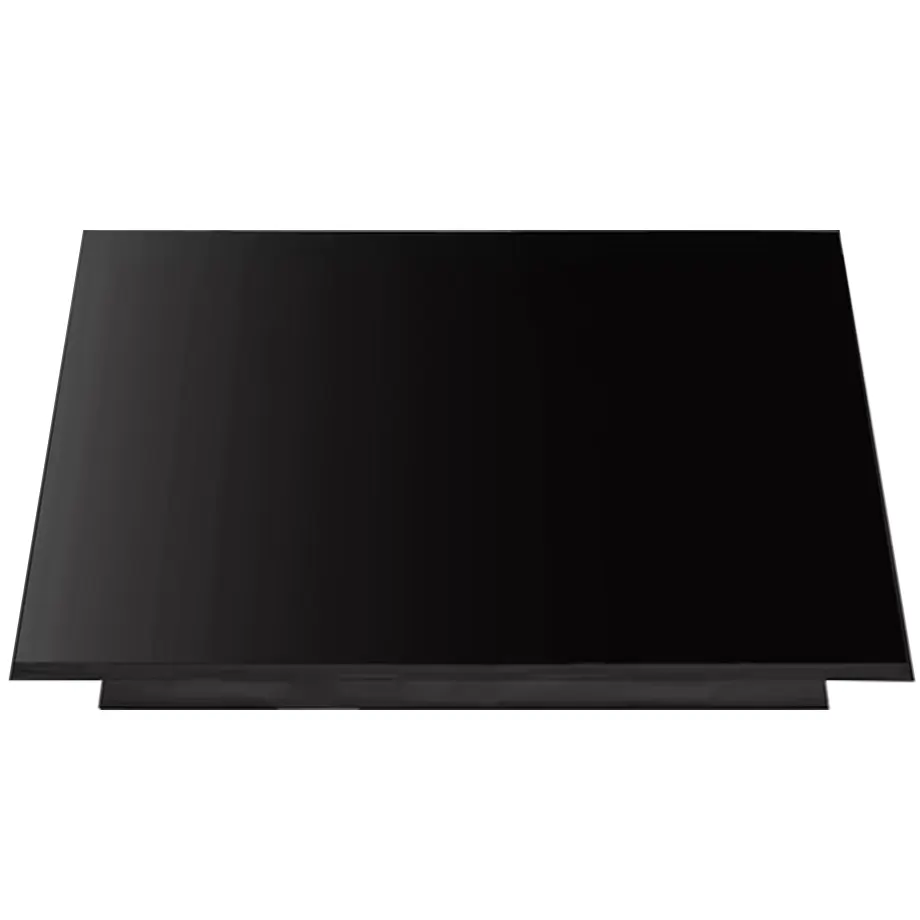
ATNA45DC01-0 S-Stripe Glossy Notebook OLED Panel is a 14.5-inch Samsung AM-OLED full module for laptop integration. The native raster is 2944(RGB)×1840 in a 16:10 format, using an S-Stripe RGB pixel layout across a 312.358 × 195.224 mm active area. The complete outline is 315.56 × 212.12 × 2.2 mm and maximum mass is 180 g. The surface is glossy with 0% haze wording, typical luminance is 400 cd/m², typical contrast is 100000:1, and the panel provides 85/85/85/85 typical viewing-angle values at CR≥10.
The module supports 1.07B colors with 100% DCI-P3 wording and runs at 90 Hz. It is self-emissive and supplied without touch. Native signaling is four-lane eDP at HBR2, 5.4 Gbit/s per lane, through a 40-pin 0.5 mm connector. Panel power uses 3.3 V VDD and 10 V VBAT typical rails. The form style is slim with a flat PCBA. The response-time entry gives 1 typical G-to-G with “mm”; because the quantity is explicitly response time, the stored engineering value is normalized to 1 ms without changing the number or G2G qualifier.
Three Core Buyer Value Propositions
1. 90 Hz OLED adds motion smoothness without moving to a gaming-only architecture
The 90 Hz frame rate gives a notebook more frequent screen updates than a conventional 60 Hz panel while keeping the design centered on a premium productivity and media use case. Samsung Display has publicly described the benefits and system trade-offs of 90 Hz laptop OLED, including smoother motion and the need for appropriate graphics capability. That manufacturer context is relevant to integration planning, but it does not add any certification or performance figure to this exact model. ATNA45DC01-0 should be validated at its native 2944×1840 timing on the intended GPU and firmware stack.
2. S-Stripe, 1.07B colors and 100% DCI-P3 create a strong visual-content baseline
The panel's S-Stripe RGB structure, 10-bit-class 1.07B color support and 100% DCI-P3 wording give the display team clear targets for fine-detail rendering and color volume. These are component capabilities, not proof of factory calibration. A notebook that targets creators should still define Delta E, white point, gamma, uniformity and profile-management limits. Exact subpixel geometry should also be retained during text and UI evaluation because a different OLED pixel structure can render fine details differently even at a similar resolution.
3. A 2.2 mm full module helps thin-lid design but tightens mechanical control
The module is only 2.2 mm thick and weighs no more than 180 g, useful inputs for thin notebook lids and hinge-load calculations. Its flat-PCBA form also affects the internal clearance plan. Thinness should not be confused with drop-in interchangeability: connector location, PCB footprint, flex routing, support zones and bezel opening all remain exact-model mechanical details. A substitute panel should be checked against the current Samsung drawing rather than accepted because it has the same diagonal and native resolution.
Why 2944×1840 and 16:10 matter to notebook layout
ATNA45DC01-0 S-Stripe Glossy Notebook OLED Panel presents 2944×1840 pixels over a 14.5-inch 16:10 canvas. The extra vertical space compared with 16:9 is useful for document editing, coding, browsing and creative tools, while the high pixel density can support fine typography and detailed image work. The system still needs a deliberate scaling policy. Test the actual operating-system scale factors, application DPI behavior and font rendering that will ship with the notebook rather than evaluating only raw panel test patterns.
The 312.358 × 195.224 mm active area should be compared with the 315.56 × 212.12 mm outer module dimensions during bezel design. Camera modules, microphones, antennas and cable routing can occupy the narrow margin around the display. A mechanical team should use the controlled module drawing before committing to lid tooling because small changes in PCB position or connector exit can be more important than the diagonal dimension.
90 Hz timing and one-millisecond G2G describe different layers
The module's 90 Hz frame rate and 1 ms typical G2G response time are complementary but distinct. Frame rate describes how often the display can receive and present image updates, while the G2G number measures a panel pixel transition under specified conditions. Neither number alone equals end-to-end system latency. GPU rendering, frame buffering, operating-system composition and application behavior add their own delay.
Motion testing should include scrolling, video playback, window animation and any gaming modes the finished notebook intends to support. A 90 Hz panel can improve perceived smoothness even when an application does not sustain 90 frames per second, but the complete experience depends on frame pacing and graphics power. Keep the 1 ms value attached to its G2G qualifier rather than converting it into an unconditional “1 ms laptop response” claim.
Glossy OLED optics and reflection management
The exact panel surface is glare with 0% haze wording. A glossy OLED can preserve crispness and saturated color, but front-surface reflections may become prominent in offices with overhead lighting or near windows. The 400 cd/m² typical luminance is a useful panel-level target, yet perceived readability depends on ambient contrast, cover treatment and brightness control. No sunlight-readable or outdoor certification is claimed.
Finished-lid validation should compare dark content, bright content and mixed UI under representative lighting. Self-emissive black levels can provide very high intrinsic contrast, but reflections can lift the apparent black level in bright rooms. If the notebook adds a protective cover or coating, repeat optical measurements after the complete stack is assembled because the front layer can change both reflection and color.
100% DCI-P3 and 1.07B colors need a color-management plan
The documented 100% DCI-P3 wording gives a clear wide-gamut target, while 1.07B colors indicate 10-bit-class color depth. Those specifications can support photo, video and design workflows, but they do not prove a particular calibration accuracy. Color-managed notebooks should control the GPU output format, ICC or equivalent profiles, white point and gamma. Production sampling should verify that the panel plus electronics meets the intended tolerance.
Do not infer a VESA DisplayHDR tier, Dolby Vision certification or professional content-creation certification from the gamut and contrast figures alone. Samsung Display's broader OLED portfolio includes products with various certifications, but those achievements are not automatically inherited by ATNA45DC01-0. Any named certification should be supported by model- or finished-system-specific documentation.
HBR2 eDP link control for a 90 Hz high-resolution panel
The module uses four eDP HBR2 lanes at 5.4 Gbit/s per lane and a 40-pin 0.5 mm connector. VESA's EmbedNormally Black, Emissiveded DisplayPort overview provides standards context for internal notebook display links, while exact timing, pin mapping, AUX behavior and power sequencing remain Samsung-specific. The host must support the native 2944×1840/90 Hz mode with adequate link margin.
Bring-up should include cold boot, repeated link training, sleep and resume, graphics-mode changes and sustained 90 Hz operation. Cable routing should be checked in the final lid because impedance and connector quality can affect high-speed margin. A physically compatible 40-pin cable should never be assumed electrically compatible without a pin-by-pin review.
Dual-rail OLED power and battery planning
The panel requires 3.3 V VDD and 10 V VBAT typical rails. Power design should follow the exact allowed tolerance, enable sequence and discharge timing from the Samsung specification. These rails are component inputs, not the notebook adapter voltage. A production PMIC design should also account for transient loading as image content and brightness change.
No total panel-power value is confirmed for this exact model, so battery-life calculations should use measurements on production-intent hardware rather than a value copied from another Samsung OLED. OLED power is content-dependent, and 90 Hz operation can also influence system graphics power. Test representative office UI, video, dark-theme and bright-content conditions if energy consumption is a key product target.
Flat-PCBA form and no-touch architecture
The module is described as a slim full module with a flat PCBA and no integrated touch screen. That combination is suitable for a conventional clamshell notebook where the lid can be optimized around a thin OLED without a digitizer. A touch-enabled derivative would require a separate sensor, controller, cover stack and additional mechanical allowance unless a different integrated-touch panel is selected.
Adding a touch layer can change reflections, thickness, mass and optical performance, so it should be treated as a new qualified stack. Similarly, another Samsung 14.5-inch OLED with touch should not be considered an automatic replacement. Connector mapping, power, timing and mechanics all need to match the exact suffix.
Environmental boundaries for a premium portable system
The panel is specified for -20 to 70 °C operation and -40 to 85 °C storage. These component limits are broad enough for many portable-computing environments, but they do not establish automotive, industrial-wide-temperature or rugged certification. Notebook thermal design should consider heat from the processor, GPU, battery charging and display power electronics inside a thin lid and chassis.
Qualification should include hot operation at sustained brightness, cold boot, repeated sleep/wake, visual inspection after temperature exposure and hinge-cycle testing with the production cable. The panel specification is only one part of finished-device reliability; enclosure stress, cable strain, adhesive performance and firmware power-state handling also affect long-term behavior.
Application fit: premium laptops, creator notebooks and smooth-motion productivity
ATNA45DC01-0 S-Stripe Glossy Notebook OLED Panel is documented for Laptop use. Its strongest fit is a 14.5-inch premium notebook designed for 2944×1840 at 90 Hz, glossy OLED presentation, 100% DCI-P3 wording and four-lane HBR2 eDP. Creator-focused and media-oriented notebooks are reasonable scenarios when the system validates color management, battery life and reflections. No named Lenovo, ASUS, Samsung or other OEM notebook fit is claimed from the panel data alone.
For replacement procurement, match ATNA45DC01-0 exactly and verify the full module outline, 40-pin connector, HBR2 link, dual rails and flat-PCBA geometry. A reseller's statement that another 14.5-inch OLED is “compatible” should be treated as a lead for engineering review, not as proof of interchangeability.
Procurement and validation checklist
- Lock the complete Samsung ATNA45DC01-0 identity and approved revision.
- Validate native 2944×1840 operation at 90 Hz on the production GPU and motherboard.
- Confirm four-lane HBR2 eDP, the 40-pin 0.5 mm connector and exact pin mapping.
- Verify 3.3 V VDD and 10 V VBAT sequencing and tolerance.
- Check the 315.56 × 212.12 × 2.2 mm outline and 180 g maximum mass against the lid and hinge design.
- Measure 400 cd/m² typical luminance, glossy reflection and 100% DCI-P3 coverage on production samples.
- Preserve the 1 ms G2G response value after the unit-semantic correction.
- Keep the panel classified as non-touch unless a separately qualified touch stack is added.
- Test 90 Hz link stability, sleep/resume and thermal behavior in the final enclosure.
For qualification of ATNA45DC01-0 S-Stripe Glossy Notebook OLED Panel, provide the target notebook motherboard, production eDP cable, lid drawing, 90 Hz timing requirement, color-management targets, power design and environmental conditions. Exact-model verification of the S-Stripe OLED module, rather than diagonal-size matching, should control final sourcing approval.
Recommended: Same Size
(14.5")
Applications & Value of LCD Panel

- Fast sourcing with in-stock panels & cross-reference alternatives
- Stable supply chain with long-term availability
- Engineering-level support from panel to integration
- Custom solutions: cable, touch & optical bonding
- Strict quality control with IQC / OQC / aging test
- Full traceability system for quality assurance
- Complete technical documentation & drawings
- Compliance support: RoHS & certification files