~
~
~
~
~
~
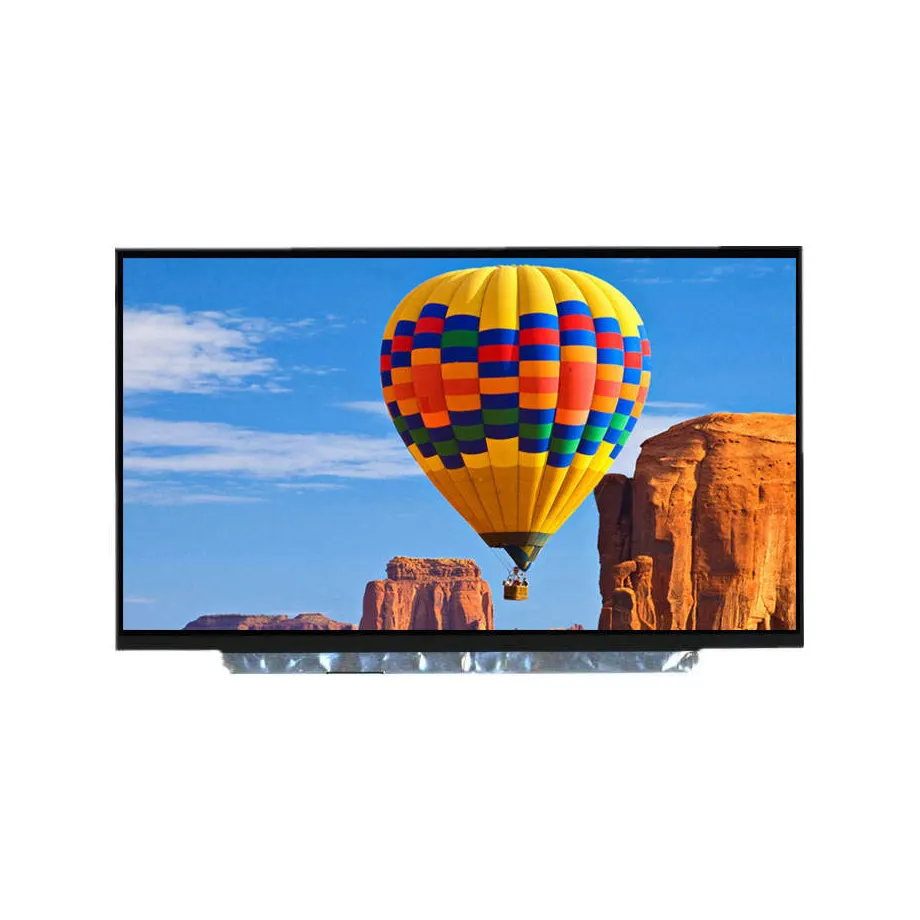
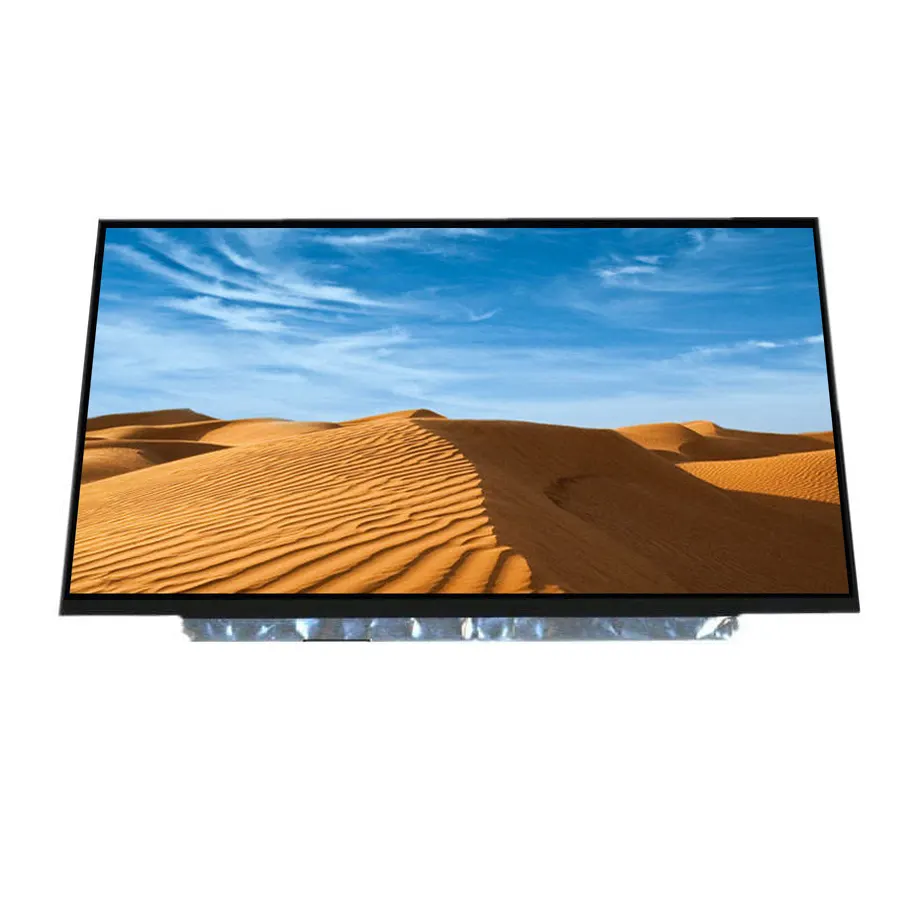
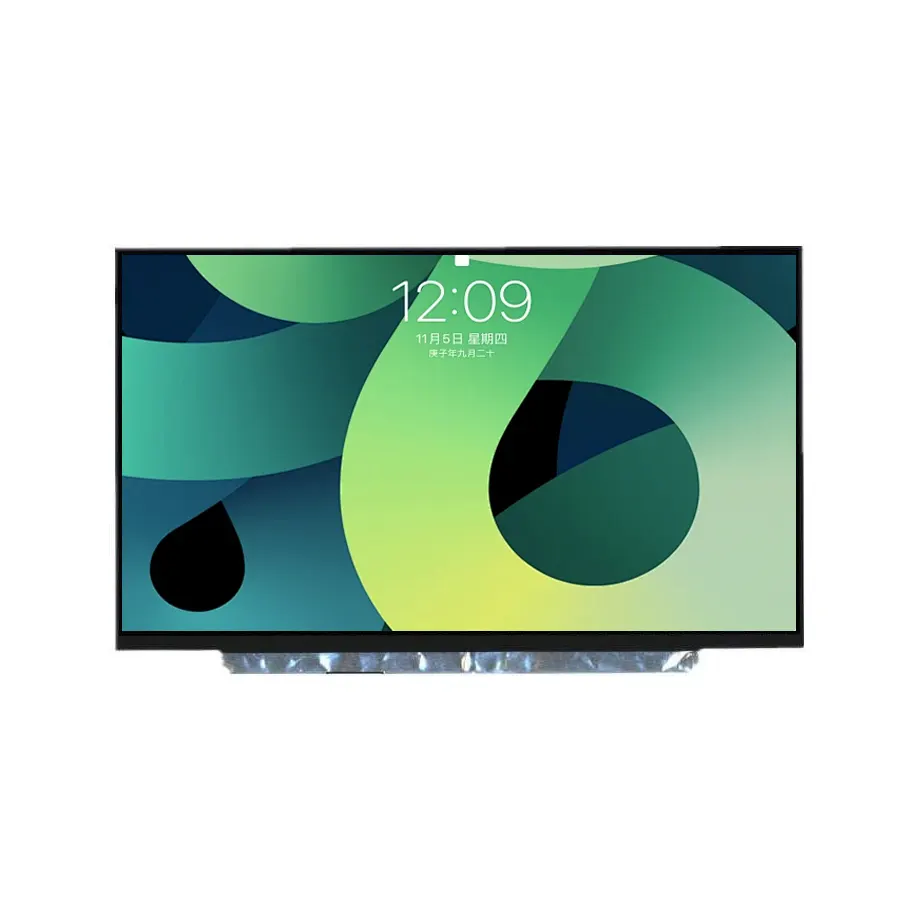
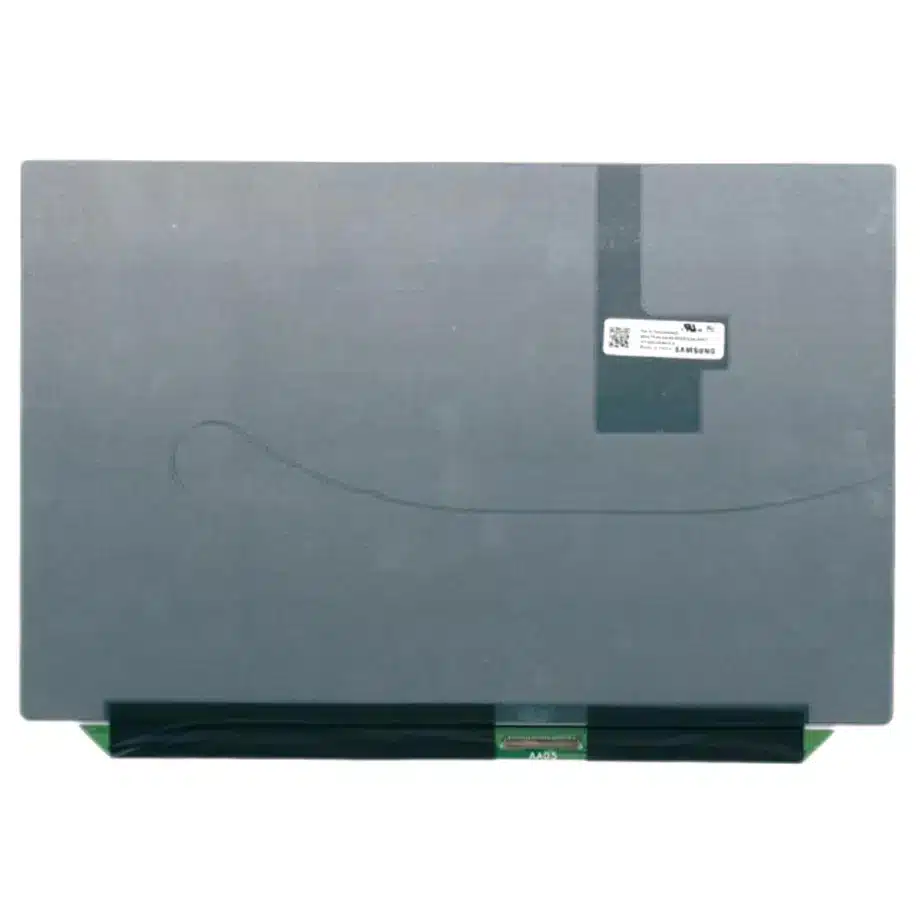
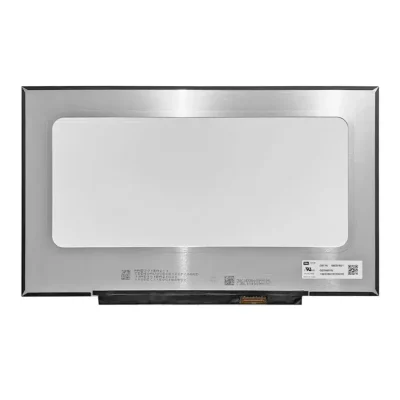
ATNA33AA07-0 13.3 Inch Slim Bent OLED Screen Samsung
Model P/N
Size
Resolution
Brightness
Viewing Angle
Connector Type
Operating Temp
Overall(mm)
samsung
ATNA33AA07-0
Brand
Panel Size (inch)
Model P/N
Resolution
Brightness (nits)
Viewing Angle
Contrast Ratio
Response Time
Overall (mm)
Active Area (mm)
Refresh Rate
Display Colors
Panel Type
Connector Type
Surface Treatment
Operating Temp
Touchscreen Type
Storage Temp
Work Mode
Pixel Format
Input Voltage (V)
Designed For
Product Details
Product Overview
ATNA33AA07-0 13.3 Inch Slim Bent OLED Screen is a Samsung AM-OLED panel for laptop integration, combining a native 2880(RGB)×1800 WQXGA+ raster with a 16:10 image format. The 285.984 × 178.74 mm active area sits inside a 289.18 × 186.3 × 3.17 mm outline, and maximum panel mass is 150 g. The front surface is glossy with 0% haze. Optical data includes 400 cd/m² typical luminance, 100,000:1 typical contrast, 85/85/85/85 typical viewing-angle values at CR≥10 and 1.07B colors with 100% DCI-P3 wording.
The module is self-emissive, operates at 60 Hz and is supplied without touch. Its native electrical path is four-lane eDP 1.4b at HBR2, 5.4 Gbit/s per lane, through a 40-pin 0.5 mm connector. Panel rails are 3.3 V VDD and 10 V VBAT typical. The product form is described as a slim bent-PCBA design, while the confirmed overall panel depth is 3.17 mm. The documented response-time value is represented as 1 ms typical Tr+Td because response time is a time quantity even though the raw line attaches an incompatible length unit.
Three Core Buyer Value Propositions
1. 2880×1800 16:10 OLED geometry gives premium notebook teams a precise high-density target
The WQXGA+ raster places substantially more pixels into a 13.3-inch image area than common FHD or WUXGA notebook panels, while the 16:10 format increases vertical workspace. For replacement and new-platform design, that combination defines source timing, scaling and visible-aperture requirements more accurately than diagonal size alone. It does not establish interchangeability with another 13.3-inch OLED: connector position, firmware timing, flex geometry, mounting and panel depth must all match the target lid.
2. 400-nit glossy OLED and 100% DCI-P3 wording support a defined premium optical specification
The self-emissive panel combines 400 cd/m² typical luminance, very high panel contrast, 10-bit-class 1.07B color capability and 100% DCI-P3 wording. These facts are useful for color-rich notebook and creator-oriented display qualification. They do not guarantee factory color accuracy, a particular Delta E, HDR certification or outdoor readability. The glossy 0% haze surface can preserve image clarity but may also produce stronger specular reflections, so the complete lid should be measured under the intended ambient conditions.
3. Four-lane HBR2 eDP and a slim bent-PCBA form make electrical and mechanical qualification specific
eDP 1.4b with four HBR2 lanes gives the motherboard a clear embedded-display link target for the 2880×1800 panel. The 40-pin connector, 3.3 V / 10 V power rails and bent-PCBA mechanical form narrow the integration class further. These facts reduce early ambiguity but do not replace the exact drawing and timing table. Cable orientation, connector location, AUX behavior, power sequence and lid clearances remain exact-model requirements.
Key Specifications at a Glance
| Parameter | Confirmed value |
|---|---|
| Manufacturer / model | Samsung ATNA33AA07-0 |
| Display size | 13.3 inch |
| Panel type | AM-OLED, OLED |
| Native resolution | 2880(RGB)×1800 WQXGA+, 16:10 |
| Active area | 285.984 × 178.74 mm |
| Outline | 289.18 × 186.3 × 3.17 mm |
| Weight | 150 g maximum |
| Brightness | 400 cd/m² typical |
| Contrast ratio | 100,000:1 typical |
| Viewing-angle values | 85/85/85/85 typical at CR≥10 |
| Response time | 1 ms typical Tr+Td |
| Colors | 1.07B, 100% DCI-P3 |
| Surface | Glare, haze 0% |
| Refresh rate | 60 Hz |
| Native interface | eDP 1.4b, 4 lanes, HBR2 5.4 Gbit/s per lane |
| Connector | 40 pins, 0.5 mm pitch |
| Panel input | 3.3 / 10 V typical (VDD / VBAT) |
| Emission | Self-emitting |
| Touch | Without touch screen |
| Mechanical form | Slim PCBA, bent form |
| Operating / storage | -20 to 70 °C / -40 to 85 °C |
How should four-lane HBR2 eDP be validated at 2880×1800?
VESA describes Embedded DisplayPort as the internal display interface used between system graphics and embedded panels. For ATNA33AA07-0, the product-specific link is eDP 1.4b with four HBR2 lanes, so the notebook motherboard and cable must support the exact 2880×1800 timing, AUX communication and panel power sequence defined by Samsung.
For ATNA33AA07-0 13.3 Inch Slim Bent OLED Screen, bring-up should cover cold boot, repeated power cycles, sleep/resume, brightness control and sustained native-resolution operation. A 40-pin connector count is not a compatibility guarantee; pin assignment, contact orientation and connector location must match. External USB-C, HDMI or DisplayPort ports on the notebook belong to the system and do not change the panel-native eDP interface.
What does the glossy 0% haze surface mean for a notebook?
A 0% haze glossy surface produces different reflection behavior from an antiglare notebook panel. The optical stack can deliver crisp image presentation in controlled environments, but point light sources and windows may create strong specular reflections. The 400 cd/m² panel luminance provides a measurable brightness target, yet it should not be translated into sunlight-readable or outdoor performance without testing the complete lid under those conditions.
If a cover layer, protective film or touch assembly is added, the reflection pattern and apparent black level can change significantly. The exact panel is supplied without touch, so any digitizer becomes a separate optical and mechanical subsystem. Evaluate the finished stack for reflection, contrast, color shift and brightness rather than assuming bare-panel measurements describe the final product.
How should 100% DCI-P3 and 1.07B colors be used?
The panel is documented with 1.07B display colors and 100% DCI-P3 wording, giving color-focused notebooks a defined gamut and bit-depth target. Gamut coverage does not prove color accuracy. A professional or creator-oriented notebook should separately define white point, gamma, Delta E, uniformity and profile behavior. GPU output format and operating-system color management also influence what the user sees.
Samsung Display’s OLED technology overview explains the self-emissive nature of OLED and its lack of a separate LCD backlight unit. Samsung Display also discusses OLED use in premium notebook products on its laptop OLED overview. These manufacturer references give technology and application context but do not add HDR, calibration or lifecycle claims to ATNA33AA07-0.
Slim bent-PCBA mechanics and lid integration
The confirmed overall module size is 289.18 × 186.3 × 3.17 mm, with a maximum mass of 150 g. The bent-PCBA form should be reviewed against rear-cover clearance, cable routing and local component keep-out areas. A mechanical drawing is needed to identify where the board bends relative to the active display and how the connector exits the panel. Similar resolution or diagonal size cannot substitute for these physical details.
The 285.984 × 178.74 mm active area should be matched to the visible bezel aperture separately from the outer module rectangle. Hinge and lid-weight calculations can use the 150 g maximum panel mass, but total assembly mass will include cover, camera, antenna, brackets and cable. Exact-model service replacement should preserve the full suffix so that a nearby ATNA33 variant is not assumed to share the same PCB or connector geometry.
Self-emissive OLED power and thermal considerations
The panel uses 3.3 V VDD and 10 V VBAT typical rails rather than a separate WLED backlight supply. Power demand can vary with image content and brightness because the emitting pixels are part of the load. Notebook power and thermal testing should therefore include dark, mixed and bright images at representative brightness settings, not only a static white desktop or an idle screen.
The -20 to 70 °C operating range is a component limit and offers useful environmental margin for portable systems, but it does not establish rugged, automotive or industrial-wide-temperature qualification. Sustained operation should be tested inside the final lid because heat from the CPU/GPU and chassis can alter the display’s local environment. No OLED lifetime in hours is documented for this model, so service-life guarantees should not be inferred from general OLED technology.
Why is the response value represented as 1 ms?
The response field is explicitly a Tr+Td time quantity and lists a typical value of 1, but the raw unit is incompatible with a time measurement. The engineering representation therefore preserves the numeric value as 1 ms typical Tr+Td. This does not turn the value into a gray-to-gray specification and does not establish total notebook input latency.
At 60 Hz, frame delivery, GPU rendering, compositing, synchronization and eDP transport remain separate from pixel transition time. If motion performance is an acceptance criterion, evaluate moving content and end-to-end responsiveness on the intended notebook platform. The fast panel response can be a useful component characteristic without being promoted as a complete gaming or latency certification.
Application fit for high-resolution OLED notebook platforms
ATNA33AA07-0 13.3 Inch Slim Bent OLED Screen is documented for Laptop use. Its strongest fit is a compact 13.3-inch notebook designed around 2880×1800 16:10 resolution, 400-nit glossy OLED optics, 100% DCI-P3 wording and four-lane HBR2 eDP. Exact-model replacement is also appropriate when the original panel label is ATNA33AA07-0 and the production cable and mechanical geometry are confirmed.
The panel is not touch-enabled. A convertible or touch notebook requires a separately qualified sensor, controller, cover stack and cabling, and these layers can alter reflections and thickness. No exact OEM laptop fit is asserted from size or connector count alone. If a supplier proposes a related Samsung OLED suffix, treat it as a separate qualification until timing, connector, outline and optical behavior are verified.
Procurement and validation checklist
- Lock Samsung ATNA33AA07-0 and the complete suffix in the BOM.
- Validate native 2880×1800 timing at 60 Hz over four-lane eDP 1.4b HBR2.
- Confirm the 40-pin 0.5 mm connector, exact pin mapping, AUX behavior and power sequence.
- Check the 289.18 × 186.3 × 3.17 mm outline, bent-PCBA geometry, active area and 150 g maximum mass against the lid design.
- Verify 400 cd/m² typical luminance, 100% DCI-P3 wording and glossy 0% haze behavior on production samples.
- Design and validate the 3.3 V VDD and 10 V VBAT rails under realistic image-content loading.
- Preserve the 1 ms typical Tr+Td response qualifier and avoid relabeling it as total system latency.
- Confirm the no-touch architecture and qualify any added touch or cover stack separately.
- Request current revision and change-status information before volume procurement rather than assuming future supply continuity.
For ATNA33AA07-0 13.3 Inch Slim Bent OLED Screen qualification, provide the target motherboard, production eDP cable, lid drawing, WQXGA+ timing requirements, color and luminance acceptance limits, thermal conditions and required quantity. Exact-suffix electrical and mechanical control should remain the basis for production or service approval.
Recommended: Same Size
(13.3")
Applications & Value of LCD Panel

- Fast sourcing with in-stock panels & cross-reference alternatives
- Stable supply chain with long-term availability
- Engineering-level support from panel to integration
- Custom solutions: cable, touch & optical bonding
- Strict quality control with IQC / OQC / aging test
- Full traceability system for quality assurance
- Complete technical documentation & drawings
- Compliance support: RoHS & certification files