~
~
~
~
~
~
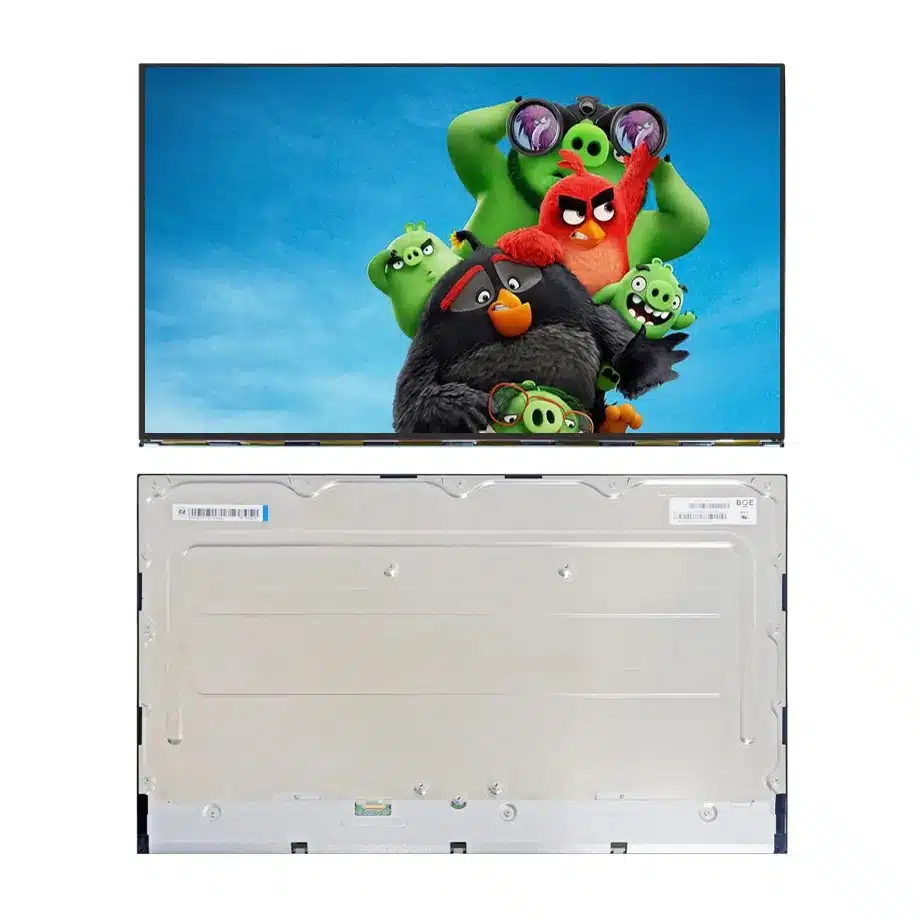
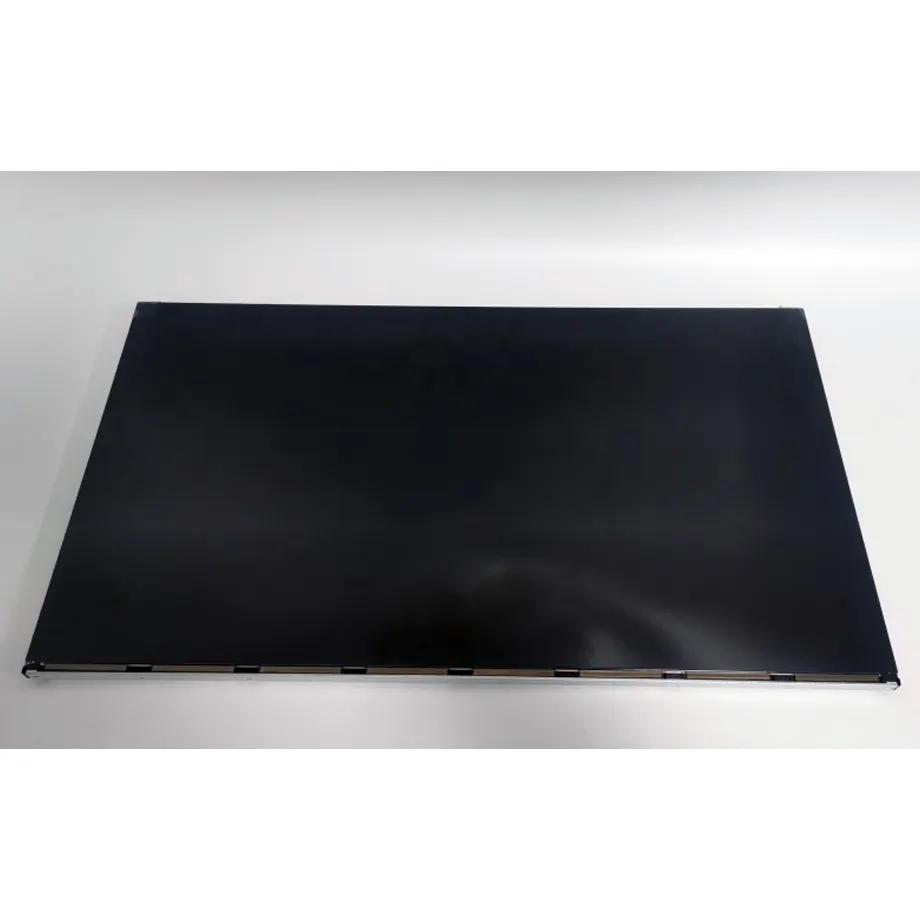
MV270QUM-N20-A949 Borderless HADS Wide-Gamut Monitor LCM BOE
Model P/N
Size
Resolution
Brightness
Viewing Angle
Connector Type
Operating Temp
Overall(mm)
boe
MV270QUM-N20-A949
Brand
Panel Size (inch)
Model P/N
Resolution
Brightness (nits)
Viewing Angle
Contrast Ratio
Response Time
Overall (mm)
Active Area (mm)
Refresh Rate
Display Colors
Panel Type
Connector Type
Surface Treatment
Operating Temp
Touchscreen Type
Storage Temp
Work Mode
Pixel Format
Input Voltage (V)
Vibration Resistance
Designed For
Product Details
Product Overview
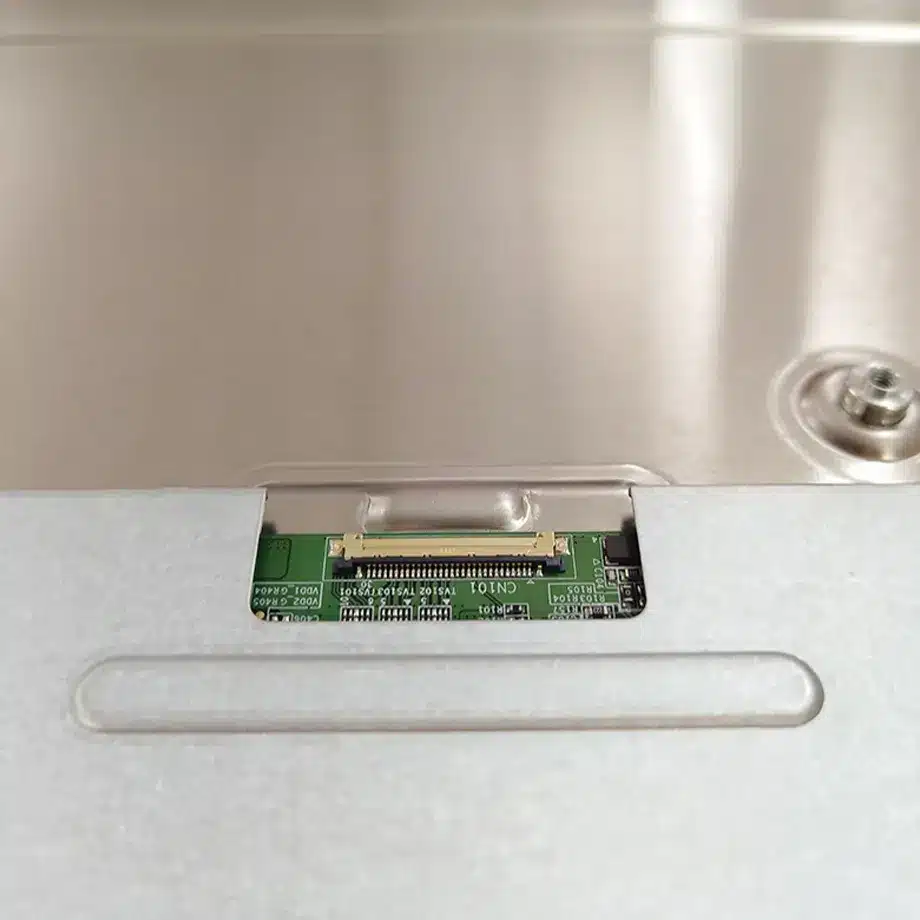
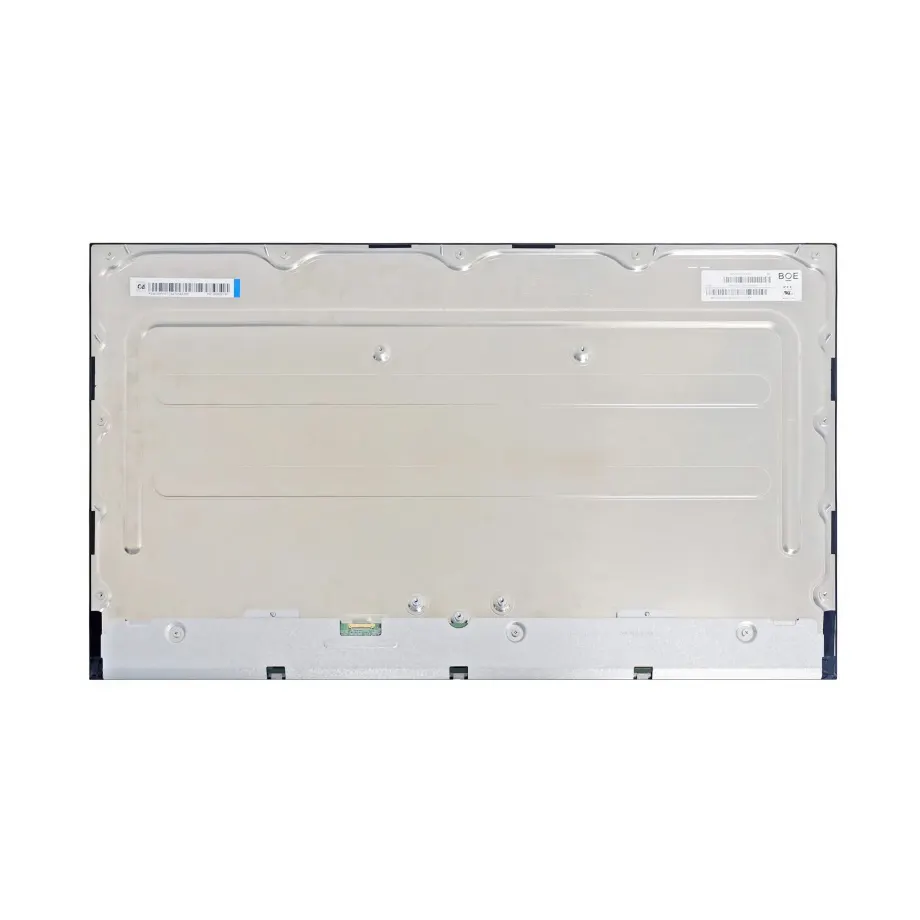
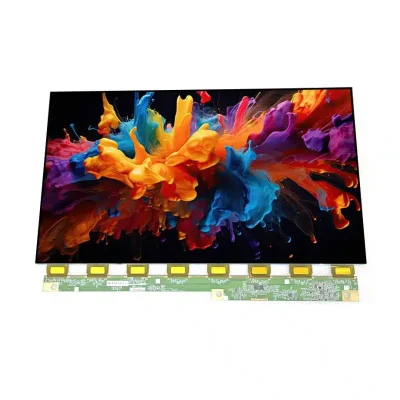
MV270QUM-N20-A949 Borderless HADS Wide-Gamut Monitor LCM is a 27.0-inch BOE a-Si TFT-LCD module for desktop-monitor integration, built around a native 3840(RGB)×2160 UHD raster in a 16:9 format. The active area is 596.736 × 335.664 mm within a documented 608.8 × 353.3 × 13.3 mm module envelope, and typical mass is 3.24 kg. The HADS normally-black transmissive panel is specified at 360 cd/m² typical luminance, 1200:1 typical contrast, 89/89/89/89 typical viewing-angle values at CR≥10 and 1.07B colors with 93% DCI-P3 wording. Its surface is antiglare with 25% haze and 3H hard coating.
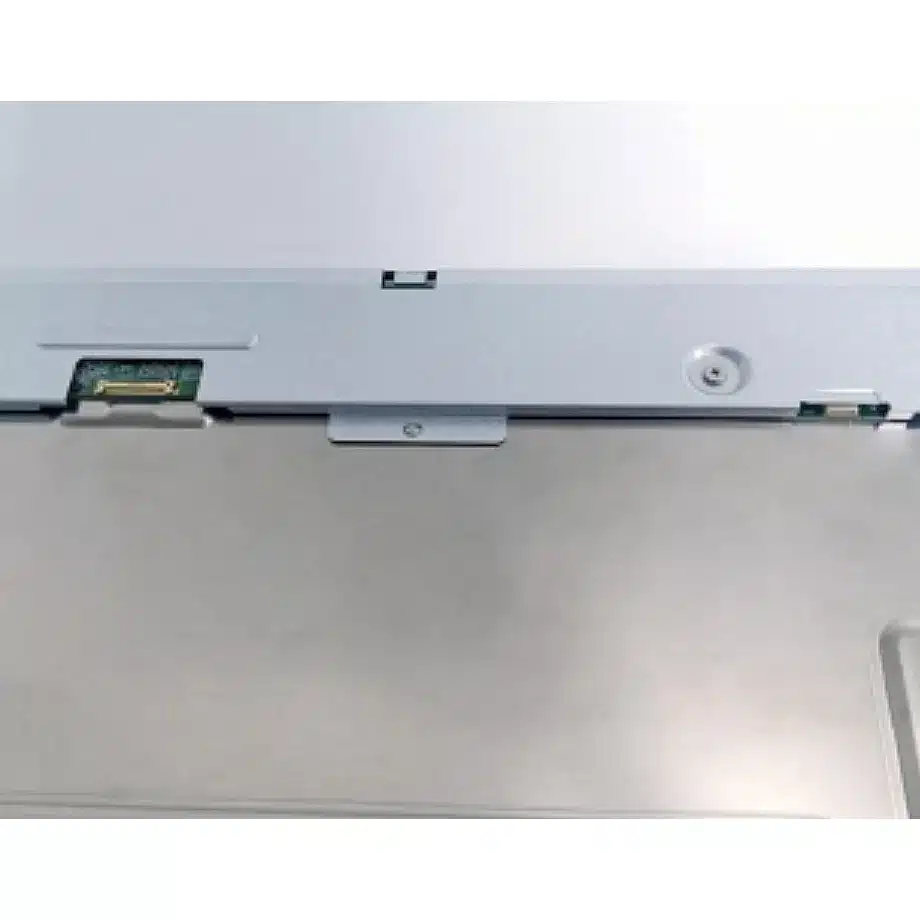
The module runs at 60 Hz and uses four-lane eDP HBR2 at 5.4 Gbit/s per lane through a 30-pin 0.5 mm connector. A 10.0 V typical panel input is documented. The integrated backlight uses a 14S4P×2CN WLED arrangement with a 30K-hour reference but is supplied without an integrated LED driver, so the monitor power electronics must provide current regulation and dimming. The exact-model power reference is 30.84/35.57 W typical/maximum. It is supplied without touch. The response entry gives a numeric value of 14 for typical G2G with an incompatible length unit; because G2G response is a time quantity, the engineering representation is 14 ms typical with the numeric value unchanged.
Three Core Buyer Value Propositions
1. 4K UHD and 93% DCI-P3 give professional monitor projects an explicit image-quality target
The 3840×2160 raster provides native 4K workspace for image review, CAD, engineering, content creation and premium productivity. Combined with 1.07B colors and 93% DCI-P3 wording, it creates a measurable wide-gamut platform rather than a generic UHD panel description. These values do not prove factory calibration, HDR certification, Delta E or a specific color profile. The finished monitor still needs its own color-management, white-point, gamma and uniformity acceptance criteria.
2. Four-lane HBR2 eDP creates a defined high-bandwidth panel interface
The native panel path uses four HBR2 lanes at 5.4 Gbit/s per lane, a 30-pin 0.5 mm connector and 60 Hz UHD timing. Those facts allow controller selection and signal-integrity work to begin from a specific embedded DisplayPort requirement. Exact pin mapping, AUX behavior, link training and power sequence remain model-specific. A monitor scaler with eDP output is not automatically compatible unless it supports the panel's timing and electrical implementation.
3. WLED without an integrated driver gives the system designer control over luminance and thermal behavior
The backlight is part of the module, but the LED driver is not. That lets the monitor power board control current regulation, dimming strategy and thermal design around the target product. It also means the 360 cd/m² typical luminance must be verified with the chosen driver. The 30K-hour backlight reference should remain tied to its stated test conditions and should not be converted into a finished-monitor warranty or future-availability promise.
Key Specifications at a Glance
| Parameter | Confirmed value |
|---|---|
| Manufacturer / model | BOE MV270QUM-N20-A949 |
| Display size | 27.0 inch |
| Panel type | a-Si TFT-LCD, LCM |
| Native resolution | 3840(RGB)×2160 UHD, 16:9 |
| Active area | 596.736 × 335.664 mm |
| Outline | 608.8 × 353.3 × 13.3 mm |
| Weight | 3.24 kg typical |
| Brightness | 360 cd/m² typical |
| Display mode | HADS, Normally Black, Transmissive |
| Contrast ratio | 1200:1 typical |
| Viewing-angle values | 89/89/89/89 typical at CR≥10 |
| Response time | 14 ms typical G2G |
| Colors | 1.07B, 93% DCI-P3 |
| Surface | Antiglare, haze 25%, hard coating 3H |
| Refresh rate | 60 Hz |
| Native interface | eDP, 4 lanes, HBR2 5.4 Gbit/s per lane |
| Connector | 30-pin 0.5 mm connector |
| Panel input | 10.0 V typical |
| Backlight | 14S4P×2CN WLED, 30K hrs, without LED driver |
| Power | 30.84 / 35.57 W typical / maximum |
| Touch | Without touch screen |
| Operating / storage | 0 to 50 °C / -20 to 60 °C |
How should the eDP link be validated at native 4K timing?
VESA's Embedded DisplayPort overview explains the internal display-link architecture used between graphics electronics and embedded panels. For this BOE module, the exact design target is four-lane HBR2 eDP at 5.4 Gbit/s per lane. The monitor controller must support native 3840×2160/60 Hz timing, the correct AUX behavior and the module's specific link-training and power sequence.
Bring-up of MV270QUM-N20-A949 Borderless HADS Wide-Gamut Monitor LCM should include cold start, repeated link training, sleep/wake, input-mode changes and sustained UHD operation. Cable impedance and routing should be tested inside the actual monitor chassis. If the system exposes HDMI, USB-C or DisplayPort to the user, those connectors belong to the scaler/input side and should not be confused with the module's native eDP interface.
How should wide-gamut capability be calibrated?
The 93% DCI-P3 wording and 1.07B color capability make the panel relevant to content creation, image review and premium office monitors where broader color coverage matters. Gamut volume and color depth do not guarantee color accuracy. A professional product should separately define Delta E, white point, gamma, uniformity and profile behavior, then measure those targets across several brightness levels.
BOE's monitor display portfolio identifies office, entertainment and professional-design applications across its monitor panel business. That manufacturer context supports the application direction, but portfolio-level technologies and certifications do not automatically apply to this exact suffix. Public copy should stay anchored to the documented UHD, 360-nit and 93% DCI-P3 values.
What does external LED-driver design imply for power planning?
The module includes its WLED backlight but not the LED driver. The system power board must therefore supply the appropriate LED current, dimming behavior and protection. The documented 30.84/35.57 W typical/maximum power reference is useful for power-supply and thermal planning, but it should not be treated as the complete AC input power of a finished monitor. Scaler, ports, audio, USB hubs and conversion losses add their own consumption.
Thermal qualification should include maximum brightness, low brightness, mixed content and long-duration operation in the final enclosure. Backlight current and thermal conditions can affect luminance, white point and LED aging. The 30K-hour life reference should remain a backlight component figure under its defined conditions rather than being translated into a monitor service-life guarantee.
How to interpret the 14 ms G2G value safely
The source line identifies a G2G response quantity with numeric value 14 but attaches an incompatible length unit. Because G2G is unambiguously a time measurement, the value is represented as 14 ms typical without changing the number. This is a source-semantic correction, not a new performance claim. It should not be turned into total display latency or compared directly with a Tr+Td number from another panel without considering measurement method.
At 60 Hz, system responsiveness also depends on input processing, scaler buffering, GPU rendering and synchronization. If motion performance matters, measure the completed monitor with the intended electronics and firmware. Do not replace the exact 14 ms figure with a faster family-member value to improve marketing language.
Three-side-borderless and reverse-interface wording affect mechanics
The exact-model feature set includes three-side-borderless and Reverse I/F wording. A borderless design goal influences bezel geometry, support and industrial design, while reverse-interface wording affects connector side and cable routing. Neither phrase replaces the current mechanical drawing. The 608.8 × 353.3 × 13.3 mm envelope and 3.24 kg typical mass should be checked against the planned chassis, stand load and internal clearance.
Replacement qualification should preserve connector orientation and cable reach. A different 27-inch 4K panel can have the same active image area but a different board position, frame depth or mounting pattern. Full model and suffix control is therefore necessary even when optical specifications appear similar.
Surface haze and 360-nit luminance in a desktop environment
The antiglare surface uses 25% haze with 3H hard coating, which can reduce sharp reflections from office lighting while retaining a defined scratch-resistance treatment. The 360 cd/m² typical luminance gives a measurable brightness target for the finished module driven under its specified conditions. Neither value establishes outdoor readability, and the final front cover or protective film can change reflection and perceived contrast.
Test dark, mid-gray and bright content under representative ambient light. Creator-oriented monitors should also verify uniformity and black level at corners and edges because wide-gamut performance is only one part of perceived image quality. The HADS viewing specification supports broad viewing, but enclosure reflections and desk lighting remain system-level concerns.
Application fit for 27-inch UHD creator and professional monitors
MV270QUM-N20-A949 Borderless HADS Wide-Gamut Monitor LCM is documented for Desktop Monitor use. Its combination of UHD resolution, 93% DCI-P3 wording, 1.07B colors, 360-nit luminance and 60 Hz HBR2 eDP makes creator, imaging, engineering and premium productivity monitors reasonable integration scenarios. Those are evidence-compatible applications rather than exact OEM chassis claims. No specific retail monitor is guaranteed compatible from the component data alone.
The module is supplied without touch. If touch or a protective front layer is added, the new optical stack should be qualified for reflection, color and thickness. For service or sourcing, lock the complete `MV270QUM-N20-A949` identity and do not approve another MV270QUM revision solely because it is also 27-inch UHD.
Procurement and validation checklist
- Lock BOE MV270QUM-N20-A949 and the full suffix in the BOM.
- Validate 3840×2160 at 60 Hz over four-lane HBR2 eDP.
- Confirm the 30-pin 0.5 mm connector, AUX behavior, cable orientation and 10 V power sequence.
- Design the external LED driver around the 14S4P×2CN WLED configuration and target brightness range.
- Verify 360 cd/m² typical luminance, 1200:1 contrast and 93% DCI-P3 on production samples.
- Use 30.84/35.57 W as the documented module power reference, not total monitor power.
- Preserve the 14 ms typical G2G response value after unit-semantic correction.
- Check the documented module envelope, mass and borderless/reverse-interface mechanics before tooling.
- Confirm current revision and sourcing status without inferring price, MOQ, lead time or long-term supply continuity.
For MV270QUM-N20-A949 Borderless HADS Wide-Gamut Monitor LCM qualification, provide the monitor scaler/controller, production eDP cable, LED-driver design, chassis constraints, color and luminance acceptance criteria, thermal limits and required quantity. Exact-model electrical, optical and mechanical validation should govern release.
Recommended: Same Size
(27")
Applications & Value of LCD Panel

- Fast sourcing with in-stock panels & cross-reference alternatives
- Stable supply chain with long-term availability
- Engineering-level support from panel to integration
- Custom solutions: cable, touch & optical bonding
- Strict quality control with IQC / OQC / aging test
- Full traceability system for quality assurance
- Complete technical documentation & drawings
- Compliance support: RoHS & certification files