Freya Yang
+86 18318948097
+852 62667476
2.8 Inch Smartwatch Face RGB TFT Module for Wearables
Model P/N
Size
Resolution
Brightness
Viewing Angle
Connector Type
Operating Temp
Overall(mm)
huisoar
HS028SV82A-V1
Brand
Panel Size (inch)
Model P/N
Resolution
Brightness (nits)
Viewing Angle
Contrast Ratio
Response Time
Overall (mm)
Active Area (mm)
Refresh Rate
Display Colors
Panel Type
Connector Type
Operating Temp
Touchscreen Type
Storage Temp
Work Mode
Pixel Format
Input Voltage (V)
Operating Environment
Designed For
2.8 Inch Smartwatch Face RGB TFT Module for Wearables
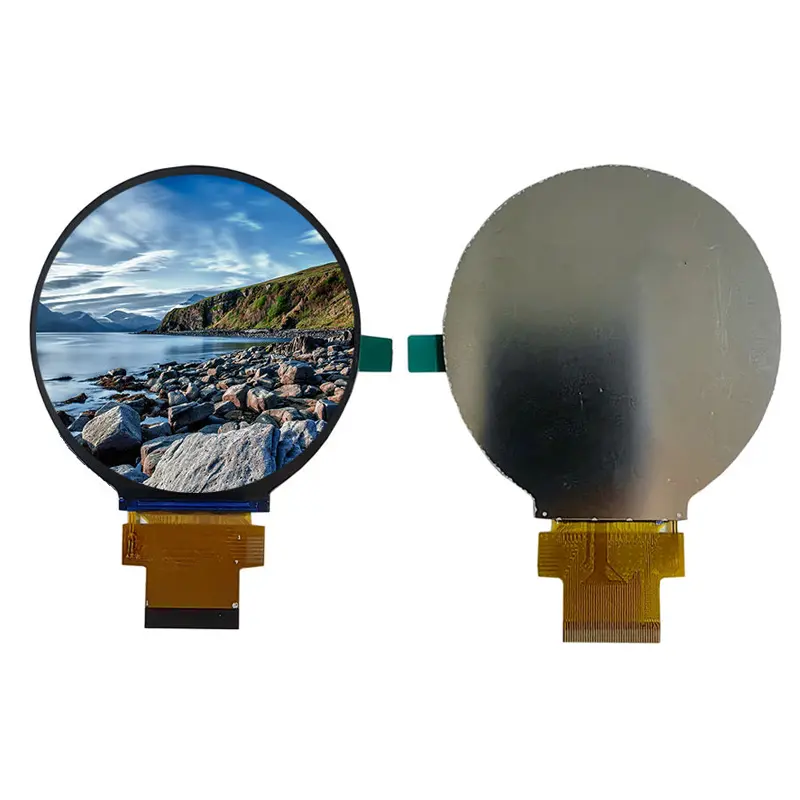
A 2.8-inch-class round display gives wearable designers a native 480 × 480 canvas for watch faces, status rings, activity graphics, compact menus and dial-style controls. The Smartwatch Face RGB TFT Module combines 800 cd/m² luminance with a 70.13 × 70.13 mm circular active area and a hybrid 3-wire SPI plus 18-bit RGB interface. An integrated touch panel is not confirmed, so display and touch requirements should be qualified separately.
Product Summary
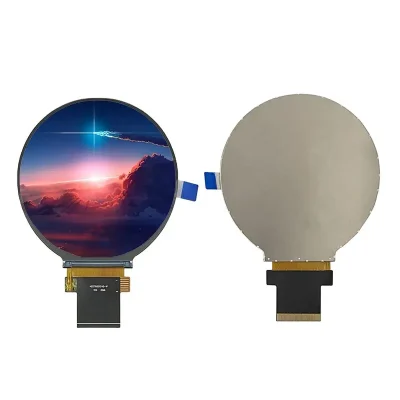
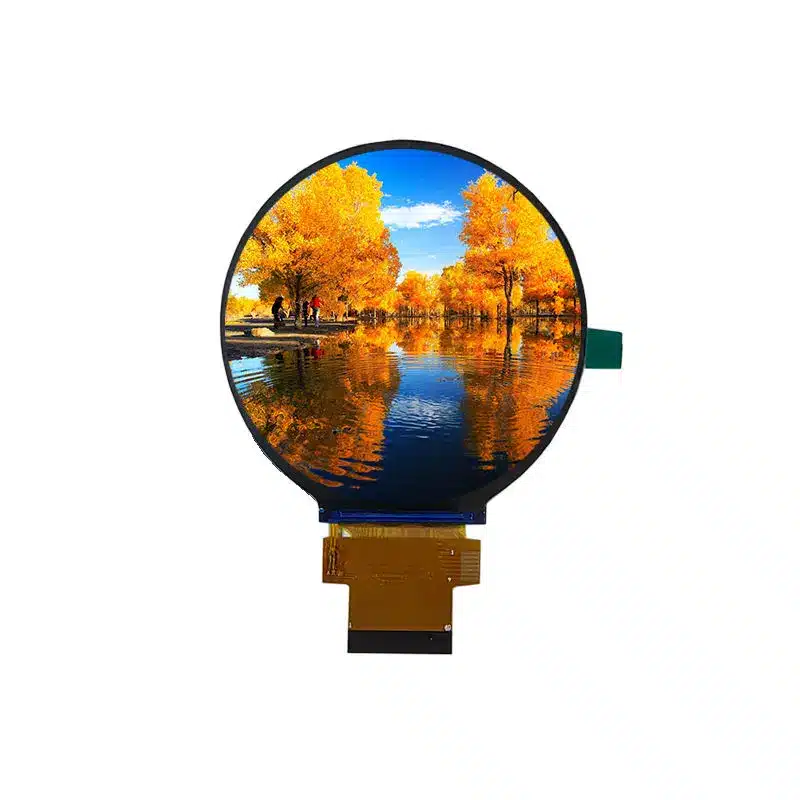
Its square 480 × 480 framebuffer maps naturally to a circular visible area, reducing the need to mask a rectangular image window. The TFT is normally black and transmissive, with an RGB vertical-stripe arrangement, 16.7M colors and a white LED backlight.
Prepare a Circular 480 × 480 UI
Build graphics at the native 480 × 480 resolution and keep critical text, icons and touch targets inside a circular safe area. Corners of the square framebuffer fall outside the visible circle, so rectangular layouts can lose information unless the interface is clipped or repositioned. Circular safe-area planning is a central design requirement for round TFT interfaces and smartwatch faces.
Evaluate the 800 cd/m² Optical Stack
The 800 cd/m² luminance supports brighter ambient-light environments than a standard low-luminance wearable panel, but it does not by itself guarantee direct-sunlight readability. Cover-lens transmission, reflections, air gaps, optical bonding, polarizer selection, backlight current and enclosure temperature all affect final contrast. Even an 800-nit panel can require reflection control and final-stack testing outdoors.
Key Specifications
| Parameter | Specification |
|---|---|
| Market size | 2.8-inch class |
| Listed LCD diagonal | 2.76 inches |
| Resolution | 480 × 480 pixels |
| Display mode | Normally black, transmissive TFT |
| Pixel arrangement | RGB vertical stripe |
| Active area | 70.13 × 70.13 mm |
| Brightness | 800 cd/m² |
| Display colors | 16.7M |
| Viewing direction | All-o’clock; angular values not confirmed |
| Interface | 3-wire SPI + 18-bit RGB |
| Driver reference | ST7701 family; exact suffix requires revision confirmation |
| Backlight | White LED |
| Operating temperature | −20°C to +70°C |
| Touch | Integrated touch panel not confirmed |
Smartwatch Face RGB TFT Module Integration
Treat the Interface as Hybrid, Not SPI-Only
The interface specification is 3SPI+18RGB. Do not assume that the complete 480 × 480 image stream is transferred through a conventional low-pin-count SPI bus. Confirm the full FPC assignment, RGB data mapping, pixel clock, synchronization or data-enable method, signal polarity, 3-wire SPI command path, voltage domains and connector orientation before selecting the host processor. Primary manufacturer documentation for comparable ST7701 modules also separates 3-wire SPI from the 18-bit RGB interface.
Confirm the Ordered ST7701 Revision
The ordered documentation must resolve whether the controller is ST7701 or ST7701S. These identifiers do not prove a particular initialization sequence, timing package or software library. The approved module revision should include the controller command set, reset timing, power requirements and validated example configuration.
Separate Panel and Backlight Power
The 2.8–3.3 V input range has an unconfirmed rail scope. It may not represent every logic, interface, bias or LED-backlight requirement. Obtain the approved electrical table before releasing the power tree, backlight driver or dimming circuit.
Mechanical Fit for Round Wearables
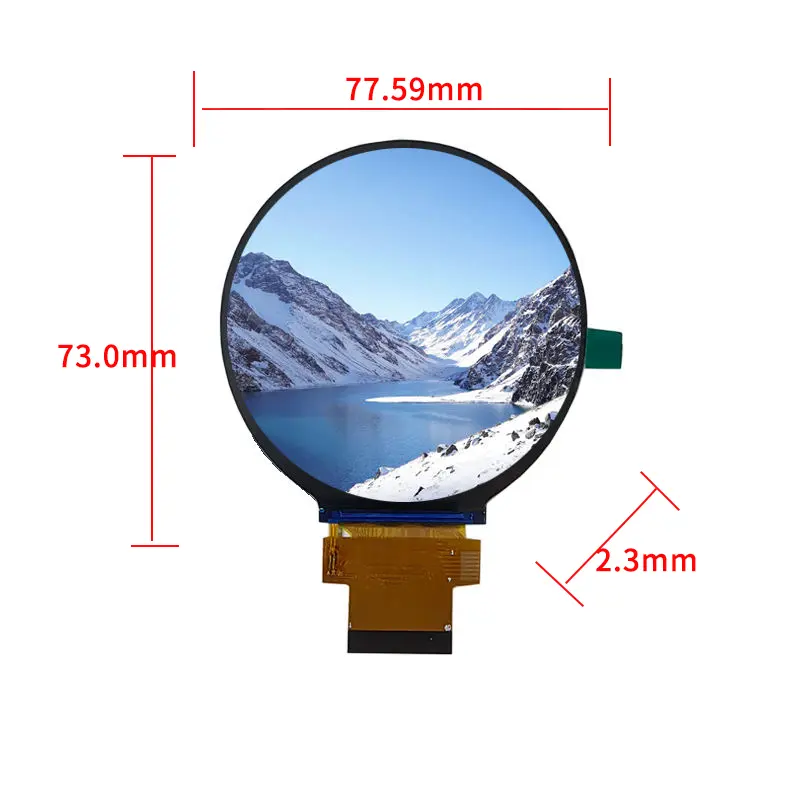
The confirmed active area is 70.13 × 70.13 mm. Two outline sets conflict: 73.03 × 76.48 × 2.34 mm and 73.0 × 77.59 × 2.3 mm. Use the approved mechanical drawing to control the enclosure, FPC exit, bezel opening, adhesive area and keep-out zones.
Check Wrist-Worn Form Factor Early
A 70.13 mm active diameter is substantially larger than many conventional wristwatch displays. It may be better suited to larger watch-style prototypes, body-worn controllers, portable dials or compact instrument interfaces. Validate enclosure diameter, wrist clearance, weight, battery volume and user ergonomics before committing to tooling.
Preserve the FPC Bend Region
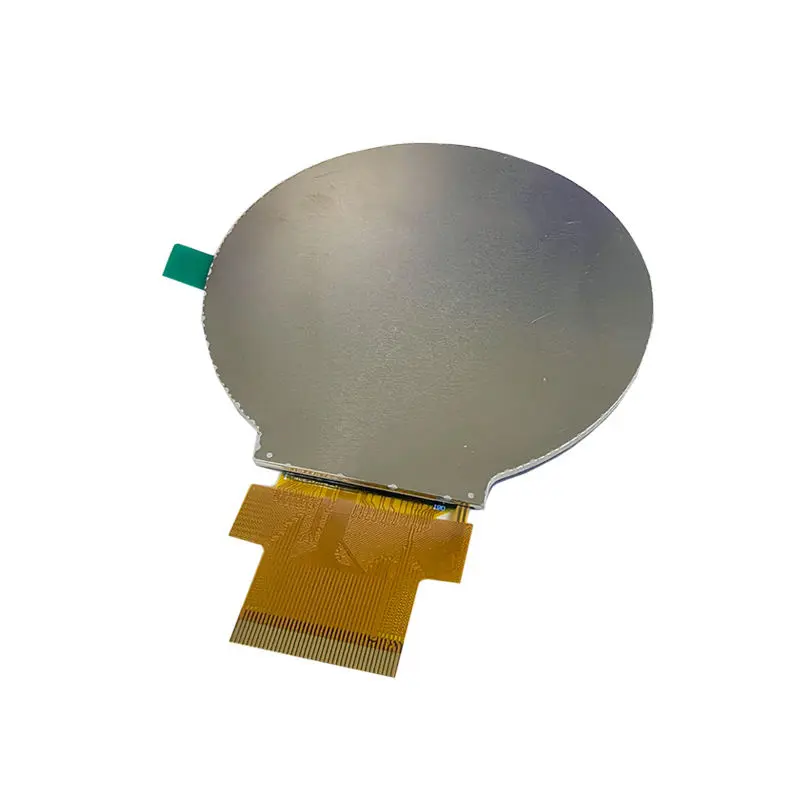
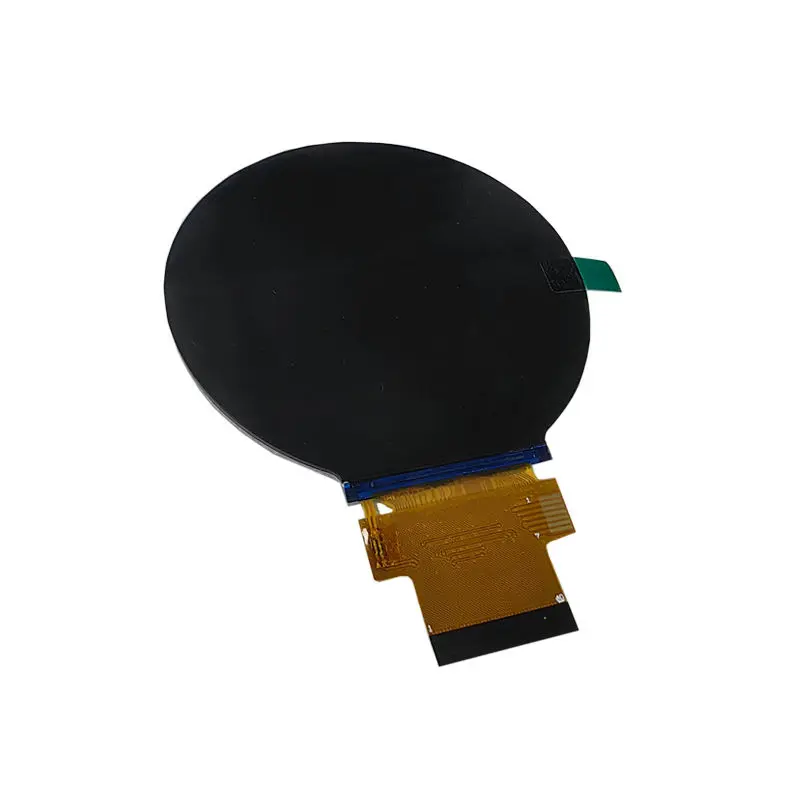
The module uses a bottom flex connection. The final drawing should define the FPC length, bend radius, contact side, connector pitch, stiffener location and allowable folding direction.
Viewing and Image Performance
All-o’clock viewing is specified, but no verified left/right/up/down angle sequence is provided. Evaluate color shift, dark-state behavior, grayscale inversion and contrast in the intended mounting orientation.
Approve final image quality with production UI assets rather than color-bar imagery alone.
Recommended Applications
The Smartwatch Face RGB TFT Module can be evaluated for larger smart-watch prototypes, wearable control interfaces, fitness or activity dashboards, circular portable controllers, smart-appliance dials and compact instruments. Medical, automotive, waterproof, impact-resistant and certified outdoor claims require separate product-level and finished-system qualification.
The 480 × 480 raster can support radial scales, status arcs, watch data and menu rings without a rectangular mask.
Customization and Sample Qualification
A customized Smartwatch Face RGB TFT Module project may include FPC routing, connector selection, cover-lens graphics, optical bonding, surface treatment, touch integration, backlight tuning, branding or packaging. Custom configurations are generally reviewed from 500 pieces, subject to tooling requirements, material availability and the requested specification. Sample and standard-module quantities are confirmed separately.
Approve the display with the intended host board, power rails, backlight driver, FPC, cover lens, enclosure and software. Sample validation should cover native timing, circular UI clipping, color mapping, viewing behavior, luminance, temperature operation and mechanical fit.
Procurement Checklist
- Confirm the ordered module revision and approved model documentation.
- Obtain the approved electrical datasheet and mechanical drawing.
- Confirm native 480 × 480 timing and the circular UI safe area.
- Confirm 18-bit RGB mapping, pixel clock, sync or data-enable mode and polarity.
- Confirm the 3-wire SPI command interface and controller command package.
- Resolve ST7701 versus ST7701S revision references.
- Confirm the complete FPC pinout, pitch, contact side, stiffener and orientation.
- Define every power rail and the scope of the 2.8–3.3 V range.
- Confirm white-LED backlight voltage, current, enable, dimming and thermal limits.
- Reconcile the two outline-dimension sets against the approved drawing.
- Verify 800 cd/m² performance behind the final cover lens.
- Confirm whether touch is absent or specify its technology, controller and interface.
- Define humidity, vibration, sealing and compliance requirements.
- Provide sample quantity, annual demand, acceptance criteria and schedule.

FAQ
About 2.8 Inch Smartwatch Face RGB TFT Module
What must be checked before connecting a host to the 3-wire SPI plus RGB interface?
How should a 480 × 480 interface be designed for the circular active area?
Is 800 cd/m² sufficient for outdoor wearable use?
Which outline dimensions should be used for enclosure release?
Does the ST7701 or ST7701S reference guarantee software compatibility?
Freya Yang
+86 18318948097